
 By admin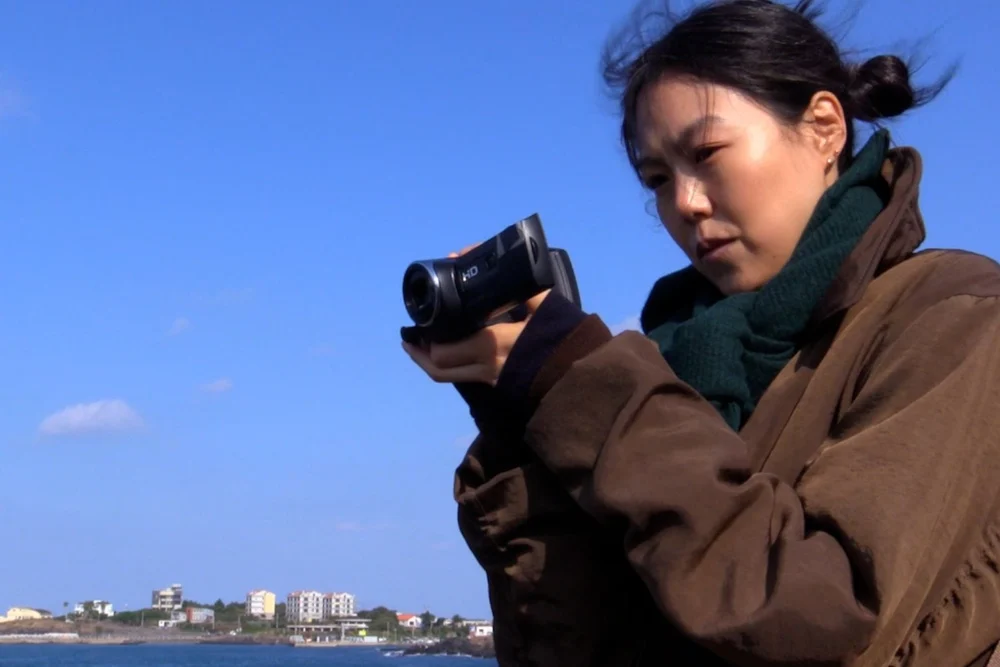
Kim Minhee’s central role in "Nowhere to Lay My Eyes" is particularly significant, as her presence in such a prominent capacity has not been a consistent feature of Hong’s recent work. While the acclaimed actress, known for her captivating performance in Park Chan-wook’s "The Handmaiden," has been an integral part of Hong’s creative orbit since 2017, she has frequently taken on supporting roles or even contributed behind the scenes. "Nowhere to Lay My Eyes" offers Kim her most rewarding showcase in several years, allowing her to fully inhabit a character whose atmospheric resonance is deeply influenced by her own porous, watchful melancholy as a performer. The film further benefits from the comforting presence of other Hong regulars, most notably the reliable Kwon Haehyo, who once again embodies a character that subtly functions as a proxy for the auteur himself. Their inclusion imbues the tightly knit ensemble with a reassuring "gang’s all here" sensibility, alongside a distinct vein of dry humor that characterizes much of Hong’s oeuvre.
Despite its outwardly gentle demeanor, "Nowhere to Lay My Eyes" also probes deeper currents of sadness and discomfort, primarily through the palpable passive-aggressive tension that simmers between Kim’s character, Sanghee, and her onscreen mother, portrayed with superb skill by Choi Myeonggil, a veteran TV star making her debut in a Hong film. The film itself is remarkably concise, clocking in at a mere 72 minutes, yet its impact lingers long after the credits roll. Following its premiere in the Locarno competition, "Nowhere to Lay My Eyes" is slated to screen in the main slate of the New York Film Festival, sharing the program with "The Day She Returns." Both films will be distributed in North America by The Cinema Guild, Hong’s long-standing partner. While it is unlikely that this new film will convert a significant number of new arthouse aficionados, it is guaranteed to be warmly embraced by his devoted following.
By day, Sanghee, played by Kim Minhee, diligently works for an importer of foreign snack products, a seemingly mundane profession that stands in stark contrast to her clandestine passion. In her off-hours, she is an experimental filmmaker, meticulously crafting and posting her poetically ruminative short films on YouTube. This delicate balancing act between the demands of commerce and the pursuit of artistic expression suits her well. However, this equilibrium is swiftly and unequivocally challenged by her mother, played by Choi Myeonggil, who views both her daughter’s professional endeavors and her artistic pursuits with a dismissive lack of appreciation. The mother’s critical stance is particularly striking given that the two women have been estranged for a decade. Having been primarily raised by her grandparents following her parents’ divorce, Sanghee harbors no strong maternal bonds, yet she harbors a flicker of hope that a weekend visit to her mother’s new residence on the remote and picturesque island of Jeju might serve as a catalyst for rebuilding some semblance of connection.
Sanghee’s journey from Seoul to Jeju is not solitary. She is accompanied by her brother, portrayed by Shin Seokho, a presence who is treated with a markedly greater degree of respect by their mother. This familial dynamic immediately establishes an undercurrent of perceived favoritism. Meanwhile, the mother finds an ally in her second husband, played by Kwon Haehyo, a mild-mannered documentary filmmaker. His profession, ironically, provides his wife with yet another avenue for the smiling disparagement of Sanghee’s own artistic choices. The mother, who owns a restaurant and has recently renovated a holiday rental cottage adjacent to her property, operates with a clear metric for personal success that conspicuously omits the cultivation of personal contentment. Sanghee does, however, find an unexpected source of support in her younger stepsister, Park Miso, a shy aspiring artist who genuinely admires both Sanghee’s films and her unwavering principles. The irony, however, is that Sanghee herself struggles to reciprocate this affection.
Over the course of two days, punctuated by meals, leisurely walks, and, in typical Hong fashion, a slightly excessive consumption of alcohol, these awkwardly assembled relatives engage in a series of gentle spars. Crucially, these interactions do not devolve into overt drama, a hallmark of Hong’s distinctive narrative approach. The true substance of the film lies in its incisive observations of their individual coping mechanisms, their blind spots, and the small, yet profoundly satisfying, moments of release that punctuate their interactions. The conversations that ebb and flow between them traverse a wide array of topics, from the perceived quality of European furniture to the diametrically opposed modes of documentary filmmaking. Sanghee, much like Hong himself, is characterized by her prolific and off-the-cuff approach to filming, while her stepfather patiently nurtures long-term projects. In a rare topical digression for the filmmaker, the war in Gaza also emerges as a subject of discussion, underscoring the film’s subtle engagement with contemporary global anxieties.
Beneath the surface of these disparate conversations, it becomes clear that the characters are, in essence, grappling with their own unique manifestations of loneliness, regret, and the fleeting moments of bliss that punctuate their lives. "Nowhere to Lay My Eyes" exhibits a keen interest in, and even a discernible pleasure derived from, exploring all these facets of the human experience. This extends to the delightful throwaway highlights of even the most fraught days – a particularly exquisite bowl of noodle soup, a perfectly timed, accidental pratfall. Kim Minhee’s economical performance is beautifully attuned to these alternatingly profound and superficial concerns. Her face serves as a canvas, working diligently to contain Sanghee’s simultaneous amusement and disappointment at the pleasant yet ultimately awkward weekend. Meanwhile, her sporadic voiceover narration offers glimpses into the more lyrically wounded woman residing within. This narrative device, while less common in Hong’s filmography, proves to be remarkably successful. Even when operating within his most quintessential mode, the director consistently finds small, sly ways to surprise and engage his audience.
The film’s exploration of familial dynamics resonates deeply, particularly in its portrayal of the subtle power plays and unspoken resentments that can exist between mothers and daughters. Choi Myeonggil’s portrayal of the mother is a masterclass in understated menace, her critiques delivered with a veneer of maternal concern that masks a deeper judgment. This is a familiar trope in Hong’s work, where characters often grapple with the weight of societal expectations and familial legacies. The contrast between Sanghee’s artistic aspirations and her mother’s pragmatic worldview highlights the generational divide and the differing definitions of success that can create chasms between loved ones. The film’s gentle pacing allows these subtle nuances to unfold organically, inviting the audience to become active participants in deciphering the unspoken tensions.
Furthermore, the inclusion of Kwon Haehyo as the stepfather provides a fascinating counterpoint. His character, a documentary filmmaker, embodies a different approach to artistic creation, one that emphasizes patience and long-term dedication. This professional contrast mirrors the broader thematic tension within the film: the conflict between spontaneity and structured discipline, between fleeting inspiration and deliberate craftsmanship. His presence also serves to further highlight the mother’s peculiar logic, as she seems to value his more conventional professional path over her daughter’s unconventional artistic pursuits. Kwon’s performance, as always, is imbued with a quiet gravitas, adding another layer of complexity to the family dynamic.
The setting of Jeju Island plays a crucial role in establishing the film’s atmosphere. The remote, picturesque landscape serves as both a backdrop and a character in itself, reflecting the internal landscapes of the characters. The isolation of the island amplifies the sense of familial distance and the characters’ individual journeys of self-discovery. The visual style, characteristic of Hong Sangsoo, is characterized by its naturalism and observational quality. Long takes, static camera positions, and minimal editing create an intimate and immersive viewing experience, allowing the audience to feel as though they are present in the room with the characters, witnessing their interactions unfold in real time. This vérité-like approach further enhances the film’s sense of authenticity and emotional resonance.
The film’s exploration of loneliness is particularly poignant. Sanghee’s journey to Jeju is not just a physical one; it is also an attempt to bridge the emotional chasm that has grown between her and her mother. Her concurrent role as an experimental filmmaker, posting her work online, suggests a desire for connection and validation in a world that often feels isolating. The fleeting moments of connection she finds with her stepsister, though tentative, offer a glimpse of hope and the possibility of forging new bonds. The film’s title, "Nowhere to Lay My Eyes," can be interpreted in multiple ways: it could refer to Sanghee’s feeling of displacement and lack of belonging, or it could allude to the difficulty of finding solace and a sense of home in a complex and often disorienting world.
The inclusion of a brief discussion about the war in Gaza, while seemingly tangential, adds a layer of contemporary relevance to the film. It suggests that even in the midst of personal familial dramas, the characters are not entirely detached from the broader global context. This moment serves as a reminder of the interconnectedness of human experience and the ways in which global events can subtly influence our individual lives and perspectives. It is a testament to Hong’s skill that he can weave such disparate elements into a cohesive and meaningful narrative tapestry.
Ultimately, "Nowhere to Lay My Eyes" is a film that rewards patience and close attention. It is a subtle yet profound exploration of family, art, and the enduring human quest for connection. Kim Minhee’s performance is a revelation, capturing the complexities of a woman navigating the delicate balance between familial duty and personal artistic integrity. The film’s understated humor and keen observations of human behavior make it a deeply resonant and memorable cinematic experience. While Hong Sangsoo may not be actively seeking to expand his audience base with groundbreaking stylistic shifts, his continued commitment to exploring the intricacies of human relationships with such unwavering honesty and subtle brilliance ensures that his films will continue to be cherished by those who appreciate his unique cinematic vision. The recurring motifs and familiar faces in his filmography are not signs of stagnation, but rather the building blocks of a deeply personal and consistently evolving artistic language. "Nowhere to Lay My Eyes" stands as a beautiful testament to this enduring artistic journey, offering both comfort in its familiarity and a quiet surprise in its nuanced emotional depth.
