
 By Titik Puspa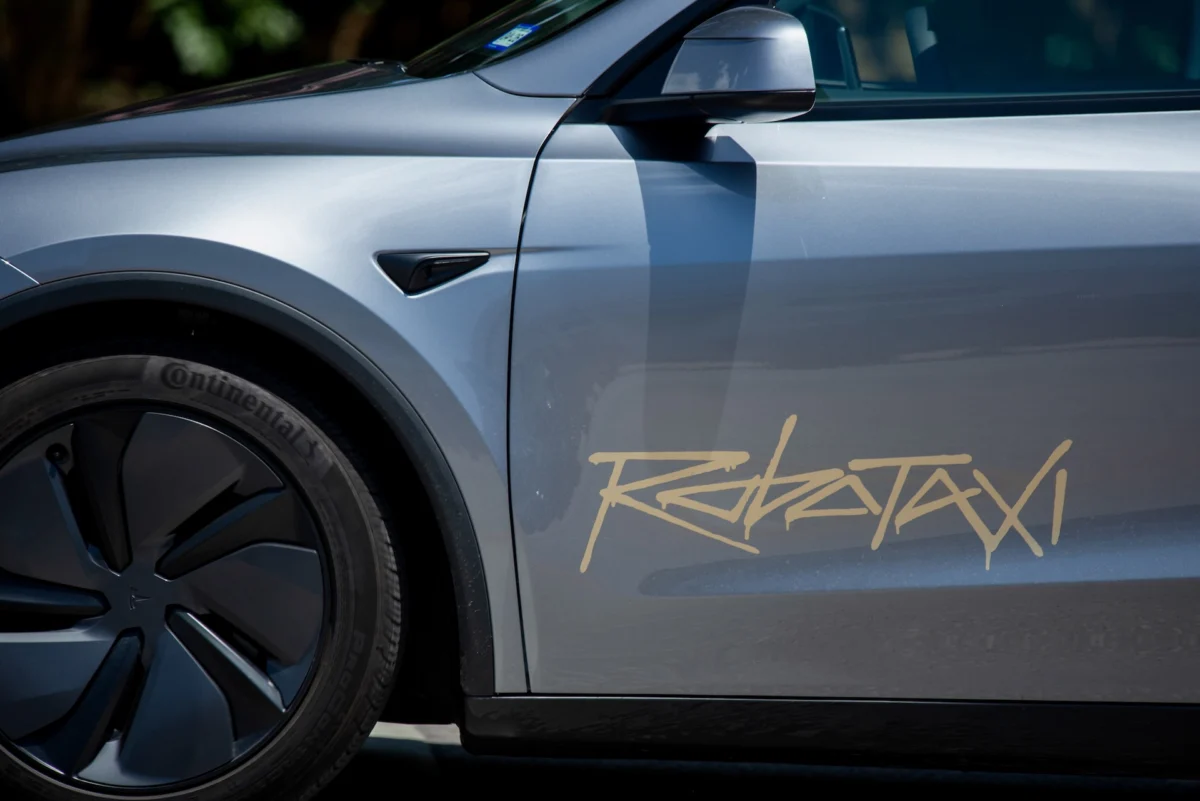
Nevada is officially charting a course into the era of autonomous transportation, with the Nevada Transportation Authority (NTA) granting landmark approvals that will usher in commercial robotaxi services across Clark County. In a unanimous decision on Thursday, the NTA greenlit permits for three major players – Tesla, Uber, and Waymo – to deploy fleets of self-driving vehicles, a move that promises to reshape the landscape of personal mobility in the region, particularly around the iconic entertainment hub of Las Vegas. The collective potential of these permits allows for the deployment of up to a staggering 8,000 robotaxis within Clark County over the next twelve months, signaling an aggressive push towards widespread autonomous adoption.
The distribution of these permits reflects the significant ambitions of each company. Tesla, a pioneer in electric vehicles and advanced driver-assistance systems, has been granted the largest allocation, permitting the deployment of up to 5,000 robotaxis. This substantial number underscores Tesla’s long-held vision of a fully autonomous ride-hailing network, often referred to as its "Cybercab" initiative. Waymo, a subsidiary of Alphabet Inc. and a long-standing leader in autonomous vehicle technology, secured a permit for up to 1,000 autonomous vehicles. Uber, while not directly operating its own fleet of robotaxis in this instance, has also been approved for 1,000 vehicles. However, Uber’s strategy here involves a collaborative approach, leveraging partnerships with Hyundai subsidiary Motional and Zoox, an Amazon-owned autonomous vehicle company. Zoox itself already possesses an existing permit allowing it to operate 100 robotaxis, which will now be integrated into Uber’s broader network strategy.
Despite the high ceilings set by these permits, the actual number of robotaxis that will hit the streets in the immediate future remains a subject of considerable discussion. Testimony provided by representatives from Tesla and the other companies during the NTA hearing suggested that achieving the full authorized deployment within the next year is unlikely. Eric Early, Tesla’s Cybercab chief engineer, candidly stated during the meeting, "The 5,000 has always been a ceiling for us. I don’t think we’ll be in a position by this time next year to deploy 5,000 vehicles, and it’s not [because of] the technology… I think we would be extremely happy and satisfied if we could get ourselves up to 2,500, maybe a bit higher than that in the next year." This acknowledgment indicates that while the regulatory framework is now in place, the operational scaling and readiness of the technology, despite its advancements, will likely dictate a more gradual rollout.
Even if these companies deploy only half of their authorized vehicle numbers, Clark County, and Las Vegas in particular, is poised to become a fiercely competitive arena for robotaxi services. The prospect of Tesla, Uber (through its partners Motional and Zoox), and Waymo vying for the same pool of riders represents a significant shift in the transportation ecosystem. This potential for rapid and large-scale deployment of autonomous vehicles is not just about convenience for passengers; it carries profound implications for the local workforce and the very fabric of the city. Opinions are sharply divided on the ultimate impact. Proponents envision a new category of jobs emerging, focused on the maintenance, charging, cleaning, and remote supervision of these autonomous fleets. Conversely, critics and many in the existing transportation sector fear the obsolescence of traditional roles, potentially displacing legions of human taxi drivers and gig economy drivers who rely on current ride-hailing models for their livelihood.
The approval of these permits was not without significant opposition. Representatives from the Livery Operators Association and various local taxi companies voiced strong concerns, arguing that the pace of approval was too aggressive and potentially destabilizing. Kimberly Maxson-Rushton, a lawyer representing the Livery Operators Association, articulated these reservations during the hearing, stating, "These applications raise two grave concerns. One deals with the oversaturation of the commercial transportation industry as a whole in Nevada, and the second one deals with the overcrowding of the roadways, and specifically the Golden Triangle." The "Golden Triangle," a geographically significant area encompassing the vicinity between the airport and the bustling Las Vegas Boulevard, has historically been a primary zone for autonomous vehicle testing. This concentration of testing, and now potential commercial operations, raises questions about traffic management and the impact on existing infrastructure and businesses. Motional has also been actively testing its vehicles in the downtown area and a prominent shopping district known as Town Square, further expanding the footprint of autonomous operations.
Uber, in its strategic approach to the autonomous future, has attempted to position itself as a mediating force. The company has actively advocated for a "hybrid approach," where ride-hailing networks are composed of both human-driven vehicles and robotaxis. This stance is not merely philosophical; Uber has reportedly lobbied for regulatory frameworks that would mandate robotaxis operate within networks that also include human drivers. Such a position creates a strategic hedge for Uber, allowing it to participate in the autonomous revolution while mitigating the risks associated with its own autonomous vehicle development falling short of its competitors’ timelines or capabilities. This approach also aims to address concerns about market saturation by enabling a more gradual integration of autonomous vehicles, allowing cities to manage demand fluctuations more effectively. During the NTA meeting, Uber reiterated this pitch, emphasizing how a hybrid model could facilitate a smoother transition for both the industry and the public, avoiding an abrupt "flooding" of the market.
The regulatory environment in Nevada has been proactive in its engagement with autonomous vehicle technology. In 2023, Governor Joe Lombardo signed Senate Bill 287, which codified rules for autonomous vehicles, including the establishment of a statewide framework for testing and deployment. This legislation was designed to foster innovation while ensuring public safety and accountability. The NTA’s recent approvals are a direct consequence of this legislative groundwork, signaling Nevada’s commitment to being at the forefront of autonomous mobility. The state’s business-friendly climate and its status as a major tourist destination, with a constant influx of visitors requiring transportation, have made it an attractive proving ground for AV companies.
The implications of this widespread robotaxi deployment extend beyond the immediate transportation sector. It raises questions about urban planning, the future of parking infrastructure, and the potential for on-demand mobility to redefine how people live and work in a metropolitan area like Las Vegas. The reduced need for personal vehicle ownership, for instance, could lead to a reimagining of urban spaces, with potential for increased pedestrianization and green areas. However, it also necessitates robust cybersecurity measures to protect these connected vehicles from malicious actors and clear protocols for accident investigation and liability.
The technological underpinnings of these robotaxis are sophisticated, relying on a complex interplay of sensors, artificial intelligence, and high-definition mapping. Companies like Waymo have spent years meticulously mapping the intricate road networks of cities like Phoenix and San Francisco, accumulating billions of miles of real-world and simulated driving data. Tesla’s approach, heavily reliant on its "Autopilot" and "Full Self-Driving" (FSD) software, leverages a vision-based system that has been deployed to millions of its customers, albeit with varying degrees of human supervision required. The success of these commercial deployments will hinge on the continued refinement and proven reliability of these systems in the diverse and often unpredictable urban environment of Las Vegas.
The economic arguments surrounding autonomous vehicles are multifaceted. While job displacement is a valid concern, the creation of new roles in AV maintenance, remote operations centers, and fleet management could offset some of these losses. Furthermore, increased efficiency and potentially lower operating costs for ride-hailing services could lead to more affordable transportation options for consumers, boosting economic activity. The tourism industry in Las Vegas, in particular, could benefit from a seamless and efficient autonomous transportation network, enhancing the visitor experience and potentially driving higher spending.
However, the path forward is not without its challenges. Public perception and trust in autonomous technology remain critical factors. Incidents involving AVs, even if rare, can significantly impact public confidence. Ensuring rigorous safety standards, transparent reporting of performance data, and effective public education campaigns will be essential for widespread acceptance. Moreover, the regulatory landscape for autonomous vehicles is still evolving globally, and Nevada’s framework will likely need to adapt as the technology matures and new challenges emerge. The interplay between state and federal regulations, as well as the potential for differing approaches in neighboring jurisdictions, will also shape the long-term trajectory of robotaxi services.
The NTA’s decision marks a pivotal moment, signaling a bold embrace of a technology that has the potential to revolutionize transportation. As these autonomous vehicles begin to populate the streets of Clark County, the coming years will be a critical period of observation, adaptation, and, undoubtedly, intense competition. The success of this transition will depend on the ability of the companies to deliver on their technological promises, the responsiveness of regulators to evolving challenges, and the willingness of the public to embrace a new era of autonomous mobility. The Nevada experiment in robotaxi deployment is set to be a closely watched case study for the rest of the world.
