
 By admin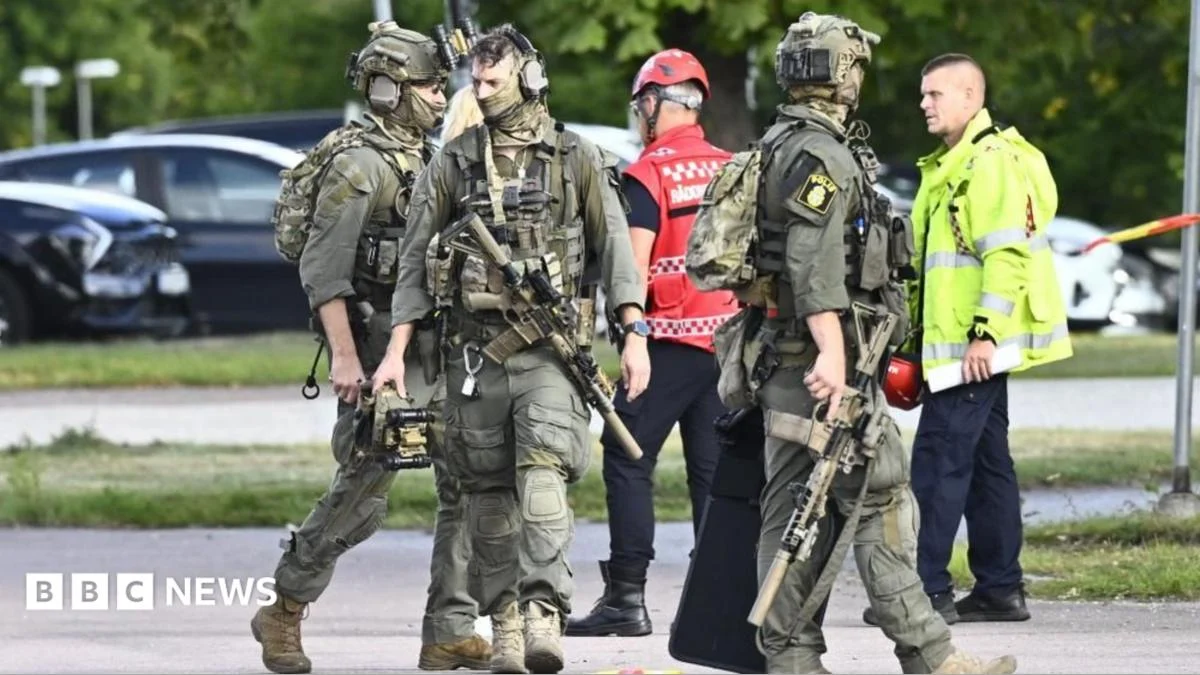
A wave of terror swept through Fagersta, Sweden, on Friday afternoon as a violent sword attack unfolded at the Brinell School, leaving two teenagers in critical condition and sending shockwaves through the nation. The incident, which occurred shortly after 2:00 PM local time, prompted an immediate and extensive police response, culminating in the arrest of a single male suspect. Authorities confirmed that a third individual sustained injuries, though the severity of their wounds remains undisclosed. Disturbingly, local media reports indicate that the alleged assailant was shot in the leg by responding officers during the chaotic confrontation.
In the immediate aftermath of the horrifying event, eight other schools in the Fagersta vicinity were placed under lockdown as a precautionary measure, a measure that has since been lifted. The Västmanland region, where Fagersta is located, declared a state of high alert, underscoring the gravity of the situation and the pervasive sense of unease. Despite the heightened security and palpable fear, police have assured the public that there is currently no ongoing danger.
The Prime Minister of Sweden, Ulf Kristersson, took to the social media platform X (formerly Twitter) to denounce the attack, labeling it a "serious incident." He acknowledged the uncertainty surrounding the motive, stating, "we do not know what lies behind the act, but we know that police are working very intensively." This statement reflects the nation’s collective anxiety and the urgent need for answers.
The timing of the attack is particularly poignant, as students at Brinell School had only recently returned to the classroom after the summer break. The new academic term had commenced either on Monday or Wednesday of the current week, depending on the specific academic calendar. This return to normalcy was brutally shattered, transforming what should have been a familiar and safe environment into a scene of unimaginable violence.
Brinell School, with its student roster just shy of 500, is situated approximately 170 kilometers (105 miles) northwest of the Swedish capital, Stockholm. According to Sweden’s public broadcaster SVT, the school serves a community that is now grappling with the trauma of this violent intrusion.
This latest incident casts a grim shadow over Sweden’s recent history, which has unfortunately been punctuated by a series of disturbing attacks on educational institutions. The nation’s most devastating mass shooting occurred in 2025, when 11 individuals, including the perpetrator, lost their lives at an adult education center in Örebro. This tragedy served as a stark wake-up call, prompting the Swedish government to significantly tighten its gun laws. Investigations revealed that the perpetrator in the Örebro shooting had legally owned four rifles, with three of them discovered at the scene of the attack, highlighting a critical loophole in the existing legislation.
The echoes of past violence resonate deeply with this latest event. In 2022, a secondary school in Malmö was the site of another horrific attack that claimed the lives of two teachers. An 18-year-old student later confessed to this crime, further underscoring the vulnerability of educational spaces to violent acts. Prior to that, in 2015, a chilling sword attack at a school in Trollhättan resulted in the deaths of a teacher and a pupil, a stark reminder of the potential for unconventional weapons to inflict devastating harm.
These recurring incidents raise profound questions about the safety and security of Swedish schools. The Brinell School attack, in particular, with its use of a bladed weapon, departs from the pattern of firearm-related incidents that have dominated headlines in recent years. This shift in methodology demands a re-evaluation of security protocols and a deeper understanding of the evolving nature of threats facing educational institutions.
Expert Analysis and Societal Impact:
The psychological impact of such an event on a school community is profound and far-reaching. Dr. Elina Karlsson, a child psychologist specializing in trauma, commented, "When violence erupts within the sanctuary of a school, it shatters the fundamental sense of safety that children and adolescents rely upon. The immediate aftermath is characterized by shock, fear, and confusion. The long-term effects can include anxiety, post-traumatic stress disorder, and a pervasive distrust of familiar environments. Comprehensive and sustained psychological support is absolutely critical for the students, staff, and families affected."
The choice of weapon—a sword—is particularly noteworthy and raises concerns about the accessibility of such items and the potential for premeditation. While the motive remains unclear, criminologists are already speculating on various possibilities. Professor Lars Johansson, a leading expert in violent crime at Uppsala University, noted, "The use of a sword suggests a degree of planning and potentially a symbolic intent, rather than a spontaneous act of rage. It deviates from the more common firearms used in recent school attacks. Investigators will be looking closely at the suspect’s background, any known affiliations, and any online activity that might shed light on their state of mind and motivations. The psychological profile of someone choosing to wield a sword in such an attack is complex and warrants careful examination."
The heightened state of alert in the Västmanland region and the lockdown measures implemented in neighboring schools demonstrate a proactive, albeit reactive, approach to managing the immediate crisis. However, the lifting of these measures, coupled with the assurance that there is no current danger to the public, highlights the police’s belief that the immediate threat has been contained. Nonetheless, the psychological scars will undoubtedly linger.
The Swedish government’s response, as articulated by Prime Minister Kristersson, emphasizes the ongoing investigation and the commitment to understanding the root causes of such violence. The nation has a history of grappling with societal issues that may contribute to such acts, including integration challenges, mental health support, and the impact of social isolation, particularly among young people.
The fact that students had just returned from summer break adds another layer of tragedy. The transition back to school, typically a period of renewed routine and social reconnection, has been irrevocably marred by this violent event. Educators will face the immense challenge of not only resuming academic instruction but also of creating a space where students feel safe enough to learn and grow.
Broader Context and Future Implications:
Sweden’s experience with school violence is not isolated. Globally, educational institutions have become increasingly vulnerable targets, prompting ongoing debates about security measures, mental health interventions, and the societal factors that contribute to youth violence. The recurring nature of these attacks in Sweden underscores a persistent societal vulnerability that requires continuous attention and adaptation.
The tightening of gun laws following the 2025 Örebro massacre was a significant policy shift. However, the Brinell School incident suggests that the threat landscape may be evolving, with perpetrators potentially seeking alternative means to inflict harm. This necessitates a broader approach to security that encompasses not only the prevention of firearms but also the assessment and mitigation of risks associated with other weapons and forms of violence.
The confession of the 18-year-old in the Malmö attack in 2022 highlights the complex issue of youth radicalization and the challenges in identifying and intervening with individuals who may be contemplating violence. The 2015 Trollhättan attack, involving a sword, serves as a grim precedent, indicating that bladed weapons can be used with lethal effect in school settings.
As the investigation into the Fagersta attack progresses, the focus will undoubtedly be on identifying the suspect’s motives, any potential accomplices, and the broader circumstances that led to this act of extreme violence. The nation will be looking for answers, not just to understand this specific incident, but to prevent future tragedies. The Brinell School attack is a stark reminder of the fragility of peace and the enduring need for vigilance, resilience, and a comprehensive approach to ensuring the safety and well-being of all students and educators. The long road to recovery for the Fagersta community has just begun, marked by the shadow of this brutal and senseless act.
