
 By Lina Irawan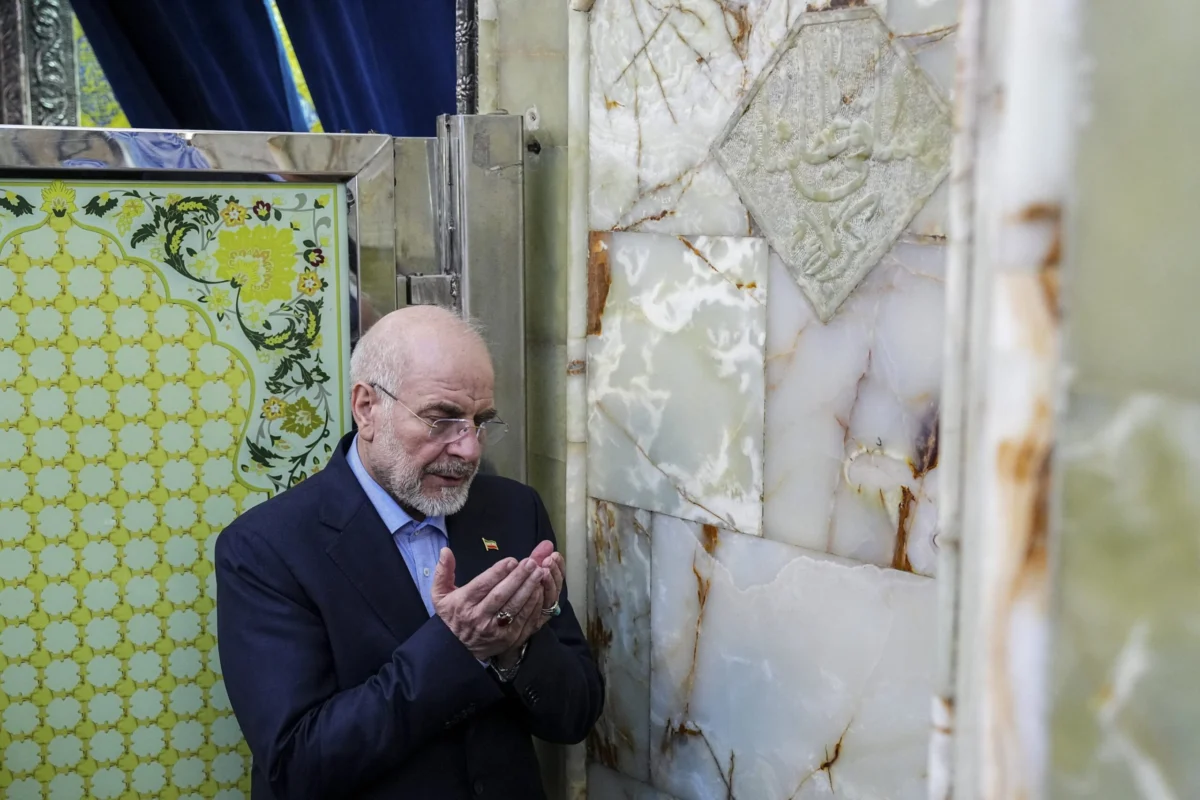
A palpable and increasingly public rift has emerged within Iran’s ruling establishment, signaling profound impatience with the nation’s economic freefall and the persistent diplomatic stalemate with the United States. This internal struggle pits moderate factions, deeply concerned by the escalating humanitarian and financial costs, against entrenched hardliners who continue to advocate a confrontational, military-first posture. The chasm reflects a growing desperation to secure some form of economic relief before the country’s already catastrophic situation spirals further out of control, even as diplomatic progress with Washington remains elusive.
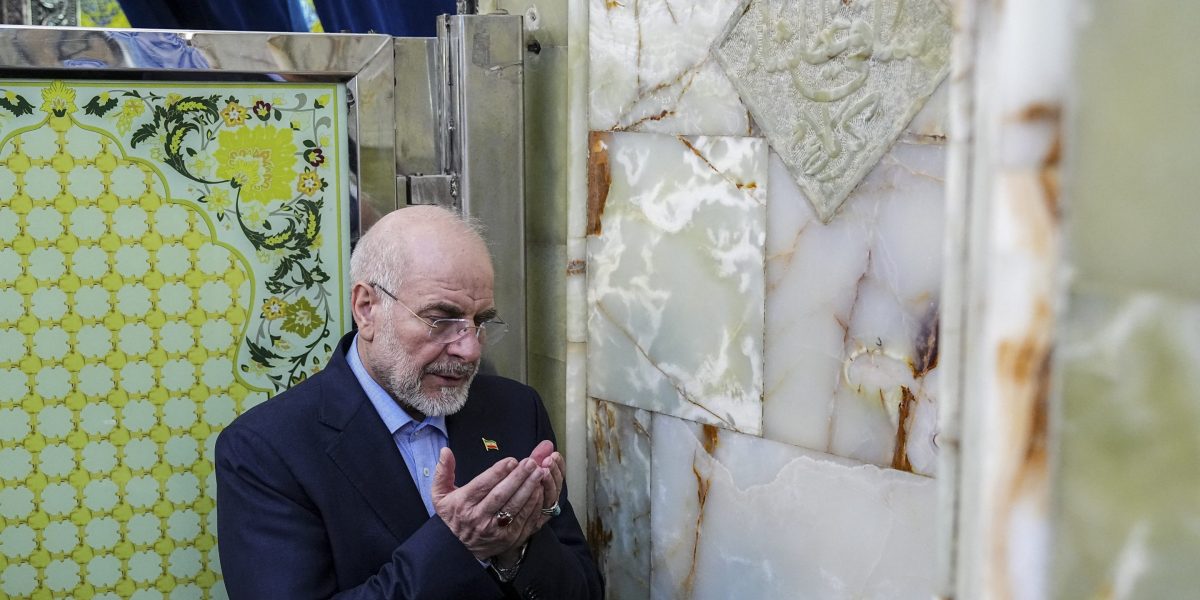
The anxiety among moderate officials is particularly acute, manifesting in direct challenges to the hardline strategy. Mohammad Bagher Ghalibaf, a prominent figure serving as both parliamentary speaker and Iran’s chief negotiator, underscored this sentiment during a recent visit to Iraq. "No matter how strong we are militarily, if the people are hungry and we do not have financial circulation, economic growth and domestic production, we will not endure," Ghalibaf warned on Friday. His remarks, coming from a former Revolutionary Guard commander and a figure who has long navigated Iran’s complex power structures, carry significant weight. He further emphasized his position, stating, "As someone who has experienced war, we understand the true value of peace," a clear rebuke to those prioritizing military might over economic stability and diplomatic resolution.
Echoing this pragmatic stance, President Masoud Pezeshkian, whose administration bears the primary responsibility for navigating Iran’s economic woes, publicly pushed back against hardline criticisms regarding a recent ceasefire deal with the U.S. Pezeshkian firmly asserted that the agreement did not represent capitulation, a term often used by hardliners to discredit any form of compromise with Western powers. In comments widely carried by state media, the President called for an end to the protracted conflict, hinting at a strategic window of opportunity for Tehran to leverage its current position. "It is better to end it today, as we are in a position of strength and dignity," Pezeshkian declared, attempting to reframe de-escalation as a strategic victory rather than a retreat. He controversially added, "The whole world acknowledges our victory and emphasizes that America has attacked our schools, hospitals and infrastructure in violation of all regulations and is hated around the world," a statement seemingly aimed at rallying domestic support while signaling a readiness for a diplomatic off-ramp.
The severity of Iran’s economic crisis, which underpins this leadership split, is undeniable and widely acknowledged even by state officials. Abdolnaser Hemmati, the governor of Iran’s central bank, offered a stark admission on state television this week, confirming the devastating impact of U.S. sanctions. "It is a reality that we are not exporting oil," Hemmati confessed, laying bare the crippling effect of the U.S. blockade on Iran’s primary source of revenue. He further detailed the financial isolation, stating, "The Americans have frozen our foreign exchange reserves and do not allow us to access them." This blockade, primarily enforced through a U.S. naval presence and stringent financial measures, has effectively cut off Iran from international oil markets and a significant portion of its overseas assets, estimated to be in the tens of billions of dollars.
Beyond oil exports, the blockade has severely hampered Iran’s ability to import critical goods, from essential medicines to industrial components, exacerbating domestic shortages and inflation. The situation was further compounded this week by the United Arab Emirates’ decision to impose a total embargo on trade and financial transactions with Iran. This move is particularly devastating, as the UAE has historically served as a crucial conduit for Iran’s trade, enabling it to circumvent some sanctions and access international markets. The cutting of this "vital lifeline" means that many goods, including food and raw materials, will become even scarcer and more expensive, tightening the noose around Iran’s already struggling economy. The deputy head of Iran’s Energy Optimisation Organisation has also highlighted severe limitations in fuel imports, forcing the country’s industry to deplete strategic reserves at an alarming rate in recent months.
These stark, public acknowledgments of economic distress mark a significant departure from previous patterns where such concerns were often aired anonymously or downplayed. Earlier reports had cited unnamed officials expressing similar worries about the U.S. naval blockade’s damage to the Iranian economy. However, the current wave of public statements from high-ranking officials underscores a heightened sense of urgency and perhaps a tactical shift in internal discourse. Indeed, some officials had already gone on record, with Iran’s deputy foreign minister previously emphasizing the economy’s desperate need for sanctions relief that only a deal with the U.S. could provide. Moreover, the head of the Iran-China Joint Chamber of Commerce had warned that the U.S. blockade would inflict far worse consequences on the economy than any direct military conflict.
The economic toll is already catastrophic for ordinary Iranians. Inflation has soared to over 80%, with prices for certain food staples experiencing a staggering 100% increase. The national currency, the rial, which triggered widespread nationwide protests late last year after its initial collapse, has shed a further 30% of its value this year alone, eroding the purchasing power of millions. The International Monetary Fund (IMF) projected in April that Iran’s economy would shrink by 6.1% this year, marking one of the worst contractions in decades. The human cost is equally severe, with a labor ministry official estimating that over 1 million jobs had been lost by late May, pushing more families into poverty and fueling social discontent.
Despite the growing internal dissent and mounting economic hardship, experts caution that Iran’s hardline regime, particularly the powerful Islamic Revolutionary Guard Corps (IRGC) and the office of the Supreme Leader, may remain impervious to the suffering of ordinary citizens. Their historical resilience suggests a preparedness to endure economic hardship for longer than the U.S. public might tolerate high gasoline prices, which are often linked to regional tensions. This resolve was recently reinforced by Supreme Leader Mojtaba Khamenei’s (referring to the hypothetical future Supreme Leader as per the source text, implying a significant leadership transition from Ali Khamenei) strategic reshuffle of the country’s leadership. This move notably elevated hardliners who favor a return to a more aggressive stance, potentially preferring open conflict over another ceasefire deal that could be perceived as a concession.
Further underlining this hardline trajectory, an adviser to Khamenei indicated that Iran has shifted its military posture to be more offensive, suggesting a readiness for preemptive attacks to extract concessions rather than a reactive stance focused solely on retaliating against U.S. strikes. This was echoed by Brig. Gen. Yadollah Javani, a senior official in the Islamic Revolutionary Guard Corps, who told state media that while "Iran’s actions are defensive, although they may also take on an offensive aspect in the future." This rhetoric signals a dangerous escalation, raising concerns about potential miscalculations and broader regional instability.
Such tough talk from Tehran comes at a time when the U.S. has seen its own military options narrow. Years of sustained military engagements elsewhere, coupled with budget constraints, have led to depleted inventories of key munitions and readiness concerns among the Navy ships deployed to the Persian Gulf. President Donald Trump, despite Iran reportedly crossing his "red line" by killing more U.S. troops, has repeatedly shied away from resuming all-out war, likely weighing the immense political and economic costs of a full-scale conflict.
Instead, the Trump administration has pivoted decisively towards economic warfare, recently vowing an "economic D-Day" against Iran. This initiative teases an unprecedented level of economic isolation designed to cripple the Iranian regime without direct military engagement. While specific details of the plan remain thin, Treasury Secretary Scott Bessent indicated that it would entail a sweeping expansion of secondary sanctions. These sanctions would target not just Iranian entities, but also nations and companies globally that continue to engage in trade or financial transactions with Iran. "If you insist on doing business with them, then the U.S. Treasury and U.S. government will put its full might and force against you," Bessent warned in an interview with CNBC, sending a clear message to international partners. "It’s time for our allies and the rest of the world to make a decision." This aggressive stance aims to force a global choice: economic ties with the U.S. or with Iran, effectively seeking to sever Tehran’s last remaining economic lifelines.
The deepening chasm within Iran’s leadership, set against the backdrop of a collapsing economy and an unrelenting U.S. pressure campaign, presents an volatile and unpredictable geopolitical landscape. The public dissent from moderate voices signals a critical juncture, where the internal stability of the regime could be severely tested by the compounding crises. Meanwhile, the hardliners’ commitment to an aggressive posture, even as the nation starves, risks further isolating Iran and pushing it closer to a confrontation that neither side explicitly desires but which the current trajectory makes increasingly difficult to avoid. The coming months will determine whether the internal calls for economic relief can sway the Supreme Leader’s strategic calculations, or if the "economic D-Day" will further entrench the hardline elements, propelling Iran towards an even more perilous future.
