
 By admin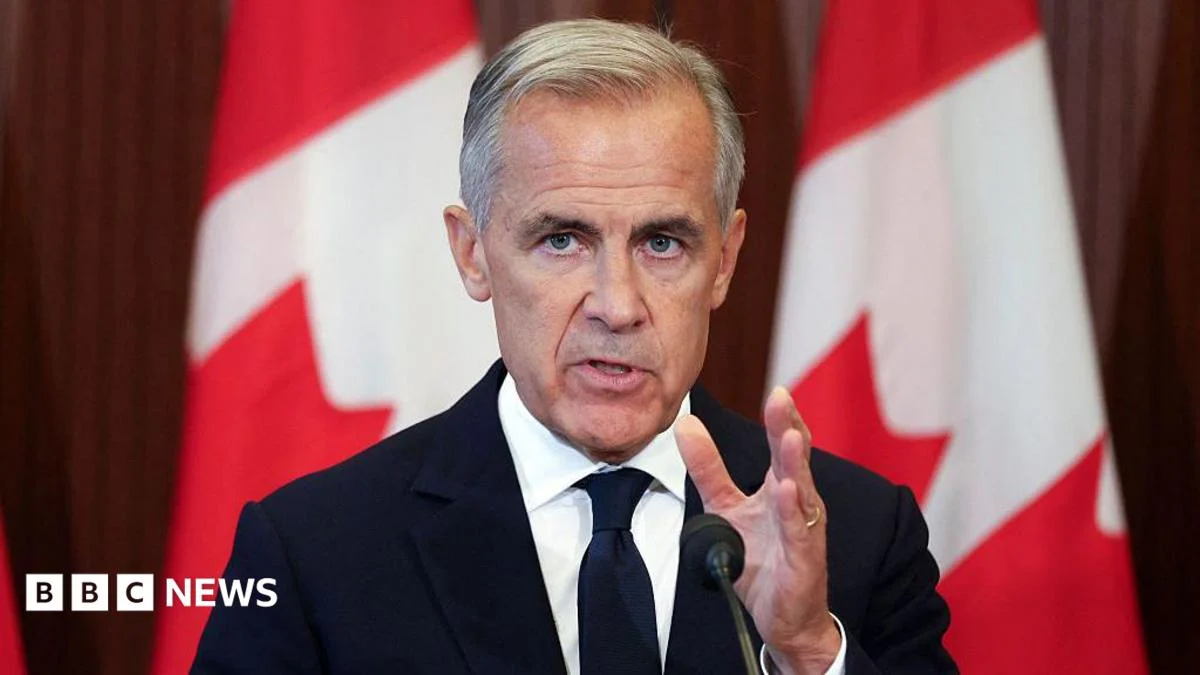
Canada’s Prime Minister Mark Carney has vehemently denounced the imposition of a fresh wave of U.S. tariffs on Canadian goods as a "miscalculation" deliberately designed to "hurt and divide us," emerging from collapsed trade talks late on Friday with a resolute stance against compromising national sovereignty. In a decisive address to the nation on Saturday morning, Carney declared that he had walked away from a potential deal because he was unwilling to "compromise Canada’s sovereignty," expressing a palpable sense of being "attacked" by the United States. "They asked too much and they offered too little," Carney stated, unequivocally outlining the reasons for the breakdown in negotiations.
Confirming the inevitable escalation of the trade dispute, Prime Minister Carney announced that Canada would match U.S. tariffs "dollar-for-dollar" effective September 8th. This retaliatory measure will encompass a broad range of Canadian exports, including significant levies on steel, dairy products, appliances, and electronics. The United States Trade Representative, Jamieson Greer, speaking on Fox News on Saturday, indicated that there were no immediate plans to resume talks, adding a somber note to the ongoing diplomatic impasse.
Earlier in the week, a palpable sense of optimism had pervaded the trade negotiations, with both nations expressing confidence in reaching an agreement. However, this hopeful trajectory was abruptly shattered as both sides began to accuse the other of introducing last-minute changes, effectively derailing any progress. The current fallout means that Canada is now grappling with new 50% U.S. tariffs on a diverse array of its goods. These new levies are in addition to existing U.S. tariffs already imposed on Canadian steel, aluminum, automobiles, and lumber, creating a significant economic pressure point for Canadian industries.
Prime Minister Carney articulated that Canada’s decision to retaliate was made "reluctantly," emphasizing that the counter-measures were a necessary step to safeguard the nation’s economic interests. He assured Canadians that further details regarding the specifics of these counter-tariffs would be disseminated in the coming days. The firm stance taken by Prime Minister Carney has garnered widespread support across the Canadian political spectrum. Leaders of other federal parties, including the Conservative opposition, have voiced their solidarity with the Prime Minister. Furthermore, several provincial leaders have also expressed their backing, underscoring a unified national front in the face of American trade aggression.
The imposition of tariffs has become a hallmark of President Donald Trump’s trade policy. Trump has consistently argued that these tariffs are instrumental in bolstering American manufacturing and stimulating domestic job creation. However, critics of this protectionist approach contend that tariffs have led to increased prices for American consumers and have demonstrably disrupted and damaged the global economic landscape, fostering an environment of uncertainty and instability.
Carney’s address on Saturday marked his first public statement following the dramatic announcement late Friday night that a trade deal would not materialize. He had previously accused the American delegation of introducing "last-minute changes" that were both "unfair" and "uneconomic." In response, U.S. negotiators leveled accusations against Canada, claiming that the Canadian side had introduced "new demands and walk backs" on previously agreed-upon terms. This mutual finger-pointing highlights the deep chasm that had opened between the two negotiating parties.
U.S. trade representative Jamieson Greer’s comments on Fox News on Saturday further solidified the perception that the diplomatic channels had been largely severed. He stated that the U.S. had been prepared to reduce some of its tariffs on Canada as part of the now-defunct trade agreement. However, Prime Minister Carney countered this assertion, characterizing the U.S. proposals as "unacceptable" and overly restrictive. He specifically pointed to clauses that would have curbed Canada’s autonomy in negotiating new trade deals with other countries, a significant infringement on national sovereignty. Carney also unequivocally rejected the American claim that Canada had engaged in last-minute requests, stating, "We clarified what was on offer and were continually disappointed by the answers."
The solidarity expressed by Canadian provincial leaders underscores the gravity of the situation. Doug Ford, the Premier of Ontario, Canada’s most populous province, publicly backed Carney, delivering a strong rebuke to President Trump by stating that he "can’t be trusted." Pierre Poilievre, the leader of the Conservative opposition, also signaled his support for the Prime Minister’s actions, describing the latest U.S. levies as "unjustified." Christine Fréchette, the Premier of Quebec, issued a stark warning, predicting job losses as a direct consequence of the new U.S. tariffs. She humanized the economic impact by stating, "Behind these numbers are real people," and pledged to implement measures to support affected sectors. Danielle Smith, the Premier of Alberta, a province heavily reliant on its oil industry and one that has actively sought to forge stronger ties with the Trump administration, issued a plea for both sides to resume negotiations, highlighting the potential for further economic damage if the stalemate persists.
The collapse of these trade talks marks a significant escalation in a protracted period of negotiations that have been characterized by an on-again, off-again dynamic. These discussions had intensified in recent weeks, spurred by a U.S.-imposed deadline to reach an agreement or face the imposition of further tariffs. The current trade dispute unfolds against the backdrop of a mandatory review of the existing North American free trade agreement, known as the United States-Mexico-Canada Agreement (USMCA). This pact, which replaced the 1994 North American Free Trade Agreement (NAFTA) during President Trump’s first term, underpins an astounding $1.6 trillion (approximately £1.2 trillion) in annual trilateral trade between Canada, the United States, and Mexico.
Earlier in the summer, Canada and Mexico had formally requested the renewal of the USMCA for an additional 16 years. However, the United States declined to renew the agreement in its current form, signaling a desire for renegotiation or alteration of its terms. When questioned about the potential impact of Friday’s trade talk collapse on the future of the North American free trade pact, Prime Minister Carney acknowledged that it was "certainly not good news," indicating that the current acrimony could have far-reaching implications for regional economic integration.
The economic implications of this escalating trade war are significant. For Canada, the new tariffs represent a direct assault on key export sectors, potentially leading to reduced competitiveness, job losses, and a slowdown in economic growth. Industries such as agriculture, manufacturing, and resource extraction, which rely heavily on access to the U.S. market, will bear the brunt of these new levies. The retaliatory measures announced by Prime Minister Carney, while necessary for protecting Canadian interests, will also create ripple effects within the Canadian economy and potentially impact consumers through higher prices.
From the U.S. perspective, President Trump’s objective of reshoring manufacturing and creating jobs is a central tenet of his economic agenda. However, economists and business leaders have raised concerns that tariffs can lead to increased input costs for American businesses, ultimately hindering their ability to compete globally and potentially leading to higher prices for American consumers. The interconnectedness of North American supply chains means that tariffs imposed by one country inevitably affect businesses and consumers in the other.
The breakdown in trust and communication between the two nations is a critical element of this dispute. The accusations of "last-minute changes" and "new demands" suggest a fundamental disagreement on core principles and expectations. The U.S. demand to curb Canada’s ability to strike independent trade deals is particularly contentious, as it touches upon Canada’s sovereign right to conduct its foreign policy and economic relations.
The broader geopolitical implications of this trade dispute are also noteworthy. The United States, under the Trump administration, has increasingly adopted a more protectionist and transactional approach to international trade. This has strained relationships with traditional allies, including Canada. The inability to reach an agreement on such a critical economic relationship could embolden other nations to adopt similar protectionist stances, further fragmenting the global trading system.
The role of the USMCA review process is also crucial. The agreement itself is designed to foster deeper economic integration and provide stability for businesses operating across North America. However, the current trade friction and the U.S. reluctance to renew the pact in its current form cast a shadow over its long-term viability. The potential for the USMCA to be renegotiated or even weakened could have profound implications for the economic landscape of the entire continent.
As Canada braces for the September 8th deadline, the focus will shift to the specific details of its retaliatory measures and the extent to which they will be tailored to mitigate economic damage while exerting pressure on the United States. The coming days will be critical in determining the trajectory of this trade conflict and its broader impact on the enduring economic partnership between two of the world’s closest trading nations. The rhetoric from both sides suggests a willingness to engage in a prolonged and potentially costly trade battle, with significant consequences for businesses, workers, and consumers on both sides of the border. The path forward is uncertain, but one thing is clear: the relationship between Canada and the United States has entered a new and challenging phase, marked by economic brinkmanship and a fundamental divergence in trade philosophy.
