
 By admin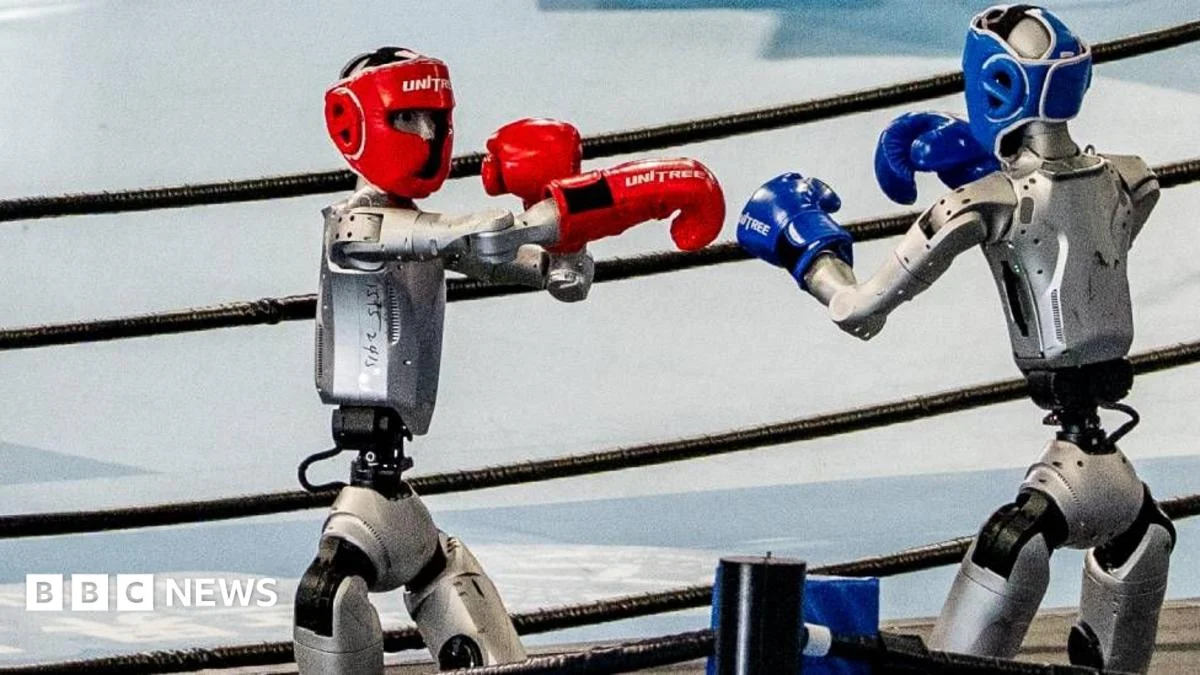
The second edition of the World Humanoid Robot Games commenced with a spectacular display of artificial intelligence and mechanical prowess on Saturday in Beijing, China, signaling a significant leap forward in the capabilities of anthropomorphic machines. This five-day international extravaganza, held against the backdrop of China’s ambitious drive to become a global leader in artificial intelligence and robotics, has already captivated audiences with groundbreaking achievements, including a humanoid robot demonstrably outpacing the legendary Usain Bolt’s 100-meter sprint world record. The event, a testament to the rapid advancements in robotics engineering, serves as a critical platform for showcasing the latest innovations, fostering international collaboration, and setting new benchmarks for humanoid robot performance across a diverse range of athletic and functional disciplines.
Beyond the astonishing speed, the Games are a vibrant exhibition of the nuanced and surprisingly human-like abilities that modern humanoid robots are now capable of. Spectators at the Beijing venue were treated to a moment of unexpected sporting artistry when a robot, seemingly channeling the flamboyant spirit of football icon Cristiano Ronaldo, flawlessly executed his signature "Siuuu" celebration on the football pitch. This demonstration, while perhaps seemingly lighthearted, underscores the sophisticated control systems and complex motion planning that enable robots to replicate intricate human movements and gestures with remarkable fidelity. The integration of such expressive actions into robotic capabilities opens up new avenues for human-robot interaction, entertainment, and even therapeutic applications, suggesting a future where robots can engage with us on a more intuitive and emotionally resonant level.
The opening ceremony itself was a breathtaking spectacle of synchronized precision, featuring droids participating in meticulously choreographed marching routines. This display highlighted the advanced coordination and navigational algorithms that allow multiple robots to operate in unison, a crucial capability for applications ranging from automated manufacturing and logistics to disaster response and space exploration. The seamless execution of these complex formations underscored the progress made in multi-robot systems, where individual units must communicate, synchronize, and adapt to their environment and to each other in real-time. This level of coordinated action is a significant hurdle in robotics, and its successful demonstration at the Games points towards a future where swarms of robots can perform complex tasks collectively and efficiently.
The World Humanoid Robot Games are not merely a showcase of individual feats but a comprehensive competition designed to push the boundaries of humanoid robotics across a broad spectrum of human-like activities. The event features robots vying for supremacy in a variety of demanding disciplines, including the brutal physicality of boxing, the explosive power required for the high jump, and the precision and agility demanded by table tennis. Each of these events presents unique challenges for robotic design and control. Boxing, for instance, requires robots to possess not only strength and speed but also the ability to anticipate an opponent’s moves, react defensively, and execute offensive maneuvers with controlled aggression. The high jump tests the robots’ capacity for explosive power generation, balance, and precise trajectory control. Table tennis, on the other hand, demands incredibly fast reaction times, sophisticated visual tracking, and delicate manipulation for accurate ball striking.
The inclusion of these athletic competitions serves a dual purpose: it provides a tangible and relatable metric for evaluating robotic capabilities, and it drives innovation by posing complex engineering problems that require novel solutions. The development of robots capable of excelling in these human-centric activities is directly applicable to a wide range of real-world scenarios. For example, robots that can perform complex athletic movements could be adapted for advanced rehabilitation services, assisting individuals recovering from injuries or strokes. Similarly, the agility and dexterity demonstrated in sports like table tennis could be leveraged for intricate surgical procedures or delicate assembly tasks in manufacturing.
The unprecedented speed achieved by one of the robots in the 100-meter sprint is particularly noteworthy. While the exact specifications of the record-breaking robot are still emerging, the implications are profound. Usain Bolt’s 100m world record of 9.58 seconds, set in 2009, represents the pinnacle of human athletic achievement in this discipline. For a humanoid robot to not only match but potentially surpass this speed signifies a monumental breakthrough in actuator technology, power systems, and dynamic balance control. This achievement suggests that robots are rapidly closing the gap in areas previously thought to be exclusively within the domain of human physiology and biomechanics. The development of such high-speed locomotion in robots could revolutionize fields such as search and rescue operations in hazardous environments, where rapid deployment and traversal are critical. It also opens up possibilities for autonomous delivery systems capable of covering significant distances quickly and efficiently.
The "Siuuu" celebration, while seemingly trivial, represents a sophisticated achievement in replicating human social and emotional expression. The ability of a robot to understand and execute a culturally recognized gesture like Ronaldo’s iconic celebration indicates a growing capacity for contextual awareness and the integration of learned behaviors. This moves beyond mere task execution and enters the realm of social robotics, where robots are designed to interact with humans in a more natural and engaging manner. Such advancements are crucial for the acceptance and integration of robots into everyday life, from companion robots for the elderly to educational robots for children. The development of robots that can understand and respond to human social cues, including expressions of joy or accomplishment, is a key step towards building trust and fostering positive human-robot relationships.
The synchronized marching at the opening ceremony is a powerful illustration of progress in swarm robotics and artificial intelligence coordination. This type of coordinated movement is essential for large-scale applications such as automated warehousing, where fleets of robots must navigate complex environments, pick and transport goods, and avoid collisions. In disaster relief scenarios, synchronized robot teams could efficiently clear debris, locate survivors, or deliver aid to inaccessible areas. The underlying technologies involved include advanced sensor fusion, real-time communication protocols, and sophisticated pathfinding algorithms that enable multiple agents to operate as a cohesive unit. The Games provide a unique environment to test and refine these complex multi-robot systems under competitive pressure.
The broader context of the World Humanoid Robot Games is deeply intertwined with the global race for AI supremacy. China, in particular, has made significant investments in artificial intelligence and robotics research and development, with ambitious national strategies aiming to position the country at the forefront of these transformative technologies. The Games serve as a high-profile platform to showcase this progress, attract international talent and investment, and foster domestic innovation. By hosting such a prestigious event, China aims to solidify its position as a leader in robotics, influencing global standards and driving the future direction of the industry. The success of Chinese-developed robots at the Games will undoubtedly bolster the nation’s reputation and further accelerate its research efforts.
The competition categories themselves are meticulously chosen to represent a wide array of human capabilities that are challenging to replicate in machines. Boxing, for instance, requires not only powerful actuators but also sophisticated vision systems for tracking opponents, advanced prediction algorithms for anticipating attacks, and robust control systems for maintaining balance during dynamic exchanges. The high jump tests the robots’ ability to generate explosive vertical force, precisely control their center of gravity, and execute a complex somersaulting motion over the bar. Table tennis, a game of extreme speed and precision, demands rapid visual processing, sub-millisecond reaction times, and fine motor control for accurately striking a small, fast-moving ball.
The data generated from these competitions is invaluable for researchers and engineers worldwide. Performance metrics, failure analyses, and innovative design solutions shared at the Games contribute to a collective acceleration of knowledge and technological advancement. Each robot’s performance provides empirical data that can be used to refine simulation models, improve control algorithms, and inspire new hardware designs. This collaborative environment, fostered by the competitive nature of the Games, is crucial for overcoming the complex challenges that remain in the field of humanoid robotics.
Looking ahead, the World Humanoid Robot Games are poised to become an even more significant event on the global stage. As the technology continues to evolve at an exponential pace, future iterations of the Games will likely feature robots with even more advanced capabilities, tackling even more complex tasks. We can anticipate robots that can engage in more nuanced conversations, demonstrate greater emotional intelligence, and perform a wider range of delicate and intricate manipulations. The breakthroughs witnessed in Beijing this week are not just fleeting moments of technological marvel; they are stepping stones towards a future where humanoid robots are seamlessly integrated into our society, assisting us in countless ways, and pushing the boundaries of what is possible. The ongoing competition in Beijing serves as a compelling preview of this transformative future, demonstrating that the era of advanced humanoid robotics is not a distant dream, but a rapidly unfolding reality.
