
 By admin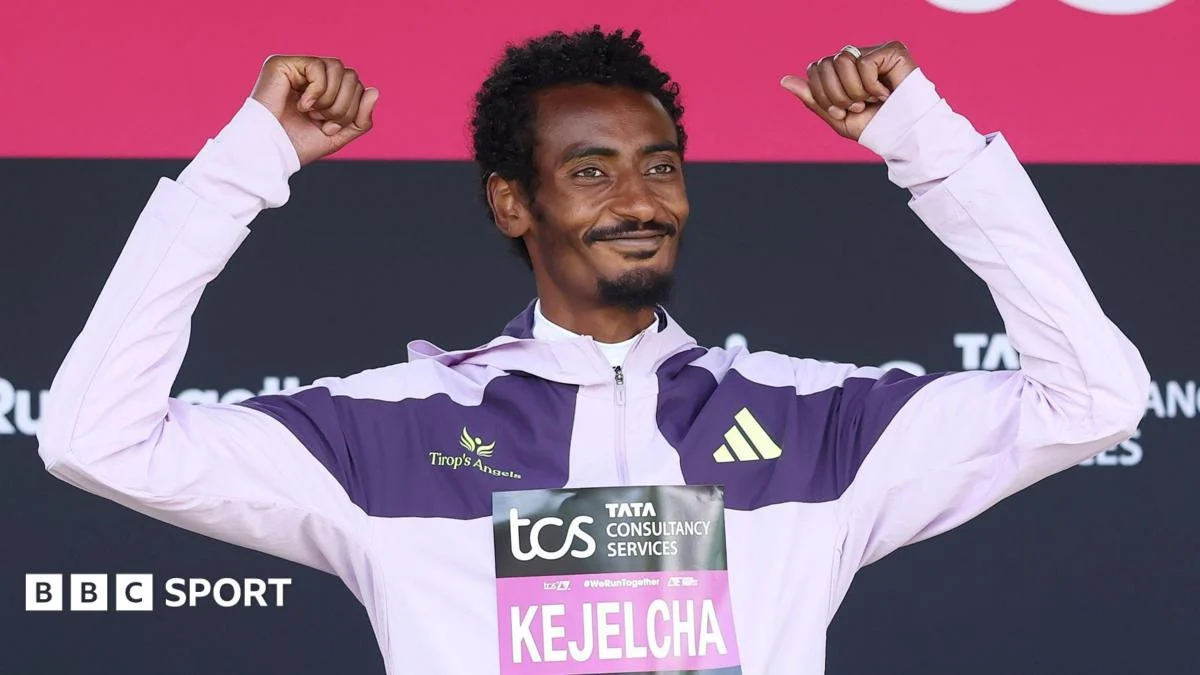
In a breathtaking display of endurance and speed, Ethiopian phenomenon Yomif Kejelcha has once again etched his name in the annals of athletic history, shattering the men’s half marathon world record with an astonishing time of 56 minutes and 51 seconds. The electrifying performance unfolded on Sunday at a World Athletics road race held in the vibrant city of Buenos Aires, Argentina, a venue that will forever be associated with this monumental achievement. This victory marks a triumphant return to the pinnacle of the half marathon discipline for the 29-year-old, who has consistently demonstrated his exceptional talent on the global stage.
Just months prior, in October 2024, Kejelcha had set a new benchmark with a remarkable 57 minutes and 30 seconds in Valencia. However, the relentless pursuit of excellence in elite athletics saw this record swiftly challenged and ultimately surpassed. Uganda’s rising star, Jacob Kiplimo, emerged as the new record holder in March, clocking an impressive 57 minutes and 20 seconds in Lisbon. This remarkable feat by Kiplimo, himself a formidable athlete, had temporarily dethroned Kejelcha and set the stage for a thrilling rematch. Sunday’s race in Buenos Aires, however, was Kejelcha’s moment of redemption and a resounding statement of his unparalleled ability. By eclipsing Kiplimo’s mark by a staggering 29 seconds, Kejelcha has not only reclaimed the world record but has also significantly raised the bar for future aspirants. The new record, pending official ratification by World Athletics, signifies a new era in men’s half marathon running.
Kejelcha’s prowess extends far beyond the half marathon. He is a celebrated figure in middle and long-distance running, boasting an impressive resume that includes a silver medal in the 10,000 meters at the World Athletics Championships. This track pedigree is a testament to his versatility and his ability to excel across different distances and formats. Furthermore, his dominance is not confined to the track; Kejelcha also holds the world record for the men’s 10,000 meters on the road, showcasing his consistent ability to perform at the highest level regardless of the surface. This dual mastery of track and road records underscores his exceptional conditioning, strategic racing acumen, and the sheer depth of his talent.
The recent history of record-breaking in distance running has been particularly captivating, and Kejelcha has been at the forefront of many of these groundbreaking moments. Earlier this year, he was a central figure in another historic event: the sub-two-hour marathon. While not an official world record due to specific pacing and course conditions, the London Marathon saw Kejelcha finish second behind Kenya’s Sebastian Sawe in an extraordinary 1 hour, 59 minutes, and 30 seconds. This performance, where he was beaten by a mere 11 seconds, highlighted his incredible speed and endurance, pushing the boundaries of human capability in marathon running. The fact that he could transition from such a demanding marathon effort to then dominate the half marathon less than a year later speaks volumes about his remarkable recovery, training regimen, and innate athletic gifts.
The strategic implications of Kejelcha’s latest record are significant. The half marathon, often seen as a bridge between the 10,000 meters and the full marathon, demands a unique blend of speed, stamina, and tactical intelligence. Kejelcha’s ability to dominate this event suggests that he is perfectly attuned to these requirements. His training must be meticulously planned to develop both the explosive speed needed for shorter bursts and the sustained aerobic capacity required for longer distances. Coaches and sports scientists will undoubtedly be analyzing his training methodologies, biomechanics, and nutritional strategies in an attempt to unravel the secrets behind his consistent success.
The competitive landscape of elite distance running is incredibly fierce, with athletes from Ethiopia, Kenya, Uganda, and other East African nations consistently vying for supremacy. Kejelcha’s record-breaking exploits are not just personal triumphs but also represent the continued strength and dominance of Ethiopian athletics. The nation has a rich legacy of producing world-class runners, and Kejelcha is a shining example of this enduring tradition. His success inspires a new generation of young athletes in Ethiopia, fostering a culture of dedication, hard work, and aspiration. The intense rivalry between athletes like Kejelcha and Kiplimo, while pushing each other to new heights, also provides compelling narratives for fans and media, making the sport more engaging and exciting.
The Buenos Aires half marathon itself, as a World Athletics road race, is an important event on the international calendar. Hosting a world record attempt adds considerable prestige and draws global attention. The conditions in Buenos Aires on Sunday, presumably favorable for fast running, played a crucial role in enabling Kejelcha to achieve such a remarkable time. Factors such as temperature, humidity, wind speed, and course elevation are all meticulously recorded and analyzed when world records are set. A fast course, combined with a highly motivated and well-prepared athlete, creates the perfect storm for record-breaking performances.
Looking ahead, Kejelcha’s record will undoubtedly serve as a significant target for other elite runners. The challenge now falls to Kiplimo and other top contenders to attempt to surpass this new benchmark. The continuous cycle of record-breaking in athletics is a testament to the relentless pursuit of improvement by athletes and their support teams. It also highlights the evolving understanding of human physiology and the advancements in sports science that allow athletes to train smarter and perform at previously unimaginable levels.
The significance of the sub-two-hour marathon, even in record-eligible conditions, cannot be overstated. While not an official world record, it represents a symbolic barrier that has been broken, demonstrating that the marathon, once considered an insurmountable challenge for humans to complete in under two hours, is now within reach under controlled circumstances. Kejelcha’s participation in such an event further solidifies his status as a pioneering athlete, willing to push the boundaries of what is considered possible. His ability to compete at the very highest level in both the marathon and the half marathon, setting world records in the latter, showcases an extraordinary range of talent and conditioning.
The recent surge in record-breaking performances across various distance running disciplines underscores a golden era in the sport. Athletes are not only running faster but are also more strategically astute, benefiting from advanced training techniques, nutritional science, and improved recovery methods. The role of technology, from advanced footwear to sophisticated training equipment, also contributes to these remarkable achievements. However, at the core of every record lies the unwavering dedication, discipline, and sheer grit of the athlete themselves. Yomif Kejelcha embodies these qualities in abundance.
His journey from a promising young runner to a multiple world record holder is an inspiring story of perseverance and talent. The athletic community will eagerly await the official ratification of his half marathon world record, a confirmation of a performance that has already captivated the sporting world. As the sport continues to evolve, Yomif Kejelcha has once again demonstrated that the pursuit of excellence knows no bounds, setting a new standard for half marathon running and leaving an indelible mark on the history of athletics. The record of 56 minutes and 51 seconds is not just a number; it is a testament to human potential, relentless dedication, and the thrill of pushing the limits of what is possible on the track and the road. The narrative of elite distance running is continually being rewritten, and Yomif Kejelcha is a central author of its most thrilling chapters.
