
 By Lina Irawan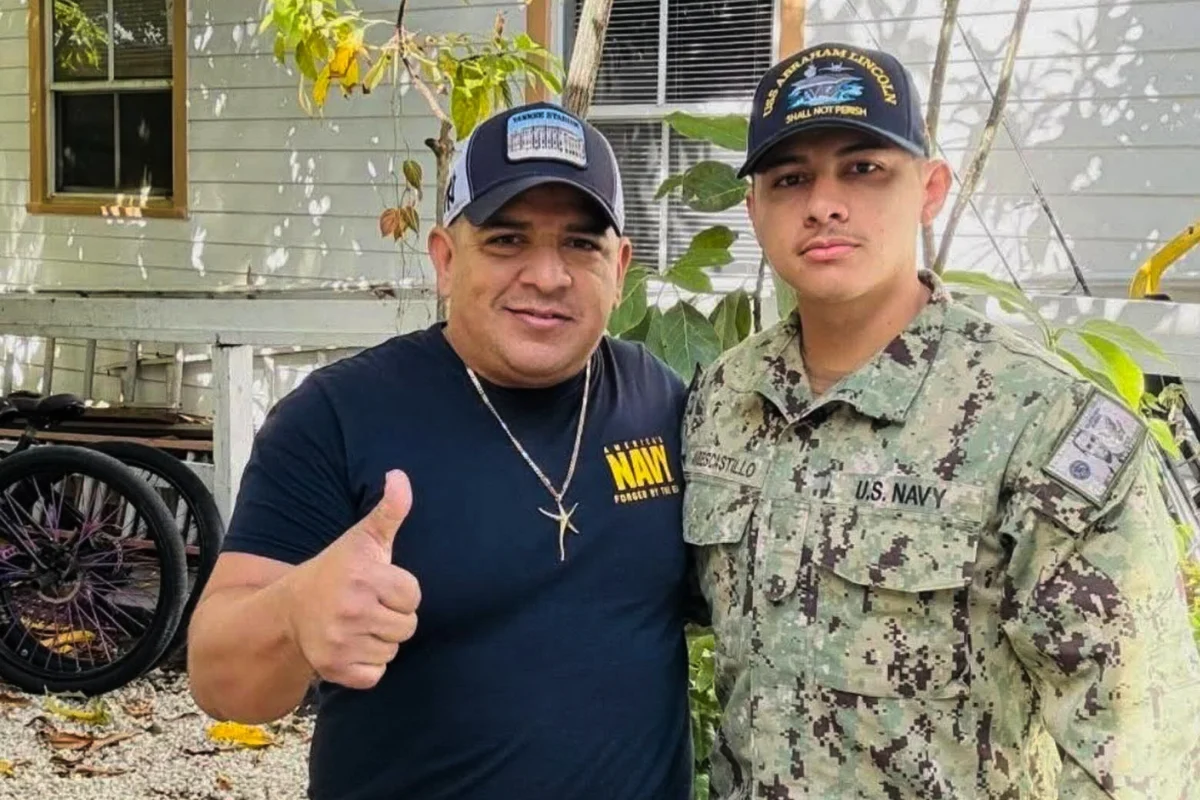
Luis Manuel Aviles, a 48-year-old handyman originally from Nicaragua, was detained by immigration authorities in Key West, Florida, as he was leaving his home to take his car for repairs. His wife, Argelia Aviles, 47, recounted the sudden and distressing incident, emphasizing her husband’s dedication to his family and his work. Luis Aviles, who has resided in the United States for 19 years, reportedly possessed a permit to work, a detail that adds a layer of complexity to his immigration status. While a work permit, or Employment Authorization Document (EAD), allows an individual to legally work in the U.S., it does not automatically confer permanent legal residency or protection from deportation. Such permits are often granted to individuals with pending asylum claims, Temporary Protected Status (TPS), or other provisional statuses that can be revoked or expire, leaving them vulnerable to enforcement actions. For someone like Aviles, who has built a life and a family over nearly two decades, the sudden disruption of arrest carries a particularly heavy weight, not least because of his son’s active service.
The timing of Aviles’s arrest is set against a backdrop of the Trump administration’s aggressive overhaul of immigration policy, which saw a significant hardening of enforcement and a deliberate rollback of protections previously extended to military families. The administration had embarked on what critics termed a "mass deportation agenda," aiming to increase deportations and discourage unauthorized immigration. This agenda did not spare families of active-duty service members or veterans, leading to a surge in detentions and deportations that sent shockwaves through the military community. The Associated Press, in its groundbreaking reporting, revealed that dozens of parents and spouses of active-duty U.S. troops had been detained, with at least six deported and one self-deported, numbers the government itself did not systematically track. These cases highlighted a perceived shift from previous administrations that often exercised greater discretion in cases involving military families, acknowledging the unique sacrifices made by service members and the potential negative impact on military morale and readiness.
One of the most highly publicized immigration benefits for military families is "military parole-in-place" (PIP). This humanitarian program allows eligible spouses, children, and parents of active-duty service members, reservists, and veterans to obtain legal immigration status from within the United States without having to leave the country. The intention behind PIP is to prevent the separation of military families and alleviate the immense stress on service members who are already facing the challenges of deployment or combat. However, the program has strict eligibility criteria. Individuals who overstayed visas might qualify, but those with prior deportation orders, certain criminal records, or who had previously applied for legal status at a port of entry and were denied, might not. The process also relies on the discretion of immigration authorities, and under the Trump administration, that discretion was often applied with less leniency, leading to increased vulnerability for many. The specific details of Luis Aviles’s permit and his history in the U.S. would be crucial in determining if he was ever eligible for such protections, or if the policy shifts simply removed any remaining pathways for him.
The Department of Homeland Security (DHS), through its agency Immigration and Customs Enforcement (ICE) and Border Patrol, confirmed Luis Aviles’s arrest, stating he would remain in custody as the government pursued his deportation. In a statement, the department underscored its unwavering commitment to enforcing immigration laws: "Having a family member in the military is not a free pass to violate our nation’s laws," the department declared, adding that the Trump administration "does not pick and choose which laws to enforce." This statement, while legally defensible, ignited a fierce public debate about the moral and ethical implications of such a rigid stance. Critics argued that while no one is above the law, the government typically exercises prosecutorial discretion in various contexts, and military families represent a uniquely deserving category for such consideration. The decision to enforce immigration laws without apparent regard for the profound personal and national sacrifices made by service members like Joshua Aviles was seen by many as a betrayal of those who serve.
Meanwhile, Joshua Aviles, Luis’s son, was enduring his own profound challenges aboard the USS Abraham Lincoln. The aircraft carrier had embarked on an unprecedented deployment, remaining at sea for over 280 consecutive days, setting a new U.S. military record for uninterrupted time away from port. Stationed in the volatile Middle East, the deployment was a critical component of U.S. strategic presence amidst heightened tensions with Iran. However, such extended periods at sea are known to take a severe toll on service members. Reports from the USS Lincoln itself, and broader studies on long deployments, highlighted widespread concerns about supply shortages, including food and essential goods, and a significant deterioration in mental health among the crew. Sailors were working grueling 12-hour shifts for months on end without a break from the confines of the massive warship, a relentless grind that can lead to exhaustion, stress, and feelings of isolation. While Defense Secretary Pete Hegseth had previously dismissed these concerns as "completely misrepresented," the anecdotal evidence and expert opinions suggested otherwise. The Pentagon referred all questions regarding the deployment to the Navy, which did not immediately respond to requests for comment.
Joshua Aviles himself voiced his anguish in a poignant Facebook post, written from the deck of the USS Lincoln. He described receiving the devastating news of his father’s detention while still "fighting for a country that has given me everything." His words encapsulated the profound irony and heartbreak of his situation: "This is heartbreaking for me. I don’t know how I can mentally continue working 12+ hour days knowing that my dad is somewhere, possibly treated like a criminal." This public cry for help resonated deeply, highlighting the immense psychological burden placed on service members when their families face such crises at home. The military relies heavily on the morale and mental resilience of its personnel, and events like these can have far-reaching consequences on readiness, retention, and recruitment.
Joshua’s sister, Katherine Delgado, 28, further elaborated on the family’s plight and her brother’s motivations. She revealed that Joshua had joined the military partly in the hope that his service would improve his father’s chances of obtaining citizenship, believing it would finally allow Luis to "no longer be living in fear of being arrested." This sentiment reflects a common perception among immigrant communities that military service offers a pathway to legal status or at least significant protection for family members, a perception that the Trump administration’s policies actively challenged. Katherine spoke of the devastating impact of her brother’s deployment, calling him her "best friend" and "ride-or-die." The prolonged absence, coupled with the distressing news of conditions aboard the ship—including Joshua not getting enough food—led her to spend hundreds of dollars sending care packages, some of which never even reached him.
The family’s anticipation for Joshua’s return was palpable, made even more poignant by the news that the USS Abraham Lincoln would soon be brought out of service in the Middle East. However, this long-awaited reunion would now be overshadowed by a gaping absence. "He’s gonna come home without his father," Katherine lamented, underscoring the cruel twist of fate that awaited her brother. Luis Aviles himself had been profoundly affected by his son’s extended deployment, his wife Argelia recalled. He had expressed his excitement for the deployment’s end, eager to finally hug his son after nine months apart. When the anticipated six-month return date passed without Joshua’s homecoming, Luis was visibly distraught, his hopes dashed by the relentless demands of military service. His longing for his son, a natural human emotion, now intersected with his own uncertain future, caught in the gears of a rigorous immigration system.
This case, while specific to the Aviles family, mirrors a broader national tension between the enforcement of immigration laws and the recognition of contributions made by immigrants and their families, particularly those serving in the U.S. military. Immigration advocates and military support organizations argue that such policies undermine military readiness by creating an environment of fear and instability for service members whose families are targeted. They contend that upholding the dignity and security of military families is paramount to maintaining a strong and dedicated fighting force. The story of Luis and Joshua Aviles serves as a powerful reminder of the complex human narratives often hidden within policy debates, where personal sacrifices and national service collide with unforgiving legal frameworks, leaving families torn apart and challenging the very ideals they fight to uphold.
