
 By admin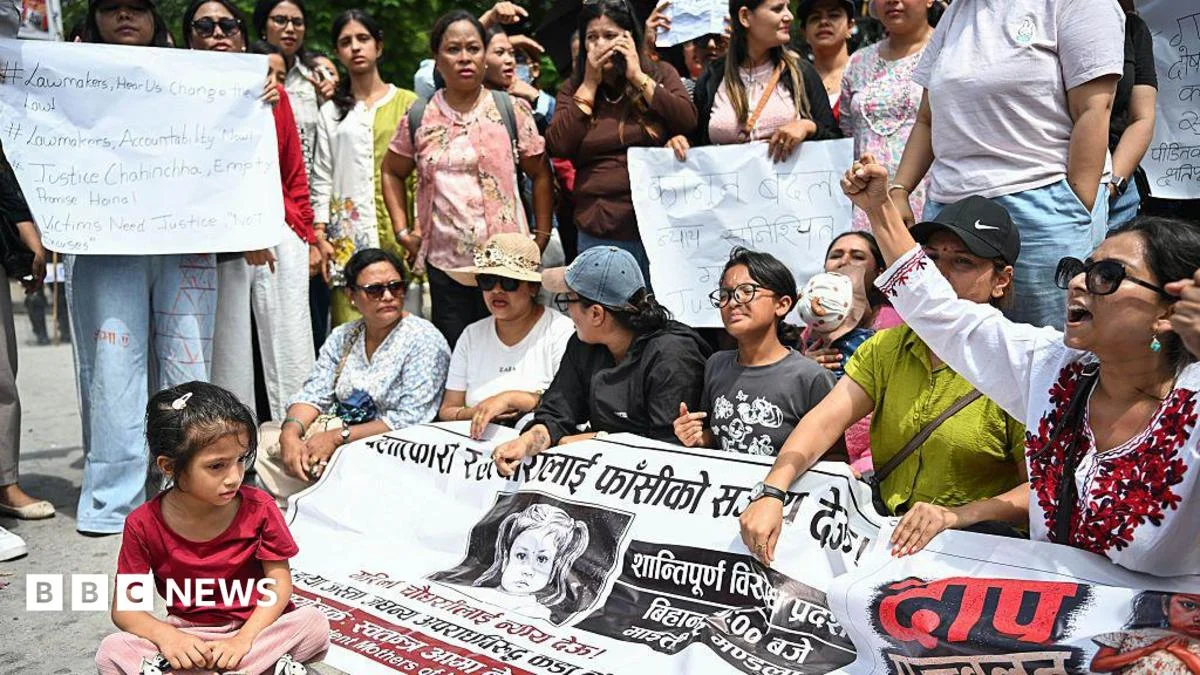
A wave of revulsion and grief has swept across Nepal following the horrific alleged rape and murder of a three-year-old girl, propelling activists and politicians to demand a drastic overhaul of the nation’s legal framework. The barbaric act, which has plunged the Madhesh province into mourning and ignited widespread public outcry, has underscored deeply entrenched issues surrounding justice, child protection, and the handling of serious crimes within the country. Protests have continued unabated since the child’s lifeless body was discovered last week, three agonizing days after she vanished, leaving a community shattered and a nation demanding accountability.
In the wake of the tragedy, nine individuals have been apprehended in connection with the crime, a spokesperson for the local police confirmed to the BBC. However, the arrests have done little to quell the rising tide of anger, which has been amplified by accusations of police negligence during the initial stages of the investigation. The leak of social media footage depicting a teenage suspect providing a statement has further fueled public distrust, raising serious questions about the integrity and professionalism of law enforcement agencies. This breach of protocol not only jeopardized the investigation but also served as a cruel reminder of the vulnerability of victims and suspects alike within the justice system.
The prolonged demonstrations, particularly in the city of Simara, culminated in a crucial meeting between the victim’s bereaved family and government ministers. Over the weekend, this high-level engagement resulted in a written agreement, a small but significant step towards addressing the deep-seated grievances. The government has committed to a comprehensive review of existing laws pertaining to grave offenses, signaling a potential shift in its approach to tackling violent crime. Furthermore, a poignant promise has been made to establish a memorial in honor of the young victim, a gesture intended to acknowledge the profound loss and ensure her memory is preserved.
Beyond the immediate demands for justice in this specific case, the incident has ignited a broader and more complex debate concerning Nepal’s approach to juvenile offenders. A growing chorus of campaigners is advocating for significantly harsher punishments for minors convicted of heinous crimes such as rape and murder. This push for stricter penalties reflects a societal yearning for greater deterrence and a sense of retribution against those who commit acts of extreme violence, regardless of age. The current legal framework, which often seeks to balance rehabilitation with punishment for young offenders, is now under intense scrutiny, with many arguing that it is too lenient in the face of such depravity.
Gauri Pradhan, a respected and prominent human rights activist, articulated the profound sorrow and anger felt by many, describing the attack as a "very painful incident." He unequivocally stated that "the government should punish anyone involved in such atrocious act. There should be some serious efforts for wider reforms." His call for accountability and systemic change resonates with a widespread sentiment that the current legal and societal structures are failing to adequately protect the most vulnerable and to deter the perpetrators of such unimaginable cruelty.
However, Pradhan also sounded a note of caution, urging against the knee-jerk reaction of advocating for the reintroduction of the death penalty. This stance highlights the ongoing ethical and practical debates surrounding capital punishment, even in the face of the most heinous crimes. While the emotional impulse for the ultimate punishment is understandable, human rights advocates often point to the irreversible nature of such sentences, the potential for miscarriages of justice, and the moral implications of state-sanctioned killing. The debate in Nepal is likely to mirror these broader international discussions, seeking a balance between retribution and the principles of justice and human rights.
The public’s anger was further inflamed by the aforementioned social media leak of a video featuring a teenage suspect. The footage, purportedly showing the individual giving a statement while in police custody, sent shockwaves through the nation and ignited a firestorm of criticism. Questions swirled about the security protocols within police stations and the potential for evidence tampering or the violation of an individual’s rights, even if they are suspected of a terrible crime. The ease with which such sensitive information could be disseminated online exposed a critical vulnerability in the handling of evidence and the protection of individuals under investigation.
In response to the outcry, Dharmendra Kumar Mishra, the chief district officer of Bara district, assured the BBC that a thorough investigation into the leak was underway. "We have so far found one police personnel directly involved in the [leak] and have initiated action against him," Mishra stated. He further emphasized the zero-tolerance policy towards such breaches, vowing that "If more officers are found, they will also be punished. We have zero tolerance against such practice." This swift acknowledgment and action, at least on a preliminary level, aim to restore some semblance of public trust in the investigative process, though the lingering doubts about systemic issues remain.
The disturbing statistics provided by the Nepalese Police paint a grim picture of the pervasive nature of sexual violence in the country. Between July 2017 and July 2025, an alarming figure of over 25,500 accusations of rape and sexual abuse were filed. This data, while representing reported incidents, suggests a deeply troubling trend of sexual violence that affects a significant portion of the population.
Of even greater concern is the demographic breakdown of these victims. The police data reveals that more than 3,200 female victims were under the age of 10. This stark statistic underscores the vulnerability of young children to sexual predators and highlights a critical failure in protective mechanisms and societal awareness. The innocence of these young lives is being brutally shattered, and the sheer number of child victims points to an urgent and systemic crisis that demands immediate and comprehensive intervention.
The ramifications of this tragic event extend far beyond the immediate legal proceedings. It has exposed the fragilities in Nepal’s child protection services, the efficacy of its law enforcement agencies in handling sensitive cases, and the adequacy of its penal code in deterring and punishing perpetrators of violent crimes. The debate over juvenile justice, in particular, is likely to become a central focus, with stakeholders grappling with the difficult question of how to balance the need for accountability with the principles of rehabilitation and the specific vulnerabilities of young offenders.
The current legal framework in Nepal, like in many countries, often differentiates between adult and juvenile offenders, with provisions aimed at ensuring that minors are treated differently due to their developmental stage and capacity for understanding. However, the severity of crimes like rape and murder, especially when committed against children, challenges these distinctions and prompts a re-evaluation of whether the existing leniency is appropriate or even justifiable. Advocates for harsher penalties argue that certain acts are so heinous that they transcend age, and that society has a right to demand severe consequences to protect its citizens.
Conversely, child psychologists and legal experts often caution against a purely punitive approach to juvenile offenders. They argue that many young perpetrators may be acting out of a lack of understanding, exposure to abuse themselves, or severe psychological distress. A focus solely on punishment, they contend, can be counterproductive, failing to address the underlying causes of such behavior and potentially leading to recidivism. The challenge for Nepal will be to find a path that balances the legitimate demand for justice and public safety with the complexities of juvenile psychology and the long-term goal of preventing future offenses.
The leaked video also brings to the forefront the critical importance of robust data protection and evidence handling protocols within law enforcement. In an era where digital footprints are ubiquitous, the ability of law enforcement to safeguard sensitive information is paramount. The breach of trust that occurred in this case not only undermines public confidence but also raises concerns about the integrity of future investigations. The government’s swift commitment to punishing those responsible for the leak, while a positive step, must be accompanied by a comprehensive review and enhancement of security measures to prevent such incidents from recurring.
The calls for wider reforms are not merely reactive; they are rooted in a growing awareness of the persistent challenges Nepal faces in combating gender-based violence and ensuring justice for all its citizens. The statistics on reported rapes and sexual abuse, particularly those involving young victims, are a stark indicator of a societal problem that requires more than just legal adjustments. It necessitates a multi-faceted approach that includes public awareness campaigns, improved educational curricula, greater support for victims, and a fundamental shift in societal attitudes towards gender equality and the protection of children.
The incident in Madhesh province has served as a tragic catalyst, forcing Nepal to confront these uncomfortable truths. The coming months will be crucial as the government grapples with the complex task of enacting meaningful reforms. The pressure from civil society, activists, and politicians will undoubtedly remain intense, pushing for concrete actions rather than mere promises. The legacy of this young victim, and the hope for a safer future for all children in Nepal, hinges on the government’s ability to translate outrage into tangible and lasting change. The nation watches, waiting to see if this tragedy will indeed be a turning point towards a more just and secure society.
