
 By Lina Irawan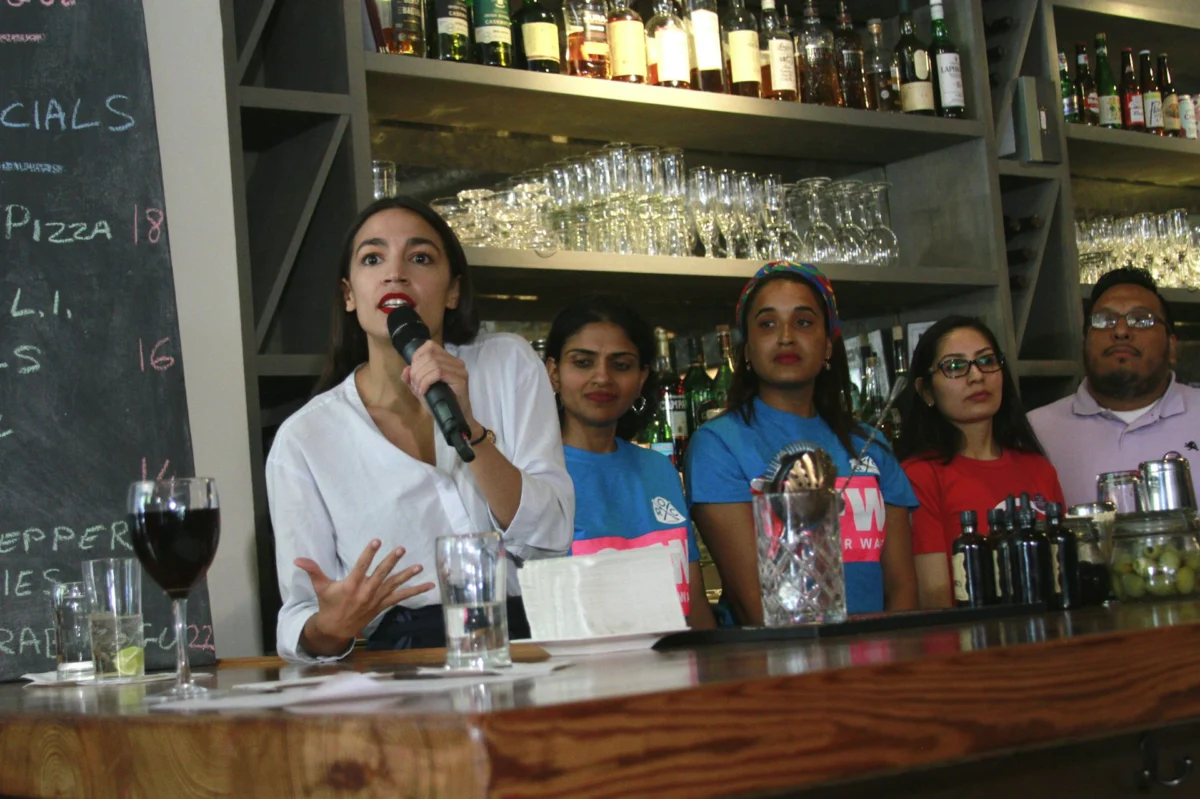
Across the globe, the corridors of power, from local councils to national parliaments, are conspicuously devoid of individuals hailing from working-class backgrounds. This stark underrepresentation is not merely a demographic anomaly; it is a fundamental challenge to the very essence of representative democracy, with profound implications for policy-making and societal equity. Groundbreaking research by political scientists Noam Lupu of Vanderbilt University and Nicholas Carnes of Duke University, extensively detailed in their book "Keeping Workers Off the Ballot," illuminates the causes and critical consequences of this systemic imbalance, revealing how the absence of working-class legislators directly contributes to policies that are less supportive of ordinary citizens.
The researchers define "working-class jobs" with precision, focusing on occupations characterized by manual labor, service industry roles, and clerical positions. This includes jobs such as construction workers, restaurant servers, receptionists, truck drivers, and metalworkers. Crucially, their definition excludes small-business owners or those requiring extensive formal education, concentrating instead on roles that typically offer employees less stability, security, and upward mobility. This careful delineation ensures that their analysis targets the segment of the population whose daily struggles and economic realities are often overlooked in policy discourse.
The impact of this skewed representation is not abstract. Studies conducted in the United States and other established democracies consistently demonstrate a tangible link between the socioeconomic composition of legislative bodies and the nature of public policy. When working-class individuals are scarcely present, safety net programs designed to protect vulnerable populations tend to be "stingier," offering less comprehensive support. Business regulations often become "flimsier," potentially leading to lax oversight and diminished accountability for corporations. Furthermore, protections for workers—ranging from minimum wage standards and workplace safety to unionization rights—are frequently "weaker" than they would be if a more diverse range of socioeconomic experiences informed legislative decisions. While working-class communities can sometimes influence policy through avenues like union advocacy or grassroots movements, the direct absence of their lived experiences within elected office means their interests often "fall by the wayside."
The statistics paint a grim picture of democratic inequality. Lupu and Carnes’ research reveals that approximately half of the American labor force holds jobs defined as working-class. Yet, individuals whose last occupation before entering politics was a working-class job constitute a mere 1% of the average state legislature in the U.S., irrespective of their political affiliation. This same glaring disparity holds true for the U.S. Congress. This is not an isolated American phenomenon. Beginning in 2016, the research team expanded its scope, collecting data from 97 of 103 democracies worldwide with populations exceeding 300,000 citizens. Their findings were strikingly consistent: the average global democracy draws just 2% of its national legislature from individuals whose last jobs were working-class. This pervasive pattern underscores a fundamental flaw in how modern democracies select their leaders.

Despite this overwhelming trend, there are a few notable exceptions that often garner significant media attention, highlighting the rarity of their ascent. U.S. Representative Alexandria Ocasio-Cortez, a Democrat from New York, famously worked as a bartender before her historic election, her background often cited as a testament to her connection with ordinary Americans. In Maine, Democratic Senate candidate Troy Jackson transitioned from a career as a logger into state politics, representing a blue-collar voice from a traditional industry. Indiana state Senator Jim Tomes, a Republican, leveraged his experiences as a truck driver and union steward into a legislative career. Beyond U.S. borders, examples include Stefan Löfven, the former Prime Minister of Sweden, who began his career as a welder and union leader, and Luiz Inácio Lula da Silva, Brazil’s current president, a former metalworker and prominent trade unionist. These figures, while inspirational, remain statistical outliers, their prominence serving to underscore the broader systemic barriers rather than negate them.
Common explanations for this shortage often point to features of American political life, such as the exorbitant costs of campaigning and the widely publicized decline of labor unions. Campaign finance, with its ever-increasing demands for fundraising, undeniably presents a significant hurdle for candidates without personal wealth or extensive networks. Similarly, the weakening of union power, which historically served as a crucial pipeline for working-class political engagement and support, is a contributing factor. However, Lupu and Carnes’ global analysis reveals that these are not the sole or even primary drivers of the problem. Even in countries like Germany and Belgium, which implement robust public financing systems for candidates, or Finland, where union density remains exceptionally high, working-class representation in national legislatures hovers around 5% or less. This suggests that the roots of the problem are more deeply embedded in the mechanics of political recruitment and the intrinsic challenges of campaigning.
The researchers emphatically state that the deficit of working-class politicians is not attributable to any inherent shortcomings on the part of working-class Americans themselves. Their studies demonstrate that working-class candidates are generally "about as qualified" as their white-collar counterparts when measured by conventional metrics. They are "about as interested in running for office," dispelling notions of apathy, and crucially, they are "about as likely to win when they run." The problem, therefore, lies not in their capability or appeal to voters, but in their ability to even get on the ballot.
The core impediment, as articulated in "Keeping Workers Off the Ballot," is the immense personal burden associated with campaigning. Running for any office, at any level of government, demands an extraordinary commitment of time, energy, and resources. It entails significant personal risks, from public scrutiny and potential embarrassment to, in some cases, physical threats. The outcome is always uncertain, making the decision to run a high-stakes gamble. For individuals from working-class backgrounds, these burdens are disproportionately heavy. Surveys conducted in the U.S. and other democracies reveal that working-class individuals are significantly more likely than equally qualified professionals to cite concerns about taking extended time off work and the inability to cover their living expenses during months spent on the campaign trail as major deterrents. Unlike professionals who might have flexible schedules, independent wealth, or employers willing to grant leave, a construction worker or a restaurant server typically cannot afford to pause their income for an unpredictable political pursuit.
This inherent inequality is further exacerbated by the behavior of political "gatekeepers"—the parties and interest groups responsible for recruiting and supporting candidates. These gatekeepers, understanding the financial and logistical challenges faced by working-class individuals, often bypass them in favor of white-collar professionals. Even party leaders who genuinely champion working-class interests may pragmatically select candidates they believe will have an "easier time on the campaign trail," thus perpetuating a cycle of underrepresentation. This creates a self-reinforcing mechanism where the perceived difficulty of running for office for working-class individuals leads to fewer opportunities, irrespective of their qualifications or potential.
Recognizing the systemic nature of these barriers, Lupu and Carnes propose a range of reforms aimed at leveling the playing field and fostering greater working-class political participation. In a report for the American Academy of Arts and Sciences, they outline both short-term and long-term strategies. Immediate solutions include the creation of targeted candidate training programs and political scholarships specifically designed for working-class individuals. Examples such as the New Jersey AFL-CIO’s Labor Candidates School already demonstrate the viability of such initiatives, providing essential skills, networking opportunities, and financial assistance to aspiring working-class politicians. These programs can mitigate some of the knowledge gaps and financial pressures associated with entering politics.
For more enduring structural change, the researchers suggest bolder, albeit potentially more challenging, reforms. These include the implementation of party or institutional quotas for individuals from working-class jobs, similar to gender quotas that have been successfully adopted in many democracies to enhance women’s representation. Such quotas would mandate a certain proportion of candidates or elected officials come from these backgrounds, forcing parties to actively recruit and support them. Another innovative, long-term proposal involves the creation of randomly selected citizen juries or assemblies that would advise policymakers. These bodies, composed of demographically representative citizens, could bring a wider array of perspectives and lived experiences directly into the policy-making process, bypassing some of the traditional electoral hurdles. While the political feasibility of such radical changes may be debated in the current environment, their potential to democratize political institutions is undeniable.
Without concerted, serious reform efforts that directly address the financial, logistical, and institutional obstacles keeping workers off the ballot, the research by Lupu and Carnes unequivocally suggests that working-class people will continue to constitute only a tiny fraction of elected officials in the U.S. and democracies worldwide. The implications are clear: a government that fails to reflect the socioeconomic diversity of its populace risks crafting policies that do not serve the broader public interest, ultimately undermining the very principles of democracy and equitable governance. The call for action is not just about fairness; it is about ensuring that the halls of power truly resonate with the voices and needs of all citizens.
