
 By admin
The scenario is a nightmare well-known to the "points and miles" community: you have spent months meticulously tracking award availability for a bucket-list trip to Tokyo or the Maldives. You have set up automated alerts, and finally, your phone pings with the news you have been waiting for. You rush to the airline’s website, find the seat, and initiate an instantaneous transfer of 100,000 hard-earned points from your credit card account to the airline’s loyalty program. But then, the crushing blow arrives. You click "Confirm Booking," and instead of a confirmation number, you are met with a generic error message: "The flight you selected is no longer available." You refresh, you try again, and the result is the same. You have just fallen victim to phantom award space.
Phantom award space is arguably the most deceptive and frustrating hurdle in the world of travel hacking. It represents a systemic failure in the communication between airline reservation systems, where one carrier’s website displays a seat as available for booking when, in reality, that seat has already been sold or was never released to partners in the first place. This guide will provide an exhaustive deep dive into why this phenomenon occurs, which airlines are the most frequent offenders, and the rigorous verification steps you must take to ensure your points never get "orphaned" in a loyalty program again.
The Technical Anatomy of a "Ghost" Seat
To understand phantom award space, one must understand the complex web of Global Distribution Systems (GDS) and Application Programming Interfaces (APIs) that allow different airlines to "talk" to one another. When you search for a United Airlines flight on the Air Canada Aeroplan website, you are not looking at Air Canada’s own database; you are looking at a cached or live feed from a middleman system that connects the two carriers.

The root cause of phantom space is usually "stale data." Because processing real-time search queries across hundreds of partners is computationally expensive and slow, many loyalty programs use cached data—essentially a "snapshot" of availability taken several hours or even days ago. If another traveler booked the last remaining seat ten minutes after that snapshot was taken, the partner website will continue to show the seat as available until the next system refresh.
Furthermore, communication errors between different coding languages (such as the legacy EDIFACT systems used by older airlines and the newer NDC protocols) can result in "false positives." Sometimes, a system might see a seat in a specific fare bucket and incorrectly label it as an "award" seat, even if it is only available for full-fare cash purchases.
Why Phantom Space is a High-Stakes Risk
For the casual traveler, phantom space is a minor annoyance. For the award travel enthusiast, it is a potential financial disaster. The danger lies in the "one-way street" nature of transferable rewards. Programs like Chase Ultimate Rewards, American Express Membership Rewards, Capital One Miles, and Citi ThankYou Rewards allow you to move points to partners instantly, but once those points land in an airline account (like Delta SkyMiles or British Airways Avios), they can almost never be moved back.
If you transfer 150,000 points to book a Lufthansa First Class seat that turns out to be phantom, those points are now stuck in the airline’s ecosystem. You are now forced to use them for a different flight on that specific airline or its partners, often at a much lower value than you originally intended. This "orphaning" of points destroys the primary benefit of transferable currencies: their flexibility.
Identifying the Frequent Offenders
While phantom space can happen with any airline, certain carriers and alliances are notorious for technical glitches. Expert travelers have identified several recurring problem areas:
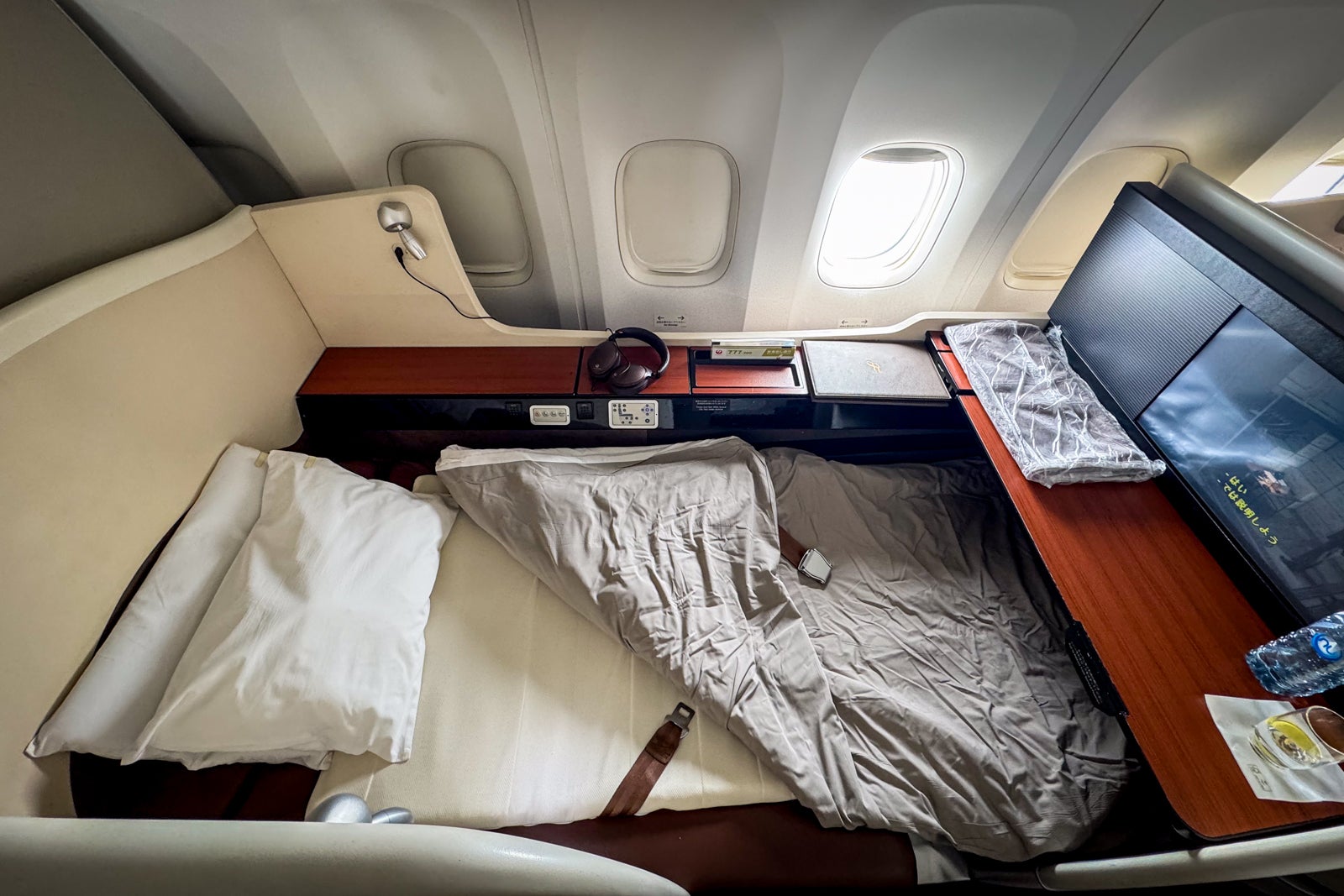
- The Oneworld Connection (JAL and Qantas): Japan Airlines (JAL) premium cabin space is highly coveted. Frequently, the Qantas and British Airways websites will show "phantom" JAL seats that do not actually exist. Travelers often transfer points to these programs only to find the "Book" button leads to a dead end.
- Air Canada Aeroplan: As one of the most versatile programs with the most partners in the world, Aeroplan’s search engine is under constant strain. It frequently displays "phantom" space for partner airlines like Swiss, Lufthansa, and even regional carriers in Asia.
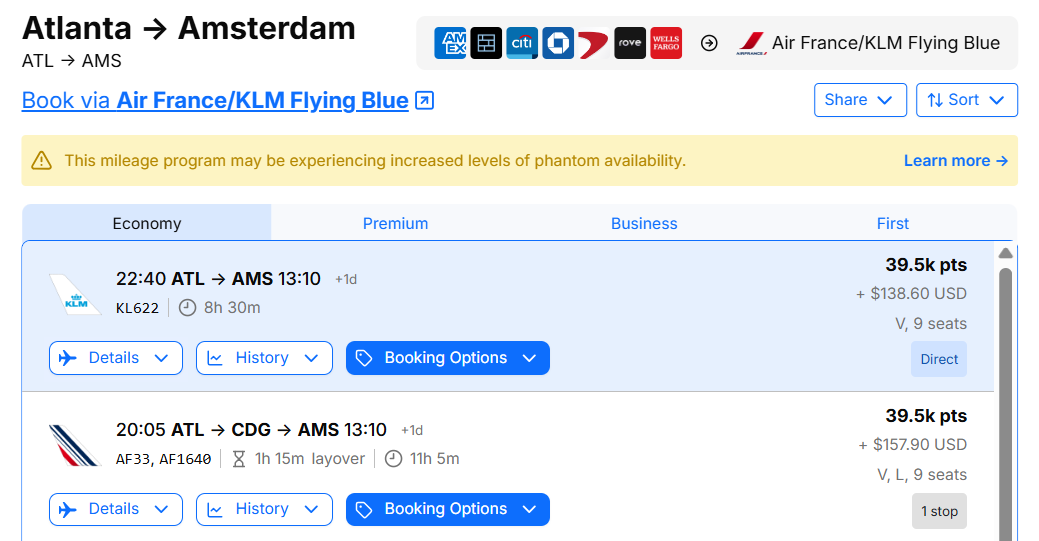
- Air France-KLM Flying Blue: Recently, Flying Blue has been flagged by data aggregators like Seats.aero for significant phantom availability issues, particularly on flights operated by Virgin Atlantic or Delta.
- United Airlines: United’s website is often considered a "gold standard" for searching Star Alliance space, but even it is not immune. It occasionally shows "phantom" availability for Lufthansa First Class, which typically only opens to partners 15 days before departure.
The "Rule of Three": How to Verify Award Space
To protect yourself, you should never trust a single source. Before you hit the "transfer" button on your credit card portal, follow this rigorous verification protocol:
1. Cross-Check with Multiple Partners
If you see a flight available on the British Airways website, go to the American Airlines or Qatar Airways website and search for the exact same flight. If the seat appears on two or three different partner sites independently, there is a much higher probability that the space is "real." If it only appears on one site and yields an error on others, it is almost certainly phantom.
2. The "Checkout Test"
Most websites will allow you to proceed through the initial stages of booking even if your account balance is zero. Try to click through the selection screen, enter your passenger details, and reach the final "Review" or "Payment" page. In many cases, the system will perform a "real-time" check with the operating carrier at this stage. If the seat is phantom, the error message will usually appear here, before you have committed any points.
3. Use Professional Search Tools Wisely
Tools like Point.me, Seats.aero, and ExpertFlyer are invaluable for finding availability, but they are subject to the same data lags as the airlines themselves. Always check the "Last Seen" timestamp on these tools. If a seat was last seen 12 hours ago, there is a high chance it has already been snatched up. Use these tools for discovery, but always perform a manual "Live" search on the airline’s website as the final step.
4. The Power of the Phone Call
It may feel "old school," but calling the airline’s reservations desk is one of the most reliable ways to verify space. Ask the agent: "I see award availability for flight [Number] on [Date]. Can you see if that seat is available for a ‘long sell’ or if it is confirmed in your system?" If the agent can see the seat and can start the booking process (even if they can’t finish it without the points), you are likely safe.
Strategic Safeguards: Holds and Plan B
Some airlines allow you to put an award ticket on "hold" for a period ranging from 24 hours to five days. American Airlines AAdvantage and Turkish Airlines Miles&Smiles are notable for this feature. Placing a hold is the only 100% foolproof way to ensure the space is yours before you transfer points. If a hold is not possible, always have a "Plan B" itinerary. Before transferring points, ensure there are other flights on different dates or nearby airports that you would be willing to take if your primary choice disappears.
What to Do if You Get Stuck
If the worst happens and you have already transferred points for a phantom flight, your options are limited but not non-existent. First, immediately call the airline’s customer service. Explain that their website displayed a seat as available and that you transferred points based on that "false" information. While they cannot create a seat out of thin air, they may be able to open up "saver" level space on one of their own flights as a gesture of goodwill.

In extreme cases, you can contact your credit card issuer (e.g., Amex or Chase). While their terms and conditions strictly state that transfers are final, they have occasionally been known to reverse a transfer if there was a documented technical error on the partner’s end. However, this is a rare exception and should not be relied upon as a primary strategy.
The Bottom Line
In the high-stakes game of award travel, information is your most valuable currency. Phantom award space is a byproduct of aging technology and the immense complexity of global aviation networks. By maintaining a healthy skepticism, cross-referencing your searches across multiple platforms, and attempting to "ghost-book" the flight before transferring points, you can navigate these digital minefields successfully. Remember: a transferable point is a flexible asset; once it is moved to an airline, it becomes a rigid liability. Treat your transfers with the caution they deserve, and don’t let a "ghost" ruin your next great adventure.
