
 By Titik Puspa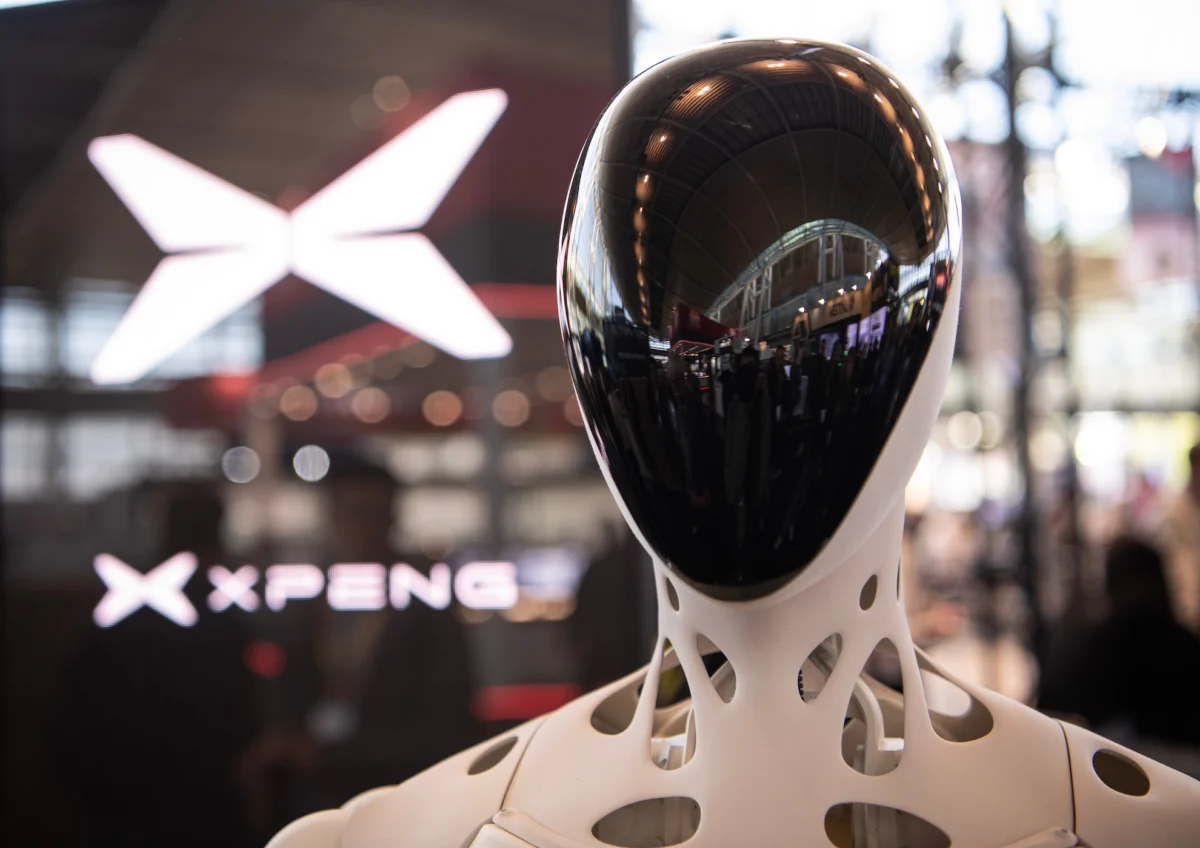
The buzz surrounding humanoid robots, amplified by the prominent figures of Elon Musk’s Optimus and Boston Dynamics’ agile Atlas, has ignited a fervent belief that artificial intelligence, particularly the advancements seen in large language models, can empower physical machines to learn and execute virtually any task. This burgeoning optimism, coupled with the tangible improvements in robotic physical capabilities, has catalyzed a new wave of companies eager to capitalize on the lucrative potential of humanoid robots. Notably, a significant influx of these ambitious players are emerging from China’s automotive sector, a testament to their manufacturing prowess and strategic vision.
One of the most striking examples of this trend is Xpeng’s robotics division, which recently secured over $900 million in funding. This substantial investment, achieved at a post-money valuation exceeding $6.3 billion, was spearheaded by IDG Capital and included contributions from prominent firms like Gaorong Ventures, Tencent, and Alibaba. Xpeng has proudly heralded this funding round as a landmark achievement, marking the largest single-round private financing ever recorded in China’s "embodied AI" industry – a sector focused on integrating AI directly into physical robotic systems. This significant capital injection underscores the immense confidence investors have in the future of intelligent, physically capable robots.
The momentum within China’s automotive-led robotics initiatives is palpable. This very month, AiMOGA, the robotics arm of Chery Automobile, has reportedly begun preparations for an Initial Public Offering (IPO), signaling its intent to become a publicly traded entity and further legitimize the burgeoning market. Concurrently, BYD, another automotive giant, has unveiled its own humanoid robot, dubbed "Xiao Di," showcasing its commitment to this evolving technological frontier. The competitive landscape is intensifying, with other major Chinese automakers, including Changan, GAC, Li Auto, SAIC, and Seres, actively engaged in their own humanoid robot development programs. This widespread participation highlights a strategic pivot within the industry, moving beyond traditional vehicle manufacturing to embrace a broader spectrum of advanced robotics.
Michael Dunne, CEO of the San Diego and Singapore-based advisory firm Dunne Insights, observes a particularly strong alignment between Xpeng and Tesla’s strategic direction in the robotics space. "It’s the most focused on autonomy, it’s the first to commit in a big way to humanoid robots," Dunne commented, emphasizing Xpeng’s deep-seated dedication to autonomous systems and its early and significant investment in humanoid robotics. He further highlighted the agility and foresight of Xpeng founder He Xiaopeng, a tech billionaire known for his rapid decision-making and adaptability. Dunne’s analysis suggests a clear strategic motivation: "He sees razor-thin profit in cars on the near horizon. Robots look much more promising." This perspective points to a fundamental shift in the automotive industry’s profit potential, with executives increasingly viewing robotics as a more sustainable and lucrative avenue for future growth.
The conviction of Xpeng’s leadership in the humanoid robot market is further underscored by the personal financial commitments of its founder, He Xiaopeng, and co-president, Brian Gu. According to a report by The Wall Street Journal, the duo personally invested approximately $100 million into the recent fundraising round. This substantial personal stake demonstrates a profound belief in the company’s robotics ambitions and the long-term viability of its humanoid robot, named Iron. Iron is being meticulously designed with a realistic human form, specifically engineered for commercial deployment, suggesting a clear focus on practical, real-world applications rather than purely research-oriented prototypes.
The inherent manufacturing expertise of Chinese automakers like Xpeng provides a distinct advantage in the race to develop and deploy humanoid robots. Dunne elaborates on this point, stating, "They have all the hardware to get the job done." This access to established manufacturing infrastructure, supply chains, and production expertise is a critical factor in translating ambitious designs into tangible products. However, he also poses a crucial question that looms over the industry: "Question is if they can catch Tesla on the AI side of the equation." This highlights the ongoing challenge of not only building physically capable robots but also imbuing them with the sophisticated artificial intelligence required for complex problem-solving and adaptive learning, an area where companies like Tesla have demonstrated significant progress.
While the Chinese automotive sector is making significant strides, it’s important to acknowledge the broader global landscape of humanoid robot development. Numerous other companies are actively pursuing this ambitious goal, including Agility Robotics, Apptronik, and Figure. These entities share the common objective of achieving commercial deployment at scale, aiming to integrate their robots into diverse industries and everyday applications. Each of these companies is contributing to the collective advancement of humanoid robotics, pushing the boundaries of what is technologically feasible.
Hyundai-owned Boston Dynamics is a prominent player in this global endeavor, with its highly advanced Atlas robot making significant progress towards commercialization. Hyundai has announced plans to introduce the Atlas humanoid robot to its manufacturing facility in Georgia this year. The long-term vision is to deploy these robots for critical tasks such as parts sequencing by 2028, demonstrating a clear roadmap for integration into industrial settings. To accelerate the development of Atlas, Hyundai has forged a strategic partnership with Google’s AI research lab, DeepMind. This collaboration is expected to imbue the next generation of Atlas robots with the cutting-edge AI capabilities developed by DeepMind, further enhancing their learning and operational efficiency. In line with this commitment, Hyundai is also establishing a U.S. facility this year, termed a Robot Metaplant Application Center. This center will serve as a hub for teaching robots intricate movements, including complex lifts and turns, thereby refining their dexterity and applicability in various scenarios.
The automotive industry’s engagement with humanoid robotics extends beyond direct robot development. Mobileye, a key automotive supplier, made a significant move earlier this year by acquiring humanoid robot startup Mentee Robotics for a substantial $900 million. This acquisition signals Mobileye’s strategic intent to integrate advanced robotics into its broader automotive technology portfolio, potentially influencing future vehicle design and manufacturing processes. Even electric vehicle startup Rivian is exploring the robotics domain, having launched a spin-off company called Mind Robotics. While Rivian’s approach to robotics may not involve the development of human-like forms, as indicated by their CEO RJ Scaringe’s views on the "wrong" way to approach robots, their foray into the field underscores the pervasive interest in robotic solutions across the automotive spectrum. This diverse range of approaches, from creating highly anthropomorphic robots to developing specialized robotic systems, reflects the broad applicability and transformative potential that the industry sees in robotics.
The convergence of AI advancements, particularly in large language models, with the physical capabilities of robots is ushering in a new era of embodied AI. The substantial investments, strategic partnerships, and ambitious development programs being undertaken by both established automotive giants and innovative startups highlight the immense potential perceived in humanoid robots. As these technologies mature, we can anticipate a future where robots play an increasingly integral role in various sectors, from manufacturing and logistics to potentially even domestic assistance. The race to develop and deploy these intelligent machines is on, and the automotive industry, with its manufacturing acumen and forward-thinking leadership, is proving to be a formidable contender in shaping this transformative technological landscape. The question remains not if humanoid robots will become commonplace, but rather how quickly and to what extent they will redefine our relationship with work and technology.
