
 By Lina Irawan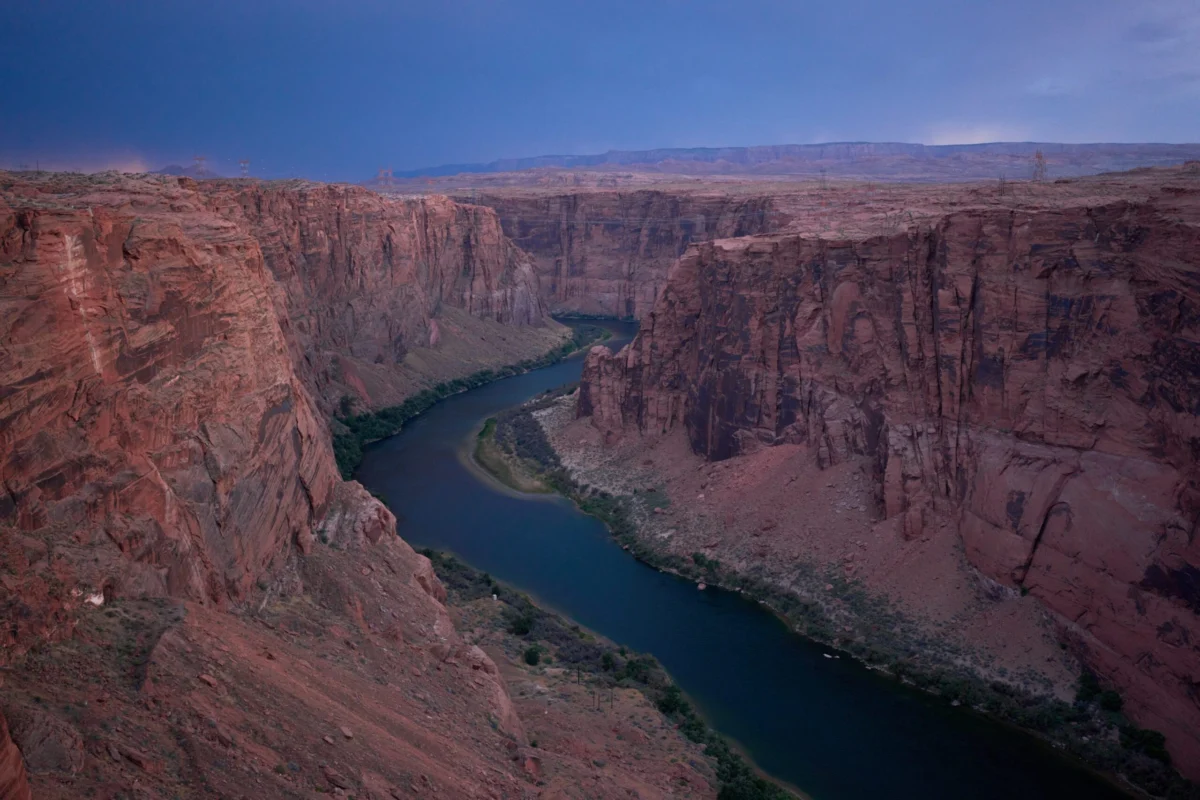
But in the heart of the Sonoran Desert, Cave Creek, a community of approximately 5,000 residents, finds itself on the precipice of an existential crisis. Despite proactive and innovative measures to secure its water future, Mayor Robert Morris harbors a profound apprehension that their collective efforts may not be enough to sustain the desert community well into the future. A recent federal plan, designed to address the deepening crisis in the vast Colorado River basin, offers little solace, and in some ways, exacerbates the town’s anxieties.
Cave Creek’s vulnerability is stark: nearly all of its municipal water supply flows from the Colorado River, a lifeline that sustains over 40 million people across seven U.S. states, numerous tribal nations, and Mexico. This colossal river system, once a symbol of abundance, has been progressively dwindling under the relentless pressures of a two-decade-long megadrought, intensified by climate change, persistent overuse, and escalating demand from a rapidly growing population in the arid Southwest. The town has already been forced to implement significant water use reductions this year, and the new federal directives portend even more stringent cuts, pushing its resilience to the brink.
Mayor Morris articulated the town’s precarious position with a chilling metaphor, likening it to "planning for a meteor strike." He elaborated, "You can see it coming, but you can’t get out of the way and you don’t know what the damage is going to be." This sentiment encapsulates the pervasive uncertainty gripping the entire Colorado River Basin, a region grappling with an unprecedented hydrological challenge.
A Region Under Siege: The Broadening Crisis
The ripple effects of the dwindling Colorado River extend far beyond Cave Creek, casting a long shadow over the entire U.S. West. Farmers, who historically consume the largest share of the river’s water, are facing agonizing decisions about which crops are worth the investment, risking their livelihoods on increasingly uncertain water allocations. Major metropolitan centers like Phoenix, Arizona’s capital and a sprawling hub of over 1.6 million people, could face an unprecedented scenario: the loss of some municipal and industrial water supplies for the first time, forcing a reliance on expensive backup resources. For residents across the basin, the prospect of even more costly water bills looms large, reflecting the true scarcity of this vital resource.
The gravity of the situation was underscored recently when Nevada escalated its concerns by filing a lawsuit against the U.S. Department of the Interior and the Bureau of Reclamation. The state argued vehemently that the Las Vegas region’s basic water needs would go unmet if it were forced to absorb proposed reductions of up to 70% of its Colorado River water in the next decade. Las Vegas, a city built in an extreme desert environment, has long been at the forefront of aggressive water conservation, implementing extensive turf removal programs and pioneering advanced wastewater recycling. Yet, even with these efforts, the projected cuts represent an existential threat to its future growth and stability. The Bureau of Reclamation, adhering to policy, declined to comment on ongoing litigation, but the legal challenge highlights the growing desperation and fragmentation among stakeholders.
Tom Buschatzke, director of the Arizona Department of Water Resources, succinctly summarized the overarching sentiment: "The uncertainty is going to continue to build in the wrong direction." His words echo the frustration and apprehension of water managers and policymakers throughout the West, who are racing against time to devise sustainable solutions.
Western Reservoirs See Record Lows: The Alarming Barometers
The health of the Colorado River system is primarily gauged by the levels of its vast network of reservoirs, crucial storage facilities that capture snowmelt and rainfall, as well as the integrity of the mountain snowpacks and groundwater aquifers. However, a recent record snow drought has meant significantly less water available to recharge these critical sources, exacerbating the long-term deficit.
The two largest reservoirs in the United States, Lake Mead and Lake Powell, serve as the quintessential barometers for the entire Colorado River system. Both colossal reservoirs plummeted to unprecedented record lows this month, their "bathtub rings" of bleached rock extending hundreds of feet above the current water line, a stark visual testament to the severity of the crisis. Lake Mead, formed by the Hoover Dam, currently stands at historically low elevations, significantly below its full capacity of over 28 million acre-feet. Similarly, Lake Powell, impounded by the Glen Canyon Dam, has seen its water levels drop to precarious depths, raising concerns about its ability to generate hydroelectric power and transfer water to the Lower Basin states.
The dire situation extends beyond these two giants. Eight other reservoirs operated by the Bureau of Reclamation have recently registered their lowest levels in at least the last 30 years. Among these is Elephant Butte Lake in New Mexico, a vital artery for agricultural communities in southern New Mexico, Texas, and Mexico. The Green Mountain Reservoir, critical for the western part of Colorado, and the Guernsey Reservoir in Wyoming, which funnels water to farmers in eastern Wyoming and western Nebraska, are also struggling. These declining levels represent not just a statistical anomaly but a direct threat to the agricultural productivity, energy supply, and municipal water security of millions.
The Federal Plan: A Short-Term Band-Aid?
In response to the deepening crisis, the Bureau of Reclamation unveiled a plan requiring California, Nevada, and Arizona – the Lower Basin states – to collectively reduce their water use by 1.25 million acre-feet annually for the next two years. To put this in perspective, 1.25 million acre-feet is enough water to fill over 600,000 Olympic-sized swimming pools. While significant, this measure is largely seen as a short-term intervention, with the possibility of even larger, more painful cuts depending on hydrological conditions and reservoir levels. The Upper Basin states – Colorado, Utah, Wyoming, and New Mexico – are not currently mandated to make cuts under this specific plan but are encouraged to voluntarily reduce water use. This distinction highlights the complex legal and historical "Law of the River" framework, which governs allocations and priorities among the basin states, a framework that many argue is increasingly ill-suited to the realities of a depleted river.
Experts caution that even the anticipated arrival of El Niño, a climate pattern known to bring intense moisture to the northern Rockies and parts of the Southwest in the coming months, will not be a panacea. While El Niño events can deliver much-needed precipitation, they are unlikely to reverse decades of chronic drought and the profound hydrological deficit. David Mocko, a senior research scientist who authored a recent U.S. Drought Monitor map, emphasized, "Drought is a slow-moving phenomena and it can take some time to come into it and also come out of it." The concept of "aridification," a long-term shift towards a drier climate rather than a temporary drought, is increasingly used by scientists to describe the fundamental changes occurring in the American West, suggesting that the challenges are permanent, not cyclical.
Farmers on the Frontline: A Looming Food Security Challenge
The agricultural sector, particularly in Arizona’s Yuma region, faces an existential threat. John Boelts, a farmer in Yuma, cultivates a variety of crops, including vegetables, melons, and durum wheat. The Yuma area is remarkably productive, yielding approximately 90% of the leafy greens consumed in North America during the winter months, making it a critical component of the continent’s food supply chain.
Farmers in Yuma hold high-priority water rights, a legacy of the "prior appropriation doctrine" that dictates "first in time, first in right." These senior rights may shield them from immediate, severe cuts to their Colorado River supply over the next two years. However, as Boelts explained, this temporary reprieve does not alleviate the profound uncertainty that prevents longer-term planning. The reluctance to plant new acreage is palpable. Crops like citrus, dates, and other orchard varieties that thrive in the region require years to become commercially productive. Investing in such long-term ventures without assured water supply is a gamble few farmers can afford to take.
"There’s no food that we grow in a hurry," Boelts, who also serves as the Arizona Farm Bureau president, stressed. "Beef takes years to produce. The lettuce you eat today? A farmer was working on how they would grow that crop six plus months ago." The implications of this uncertainty are far-reaching, potentially leading to reduced crop yields, higher food prices, economic hardship for farming communities, and even impacts on national food security. The economic multiplier effect of agriculture in these regions is immense, supporting processing plants, transportation networks, and a vast labor force.
Tribal Nations: Rights Without Infrastructure
Adding another layer of complexity and historical injustice to the water crisis are the tribal nations. Ray Martinez, a member of the Colorado River Indian Tribes (CRIT), grows alfalfa on the reservation, which holds some of the river’s oldest and most significant water rights, established through the "Winters Doctrine" that guarantees water for tribal lands. While CRIT’s Arizona allocation is substantial, the practical reality is that an antiquated irrigation system and a glaring lack of modern infrastructure have rendered much of this water inaccessible or unusable for efficient agriculture.
Martinez and the CRIT water department are deeply concerned about having sufficient water to finish the current growing season. In a remarkable act of conservation and regional solidarity, CRIT has voluntarily left some fields unplanted for years to help bolster the dangerously low levels of Lake Mead. However, Martinez warns that if the reservoir continues its precipitous decline, the surface water delivered to his and neighboring farms will be further limited, regardless of their senior rights. "Unfortunately, Mother Nature has its own way of doing things, and we have no control of that," he added, highlighting the profound humility and vulnerability felt by those most directly dependent on the river. The plight of CRIT underscores a broader issue across the basin: many tribal nations possess senior water rights that could offer significant solutions to the region’s water woes, yet they often lack the necessary funding and infrastructure to fully develop and utilize these resources, or even to participate equitably in the complex negotiations.
A Future Defined by Scarcity
The Colorado River crisis is a multifaceted challenge, woven from the threads of climate change, historical allocation inequities, and relentless population growth. The "meteor strike" analogy used by Mayor Morris resonates because the consequences, though seemingly slow-motion, are inevitable and potentially catastrophic. The federal plan, while a necessary step, is acknowledged by all parties as a temporary measure. Long-term solutions will require unprecedented cooperation, investment in infrastructure, innovative water management strategies like desalination, advanced recycling, widespread conservation, and a fundamental reevaluation of water use priorities across all sectors.
The stakes are immeasurable: the economic stability of a vast region, the ecological health of a vital river system, the food security of a continent, and the very viability of communities like Cave Creek. As the West continues to dry, the question is not if more difficult choices will be made, but when, and at what cost. The era of abundance on the Colorado River has definitively ended, ushering in a future where scarcity dictates policy, innovation, and survival.
