
 By Titik Puspa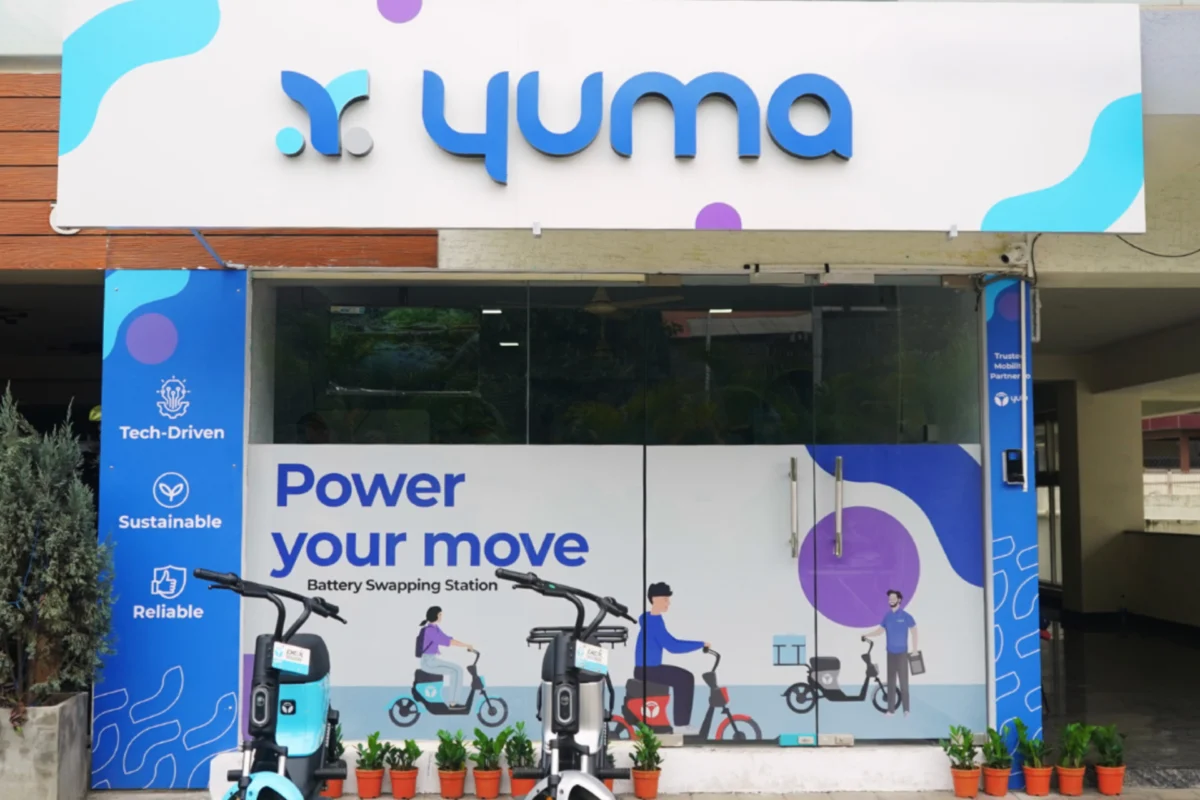
Canadian auto parts behemoth Magna International is doubling down on its commitment to the burgeoning Indian electric mobility market, injecting an additional $35 million into Bengaluru-based Yuma Energy. This significant capital infusion underscores Magna’s conviction that battery swapping, a model that has largely struggled to gain traction globally, possesses a unique potential for widespread adoption in India. The country’s massive base of two- and three-wheelers, coupled with a rapidly expanding delivery economy, creates a distinct economic landscape where battery swapping can thrive, offering a compelling alternative to traditional charging methods.
Yuma Energy, a spin-off from the prominent Indian mobility startup Yulu in early 2023, operates a sophisticated battery-swapping network specifically designed for electric two- and three-wheelers. The company has already achieved a remarkable milestone, facilitating over 60 million battery swaps to date, and currently boasts an impressive deployment of approximately 100,000 batteries across its expansive network. Magna’s latest investment represents an increase in its ownership stake in Yuma, building upon the 51% it initially acquired when the joint venture was established. Muthu Subramanian, Yuma’s managing director, confirmed the additional investment in an interview, noting that this will consequently dilute Yulu’s original 49% stake, though the precise new ownership breakdown remains undisclosed.
Magna’s strategic focus on India’s electric mobility sector is further highlighted by the fact that Yulu and Yuma represent its sole startup investments on Indian soil. In 2022, the automotive supplier had already committed a substantial $77 million to these two entities, with $25 million directed towards Yulu and a considerable $52 million allocated to the battery-swapping joint venture. This sustained and escalating investment signals a deep-seated belief in the long-term viability and growth potential of Yuma’s battery-swapping ecosystem within the Indian context.
The cornerstone of Magna’s optimistic outlook for Yuma is the robust and accelerating growth of India’s gig economy. Delivery riders, who form a critical segment of this economy, often face significant downtime and revenue loss while waiting for their electric vehicles (EVs) to charge. Subramanian estimates that currently, only about 10% to 15% of vehicles utilized by gig workers in India are electric, presenting a vast untapped market for operators like Yuma as more riders transition from gasoline-powered alternatives. "With Indian gig workers’ high runtime on a daily basis, an EV makes absolute sense in terms of cost of ownership," Subramanian stated. "Uptime is important."
Yuma is strategically targeting these high-mileage riders, emphasizing the superior practicality of battery swapping over fast charging. Subramanian highlights that a battery can be exchanged in under two minutes, a stark contrast to the 20 to 30 minutes required for even a fast charge. This prolonged charging downtime directly impacts a rider’s earning potential and necessitates additional infrastructure to serve multiple vehicles concurrently, demanding more space and power.
However, the creation of such a seamless and convenient user experience is inherently capital-intensive. Yuma must maintain a ready supply of charged batteries and a robust swapping infrastructure, often ahead of the full demand from its user base. "It’s a capital-intensive business, and the unit economics will play out at scale," Subramanian acknowledged. While Yuma is not yet profitable, a positive sign of its developing business model is that some of its older swapping stations have already achieved EBITDA-positive status. The company’s financial performance for the fiscal year ending March 2026 saw revenues of approximately ₹1 billion (around $10.5 million), supported by over 400 stations and more than 2,500 charging units. Yuma is projecting to reach EBITDA break-even within the next two quarters, a testament to its aggressive growth strategy.
Achieving this break-even point necessitates Yuma’s proactive approach of building infrastructure ahead of immediate demand. The substantial investment from Magna is earmarked primarily for the expansion of its swapping infrastructure and a doubling of its current battery fleet to approximately 200,000 units over the next 12 to 18 months. This expansion is crucial to support the growing network and meet the increasing demand from its expanding customer base.
While Yulu continues to be the dominant user of Yuma’s battery-swapping services, accounting for the vast majority of the 60 million lifetime swaps, this dependency is gradually decreasing. Subramanian reported that in the most recent quarter, approximately 15% to 20% of swaps were performed by customers other than Yulu. This diversification is a positive development, indicating the growing acceptance and adoption of Yuma’s network by a broader range of fleet operators and individual users.
Beyond its foundational partnership with Yulu, Yuma has successfully integrated its battery solutions with more than 10 vehicle platforms from a growing list of manufacturers, including prominent names like Kinetic Green, Motovolt, BGauss, and Quantum Energy. The company is actively serving more than five distinct fleets, demonstrating its versatility and adaptability to various operational needs. Yuma anticipates that non-Yulu customers will constitute around 25% of its total swaps within the next two years, further solidifying its position as a key enabler of electric mobility across different segments.
The recent $93 million funding round secured by Yulu to expand its electric two-wheeler fleet further underscores the dynamic growth of India’s e-bike market, particularly fueled by the boom in quick commerce. This expansion by Yulu will necessitate a corresponding growth in Yuma’s network capacity to not only keep pace with its largest customer but also to seamlessly accommodate the increasing number of newer fleets utilizing its battery technology.
Yuma’s operational footprint currently spans 18 major Indian cities, including metropolitan hubs like Bengaluru, Hyderabad, Mumbai, and the Delhi region, alongside significant Tier-2 cities such as Jaipur, Lucknow, Indore, Coimbatore, Kochi, and Kolkata. With the influx of fresh capital, Yuma has ambitious plans to extend its reach into new markets, with Chennai and Pune slated for expansion in the coming quarters. Furthermore, the company intends to augment its existing infrastructure by adding more stations in its current operational cities, deepening its presence and improving accessibility.
While India remains Yuma’s primary focus for at least the next 12 to 18 months, Subramanian revealed that the company has its sights set on international expansion as part of its long-term strategic roadmap. Southeast Asian markets, specifically Vietnam and Thailand, along with certain regions in Africa, are being considered as attractive future territories due to their substantial two-wheeler markets. Although concrete discussions about market entry have not yet commenced, these regions represent significant growth opportunities for Yuma’s proven battery-swapping model.
A key differentiator for Yuma in the competitive landscape is its integrated approach to battery technology and network infrastructure. Unlike many operators that rely on third-party solutions, Yuma designs and manufactures its own battery packs and charging units. The company’s battery packs are produced at its facility in Chennai, while its charging units are manufactured in Bengaluru. This in-house capability grants Yuma complete control over both the hardware components and the sophisticated network that manages them, enabling greater innovation, quality control, and cost optimization. This vertical integration is a significant strategic advantage, allowing Yuma to tailor its solutions precisely to the demands of the Indian market and to rapidly iterate on its technology. The company’s commitment to developing its own intellectual property and manufacturing capabilities positions it as a formidable player in the rapidly evolving global electric vehicle battery solutions sector.
