
 By admin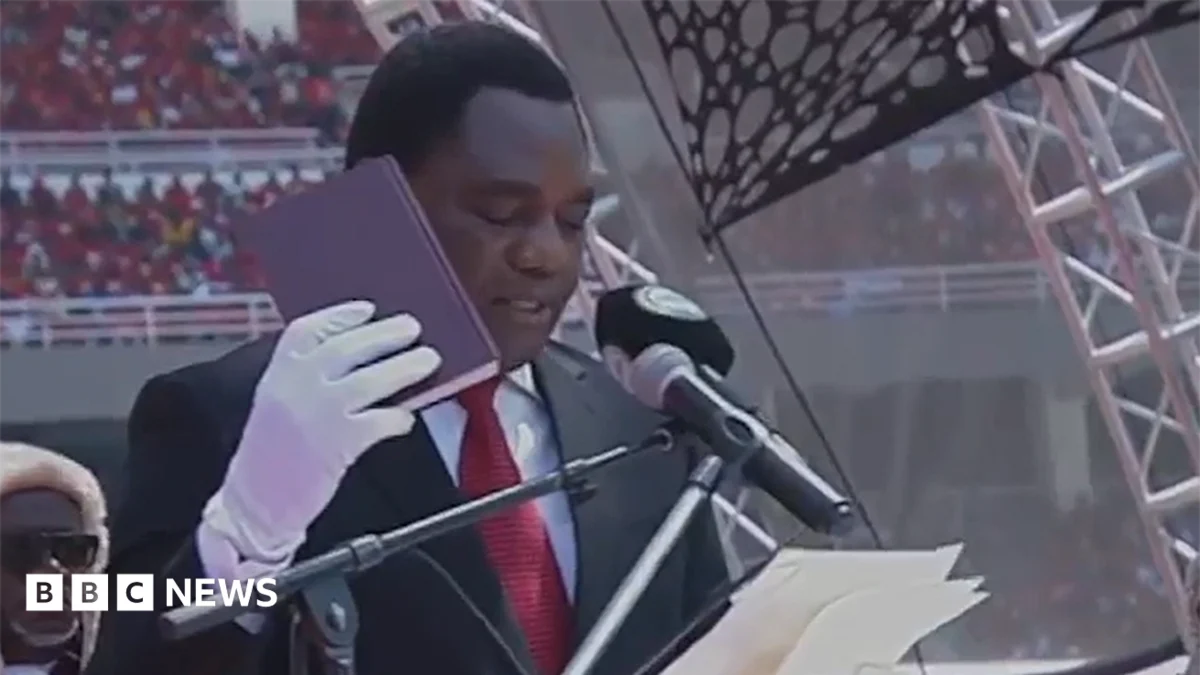
In a ceremony marked by both jubilation and controversy, Hakainde Hichilema was officially sworn in for his second five-year term as President of Zambia. The inauguration follows a tightly contested election that has cast a shadow over the nation’s democratic process, exacerbated by the arrest of his primary opponent on treason charges. Hichilema, who has been widely credited with efforts to stabilize Zambia’s economy during his first tenure, secured a decisive victory in the August 13th polls, garnering 60% of the vote according to official tallies. However, this mandate has been challenged by his main rival, Brian Mundubile, who secured 38% of the vote and alleged widespread tampering with the electoral outcome.
The path to this second term has been fraught with significant hurdles. Mundubile’s ability to mount a formal legal challenge to the election results was severely hampered by the sealing of the courts on the final day designated for filing such cases. This unprecedented move effectively barred opposition lawyers from submitting their petitions, raising serious concerns about the accessibility of justice and the integrity of the electoral review process. While election observers broadly acknowledged that polling day itself was conducted peacefully, a number of them have raised pointed questions regarding the transparency and accuracy of the vote tallying procedures.
The European Union’s observer mission, in particular, highlighted several irregularities that undermined confidence in the process. Their report detailed instances where staff at numerous tallying centers failed to record results on official tally sheets immediately after their announcement. Furthermore, the mission noted a lack of robust verification mechanisms between digital entries and the corresponding paper records, creating opportunities for discrepancies and potential manipulation. A particularly troubling observation was the frequent pausing of proceedings by returning officers, who reportedly awaited instructions from electoral headquarters, suggesting a lack of autonomous decision-making and potential external influence on the tallying process.
The tension surrounding the election escalated dramatically in the immediate aftermath of the poll. The day following the vote, security forces conducted a raid on a property in the capital city, Lusaka, reportedly linked to Brian Mundubile. This operation resulted in the death of a former cabinet minister and the arrest of several prominent opposition politicians. Authorities swiftly accused the opposition of orchestrating plans for an armed insurrection, allegations that were vehemently denied by the opposition parties. This crackdown significantly intensified the political climate and further fueled allegations of a politically motivated pursuit of opponents.
Brian Mundubile and his running mate, Makebi Zulu, were forced into hiding following the raid and subsequent accusations. They were eventually apprehended by police last week and formally charged over the weekend, facing grave accusations that could carry significant legal repercussions. The arrests of key opposition figures in the wake of a disputed election have amplified international concerns regarding the state of democracy and human rights in Zambia.
President Hichilema, now 64 years old, first assumed office in August 2021 following a landslide victory that signaled a significant shift in Zambian politics. His initial ascent to power was against a backdrop of severe economic challenges. At the time of his inauguration, Zambia was grappling with the aftermath of a sovereign debt default on its international obligations and was experiencing an annual inflation rate exceeding a daunting 24%. In a pre-election interview with the BBC in Lusaka, Hichilema articulated the dire economic situation he inherited, stating, "We inherited a broken-down country… the economy was declining."
During his first term, President Hichilema and his administration embarked on an ambitious agenda to steer the nation away from economic peril. A key achievement was the successful negotiation of a restructuring of Zambia’s substantial international debt, a complex and protracted process that required intricate diplomacy and commitment from various international financial institutions. Simultaneously, efforts were made to rebuild and strengthen relations with foreign creditors, a crucial step in restoring investor confidence and facilitating future economic engagement. These measures contributed to a noticeable reduction in inflation rates, a positive development for the average Zambian household. However, despite these gains, the cost of living remains a significant challenge for many, with prices continuing to rise and a substantial portion of the population still struggling to make ends meet.
Looking ahead, President Hichilema has expressed his commitment to building upon the economic foundations he claims to have laid during his initial five years in office. His vision for the second term centers on consolidating these gains, fostering sustainable growth, and addressing the persistent socio-economic disparities that continue to affect a large segment of the population. The president’s supporters believe that his experienced leadership and business acumen are vital for navigating Zambia’s complex economic landscape and for realizing the nation’s full potential.
The inauguration ceremony itself was a vibrant display of democratic participation and national pride. Thousands of Hichilema’s supporters gathered in Lusaka to celebrate his re-election and the commencement of his second term. The atmosphere was reportedly jubilant, with crowds cheering and expressing their enthusiasm for the leadership continuity. The event underscored the deep support Hichilema commands among a significant portion of the electorate.
The inauguration ceremony was further graced by the presence of several distinguished African leaders, highlighting Zambia’s re-engagement with the international community and its role within the regional political landscape. Presidents from neighboring countries including Kenya, Botswana, Zimbabwe, Namibia, and Tanzania were in attendance at the National Heroes Stadium in the capital. This high-level participation underscored the significance of the event and signaled a renewed emphasis on regional cooperation and solidarity. President Hichilema was officially sworn into office alongside his running mate, Mutale Nalumango, who will continue to serve as Vice President, reinforcing the continuity of the current administration’s leadership team. The presence of these regional heads of state also serves as a subtle endorsement of Hichilema’s leadership, despite the ongoing controversies surrounding the election.
The economic stabilization efforts undertaken by President Hichilema’s government have been a cornerstone of his political narrative. Upon taking office in 2021, Zambia was facing a severe fiscal crisis, characterized by a default on its Eurobonds in late 2020, making it the first African country to default during the COVID-19 pandemic. The debt burden was estimated to be over $11 billion, with a significant portion owed to bilateral creditors and private bondholders. The International Monetary Fund (IMF) played a crucial role in facilitating discussions for debt restructuring, eventually approving a $1.3 billion loan facility in August 2022. This agreement was contingent on Zambia implementing fiscal reforms, including measures to improve public financial management, enhance transparency in resource revenue, and reduce non-concessional borrowing.
Hichilema’s background as a successful businessman and former leader of Zambia’s largest opposition party for over a decade provided him with a unique perspective on the nation’s economic woes. His administration’s focus on attracting foreign direct investment (FDI) and improving the business environment has been a key strategy. Initiatives aimed at streamlining bureaucratic processes, combating corruption, and ensuring the rule of law have been central to this effort. The reduction in inflation from over 24% in 2021 to single digits in subsequent periods is a testament to the effectiveness of these macroeconomic policies. However, persistent challenges remain, particularly in addressing poverty and inequality. The cost of essential goods, such as mealie-meal (maize flour), a staple food, has remained a significant concern for many households, highlighting the ongoing struggle with the cost of living.
The political landscape in Zambia has been marked by a history of intense electoral competition. Hichilema’s victory in 2021 ended the Patriotic Front’s (PF) ten-year rule. His supporters hailed his election as a triumph for democracy and a rejection of what they termed as authoritarian tendencies under the previous administration. However, the current election cycle has seen a resurgence of political polarization, with accusations of unfair practices and suppression of dissent being leveled by the opposition. The arrest of Mundubile and other opposition figures raises critical questions about the government’s commitment to political pluralism and the protection of civil liberties. Human rights organizations have expressed concern over the use of treason charges, which are often employed to silence political opponents, and have called for due process and the respect of fundamental rights.
The role of election observers, both domestic and international, is critical in providing an independent assessment of electoral integrity. While the EU observers noted peaceful polling, their critique of the tallying process is significant. Similar concerns have been raised by other observer missions in past elections across Africa, underscoring the persistent challenges in ensuring transparent and credible vote counting. The reliance on electoral commissions to conduct free and fair elections is paramount, and any perceived lack of independence or susceptibility to political influence can erode public trust in the democratic system. The Zambian Electoral Commission (ECZ) has faced scrutiny in the past, and its performance in the recent election will likely be a subject of continued debate and analysis.
Looking forward, President Hichilema faces the dual challenge of consolidating his economic achievements while addressing the deep-seated concerns about democratic governance and political inclusivity. The international community will be closely watching Zambia’s trajectory, particularly regarding the legal proceedings against opposition leaders and the government’s commitment to upholding democratic principles. The success of his second term will not only be measured by economic progress but also by his ability to foster a more inclusive and tolerant political environment, where dissent is respected and the rule of law is applied equitably to all citizens, regardless of their political affiliation. The path ahead for Zambia remains complex, balancing the urgent need for economic development with the imperative of safeguarding democratic freedoms and ensuring a level playing field for all political actors. The inauguration marks not an end, but a continuation of this intricate journey.
