
 By Titik Puspa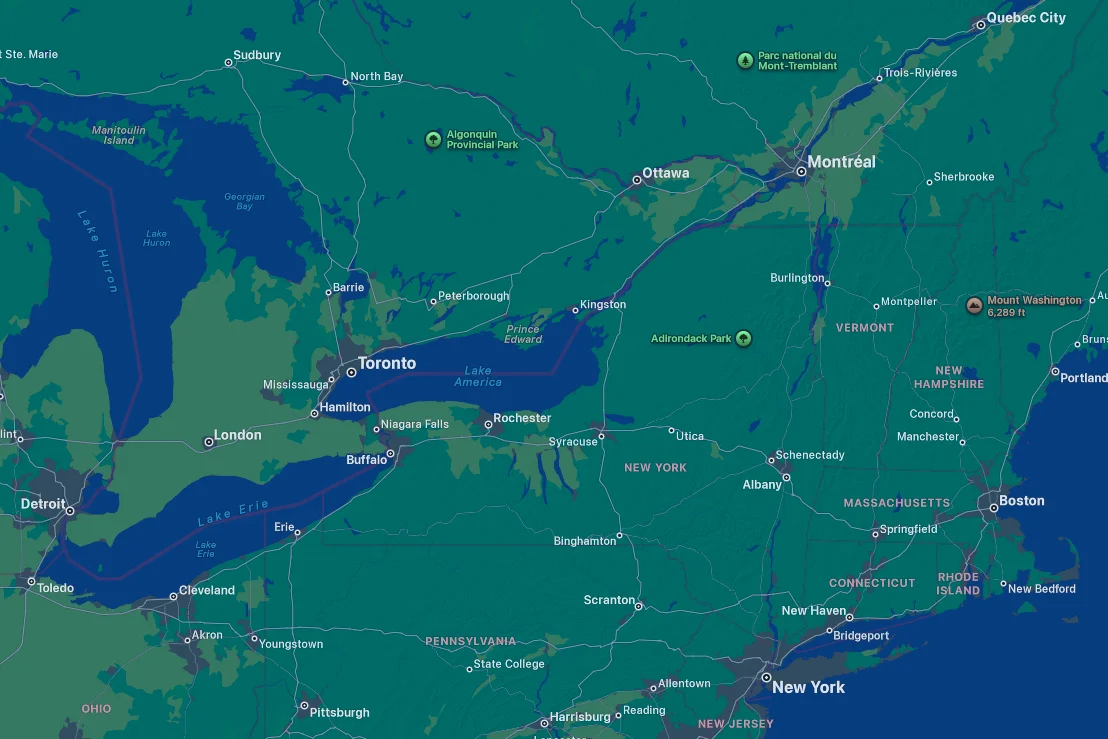
In a move mirroring Google’s recent actions, Apple has officially updated its Apple Maps service to reflect the controversial renaming of Lake Ontario to "Lake America" for users within the United States. This significant alteration, implemented less than a week after President Trump issued an executive order mandating the change, is already generating considerable discussion and impacting the competitive landscape of digital mapping services. For American users, the iconic Great Lake will now be identified solely as "Lake America" on both the Apple Maps website and its mobile application. Meanwhile, Canadian users will continue to see the traditional "Lake Ontario," while individuals accessing the service from outside these two nations will observe both names displayed, underscoring the politically charged nature of this geographical revision.
The directive originated from President Trump’s executive order, signed on August 27th, titled "Honoring the American History of the Great Lakes and Renaming Lake Ontario as Lake America." This order mandated the Department of the Interior to update the lake’s name within the U.S. Geographic Names Information System (GNIS) and all other federal databases within a 30-day timeframe. The executive order explicitly stated the rationale behind the renaming: "In recognition of this flourishing economic resource and its critical importance to our Nation’s economy and its people, I am directing that the Lake officially be renamed as Lake America." This pronouncement signals a broader governmental effort to assert American influence and historical narrative over shared geographical features, a move that has predictably heightened existing bilateral tensions with Canada, particularly in the wake of stalled trade negotiations.
Apple’s compliance with the executive order, alongside Google’s earlier decision, represents a significant capitulation by major technology firms to presidential directives concerning geographical nomenclature. While Apple has remained silent on the matter, offering no official comment when approached, Google provided a justification for its policy. The search giant explained that it updates map data to align with changes in official government sources, citing the U.S. Geographic Names Information System (GNIS) as a primary reference. This reliance on governmental data, while seemingly neutral, positions these tech giants as arbiters of officially sanctioned names, even when those names are politically motivated and deviate from established international recognition.
However, not all mapping services have bowed to this pressure. MapQuest, a veteran in the digital mapping arena, has publicly stated its refusal to alter the name of Lake Ontario. The company has chosen to maintain the familiar and widely recognized name, emphasizing user familiarity over adherence to newly imposed governmental designations. This stance extends beyond the current controversy; MapQuest also notably did not rename the Gulf of Mexico to "Gulf of America" when a similar directive was issued by President Trump last year. This independent approach has resonated strongly with a segment of the user base, creating a significant ripple effect in the market.
The divergent policies of Apple and Google versus MapQuest have resulted in a dramatic surge in user engagement for the latter. Downloads of MapQuest’s applications have reportedly skyrocketed, propelling its iOS app to the number one position in the U.S. App Store’s top charts, even surpassing the consistently dominant ChatGPT as of September 1st. The surge in popularity also extended to the Google Play Store, where MapQuest secured the sixth position overall among all apps and games. This widespread adoption of MapQuest suggests a significant user backlash against the politically influenced renaming of geographical features by major tech platforms.
MapQuest’s defiance has been met with a robust public response, including active engagement on social media platforms. The company posted a GIF of an apple on X (formerly Twitter) with the caption, "Them Too," a clear jab at Apple’s decision. In another post, showcasing a screenshot of MapQuest as the number one downloaded app, the company declared, "The people have spoken. We are working." This sentiment underscores a growing sentiment among some users who view the renaming as an overreach of presidential authority and a disregard for established geographical identities.
This is not the first instance of Apple and Google deferring to presidential directives regarding geographical names. As previously mentioned, both companies made similar adjustments last year by renaming the Gulf of Mexico to "Gulf of America" in response to a presidential order. This precedent highlights a pattern of compliance by major technology firms, which, while perhaps driven by a desire to maintain access to governmental data or avoid regulatory scrutiny, is now facing increased public scrutiny and pushback. The implications of these decisions extend beyond mere map labeling; they touch upon issues of national identity, historical interpretation, and the influence of technology companies in shaping public perception of the world.
The renaming of Lake Ontario to "Lake America" by Apple and Google, and the subsequent user reaction, raises pertinent questions about the role of technology companies in navigating complex geopolitical and historical narratives. While these platforms are often lauded for their innovation and connectivity, their decisions in areas like geographical naming can have far-reaching consequences, influencing how millions perceive and interact with the world. The market’s clear preference for MapQuest’s stance suggests that users are not simply passive recipients of information but are actively discerning and reacting to the editorial and political choices made by these digital giants.
The economic implications of this shift are also noteworthy. The surge in MapQuest’s user base could translate into significant revenue gains through advertising and data collection, potentially challenging the long-standing dominance of Apple Maps and Google Maps in the navigation sector. This competitive dynamic, fueled by a public outcry against politically motivated renaming, could force other mapping services to reconsider their policies and potentially lead to a more diverse and user-centric approach to geographical data.
Furthermore, the controversy underscores the delicate balance that technology companies must strike between adhering to official governmental mandates and maintaining user trust and loyalty. In an era where information is increasingly filtered through digital platforms, the decisions made by companies like Apple and Google carry substantial weight. Their willingness to adopt politically charged renamings, even if justified by adherence to official data, risks alienating users who may perceive these actions as compromising their neutrality and impartiality.
The historical context of Lake Ontario is also relevant to this discussion. As one of the five Great Lakes, it has been a vital artery of trade, transportation, and ecological significance for centuries, shaping the development of both Canadian and American territories. Its name, derived from the Iroquoian word "Ontarí:io," meaning "great lake," has long been recognized internationally. The imposition of a new name, particularly one that emphasizes a singular national identity, disregards this shared history and the established nomenclature that has facilitated international cooperation and understanding.
The implications of this renaming extend beyond the immediate user experience. Geographers, historians, and international bodies may also weigh in on the long-term ramifications of such unilateral name changes. The potential for confusion, the erosion of established cartographical standards, and the precedent it sets for future governmental interventions in geographical naming are all critical considerations that warrant further examination. As technology continues to shape our understanding of the world, the responsibility of tech companies to navigate these sensitive issues with care and consideration becomes increasingly paramount. The "Lake America" controversy serves as a stark reminder that digital maps are not merely neutral representations of geography but are increasingly becoming arenas for cultural and political discourse. The ongoing user migration to MapQuest suggests that, at least in this instance, the public is actively choosing a platform that prioritizes established geographical identity over politically motivated rebranding. This trend could signal a turning point in how mapping services are perceived and utilized, emphasizing the enduring value of familiarity and international consensus in a rapidly evolving digital landscape.
