
 By Titik Puspa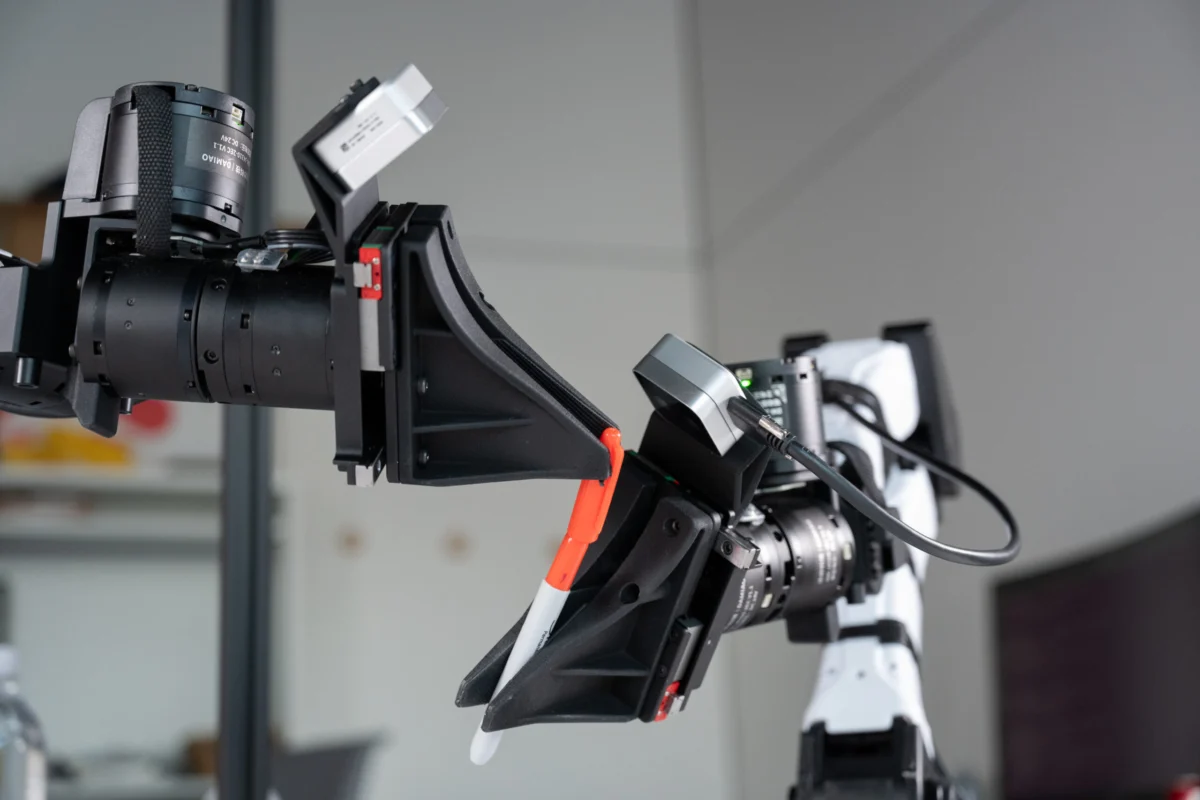
Less than three months after a significant $70 million Series A funding round, XDOF, a pioneering startup dedicated to collecting real-world teleoperation data for training general-purpose robots, is reportedly in late-stage negotiations to secure a Series B investment at an impressive valuation of approximately $1.2 billion. The round is expected to be led by prominent venture capital firm 8VC, according to multiple sources with direct knowledge of the ongoing discussions. This rapid ascent to unicorn status underscores the immense and burgeoning demand for high-quality, real-world data, a critical bottleneck in the development of sophisticated robotic systems.
XDOF, co-founded in 2024 by UC Berkeley researchers Philipp Wu (CEO) and Fred Shentu (CTO), has quickly established itself as a vital player in the nascent but rapidly expanding field of robotics data acquisition. The company’s genesis stems from Wu’s doctoral research, which highlighted the profound scarcity of large-scale datasets as a major impediment to advancing robotic learning capabilities. Recognizing this critical gap, Wu collaborated with Shentu on GELLO, an innovative, low-cost teleoperation system designed to enable human operators to remotely control robotic arms, thereby generating crucial training data. Their foundational work, which resulted in an influential paper within the robotics community, laid the groundwork for XDOF’s current operations.
The urgency and scale of XDOF’s current funding pursuit are attributed to its extraordinary growth trajectory. Despite raising a substantial $70 million Series A in June – an investment that saw participation from esteemed firms including Thrive Capital, Andreessen Horowitz, Lux, and Spark Capital – XDOF was not initially anticipating another fundraising endeavor so soon. However, the company’s annualized revenue is reportedly approaching a remarkable $50 million, a figure that has evidently captured the attention of venture capitalists, prompting them to proactively approach XDOF about a new funding round. This swift financial momentum suggests that XDOF is not merely meeting market demand but actively shaping it.
While the exact capital being raised in this Series B round remains undisclosed, and it is unclear whether the $1.2 billion valuation encompasses the new infusion of funds, the terms are still subject to finalization and could evolve. Representatives from XDOF and 8VC have not yet responded to requests for comment regarding these developments.
At its core, XDOF’s mission is to construct the sophisticated data pipelines, collection tools, and annotation systems that are often prohibitively complex or resource-intensive for frontier AI labs and robotics companies to develop in-house. In essence, XDOF is positioning itself as the indispensable outsourced data-supply chain for the entire robotics industry. This strategic focus addresses a fundamental challenge: while large language models (LLMs) initially benefited from the vast, readily available data of the internet, physical robots lack a comparable, comprehensive real-world dataset. This deficit makes data collection a primary constraint on the creation of versatile, general-purpose machines capable of interacting with and navigating the complexities of the physical world.
XDOF’s approach is multifaceted and deeply rooted in practical data generation. The company leverages a combination of remote robot teleoperation and on-the-ground human data collectors equipped with sensors. These collectors meticulously record everyday tasks, from the seemingly mundane act of folding clothes to the practical necessity of flattening boxes. This granular, real-world data is crucial for training robots to perform a wide array of physical manipulations and interactions.
The company is also forging strategic partnerships to amplify its data collection efforts. Notably, XDOF is collaborating with UC Berkeley’s AI Research lab to release what is touted as the most extensive collection of high-quality robot training data ever assembled, a project internally referred to as ABC (likely standing for "Autonomous Behavior Collection" or a similar designation). This collaborative endeavor aims to democratize access to vital datasets, accelerating research and development across the robotics landscape.
Looking ahead, XDOF has ambitious plans for scaling its operations. The startup intends to recruit and train dedicated teams of data collectors on a global scale. This workforce will comprise two key groups: teleoperators who remotely steer robots to perform specific tasks and egocentric operators who wear body-worn sensors to capture movement data from a first-person perspective. This dual approach ensures a rich and diverse dataset encompassing both external robotic actions and the nuanced human movements that robots are intended to emulate or assist.
XDOF has already demonstrated significant traction with its existing clientele. The company previously disclosed to TechCrunch that it is actively working with approximately 20 customers, a roster that includes several leading frontier AI labs. This existing customer base provides a strong validation of XDOF’s capabilities and the market’s immediate need for its services.
The competitive landscape for robotics data collection is evolving, with several other players vying for market share. Startups such as Mecka AI are also focused on collecting real-world data for robot training. Furthermore, established human-data platforms, which have already played a pivotal role in the LLM revolution, are expanding their scope to include physical robotics. Scale AI, a recognized leader in data labeling and AI training data, and Micro1, a competitor that has also secured significant funding, are examples of companies broadening their offerings in this domain. XDOF’s rapid growth and high valuation suggest it is carving out a dominant position within this emerging sector.
The significance of XDOF’s work cannot be overstated. The development of general-purpose robots, capable of performing a wide range of tasks in unpredictable environments, hinges on their ability to learn from vast amounts of real-world experience. This is a stark contrast to the development of specialized industrial robots, which often operate in highly controlled and repetitive settings. For robots to truly become ubiquitous, assisting in homes, healthcare, logistics, and beyond, they need to understand and adapt to the nuances of human environments and interactions. This requires data that captures the messy, unpredictable, and often subtle aspects of physical reality.
XDOF’s model of providing this essential data infrastructure addresses a fundamental challenge in AI development: the "data bottleneck." Just as early AI research was hampered by a lack of computational power, modern robotics research is frequently constrained by the difficulty and expense of acquiring sufficient, high-quality real-world data. By specializing in this critical area, XDOF is enabling other companies and research institutions to focus on their core competencies – designing advanced algorithms, developing novel robot hardware, and envisioning new applications – rather than getting bogged down in the arduous process of data collection.
The company’s founders’ academic background at UC Berkeley, a renowned hub for AI and robotics research, provides them with a deep understanding of the technical challenges and a strong network within the academic and industry communities. This foundation has likely been instrumental in their ability to attract top talent, secure early partnerships, and gain the confidence of investors.
The potential impact of XDOF’s work extends beyond mere data provision. By standardizing and scaling the collection of real-world robotic data, XDOF could accelerate the pace of innovation across the entire robotics sector. This could lead to faster development cycles, more robust and capable robots, and ultimately, a wider range of applications that could significantly improve human lives and productivity. The company’s valuation, if finalized at $1.2 billion, would not only be a testament to its current success but also a strong indicator of the market’s conviction in the future of physically intelligent machines, and the critical role of data in realizing that future.
