
 By admin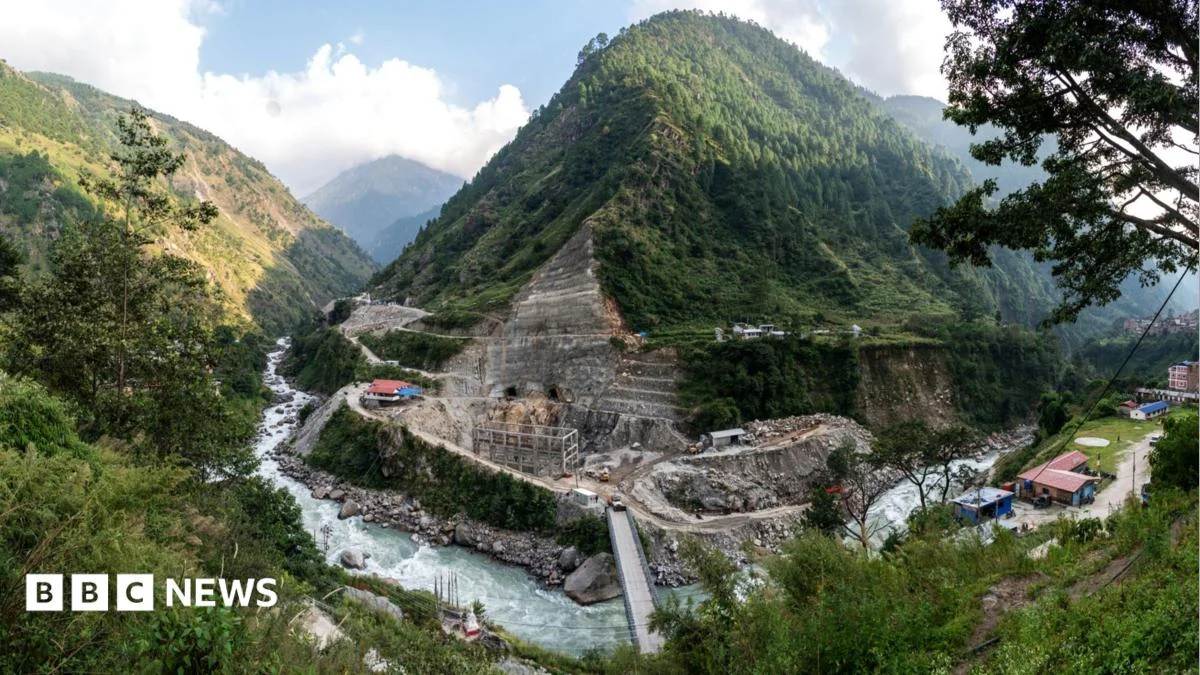
Nepal, a nation whose economic and developmental trajectory is inextricably linked to the power of its rivers, is facing an unprecedented crisis as devastating flash floods, exacerbated by climate change, have crippled its vital hydropower sector. With nearly 100% of its electricity generated from hydropower, a source that also generates substantial export revenue of nearly $200 million annually from sales to India and Bangladesh, the nation’s reliance on this single energy source has been brutally exposed. The very glaciers and majestic mountains that bestow this natural advantage are now succumbing to the ravages of global warming, with last Wednesday’s catastrophic floods serving as a stark and tragic testament to the inherent risks.
The scale of the disaster is immense. Over 1,300 lives have been lost, and thousands more remain missing, swallowed by the torrents that swept through communities near the Nepal-Tibet border. The economic and infrastructural damage is equally profound. Twelve hydropower plants in the Trishuli River basin, a critical artery for Nepal’s power generation, have been severely damaged, leading to the outage of more than 10% of the nation’s total electricity output. Operators are grappling with the grim reality that the operational status of these facilities remains uncertain, casting a long shadow over Nepal’s energy security. While the state-owned Nepal Electricity Authority (NEA) has attempted to reassure the public of continued adequate supply, its spokesman, Rajan Dhakal, candidly acknowledges the pressing need for a fundamental reevaluation of Nepal’s hydropower policy in light of increasingly frequent climate-related disasters.
This current crisis unfolds against a backdrop of remarkable progress in Nepal’s electrification efforts. Just over a decade ago, in 2010, a mere two-thirds of the population had access to electricity, and even those connected households endured daily power outages lasting up to 16 hours. Through a strategic expansion of hydropower infrastructure, coupled with concerted efforts to combat corruption and strategically import energy from India to bridge seasonal deficits, Nepal had, by 2018, achieved a significant milestone: a 24-hour power supply for most of its citizens. Today, Nepal boasts 225 hydropower plants with an installed capacity exceeding 3,900MW, capable of powering approximately three million households simultaneously. Hundreds more projects are either under construction or in advanced planning stages, predominantly situated high in the mountains to harness the power of fast-flowing glacial meltwater, often requiring minimal or no storage systems.
However, this geographical advantage is becoming a critical vulnerability. The high-altitude regions of the Himalayas are warming at a rate 50% faster than the global average, significantly elevating environmental risks. Preliminary investigations into last week’s flash flood point to a collapsed glacier and its underlying bedrock as the primary cause, a phenomenon increasingly linked to rising global temperatures. While scientists caution against drawing immediate definitive conclusions, the Nepal’s Disaster Risk Reduction and Management Authority has previously reported that over 90% of disaster events recorded between 2018 and 2024 were directly attributable to climate-related factors.
The gravity of the situation has prompted urgent calls for strategic adaptation. Kulman Ghising, Nepal’s former Energy Minister, who described the recent deluge as a "once-in-a-century" event, emphasized the critical lessons learned for future plant design and site selection. "We need to design the plants [to be more] resilient to the floods and, most importantly, adopt early-warning systems as well as robust emergency evacuation measures," he stated in an interview with the environmental news outlet Mongabay. The immediate aftermath of the floods has revealed the perilous conditions faced by those working within the sector, with hundreds of hydropower laborers, engineers, and nearby residents feared trapped within the mud-filled tunnels of the damaged plants.
The NEA spokesman, Rajan Dhakal, suggests that a strategic "rethink" of Nepal’s hydropower approach could incorporate reservoir-based power plants. These facilities, which would not necessarily be located in high-altitude mountain regions, offer the advantage of water storage and controlled release. However, this shift would undoubtedly entail significant economic and environmental considerations, including potential land acquisition challenges and altered river ecosystems.
This disaster is also fueling a broader debate about Nepal’s overwhelming reliance on hydropower. Renewable energy expert Kushal Gurung, founder of the clean tech firm WindPower Nepal, voiced a widely held concern: "We should not be putting all our eggs in one basket in these dangerous times." He strongly advocates for a more robust embrace of alternative energy sources, such as solar and wind power, urging a revision of Nepal’s current "very pro-hydropower" energy policy. This sentiment is echoed by Vivek Shastry, a researcher at Columbia University’s Center on Global Energy Policy, who posits that "meaningful additions of wind and solar generation is a resilience strategy that can limit single-point or interconnected electricity system failures in the future."
Further supporting the call for diversification, a report from the German aid agency highlights the immense untapped potential of solar power in Nepal, estimating its production capacity to be approximately ten times larger than that of hydropower. Puspa Sharma, a senior research fellow at the National University of Singapore’s Institute of South Asian Studies, agrees that energy diversification is crucial but cautions that it can only be achieved to a "limited extent." She reiterates that hydropower remains Nepal’s "massive competitive advantage vis-a-vis its South Asian neighbours," citing comparative studies on regional renewable energy potential.
Despite the escalating risks, hydropower continues to attract the lion’s share of large-scale investments in Nepal. Climate activists point to the fact that funding has persisted even in the face of known disaster vulnerabilities. The Upper Trishuli-1 project, a cornerstone of Nepal’s foreign direct investment landscape valued at approximately $647 million and backed by institutions like the Asian Development Bank and the International Finance Corporation, was largely destroyed in the recent floods. Similarly, the Upper Trishuli 3A project, also severely impacted, received funding from China’s Export-Import Bank.
Himanshu Thakkar, coordinator of the South Asia Network on Dams, Rivers & People, has been a vocal critic, asserting that international lenders were "acutely aware of the extreme danger to which they were exposing thousands of labourers, officials, residents, rivers, infrastructure and landscape." He claims that their own reports repeatedly flagged these dangers, yet preventive measures, stringent checks and balances, and preparedness for a foreseeable calamity were lacking. Thakkar points to the historical volatility of the Trishuli River basin, noting that it has been hit by significant floods in the preceding two years. In September 2024, an unprecedented cloudburst over the Trishuli and Bhote Koshi river basins triggered flash floods in Rasuwa, Nuwakot, and Dhading – settlements that bore the brunt of last week’s disaster. Furthermore, in July 2025, a glacial lake in Tibet’s Gyirong county breached, causing a devastating flood down the same river stretch into Nepal, resulting in at least 11 fatalities, critical infrastructure damage, and a nearly six-month closure of the vital Nepal-China trade corridor, which had only reopened on January 1st of the current year.
The NEA’s Rajan Dhakal concedes that even if climate risk assessments were conducted, "the designing of the plants may not have been done accordingly." He acknowledges the clear need for improvement in "the way we build and operate our hydropower plants." The financial ramifications are already being felt by private operators. Uttam Bhlon Lama of the Independent Power Producers’ Association of Nepal reports that insurers have paid out approximately $40 million for flood-related damages to over 20 privately owned plants in the past three years alone. He warns that escalating insurance premiums are rendering the cost of doing business increasingly "unfeasible," further underscoring the urgent need for a comprehensive reassessment of Nepal’s energy future and its vulnerability to a changing climate.
