
 By admin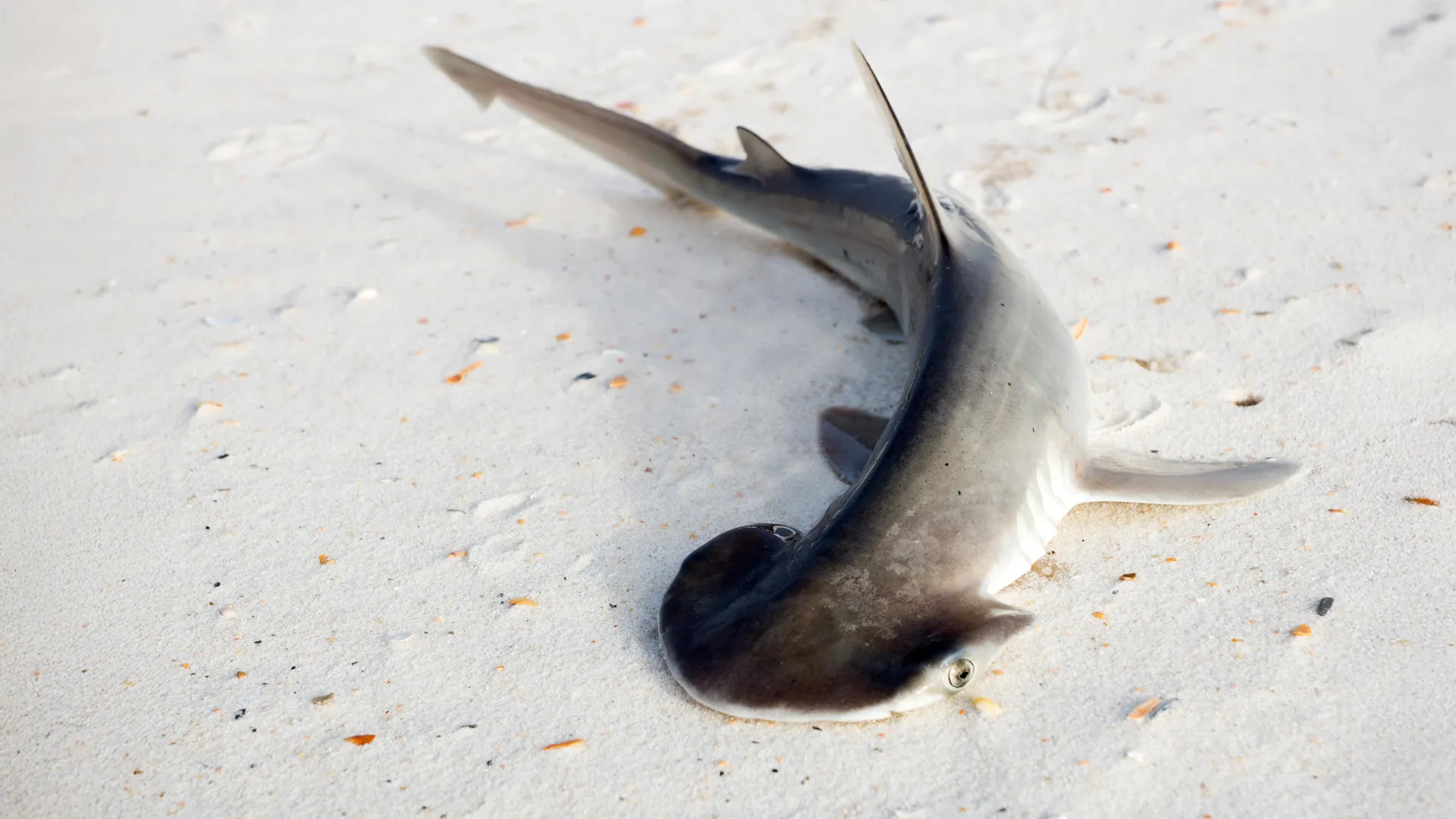
Bonnethead sharks, often referred to as "shovelhead sharks" due to their unique cephalofoil (head structure), are relatively small members of the hammerhead family (Sphyrnidae). They are widespread in shallow, coastal waters across the Western Atlantic and Gulf of Mexico, playing a vital role in estuarine ecosystems. While all hammerheads are known for their distinctive, flattened, and laterally expanded heads, bonnetheads stand out as the only shark species where clear, consistent sex-based differences in head morphology are observed. Males typically exhibit a more angular, pointed projection along the front edge of their head, giving them a sharper, almost arrowhead-like profile. In contrast, females tend to possess a smoother, more continuously curved and rounded outline, leading to a perceptibly different appearance. This kind of physical difference between males and females within the same species is a biological phenomenon known as sexual dimorphism, and its evolutionary drivers are a subject of intense scientific inquiry.
Unraveling the Mystery of Bonnethead Head Shape
For years, a prevailing hypothesis suggested that the pointed head shape in males was a secondary sexual characteristic, developing as they reached reproductive maturity to potentially aid in male-male competition, mate recognition, or even more efficient foraging strategies specific to mature males. This new study, however, fundamentally reconfigures that understanding. "Our findings show that the pointed head shape is not a feature that develops in males when they reach maturity, as previously thought," explained Kathy Liu, the lead author of the study, who conducted this research as part of her master’s degree at the Rosenstiel School. Liu further elaborated on the unexpected discovery: "Instead, we observed that younger males and females both possessed more pointed heads. As the sharks matured and grew older, their heads became progressively rounder, and this morphological change was strikingly more pronounced in females." This revelation shifts the focus from a maturity-linked trait in males to an age-related developmental change occurring in both sexes, with differential rates between them.
The research represents the first comprehensive investigation to simultaneously examine both head shape morphology and dietary habits in bonnethead sharks from Florida’s diverse coastal environments. To ensure the robustness and generalizability of their findings, scientists not only focused on populations within Biscayne Bay but also included sharks from Tampa Bay. This comparative approach allowed them to assess whether the observed developmental patterns in head shape were consistent across populations inhabiting geographically distinct regions on opposite sides of the Florida peninsula, each with potentially different ecological pressures and food webs. The consistency of the findings across these two locations lends significant weight to the study’s conclusions, suggesting a fundamental biological mechanism at play rather than a localized environmental response.
Challenging the Dietary Hypothesis
Beyond morphology, a central component of the study involved exploring whether differential feeding strategies or distinct dietary preferences could explain the observed sex-specific head shapes. It is a common evolutionary principle that an animal’s physical characteristics, especially those of the head and mouth, are often adapted to its diet and foraging behavior. Researchers hypothesized that if males and females consumed different types of prey or utilized different foraging techniques, their head shapes might evolve to optimize these specialized roles.
The team meticulously analyzed the diets of bonnethead sharks from both Biscayne Bay and Tampa Bay. Their results indeed revealed that bonnetheads within these two bays occupied distinct food webs, reflecting the unique ecological characteristics of each region. Furthermore, they found that individual sharks experienced dietary shifts as they grew, indicating a change in prey preference or availability over their life stages. For instance, younger, smaller sharks might target smaller crustaceans, while older, larger individuals might incorporate more fish into their diet. However, a critical finding emerged when comparing the sexes within the same bay: "Our findings provided no evidence that differences in diet or foraging were driving the development of the sharks’ sex-specific head shapes," stated Liu unequivocally. Despite the overall dietary changes with age and the distinct food webs between bays, male and female bonnetheads living side-by-side in the same bay showed remarkable overlap in their reliance on local food sources. This strongly suggests that diet is not the primary determinant of their morphological dimorphism.
Dr. Catherine Macdonald, a co-author of the study, an associate professor in the Department of Environmental Science and Policy, and the director of the Shark Research and Conservation Program at the Rosenstiel School, underscored the significance of this exclusion. "This study helps narrow the drivers of a biological trait that has puzzled scientists for a long time," she noted. "By examining body shape and diet in the same animals, we were able to comprehensively assess whether diet and morphological changes co-occur. Our results definitively suggest there is another cause behind the striking differences in head shape between male and female bonnetheads." This systematic process of elimination is crucial in scientific inquiry, allowing researchers to discard plausible but ultimately incorrect hypotheses and focus future efforts on more promising avenues.
A Meticulous Approach to Measurement and Analysis
The robust conclusions of the study are built upon a meticulous and ethically sound research methodology. Between May 2022 and May 2023, the research team conducted extensive fieldwork, sampling a total of 105 bonnethead sharks in Biscayne Bay and an additional 39 in the Tampa Bay region. The capture methods were tailored to the specific conditions of each location: sharks in Biscayne Bay were primarily captured using research longlines, while those in Tampa Bay were collected predominantly with scientific gillnets, both standard methods for shark research that minimize harm to the animals.
Upon capture, each shark underwent a comprehensive suite of measurements, including length, weight, and sex determination. A small, non-lethal muscle sample was carefully taken for dietary analysis. Crucially, the researchers developed a standardized photographic technique to precisely document the head morphology. Each side of the animal’s head was photographed against a specially designed grid board, ensuring consistent scale and orientation. This allowed for highly accurate digital analysis. To minimize stress and ensure the well-being of the sharks, all measurements and sampling procedures were conducted swiftly, and the animals were released back into the water as quickly as possible.
The photographic data was then processed using ImageJ software, a powerful open-source image analysis program. This enabled the team to analyze the photographs with extreme precision, comparing the curvature and angularity of each shark’s head. The digital method provided an objective and repeatable way to quantify subtle morphological differences that might be missed by manual measurements, allowing for a detailed comparison of head shapes across different sexes, ages, and populations. This innovative approach to morphological quantification was central to detecting the age-related changes in head shape.
Unveiling Dietary Insights Through Chemical Clues
To investigate the sharks’ diets beyond direct stomach contents, which only reflect recent meals, scientists utilized stable isotope analysis (SIA). Muscle tissue from 137 sharks was analyzed for carbon (δ13C) and nitrogen (δ15N) isotope signatures. These chemical markers act as long-term dietary tracers. Carbon isotopes (δ13C) can indicate the primary source of organic matter at the base of the food web, differentiating between coastal, estuarine, or offshore feeding grounds. Nitrogen isotopes (δ15N), on the other hand, provide insights into an animal’s trophic level—how high up it is in the food chain. By analyzing these ratios, researchers can gain a broader, integrated view of an animal’s diet over weeks to months, providing a more comprehensive understanding of their long-term foraging ecology.
The stable isotope signatures revealed significant ecological distinctions between the two study sites. The isotope signatures of sharks from Biscayne Bay showed little overlap with those from Tampa Bay, strongly suggesting that the two populations were feeding within ecosystems characterized by different environmental baselines. This means that even if the sharks were consuming similar types of prey, those prey items would carry different isotope signatures depending on the specific environmental conditions (e.g., salinity, primary producers) of the bay they inhabited. The researchers carefully cautioned that this finding does not necessarily imply that the sharks were eating entirely different prey species. Rather, it highlights the influence of the local ecosystem’s unique isotopic fingerprint on all organisms within its food web. This distinction was crucial for the study’s primary objective: by demonstrating that the sexes within each bay had similar isotopic signatures (and thus similar long-term diets), the researchers could confidently rule out diet as the driver of head shape dimorphism.
The Enduring Enigma: Why the Pointed Head?
Despite these significant advancements, the fundamental question persists: what evolutionary advantage does the bonnethead’s distinctive pointed head confer, especially given its differential development between sexes? Scientists still do not have a definitive answer, but the new findings provide a fresh perspective for formulating future hypotheses.
One compelling possibility proposed by the researchers centers on hydrodynamics and swimming efficiency. They suggest that the pointed head shape could offer a hydrodynamic advantage, potentially reducing drag or enhancing maneuverability, which might be particularly beneficial for younger and smaller sharks. For juvenile sharks, efficiency in swimming could be critical for evading predators, capturing small prey, or simply conserving energy in their dynamic coastal habitats. As females grow larger, reaching substantial sizes to support reproduction and gestation (bonnetheads are viviparous, giving birth to live young), the potential benefits of a pointed head for swimming efficiency may become less critical or be outweighed by other biological imperatives. A larger, more robust female body might prioritize carrying offspring over subtle hydrodynamic advantages of the head. This could explain why the rounding of the head is more pronounced in females as they mature, perhaps representing an evolutionary trade-off where the energetic demands and physical constraints of reproduction lead to a different optimal head morphology.
To rigorously test this fascinating hypothesis, future research will be essential. Scientists will need to conduct detailed studies on swimming performance, potentially using respirometry tanks or flow tank experiments to quantify the hydrodynamic properties of different head shapes. Additionally, investigations into embryonic development are crucial. By examining the morphology of bonnethead embryos and neonates, researchers could pinpoint exactly when the differences between male and female head shapes first begin to appear, offering critical insights into the genetic or environmental triggers of this sexual dimorphism.
Expanding the Horizon of Bonnethead Research
The methodologies developed in this study, particularly the precise photographic technique for morphological analysis, hold immense promise for broader applications. The researchers emphasize that the same technique could be readily adopted to study bonnethead sharks in other parts of their extensive geographic range, which stretches from the temperate waters of the Americas to tropical coastlines. Comparing populations from diverse regions, such as those in the Caribbean, Central America, or the Eastern Pacific, could reveal additional variations in head shape and help scientists better understand how local environmental pressures or genetic differences might influence morphology.
Such expanded comparisons carry significant conservation value. Identifying subtle biological and ecological differences between geographically distinct bonnethead populations could be crucial for developing region-specific management strategies. If, for instance, certain populations exhibit unique developmental patterns or face particular environmental stressors, a one-size-fits-all conservation approach might be ineffective. Understanding these localized adaptations is vital for tailoring fishing regulations, habitat protection efforts, and other conservation measures to ensure the long-term sustainability of the species.
By combining detailed measurements of body shape with comprehensive information about diet and trophic ecology, scientists can continue to test competing explanations for how unusual biological traits like the bonnethead’s head shape develop and evolve. This multidisciplinary approach is powerful, allowing for a holistic understanding of an organism’s biology. Furthermore, studying bonnetheads across a wider geographic range could reveal hidden population differences—genetic, ecological, or morphological—that might otherwise remain undetected, providing a more complete picture of Sphyrna tiburo‘s remarkable diversity and evolutionary history.
The study, aptly titled "A Head of the Curve: Bonnethead Shark (Sphyrna tiburo) Cephalofoil Morphology and Trophic Ecology," was published in the esteemed journal Integrative Organismal Biology. The collaborative effort included authors Kathy Liu from the University of Miami Rosenstiel School and Field School; Jasmin Graham from Minorities in Shark Science; H Ro and S L Kim from the University of California, Merced; T. R. Wiley and J.M. Gardiner from Havenworth Coastal Conservation; L.J. Baker from California State University, Monterey Bay; and C. Macdonald from the Rosenstiel School and Field School. This impactful research was generously supported by the Field School and the University of Miami Shark Research and Conservation Program, with additional fieldwork in Tampa Bay supported by the Tampa Bay Environmental Restoration Fund and Disney Conservation Fund. Stable isotope analysis received support from the University of California, Merced, and partial project funding was provided by the Maxwell/Hanrahan Foundation, underscoring the collaborative and interdisciplinary nature essential for such significant scientific endeavors.
