
 By admin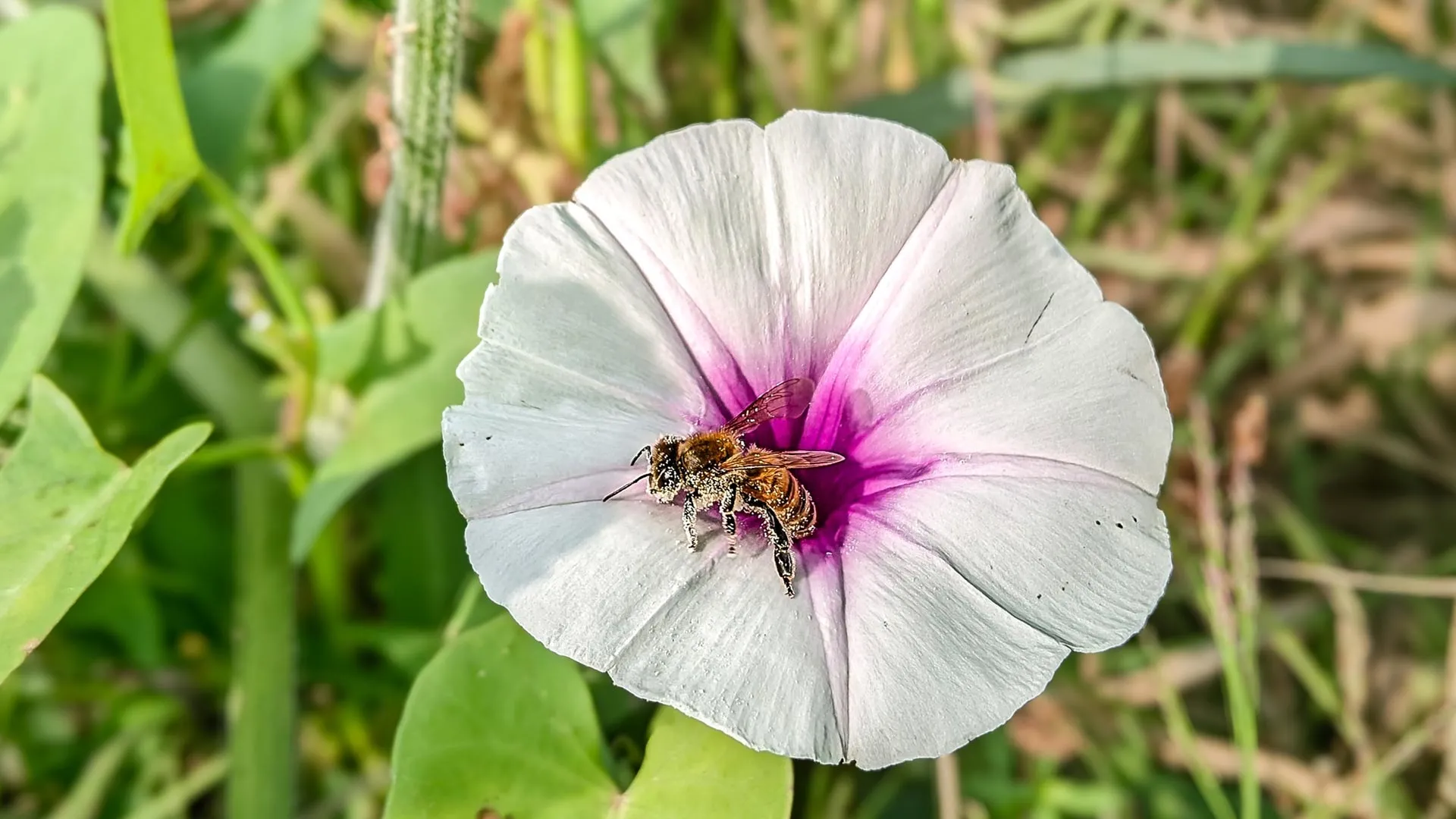
The research, focusing on the common morning glory (Ipomoea purpurea), unveils a troubling evolutionary bottleneck: the population’s rate of adaptation plummeted by a staggering 96% over just nine years. This precipitous slowdown in adaptive capacity carries significant implications not only for the survival of wild plant populations but also for global agriculture, given that morning glory is frequently considered a troublesome weed by farmers worldwide. The study highlights a critical conflict arising from human-caused environmental changes, where the immediate pressure of attracting dwindling pollinators may override the long-term necessity of adapting to a rapidly changing climate.
"Because pollinator pressure strongly favors larger flowers, that linkage may limit how efficiently the population can respond to other selective pressures," explained Regina Baucom, a professor in the U-M Department of Ecology and Evolutionary Biology and a co-author of the study. "Whether that ultimately makes the weed more or less of a problem for farmers is hard to predict – and that unpredictability is itself part of the story." This uncertainty underscores the complex and often unforeseen ripple effects of anthropogenic environmental degradation on natural systems.
Larger Flowers May Come With an Evolutionary Cost
The core of this evolutionary conundrum, Baucom posits, stems from an inherent conflict between two seemingly beneficial traits. On one hand, larger, more conspicuous flowers are a clear advantage in an environment where pollinators are scarce, increasing a plant’s chances of successful reproduction. On the other hand, the ability to flower earlier in the season or adjust flowering times (phenology) is a crucial adaptive strategy for plants responding to the vagaries of a warming climate, such as earlier springs or altered precipitation patterns.
In the morning glory populations studied, these two critical traits – flower size and flowering time – became increasingly linked, or "covaried," over the nine-year observation period. This genetic and phenotypic connection appears to restrict the plant’s evolutionary freedom, forcing a difficult choice. The research indicates that the intense selective pressure for larger flowers, driven by the scarcity of pollinators, took precedence, effectively limiting the plants’ capacity to adapt their flowering time in response to changing environmental conditions. This prioritization comes at a significant evolutionary cost, potentially compromising the plant’s long-term resilience to climate change.
Intriguingly, the newer plant populations still retained substantial genetic variation. In theory, this genetic diversity should provide ample "raw material" for continued adaptation across various traits. However, the study reveals that the presence of genetic diversity alone is not sufficient if evolutionary pathways become constrained. "The plant isn’t running out of evolutionary fuel – it’s increasingly locked into a trajectory that favors pollinator attraction, potentially at the expense of climate adaptation," Baucom emphasized. This suggests a redirection of evolutionary effort rather than a depletion of genetic resources, leading to a specialized adaptation that might be maladaptive in the broader context of global change.
Human-Caused Environmental Change: A Double Bind
The research was spearheaded by recent doctoral graduate Sasha Bishop in close collaboration with Baucom and University of Toronto researcher John Stinchcombe. Their team specifically utilized morning glories as a model system within a broader, urgent effort to comprehend the intricate ways human-caused global change is reshaping evolutionary trajectories across diverse species. The study adds a critical layer of understanding to the multifaceted pressures confronting the planet’s flora and fauna.
Climate warming, characterized by rising global temperatures, more frequent extreme weather events, and altered precipitation patterns, is just one dimension of the profound environmental shifts plants and animals currently navigate. Concurrently, human development has relentlessly replaced once-pristine, undisturbed habitats with urban sprawl, agricultural monocultures, and infrastructure. Furthermore, the widespread and often indiscriminate agricultural use of pesticides and herbicides has been a primary driver behind the drastic, well-documented declines in pollinator populations worldwide. Bees, butterflies, moths, and other crucial vectors of plant reproduction are vanishing at alarming rates, creating an intense selective pressure for plants to maximize attraction to the remaining few. This creates a "double bind" for plants, forcing them to adapt to two opposing forces simultaneously.
Bishop highlighted that the study, published in the prestigious journal Evolution Letters, directly addresses a growing discrepancy between established evolutionary theory and empirical observations in nature. Conventional evolutionary theory often posits that organisms can adapt rapidly when their environments undergo swift changes. Yet, a disheartening reality is emerging: numerous wild plant populations appear unable to keep pace with the unprecedented rate of environmental upheaval.
"Instead of evolving, there are all these wild populations that are dying off, declining or going through genetic bottlenecks," Bishop observed. "So we’re looking at a situation in which there’s a lag in what we’re seeing in the adaptive rate in wild populations compared to what we think might be theoretically possible in terms of rapid evolution." This lag is a critical warning sign for biodiversity, indicating that many species may not possess the evolutionary agility to survive the Anthropocene.
Testing an Adaptation Trade-Off: The Morning Glory Experiment
To meticulously investigate this critical problem, the researchers embarked on a sophisticated experimental approach. They cultivated morning glory plants from seeds meticulously collected from wild populations at two distinct time points, separated by a nine-year interval. This allowed for a direct comparison of evolutionary changes over a relatively short, ecologically relevant period.
Upon germination and growth, the team precisely measured a suite of traits known to be influenced by either climate conditions or pollinator activity. These included the crucial date of the first flower (a key phenological trait), overall flower size, the quantity and sugar content of nectar (a direct pollinator attractant), the total flowering time, and the distance between the flowers’ anthers (the pollen-producing part) and the stigma (the pollen-receiving structure), which can influence pollination efficiency.
The critical analytical step involved calculating the plants’ adaptation rate using a specialized statistical measure known as R. Unlike simpler methods that might examine each trait in isolation, this advanced approach estimates how an entire population is expected to adapt while explicitly accounting for the intricate relationships, or "covariances," among multiple traits. This holistic view is paramount for understanding evolutionary constraints, as changes in one characteristic can inherently limit the degree to which another characteristic can change.
When two traits are linked in this manner – a phenomenon known as covariance – they are no longer free to evolve independently. Bishop and Baucom’s meticulous analysis revealed a striking finding: flower size and flowering time became significantly linked in the morning glory populations during the relatively brief nine-year study period. This newly established covariance acted as an evolutionary tether, binding the fate of climate adaptation to pollinator attraction.
Plant Adaptation Falls Sharply: A Stark Warning
The quantitative results were stark. In the original morning glory populations, collected at the start of the study period, the researchers estimated that adaptation was occurring at approximately 76% of the rate expected if covariance between traits were entirely disregarded. This indicated some level of constraint even initially. However, nine years later, that figure had plummeted to roughly 9% of the expected rate without accounting for covariance. This dramatic reduction – a 96% drop in the actual adaptive rate relative to the unconstrained theoretical potential – points to a substantial and rapid increase in evolutionary constraints over a surprisingly short timeframe.
The implications of this constraint on flowering time are particularly concerning. Flowering phenology – the timing of life cycle events like blooming – is an exceptionally important adaptive pathway for plants responding to environmental changes. "There are quite literally thousands of studies showing that flowering phenology is a really important adaptive path when it comes to climate change, particularly temperature changes and precipitation changes, both of which happened in these wild populations in the locations where they were collected from," Bishop stated. The regions where the morning glories were collected indeed experienced significant shifts in temperature and precipitation during the study period, underscoring the relevance of this finding.
"The implication in my mind is that pollinator decline, or the lack of pollination and selective drive to attract pollinators, is making these plants potentially less able to adapt to climatic shifts," Bishop concluded. This suggests a tragic irony: as humans deplete pollinator populations, plants are forced to invest more evolutionary energy into attracting the few remaining, potentially compromising their ability to adapt to the equally pressing threat of a rapidly warming planet. This study serves as a potent warning about the complex and often unforeseen consequences of human activities on the fundamental processes of evolution, highlighting the urgent need for integrated conservation strategies that address both climate change and biodiversity loss.
