
 By admin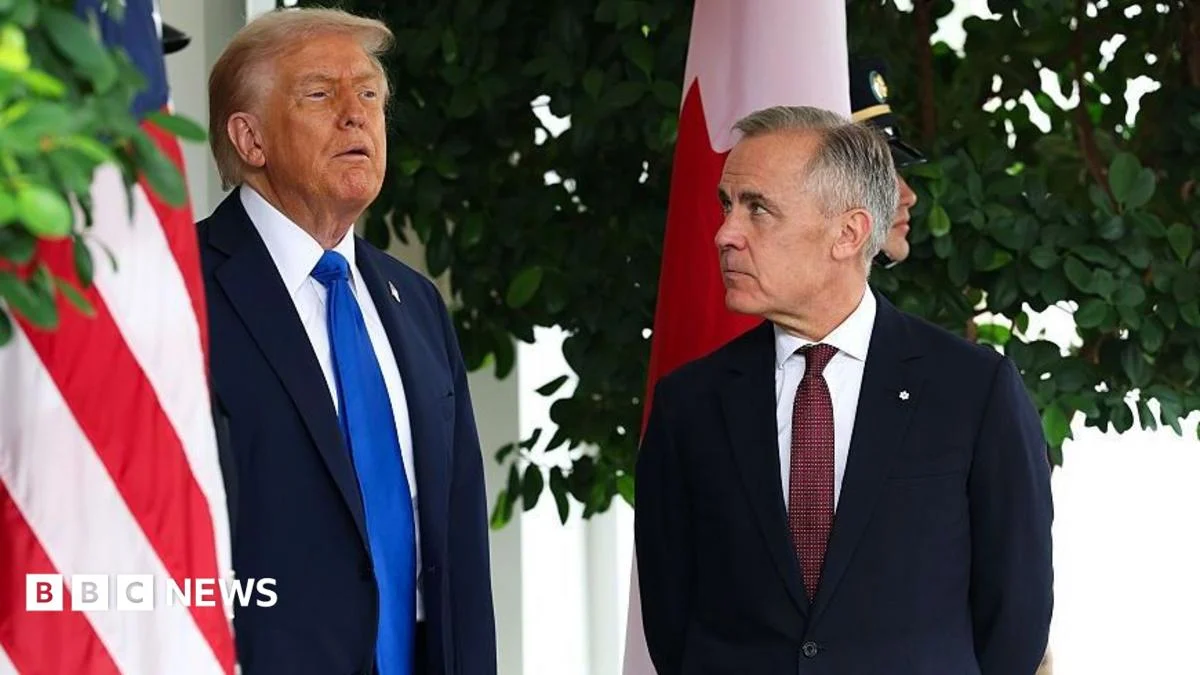
In a dramatic escalation of the ongoing trade dispute, the United States has announced a sweeping ban on a wide array of Canadian products, including alcohol, dairy, and motor vehicles. This move, which will take effect on September 29th, comes as a direct response to Canada’s imposition of retaliatory tariffs on American goods, further deepening the rift between the two neighboring nations. The executive orders, signed by US President Donald Trump on Tuesday, explicitly state that "Canada is discriminating in fact against the commerce of the United States," justifying the drastic measure.
The latest development marks a significant intensification of tensions that have been simmering for months. Just hours before the US announcement, Canadian Prime Minister Mark Carney addressed the nation in a video message, acknowledging that the country’s strategic "pivot away from the US as its largest trading partner ‘will come at a cost’." This candid admission underscores the gravity of the situation and the potential economic ramifications for both economies.
Despite the escalating measures, both US and Canadian officials have publicly expressed a desire to de-escalate the conflict and reach a mutually beneficial agreement. However, the path to resolution appears increasingly fraught, with no new high-level talks scheduled since negotiations abruptly collapsed in late August. This impasse leaves businesses and consumers on both sides of the border bracing for further uncertainty and disruption.
The current trade spat traces its roots back to last month when the White House, following several rounds of fruitless discussions, imposed substantial tariffs. These tariffs, set at a steep 50%, targeted approximately $20 billion worth of Canadian goods. The move was widely seen as a punitive measure aimed at forcing Canada back to the negotiating table and extracting concessions.
Canada, in turn, did not shy away from retaliating. Ottawa responded with its own set of dollar-for-dollar tariffs on a range of American products. These counter-duties, which came into effect after midnight on Tuesday, encompass items such as steel, clothing, and furniture, directly impacting key US export sectors. The tit-for-tat nature of these tariffs highlights the growing acrimony and the willingness of both governments to inflict economic pain on each other.
The trade dispute, however, is not solely confined to the realm of tariffs and economic sanctions. The friction between the US and Canada has also manifested in more symbolic, and at times, bizarre ways, further complicating the relationship. A notable instance occurred in August when President Trump ordered Lake Ontario to be renamed "Lake America." This directive, seemingly a political statement aimed at asserting American dominance, triggered widespread outcry and disbelief from Canadians and even some segments of the American population, who viewed it as an unnecessary and provocative act that disregarded shared history and geographical realities. Such incidents, while not directly economic, contribute to an atmosphere of mistrust and animosity, making diplomatic solutions even more challenging.
The economic underpinnings of this trade war are complex and deeply intertwined. Canada has historically relied heavily on the United States as its primary trading partner, with a vast majority of its exports flowing south of the border. The US, while not as dependent on Canada, still benefits significantly from robust trade with its northern neighbor, particularly in sectors like automotive manufacturing, energy, and agriculture. The imposition of tariffs and bans disrupts these established supply chains, leading to increased costs for businesses, higher prices for consumers, and potential job losses.
Economists have been closely monitoring the situation, with many warning of the detrimental effects of prolonged trade protectionism. Dr. Eleanor Vance, a senior trade economist at the Peterson Institute for International Economics, commented, "The current trajectory is deeply concerning. While individual tariffs might seem like targeted measures, the cumulative effect of such actions creates a ripple effect across the entire economy. It introduces uncertainty, discourages investment, and ultimately harms consumers through higher prices and reduced choice." She further elaborated that "the automotive sector, in particular, is highly integrated between the US and Canada, with many components crossing the border multiple times during the manufacturing process. Tariffs on vehicles and parts can significantly disrupt production and make vehicles more expensive for consumers on both sides."
The impact on the agricultural sector is also a significant concern. Canadian dairy farmers, for instance, are already feeling the pressure from existing tariffs, and the new ban on their products will further exacerbate their challenges. Similarly, American agricultural producers who rely on the Canadian market for certain products could face reduced demand. The political rhetoric surrounding these trade issues often overlooks the intricate web of dependencies that bind the two economies.
Beyond the immediate economic consequences, the trade war also carries significant geopolitical implications. The close relationship between the US and Canada, built on decades of cooperation and shared values, is being tested. A sustained period of trade animosity could erode this goodwill and potentially lead to a broader recalibrating of diplomatic and strategic alliances.
The Trump administration’s "America First" policy, which has characterized much of its foreign economic engagement, appears to be a driving force behind these aggressive trade tactics. The administration argues that previous trade agreements have unfairly benefited other countries at the expense of American workers and industries. However, critics contend that this protectionist approach is counterproductive and ultimately harms global economic growth.
Canada, under Prime Minister Justin Trudeau, has adopted a more multilateral approach to international trade and diplomacy. While seeking to maintain strong ties with its traditional allies, Canada has also been actively pursuing trade diversification, seeking new markets and strengthening existing relationships with countries in Asia and Europe. Prime Minister Carney’s statement about pivoting away from the US can be seen as a reflection of this broader strategy, albeit one undertaken under duress.
The current impasse highlights the challenges of negotiating trade agreements in an era of heightened nationalism and protectionist sentiment. The breakdown of talks in August suggests a significant divergence in objectives and priorities between the two governments. While both sides claim to want a deal, the conditions they are willing to accept appear to be miles apart.
The US ban on Canadian products, particularly on items like alcohol and motor vehicles, is likely to be met with further retaliatory measures from Canada, potentially leading to an even broader trade war. The ramifications for consumers are already becoming apparent, with anticipated price increases and reduced availability of certain goods. Small businesses, which often operate on tighter margins, are particularly vulnerable to these disruptions.
As the September 29th deadline approaches, the uncertainty surrounding the future of US-Canada trade continues to grow. Businesses are scrambling to adjust their supply chains and assess the potential impact of the new US ban. Investors are watching closely, with concerns about the stability of North American trade relations weighing on market sentiment.
The narrative surrounding this trade conflict is often framed as a zero-sum game, where one country’s gain is another’s loss. However, many trade experts argue that such disputes are ultimately detrimental to all parties involved, leading to inefficient resource allocation, reduced consumer welfare, and slower economic growth.
The coming weeks will be crucial in determining the future course of this trade war. The lack of scheduled negotiations, coupled with the imposition of further restrictive measures, paints a grim picture for immediate de-escalation. The hope remains that cooler heads will prevail, and that both nations will recognize the immense mutual benefit of a stable and prosperous trading relationship. However, the current actions suggest a willingness to endure significant economic pain in pursuit of perceived strategic advantages. The world is watching as this critical trade partnership navigates its most challenging period in recent memory.
