
 By admin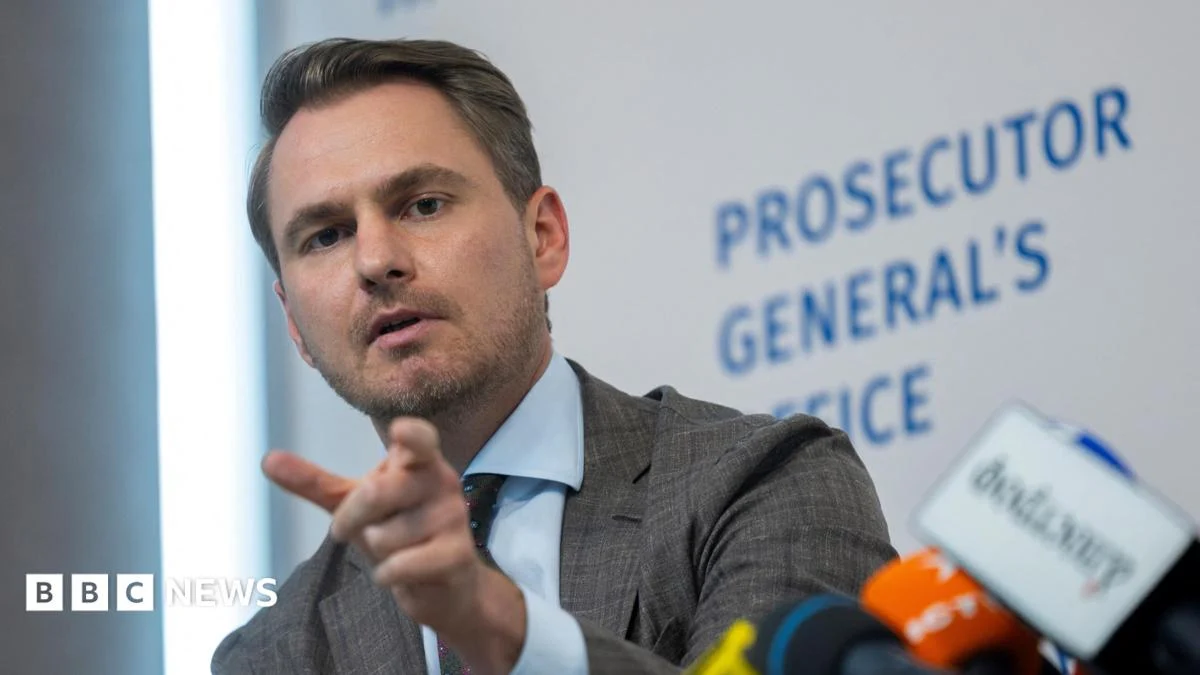
Ukraine’s chief prosecutor, Ruslan Kravchenko, has stepped down following serious corruption allegations that have cast a shadow over his tenure and the ongoing fight against illicit financial activities within the country. The resignation comes in the wake of a weekend search of his offices by Ukrainian anti-corruption investigators, who revealed they had uncovered a sophisticated money-laundering scheme reportedly orchestrated by an official directly within Kravchenko’s own department. This development is the latest in a series of corruption scandals that have persistently plagued Kyiv, even as the nation grapples with a full-scale invasion by Russia. The accusations have reached into the highest echelons of power, with several individuals close to President Volodymyr Zelensky facing scrutiny.
In a formal resignation letter, Kravchenko stated his desire to prevent his office from becoming a "tool for political confrontation," a sentiment that appears to acknowledge the escalating tensions surrounding the investigation. He reiterated his earlier position, vehemently rejecting the claims as "unsubstantiated" and asserting his innocence. However, the actions of Ukraine’s National Anti-Corruption Bureau (Nabu) and the Specialised Anti-Corruption Prosecutor’s Office (Sap) paint a starkly different picture. These agencies have detailed how the network operating within Kravchenko’s purview allegedly received substantial sums of money to provide protection for illegal call centres. These centres, notorious for their phone scams, were instrumental in "laundering millions in assets," according to Nabu. The illicit gains were then channeled into acquiring valuable assets, including real estate, precious jewelry, and other luxury items, further solidifying the scale and intent of the criminal enterprise.
Kravchenko, in a public statement released on Sunday evening, had vehemently dismissed the allegations, labeling them "completely unsubstantiated" and unequivocally denying any personal involvement or wrongdoing. His resignation, tendered just a day later, was accompanied by a formal expression of gratitude to President Zelensky and the Ukrainian parliament for the "trust" they had placed in him. As of this report, President Zelensky has yet to issue a public statement regarding Kravchenko’s departure.
The persistent issue of corruption in Ukraine is a deeply entrenched challenge, one that predates the current conflict and has continued to undermine the nation’s progress and international standing. Despite the establishment of key anti-corruption bodies like Nabu and Sap over a decade ago, their effectiveness has been repeatedly tested by systemic corruption. The gravity of this problem was underscored in 2025 when nationwide protests erupted following President Zelensky’s attempt to implement reforms that critics argued would significantly curb the independence of these very anti-corruption institutions. This move sparked considerable alarm among Ukraine’s European partners. Ambassadors from the G7 group of nations issued stern warnings, highlighting the potential for such actions to jeopardize Ukraine’s aspirations for integration into the European Union.
Ukraine’s status as an EU candidate country was explicitly granted on the condition that it demonstrate a credible and sustained commitment to fighting corruption. The backlash to Zelensky’s proposed reforms led to the reinstatement of the autonomy of Nabu and Sap. However, questions have continued to linger regarding the president’s unwavering commitment to deep-seated anti-corruption reform, especially in the face of internal political pressures and the ongoing war effort.
The recent allegations against Kravchenko are not an isolated incident but rather symptomatic of a broader pattern. Just last month, Nabu announced the uncovering of a scheme designed to misappropriate over $3 million (equivalent to approximately £2.2 million) in Ukrainian currency. This money was allegedly intended to facilitate the payment of bail for a former energy minister who is himself facing charges of money laundering. In a significant development following that revelation, a senior official within President Zelensky’s office, who was reportedly implicated in the scheme, was dismissed from their post. This indicates a willingness, at least at some level, to address corruption within the presidential administration, even if the scale of the problem remains vast.
The economic and social ramifications of such corruption are profound. Illegal call centres, often operating with sophisticated technical infrastructure and exploiting vulnerable individuals, siphon billions of dollars from economies worldwide. In Ukraine, the protection of these operations by corrupt officials not only facilitates financial crime but also diverts resources that could be used for essential public services, defense, and reconstruction. The laundering of these illicit funds can further destabilize the financial system, making it harder to track and recover stolen assets.
The international community, particularly the European Union and its member states, views Ukraine’s progress in tackling corruption as a critical benchmark for its integration prospects. The EU’s accession process is rigorous, demanding not only legislative reforms but also tangible evidence of their effective implementation. Scandals involving high-ranking officials can significantly erode the trust of international partners, impacting crucial financial and military aid, as well as the broader geopolitical alignment of Ukraine. The ongoing war effort necessitates a strong and unified national front, and internal corruption can serve as a significant vulnerability, exploited by adversaries and undermining domestic morale.
The legal framework for combating corruption in Ukraine has been progressively strengthened over the years, often under pressure from international partners. The establishment of Nabu as an independent investigative body and Sap as its prosecutorial arm was a landmark step. These institutions are designed to operate with a degree of autonomy, free from political interference, allowing them to pursue cases against individuals regardless of their position or influence. However, the persistent allegations of corruption within or linked to these very bodies, or their perceived manipulation for political ends, highlight the enduring challenges of institutional reform and the deep-seated nature of patronage networks.
The current investigation into the illegal call centres and the alleged involvement of an official within Kravchenko’s office raises fundamental questions about the oversight mechanisms and internal controls within the Prosecutor General’s office. Were there prior warnings or intelligence that went unheeded? What are the implications for ongoing and future investigations if the integrity of the prosecution service itself is compromised? These are questions that will likely be explored in the coming weeks and months as the investigation progresses.
The resignation of Ruslan Kravchenko, while potentially a step towards accountability, also signals a period of uncertainty for the Prosecutor General’s office. The appointment of a successor will be closely watched, with many hoping for an individual with a proven track record of integrity and a genuine commitment to independent justice. The Ukrainian parliament will play a crucial role in this selection process, and public scrutiny will undoubtedly be high.
Moreover, the broader context of the war against Russia cannot be ignored. The need for robust governance, transparent financial management, and the rule of law is paramount in securing international support and maintaining national resilience. Corruption, in this environment, is not just a domestic issue; it is a strategic vulnerability that can be leveraged by external actors to sow discord and undermine Ukraine’s sovereignty. The successful prosecution of corrupt officials and the dismantling of illicit financial networks are therefore intrinsically linked to Ukraine’s ability to defend itself and emerge victorious from the current conflict. The journey towards a corruption-free Ukraine is a long and arduous one, marked by setbacks and triumphs, but the recent resignation of its chief prosecutor underscores the persistent and critical nature of this battle. The eyes of Ukraine and its international partners will remain fixed on how these allegations are handled and what further steps are taken to strengthen the nation’s anti-corruption architecture.
