
 By Lina Irawan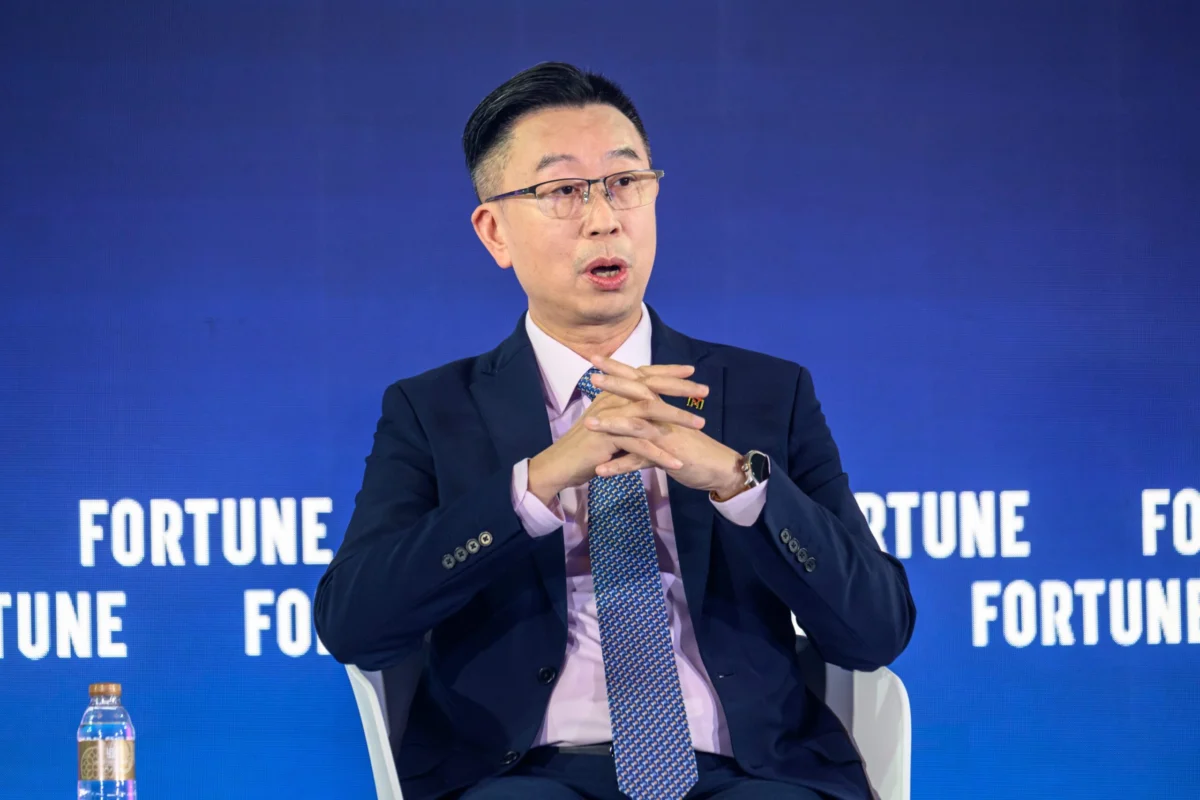
Macau, globally recognized as the world’s largest gambling hub, is embarking on an ambitious and comprehensive strategy to pivot its economic identity from a mere "tourism city" to a dynamic "business city," according to Alex Che Weng Keong, president of the board of directors of the Commerce and Investment Promotion Institute of the Macao SAR. Speaking at the prestigious Fortune Leaders Forum in Macau on September 8, Che articulated a vision for a diversified future, citing Las Vegas as a compelling blueprint for how a casino-centric economy can successfully transform into a "world-class venue for business, exchange, conferences, and exhibitions." This strategic reorientation is not merely an economic adjustment but a fundamental reimagining of Macau’s role within the Greater Bay Area and on the global stage.
The aspiration to emulate Las Vegas is instructive. For decades, Las Vegas was synonymous with gambling and entertainment. However, over the past several decades, the Nevada desert city has undergone a remarkable metamorphosis, strategically investing in infrastructure and marketing to become a premier destination for Meetings, Incentives, Conferences, and Exhibitions (MICE). The Las Vegas Convention Center, for example, is one of the largest and most active in the world, hosting numerous major trade shows and corporate events annually, such as CES and SEMA. This diversification has significantly reduced its reliance on gaming revenue alone, cultivating a more resilient and multi-faceted economy that attracts business travelers and conventioneers alongside tourists. Las Vegas has demonstrated that a city can maintain its entertainment allure while simultaneously building a robust business infrastructure, fostering a vibrant ecosystem for trade, innovation, and international exchange. Macau sees this as a viable path to sustainable growth, aiming to leverage its existing world-class hospitality and infrastructure, originally built to support its gaming industry, for a broader commercial purpose.
The urgency for Macau’s economic transformation is underscored by its current, heavily concentrated economic structure. Gaming still accounts for a substantial 45% of Macau’s Gross Domestic Product (GDP), and more critically, the industry supplies approximately 80% of the government’s total tax revenue. This overwhelming dependence on a single sector, particularly one susceptible to regulatory changes, geopolitical shifts, and public health crises like the COVID-19 pandemic, has long been a point of vulnerability. Beijing, under President Xi Jinping, has consistently pushed for Macau to diversify its economy, viewing a singular reliance on gaming as unsustainable and potentially socially destabilizing. This directive has been amplified in recent years, particularly following the pandemic’s severe impact on Macau’s tourism and gaming sectors, which saw revenues plummet and exposed the fragile nature of its economic model.
In response to this imperative, Macau has committed significant resources and strategic planning. The city’s new five-year plan, its third since Portugal returned Macau to Chinese rule in 1999, covers the period from 2026 to 2030. This ambitious blueprint allocates some 130 billion patacas (approximately $16.1 billion USD) towards fostering what Che termed "emerging industries." Crucially, the plan sets an audacious target: to have non-gaming industries contribute 60% of Macau’s GDP by 2030. This represents a dramatic rebalancing of its economic base, signaling a serious commitment to developing new pillars of growth beyond its traditional strengths. The substantial financial investment demonstrates the Macao SAR government’s resolve to back its diversification agenda with tangible resources, providing crucial seed funding and infrastructure development for nascent sectors.
A key advantage Macau possesses in this transformative journey is its unique status as one of China’s two Special Administrative Regions (SARs), alongside Hong Kong. This designation grants Macau a high degree of autonomy, allowing it to maintain its own currency (the pataca), an independent legal system based on civil law, and a separate customs territory. Che highlighted that this autonomy is not merely a constitutional formality but a practical tool that Macau can leverage to attract "emerging industries" that often require a greater degree of regulatory flexibility than might be found in mainland China. "Emerging industries often need different kinds of regulatory approaches and different ways for talent to move," Che explained, asserting that Macau "can leverage our position as an independent economy with an independent legislative system and independent regulatory system, and then invest a very large amount." This regulatory agility could be particularly attractive to sectors like fintech, biotechnology, data services, and high-end manufacturing, which thrive on innovation and adaptable legal frameworks. The ability to craft bespoke regulations, attract international talent with easier visa processes, and operate with greater financial freedom positions Macau as a unique testbed within the broader Chinese economic landscape.
Central to Macau’s diversification plan is the Guangdong-Macao In-Depth Cooperation Zone in Hengqin. This expansive 106-square-kilometer island, located immediately adjacent to Macau, is envisioned as a vital strategic asset. Che emphasized its significance as "a very important factor for the Greater Bay Area’s future development" and "a major national strategy for empowering Macau." The Hengqin Cooperation Zone is designed to provide Macau with much-needed land for expansion, allowing it to develop industries that require more space than is available on its densely populated peninsula. The zone is explicitly focused on nurturing new economic engines, with a particular emphasis on traditional Chinese medicine (TCM), big health industries, and the data technology market. The TCM sector leverages China’s rich heritage in traditional medicine, aiming to create a modern industry incorporating research, development, manufacturing, and international trade of TCM products. The "big health" sector encompasses pharmaceuticals, medical devices, elderly care, and wellness tourism, catering to the growing healthcare demands of an aging population in China and beyond. The data technology market aims to establish Hengqin as a hub for data centers, cloud computing, artificial intelligence, and other digital economy services, capitalizing on the GBA’s technological prowess. Special policies within Hengqin, including preferential tax schemes and streamlined customs procedures, are designed to foster seamless integration with Macau and attract businesses and talent. The ultimate goal is to create an integrated economic zone that offers Macau a strategic hinterland for industrial development and talent incubation.
Beyond its autonomous status and the Hengqin initiative, Macau possesses another compelling selling point: its rich heritage as a former Portuguese colony. This legacy means Portuguese remains an official language alongside Chinese, and its civil-law legal system, inherited from Portugal, offers a familiar and trusted framework for businesses from Lusophone countries and Europe. Che underscored this advantage, stating it "gives us a real convenience when it comes to trade and building partnerships with European countries or Portuguese-speaking countries." Macau has historically served as a unique bridge between China and the Portuguese-speaking world (including Brazil, Angola, Mozambique, and Portugal itself), facilitating cultural exchange and economic ties. This historical connection is not merely symbolic; it translates into tangible diplomatic and business advantages. Che cited the example of Macao’s Chief Executive’s visit to Portugal, where he met with the President, Prime Minister, Speaker of Parliament, and head of the Supreme Court. Such high-level government-to-government engagement, Che noted, is crucial: "Once government channels are established, business follow-through—whether investment or cooperation—becomes much easier." This network of relationships and a familiar legal environment can significantly reduce barriers to market entry for European and Lusophone companies looking to access the vast Chinese market via Macau, and vice-versa.
Macau’s transformation is also deeply intertwined with the broader development of the Greater Bay Area (GBA), a mega-region encompassing 11 cities, including Hong Kong, Shenzhen, and Guangzhou. This cluster boasts an impressive population of 87 million residents and generates an economic output of roughly $2 trillion – a GDP larger than that of Spain or Australia. However, despite its immense potential, the GBA has faced challenges in achieving full integration and synergy. Edward Au, southern region managing partner for Deloitte China, who shared the panel with Che, articulated this concern, stating, "We already have a lot of world-class points of innovation, but we don’t yet feel that they’re connected into a world-class innovation network." This highlights the need for a more coherent strategy to maximize the collective strength of the GBA’s diverse economies.
To address this, Au suggested a "clearer division of labor" among the GBA cities, leveraging their unique strengths for specialized roles. In this proposed framework:
- Hong Kong, Shenzhen, and Guangzhou would lead on "open, cutting-edge innovation," capitalizing on their established financial services, technology, and manufacturing prowess.
- Manufacturing hubs like Dongguan and Foshan would play a "mid-stream engineering role," focusing on advanced manufacturing and industrial production.
- Macau and Hengqin would carve out "their own niche in traditional Chinese medicine, big health, and the data-technology market."
This strategic specialization aims to create a more efficient and interconnected innovation ecosystem within the GBA, where each city contributes distinct value. For Macau, this means focusing on high-value-added industries that benefit from its unique regulatory environment, land expansion through Hengqin, and its international connections, rather than attempting to compete directly with Shenzhen’s tech giants or Hong Kong’s financial powerhouses. By embracing these specific niches, Macau and Hengqin can become indispensable components of the GBA’s overall economic machinery, attracting targeted investment and talent while contributing to regional innovation.
Looking towards the future, Alex Che expressed a profound hope that by 2036, public perception of Macau will have expanded significantly, moving beyond its singular identity as a casino hub. His vision extends geographically as well: "When people talk about Macao, [they] won’t just mean the 33.4 square kilometers of the peninsula—they’ll also include Hengqin’s 106 square kilometers, so that externally our image becomes that of a unified ‘tech city.’" This bold aspiration encapsulates the totality of Macau’s diversification efforts – an economic reorientation, a geographical expansion, and a complete rebranding. The journey to becoming a "unified ‘tech city’" by 2036 is undoubtedly challenging, requiring sustained political will, significant investment, effective talent attraction, and seamless integration with Hengqin and the broader GBA. However, with its unique advantages, strategic planning, and the unwavering commitment from both local and central governments, Macau is positioning itself for a future where its economic vitality is derived from a diverse array of industries, establishing it as a truly global business and innovation hub.
