
 By admin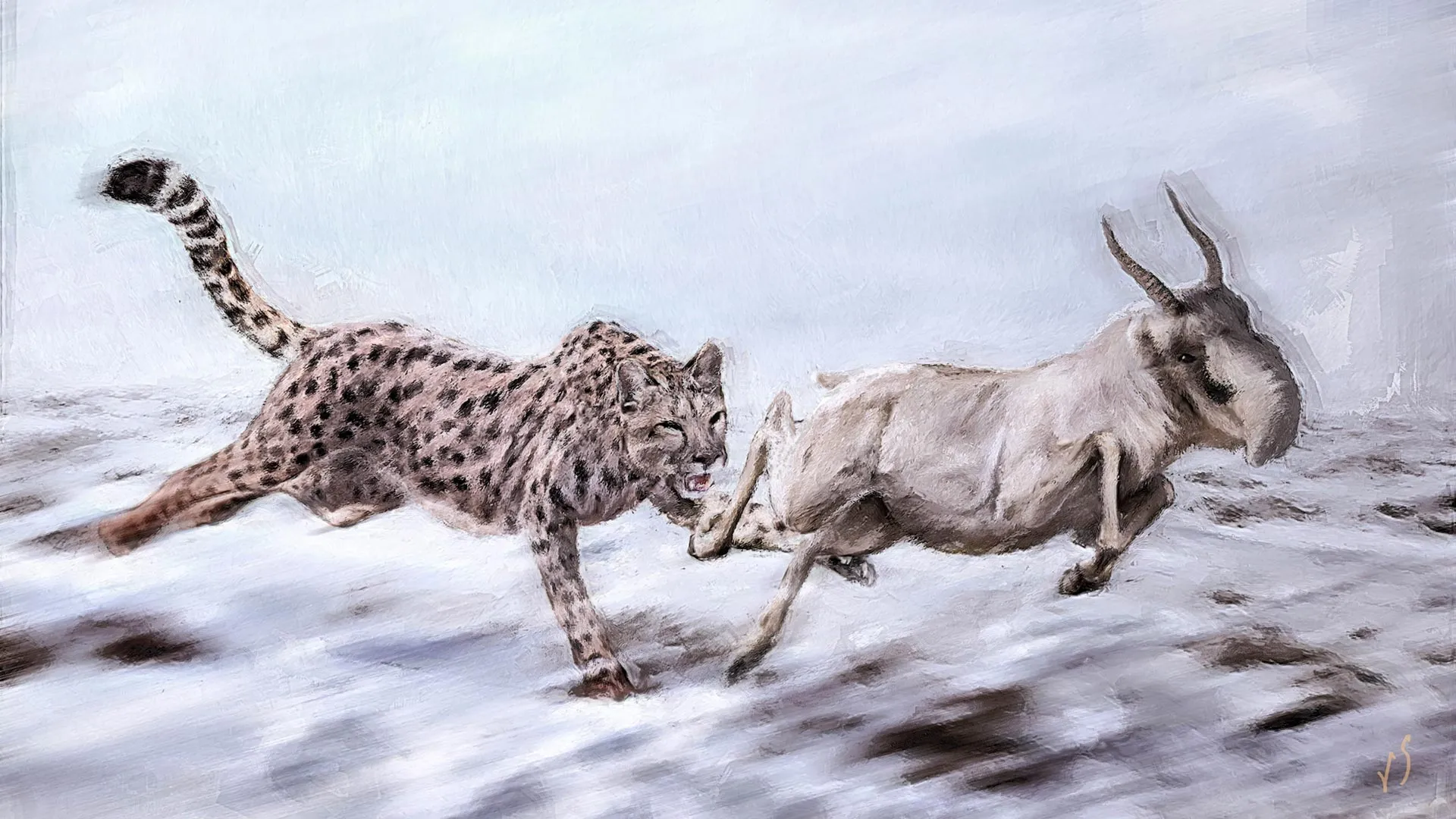
New research led by scientists at the University of California, Santa Cruz, is reshaping what is known about Miracinonyx trumani, the extinct North American predator commonly called the American cheetah. Evidence from nuclear paleogenomes and stable isotopes shows that the animal was not actually a cheetah. Instead, it was a highly adaptable close relative of the puma, and populations living in the far north appear to have relied heavily on fish to survive in Arctic environments. This groundbreaking reclassification not only redefines the evolutionary history of a significant Ice Age carnivore but also fundamentally alters our understanding of North American Pleistocene ecosystems, particularly the long-held "ghosts of predators past" hypothesis concerning the swiftness of the American pronghorn. The University of California, Santa Cruz’s Paleogenomics Lab, renowned for its pioneering work in deciphering the genetic legacies of extinct species, spearheaded this multidisciplinary investigation, combining cutting-edge ancient DNA sequencing with geochemical analysis to paint a remarkably detailed picture of M. trumani’s life and eventual demise.
The findings, published on September 4 in the prestigious journal Current Biology, are profound, extending the known geographical range of the species by an astonishing 20 degrees of latitude farther north than scientists had previously recognized. This vast expansion underscores the remarkable ecological flexibility of M. trumani, a trait more characteristic of its puma relatives than the specialized hunting strategies of true cheetahs. While in more temperate climes such as Wyoming and Florida, M. trumani likely thrived as a generalist predator across vast grasslands, preying on the diverse megafauna of the Pleistocene, its northern counterparts in the Arctic Yukon occupied a profoundly different ecological niche. Here, in an environment of extreme seasonality and limited terrestrial prey during certain periods, these formidable cats evolved into tertiary consumers, specializing in the exploitation of abundant anadromous fish, particularly salmon, that undertake epic migrations from the ocean to spawn in freshwater rivers. This stark dietary divergence, revealed through stable isotope analysis, showcases an unparalleled level of adaptive plasticity within a single species, challenging previous assumptions about large felid behavior in the Ice Age.
Adult Miracinonyx trumani are estimated to have weighed about 150 pounds on average, standing roughly 3 feet tall at the shoulder and measuring an impressive 8 feet from head to the tip of their tail. Their sleek, slim bodies and notably long front legs, which superficially resembled those of modern African cheetahs (Acinonyx jubatus), were initially the primary reason for their misclassification. These proportions were thought to facilitate efficient high-speed travel across the open landscapes characteristic of Pleistocene North America, much like their Old World namesakes. However, a growing body of evidence, now strongly supported by this genomic study, suggests that these cats were far more versatile hunters than previously imagined. Unlike true cheetahs, which rely almost exclusively on short, explosive bursts of speed to tackle relatively small, agile prey, Miracinonyx trumani likely employed a broader repertoire of hunting tactics. Their powerful forelimbs, while long, were also robust, suggesting they were not only capable of chasing prey on land but also of grabbing and holding larger, more formidable animals, or even efficiently capturing slippery fish in turbulent waters. This anatomical versatility hints at an animal that could adapt its hunting strategy to the specific prey available in its diverse habitats, a hallmark of generalist predators like the modern puma.
"These cats were remarkably flexible, much like pumas are across their range today," said Molly Cassatt-Johnstone, a Ph.D. candidate in the Paleogenomics Lab at UC Santa Cruz and lead author of the study. Her observations highlight the deep evolutionary connection and shared adaptive potential between Miracinonyx and its extant sister species. Cassatt-Johnstone further elaborated on a fascinating genetic discovery: "We found loss-of-function mutations in certain genes that regulate circadian rhythms, suggesting they may have adapted to the extreme light cycles of summers and winters in northern latitudes." In the Arctic, animals must contend with periods of continuous daylight during summer and prolonged darkness in winter. Such mutations could have enabled M. trumani to maintain altered activity patterns, perhaps hunting during periods of twilight or even continuous light, allowing them to capitalize on prey availability, such as seasonal salmon runs, regardless of conventional diurnal or nocturnal cycles. This genetic adaptation underscores the extraordinary physiological and behavioral adjustments required for a large predator to thrive in such a challenging, dynamic environment.
Rethinking the American "Cheetah" and the Pronghorn Enigma
For many years, M. trumani played a central and captivating role in theories about the ecology of Ice Age North America, particularly concerning the extraordinary speed of the American pronghorn (Antilocapra americana). Scientists often pointed to this enigmatic predator as the primary evolutionary driver behind the pronghorn’s unmatched swiftness, making it the fastest land animal in North America and second only to the cheetah globally.
Under the compelling "ghosts of predators past" hypothesis, pronghorns evolved their exceptional speed—capable of reaching up to 60 miles per hour—because they co-evolved alongside a cheetah-like predator uniquely capable of high-speed pursuit across vast open plains. In this view, the pronghorn’s speed was a critical evolutionary defense against a hunter that, despite its influence, later disappeared from the continent. The hypothesis posited that while other Ice Age predators like dire wolves (Canis dirus) and saber-toothed cats (Smilodon fatalis) were formidable, they lacked the specialized adaptations for sustained high-speed pursuit seen in cheetahs. Miracinonyx trumani, with its cheetah-like morphology, was the perfect candidate for this "ghost predator," providing a neat explanation for a biological anomaly in the modern landscape.
However, the new genomic evidence profoundly changes that picture, essentially laying to rest the "ghosts of predators past" explanation for pronghorn speed. Researchers conclusively confirmed that M. trumani was not a true cheetah but rather a sister species of the modern puma (Puma concolor), diverging from that evolutionary lineage approximately 2.6 million years ago. This phylogenetic revelation means that its narrow, "cheetah-like" build, characterized by a slender frame and elongated limbs, appears to be a vivid and compelling case of evolutionary convergence. This biological phenomenon occurs when unrelated species independently develop similar features or adaptations because they face comparable environmental pressures or occupy similar ecological niches. Classic examples include the streamlined bodies of sharks (fish) and dolphins (mammals), or the burrowing adaptations of marsupial moles and placental moles. In the case of M. trumani, the open grasslands of Pleistocene North America likely presented similar selective pressures for speed and agility that shaped the evolution of true cheetahs in Africa and Asia, leading to the independent development of strikingly similar physical traits. This reinterpretation implies that pronghorns evolved their speed in response to a suite of fast-moving predators, or perhaps against a more general threat from multiple swift carnivores, rather than a single, specialized cheetah-like pursuer.
Genetic Clues to Arctic Survival and Sensory Adaptations
To thoroughly investigate how Miracinonyx trumani managed to survive and thrive in such dramatically different habitats, from sun-baked grasslands to the frigid Arctic, researchers undertook the demanding task of sequencing high-coverage genomes from remarkably well-preserved fossils. These ancient specimens, dating back between 23,000 and 31,000 years, provided an unprecedented window into the genetic makeup of these extinct cats. High-coverage sequencing is crucial for ancient DNA studies, as it allows for multiple reads of each genomic region, helping to overcome the degradation and fragmentation inherent in ancient samples and ensuring robust and reliable genetic data.
It is vital to acknowledge that the fossil specimens analyzed in this study from Yukon Territory were recovered from the Tr’ondëk Hwëch’in and Vuntut Gwitchin Traditional Territories. This research was conducted with profound respect for their deep-rooted relationship to and stewardship of these ancestral lands, recognizing the invaluable knowledge and cultural heritage these Indigenous communities hold regarding the ancient ecosystems of their territories.
The detailed genetic analysis also uncovered an unusual and intriguing sensory trait in M. trumani. The study revealed that this species, along with every other felid lineage sampled, lacked a functional gene responsible for producing a receptor involved in detecting sour tastes. While cats are famously known for their lack of a "sweet tooth" – a result of a non-functional taste receptor for sweetness – this marks the first recorded case in felids involving the inactivation of genes tied to sour taste perception. Sourness is typically associated with acids, often found in spoiled food or certain plant materials. Similar sensory losses, particularly in taste, are sometimes linked to highly specialized diets where the ability to detect certain flavors becomes irrelevant or even detrimental. For an Arctic predator heavily reliant on fish, particularly during peak spawning seasons when carcasses might be abundant, a reduced sensitivity to sourness could potentially allow them to consume a wider range of food items without repulsion.
"This species of carnivore has this massive range, all the way from the Arctic to the Lower 48," said co-author Matthew Wooller, a professor in the College of Fisheries and Ocean Sciences at the University of Alaska Fairbanks (UAF). His comment encapsulates the remarkable ecological breadth of Miracinonyx. Wooller continued, highlighting the stark dietary contrast: "They’re demonstrating uber-specialization at two ends of their range, while also feeding on two completely different food sources." This "uber-specialization" is a testament to their inherent puma-like adaptability, allowing them to exploit locally abundant resources, whether it be terrestrial herbivores in the south or anadromous fish in the far north. The stable isotope data from the Yukon fossils showed elevated nitrogen (δ15N) values, indicative of a high trophic level, consistent with a diet rich in marine-derived protein from salmon, further corroborating the genetic and morphological evidence of their piscine preferences.
Low Genetic Diversity Before Extinction: A Gradual Decline
The results of this comprehensive study also offer new and crucial clues about why Miracinonyx trumani eventually disappeared near the end of the Pleistocene epoch, approximately 11,000 to 12,000 years ago, during the Quaternary extinction event that saw the demise of much of North America’s megafauna. Researchers found consistently low genetic diversity in animals sampled from both Wyoming and the Yukon, suggesting a widespread phenomenon across its range. Genetic diversity is a critical indicator of a species’ long-term health and its ability to adapt to environmental changes, disease, and other selective pressures. Low diversity often leaves populations vulnerable.
Unlike modern pumas, which have shown remarkable resilience despite localized genetic bottlenecks, these Miracinonyx populations did not exhibit the typical genomic signatures of severe inbreeding or abrupt, catastrophic population bottlenecks. Instead, the genetic record points towards a more gradual and protracted decline that stretched from the early Pleistocene into the late Pleistocene. This suggests that the species was not suddenly wiped out by an acute event but rather experienced a slow, persistent erosion of its population size and genetic vitality over hundreds of thousands of years. This long-term reduction in population numbers and genetic variability may help explain why fossils of the species are relatively uncommon compared to other Ice Age predators and why the cats may have become increasingly vulnerable to the cumulative effects of climate shifts, habitat fragmentation, and perhaps increased competition or human impact towards the close of the Ice Age.
Senior author Beth Shapiro, a distinguished professor of ecology and evolutionary biology at UC Santa Cruz and co-director of the Paleogenomics Lab, emphasized this point. "Miracinonyx persisted for a very long time without the signs of inbreeding we’d expect before a collapse," she explained. This indicates that while genetic diversity was low, it wasn’t critically low enough to cause immediate inbreeding depression. Shapiro continued, "The decline was slow, not sudden, and that may be what left it unable to adapt when the climate shifted." The end of the Pleistocene was marked by dramatic and rapid climatic fluctuations, including warming trends, changes in precipitation patterns, and the retreat of ice sheets. A species already weakened by a long-term population decline and limited genetic flexibility would have been poorly equipped to cope with such significant environmental upheaval, ultimately leading to its extinction.
The findings also powerfully underscore the inherent risks and potential pitfalls of assigning identities and ecological roles to extinct animals primarily from their physical appearance. According to the researchers, the colloquial label "American cheetah" is misleading in two significant ways. First, it erroneously suggests a close evolutionary relationship with true cheetahs, a notion thoroughly debunked by the nuclear genomic data. Second, it implies a similarly specialized, high-speed hunting strategy, which the evidence for broad dietary flexibility and powerful forelimbs contradicts. The study reinforces the paradigm shift in paleontology and evolutionary biology, where molecular evidence, particularly from ancient DNA, is increasingly vital for accurate phylogenetic reconstruction and understanding the true adaptations of extinct life forms, moving beyond the often deceptive clues provided solely by morphology.
This transformative research was conducted through a collaborative effort that brought together leading scientists from the University of Alaska Fairbanks (UAF), the Yukon Palaeontology Program, and Des Moines University, demonstrating the power of interdisciplinary collaboration in unraveling the complex mysteries of our planet’s ancient past. The re-evaluation of Miracinonyx trumani stands as a testament to the dynamic nature of scientific inquiry and our ever-evolving understanding of the natural world.
