
 By admin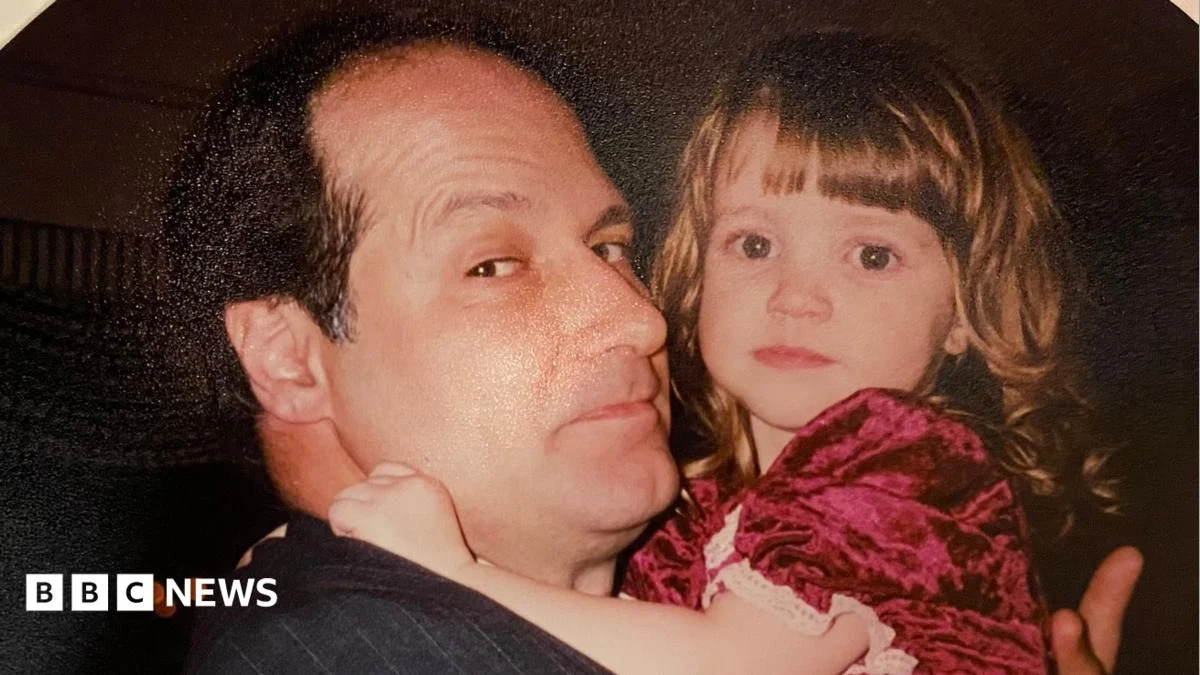
For a quarter of a century, the only tangible remnant Juliette Scauso has of her father, Dennis, from the last day of his life has been his heavily damaged firefighter helmet. Dennis Scauso, a dedicated member of the New York City Fire Department (FDNY) hazmat unit for 12 years, was not originally scheduled to work on September 11, 2001. However, a shift switch for the allure of overtime pay tragically placed him in harm’s way. The family was informed that Dennis, a Long Island father of four, was likely inside the South Tower of the World Trade Center when it was brought down by the devastating terrorist attacks. Months later, his helmet, bearing his badge number, was discovered amongst the rubble.
"I’ve spent essentially my entire life knowing my father died, and learning to live with the fact that we never recovered him," Juliette, who was only four years old when her father perished, shared with a poignant mix of grief and resilience. Dennis Scauso is one of more than 1,000 individuals killed in New York City on that horrific day whose remains have yet to be definitively identified. This stark statistic, released by New York City’s Office of Chief Medical Examiner, underscores the profound and lasting impact of the September 11th attacks, which claimed nearly 3,000 lives across the World Trade Center site.
However, in a development that offers a fragile yet significant glimmer of hope, the city announced last month the identification of a previously unknown victim of the terrorist attacks. This marked the 1,654th person to be identified, a milestone achieved through the pioneering application of a new technology known as forensic investigative genetic genealogy, or FIGG. This advanced scientific approach is revolutionizing the painstaking and emotionally charged process of identifying victims, offering a renewed sense of possibility for families who have endured decades of agonizing uncertainty.
"There is real promise in using this approach," stated Angela Soler, director of forensic anthropology at the city’s medical examiner’s office. Her words carry the weight of years of dedicated work and a deep understanding of the families’ enduring pain. "There’s hope for more families to receive answers, and hopefully we’ll be able to test more remains in the future using this technology as well." Since the tragic events of 9/11, Soler’s office has been engaged in one of the most complex and emotionally demanding identification efforts ever undertaken. Their mission: to identify the remains of the 2,753 victims who died at the World Trade Center. To date, an impressive 60 percent of those lost have been identified, a testament to the unwavering commitment of the forensic teams. "It’s been one of the most complex identification efforts that I think anybody has ever really experienced," Soler reflected, her voice tinged with the gravity of the task.
The monumental challenge of identifying victims on 9/11 has been compounded by a multitude of factors, each adding layers of complexity to an already unfathomable situation. The sheer force of the plane crashes and the intense, prolonged fires fueled by jet fuel inflicted catastrophic damage on human remains. This resulted in the medical examiner’s office often possessing only fragmented portions of victims, making traditional DNA extraction and analysis exceedingly difficult. "Human remains were damaged in the plane crashes and fires caused by jet fuel, meaning the office had only portions of victims for DNA samples," Soler explained.
Adding to the identification challenges was the chaotic nature of the disaster response. Many firefighters, like Dennis Scauso, were in the process of changing shifts when the attacks occurred. Some, driven by an unwavering sense of duty and a desire to help, stayed on, grabbing whatever additional gear they could find. This meant that some first responders recovered were wearing uniforms that belonged to other firefighters, further complicating the arduous task of matching remains to individuals. "Scauso added that because of the timing of the attacks, many firefighters were changing shifts, but some stayed to help, grabbing whatever extra gear they could find. This meant some first responders recovered were wearing uniforms with others’ names, complicating identification," the report detailed. Furthermore, the sheer scale of the tragedy at the World Trade Center, with its massive number of casualties, dwarfed the losses at other 9/11 attack sites, creating an unprecedented logistical and forensic hurdle.
In contrast, the identification efforts at other attack sites, while still challenging, were comparatively less complex. At the Pentagon, where American Airlines Flight 77 crashed, the remains of five out of the 184 individuals killed were never identified due to similar destructive forces at play. However, at the Shanksville, Pennsylvania site, where United Airlines Flight 93 tragically crashed in a field, authorities were more successful. According to the National Park Service, enough remains were recovered to utilize DNA, dental records, and fingerprints to identify all 40 victims aboard the flight, a testament to the relative preservation of evidence in that instance.
In the aftermath of 9/11, the medical examiner’s office implemented a meticulous preservation strategy for the remains recovered from the World Trade Center. These remains were carefully packaged and sealed to ensure the preservation of DNA for future testing, anticipating that scientific advancements might one day unlock their secrets. In the immediate aftermath of the attacks, initial identifications were primarily achieved through fingerprints and dental records. However, as time wore on and these methods became less viable due to the condition of the remains, the focus shifted decisively to DNA analysis. Officials harnessed emerging technologies to extract DNA and retest the same precious samples, a continuous process of scientific re-evaluation. "That’s why all these years down the road, we’re still getting new identifications, because we’re just continuing to retest and retry with every new technology that becomes available," Soler emphasized, highlighting the iterative nature of forensic science.
This persistent dedication to retesting and leveraging new technologies has yielded significant results. Since 9/11, DNA analysis has been instrumental in identifying 1,495 victims. In some cases, DNA alone provided the crucial link, while in others, it was used in conjunction with multiple identification methods. This ongoing success was underscored last year when the city announced the identification of three new victims, 24 years after the attacks, with the assistance of DNA evidence. These individuals were identified as Ryan Fitzgerald, a 26-year-old currency trader; Barbara Keating, a 72-year-old who was a passenger on American Airlines Flight 11; and a woman whose family chose to keep her identity private, a decision that speaks to the deeply personal nature of grief and remembrance.
The advent of FIGG technology represents a significant leap forward in the identification process. Soler elaborated on its capabilities, explaining that it utilizes whole genome sequencing, a powerful technique that allows investigators to read an individual’s entire genetic code. This comprehensive genetic information significantly expands the pool of potential matches, enabling investigators to identify more distant relatives of a victim. Once these familial matches are established, the New York Police Department plays a crucial role in locating closer relatives who can provide more direct DNA samples, thus confirming the identification. This sophisticated process represents a paradigm shift in how cold cases from the 9/11 attacks are approached.
The emotional toll of the attacks continues to resonate deeply within the New York community. The medical examiner’s office still receives weekly calls from grieving loved ones inquiring about individuals whose remains have never been recovered. For many, the inability to have a physical burial site for their lost loved ones remains a profound source of pain. However, some families have chosen a path of acceptance and remembrance, opting to leave the remains, once found, at a specially designated repository at the 9/11 memorial site. This repository, ingeniously built into the bedrock of the World Trade Center site, is accessible only to medical examiner staff, preserving its solemnity. Adjacent to this repository is a private space, known as the reflection room, offering families a place for quiet contemplation and mourning. "That’s where their loved one was in their last moments, and that’s where they want them to stay," Soler explained, illustrating the deep emotional connection families feel to the site.
Furthermore, the process of notification itself can be a source of immense emotional distress. Some families, Soler noted, do not wish to be notified of a positive identification, perhaps finding the confirmation of their loved one’s death too unbearable to confront directly. Juliette Scauso is one such individual. She is aware of families who, in recent years, have received the life-altering news that a relative has finally been identified. The prospect of being next on that list, she admitted, is a frightening one for her family, who have dedicated themselves to preserving the memory of her father, a man described as a jack of all trades and a devoted lover of jazz.
"At this point, an identification wouldn’t change the reality of his death. It wouldn’t give me back my father, and I don’t necessarily want to reopen something that has become part of the way I’ve learned to live and grieve," Juliette confessed, her voice laced with a complex mix of vulnerability and stoicism. "Especially 25 years later, it’s going to open up the wounds again." Her sentiment highlights the deeply personal and often paradoxical nature of closure; for some, the finality of not knowing offers a fragile form of peace, while for others, the unknown is a constant, gnawing void.
Despite her personal reservations about the notification process, Juliette acknowledged the profound importance of the scientific advancements. "But, Scauso said, the technology is important," the article states, underscoring her recognition of the broader implications of FIGG. Soler has observed that news of new identifications often elicits a complex emotional response from families, a blend of relief and sadness. "It’s confirmation of something that they always knew to be true – they knew their loved one died on 9/11, but I think for many families, there’s still that question in the back of their mind until the remains are formally identified," Soler commented. "Maybe they’re reliving it a little bit more now, having this new identification. But at the same time, it closes one chapter of their journey after 9/11," she added, acknowledging the dual nature of such profound news.
For Soler and many of her colleagues who were present on the ground during the horrific events of 9/11, their work is not merely a professional undertaking; it is deeply personal. They arrived at Ground Zero in the immediate aftermath of the plane crashes, witnessing firsthand the catastrophic collapse of the Twin Towers. This shared experience imbues their efforts with an unparalleled sense of dedication and empathy. While they understand that identifying every single victim of the New York attacks may be an unattainable goal, particularly in instances where no remains may exist, their commitment remains unwavering. "As long as there’s families looking for answers, we’ll continue searching for them," Soler vowed, her words a powerful testament to the enduring pursuit of truth and remembrance in the face of unimaginable loss. The story of Dennis Scauso and his daughter, Juliette, serves as a poignant reminder of the enduring human cost of terrorism and the relentless pursuit of justice and closure through science and unwavering dedication.
