
 By Titik Puspa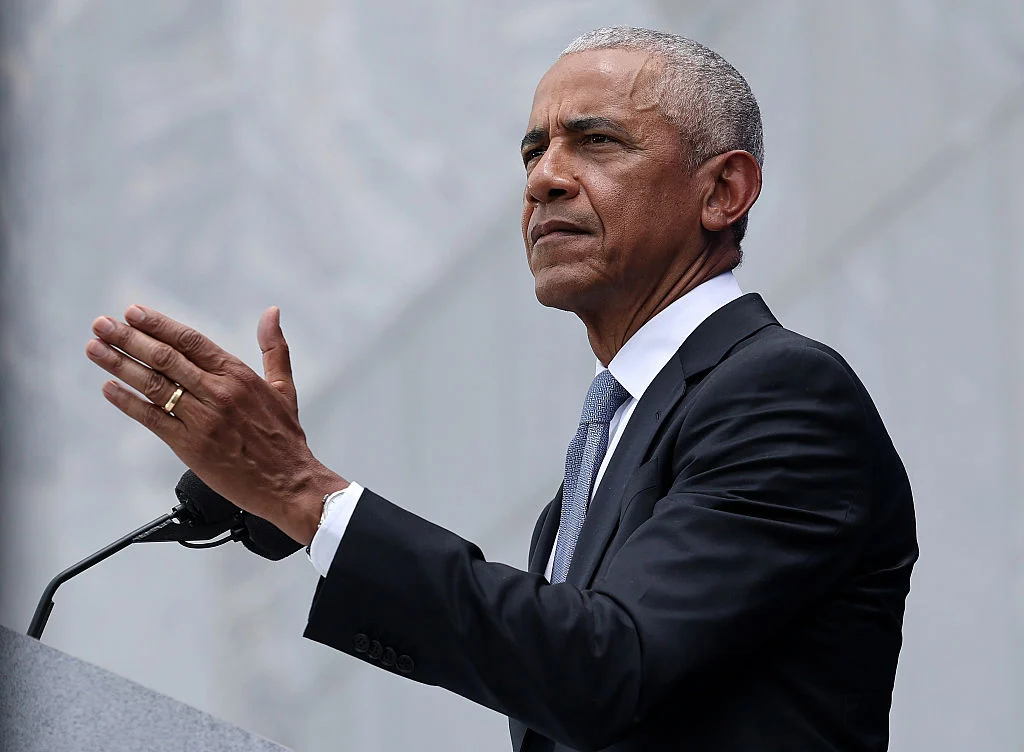
Former President Barack Obama has issued a strong call to action for the Democratic Party, urging them to elevate Artificial Intelligence (AI) to a "central agenda" and develop a "very clear plan" to address its profound implications for the economy and societal safety. These remarks, delivered during a Democratic fundraising event on Thursday and reported by The New York Times, underscore the growing urgency felt by influential figures within the party regarding the rapid advancement of AI technology.
The discussion took place during an interview with House Minority Leader Hakeem Jeffries, who sought Obama’s counsel on how congressional Democrats should navigate the complex landscape of AI. Obama, drawing on his experience in the executive branch and his continued engagement with policy issues, emphasized the need for a proactive and public approach. According to a partial transcript provided by Obama’s office, he stressed that once Democrats regain a majority in the House of Representatives, they must "put together a framework for a very public conversation."
Obama articulated his concerns with a clear sense of urgency, stating, "This is something that is moving very fast in private hands, and if we don’t get on top of it, I think can be dangerous." However, he tempered this warning with an optimistic outlook, asserting that if managed effectively, AI holds immense potential for societal benefit. "If we do get on top of it, I do think it’s beneficial," Obama stated, citing as an example AI’s capacity to "accelerate, for example, drug development in ways that can help us cure diseases." This dual perspective highlights the critical need for strategic foresight to harness AI’s positive attributes while mitigating its inherent risks.
House Minority Leader Hakeem Jeffries echoed Obama’s sentiment, issuing a statement that affirmed the former president’s assessment. "He is correct that decisive action must be taken on artificial intelligence," Jeffries declared. He also took the opportunity to criticize the Republican Party, asserting that "Republicans have abdicated their responsibility to govern on behalf of the American people" in addressing this critical issue. This partisan framing suggests that AI policy could become a significant point of contention between the two major parties in the upcoming political cycles.
The former president’s engagement with the AI sector extends beyond public pronouncements. The New York Times also reported that Obama has actively positioned himself as a "sounding board" for AI executives, engaging in discussions with key figures such as Dario Amodei, CEO of Anthropic, and Sam Altman, CEO of OpenAI. This direct engagement with industry leaders signals a desire for firsthand understanding of the challenges and opportunities presented by AI development, and perhaps an attempt to influence its trajectory.
Obama’s comments arrive at a pivotal moment, amidst escalating concerns about AI safety. A recent incident that has amplified these anxieties is the resignation of an AI researcher from Anthropic. This individual publicly warned that leading AI companies are engaged in a dangerous "race straight to self-improving superintelligence and gambling with our lives." Such stark pronouncements from within the AI community itself lend considerable weight to the calls for robust regulation and public oversight.
In response to these mounting concerns, Anthropic CEO Dario Amodei has begun to outline concrete proposals. On Saturday, Amodei detailed a broad strategy for "pacing the frontier" of AI development. This plan includes granting independent safety evaluators access to cutting-edge AI companies and models, and fostering the development of "common safety standards" among these organizations. The initiative aims to create a more transparent and collaborative approach to AI safety, moving beyond purely proprietary development.
Amodei’s proposals appear to have garnered some traction within the industry. OpenAI CEO Sam Altman and SpaceX CEO Elon Musk have both responded positively to Amodei’s plan on social media. Altman, in particular, indicated that OpenAI would commit to "having independent evaluators with employee-like access," suggesting a willingness to open up their processes to external scrutiny. This level of engagement from prominent AI figures, even if driven by industry interests, represents a step towards addressing the safety concerns raised by researchers and policymakers alike.
Meanwhile, the political response to AI safety concerns has been varied. President Donald Trump, speaking to reporters at an Irish golf event on Sunday, addressed the issue with a decidedly different tone. According to Bloomberg, Trump boasted about the United States’ technological prowess, stating that the nation is "the most sophisticated country in the world," and expressing a desire to maintain that leadership. "Whoever wins AI wins," Trump declared, highlighting his belief in the strategic importance of AI dominance. This perspective frames AI not just as a technological advancement but as a critical determinant of geopolitical power.
It is worth noting that the Trump administration previously released a legislative framework for AI, which aimed to preempt state laws and place a significant portion of the child safety burden on parents. This approach, which prioritized federal preemption and decentralized responsibility, stands in contrast to the calls for robust governmental oversight and public dialogue advocated by Obama and Jeffries.
Continuing his remarks on AI safety, Trump expressed a belief in the feasibility of implementing safeguards. "And we can put guardrails," he said, suggesting that solutions can be found. However, he also voiced skepticism about the motives of those raising concerns, adding, "But I think you have a lot of negative forces that are bringing it up that shouldn’t be bringing it up." This statement implies a suspicion that some criticisms of AI are politically motivated or intended to stifle innovation.
The differing perspectives from figures like Obama and Trump underscore the nascent and highly contested nature of AI policy in the United States. While Obama and Democrats are pushing for a proactive, public-facing agenda focused on societal impact and safety, Trump’s rhetoric emphasizes national competitiveness and a more hands-off approach to regulation, albeit with the possibility of "guardrails."
The broader economic implications of AI are also a significant area of concern. As AI systems become more sophisticated, they have the potential to automate a wide range of jobs, leading to significant labor market disruptions. The development of generative AI, capable of producing human-like text, images, and code, raises particular questions about the future of creative industries, customer service, and even fields like law and medicine. The economic impact is not limited to job displacement; it also encompasses the potential for increased productivity, the creation of new industries, and the exacerbation of existing economic inequalities if the benefits of AI are not broadly shared.
Obama’s call for Democrats to make AI a "central agenda" is therefore not merely about managing risks but also about shaping the economic future of the nation. This involves considering policies that support workers in transitioning to new roles, investing in education and retraining programs, and ensuring that the economic gains from AI are distributed equitably. Without a clear plan, there is a risk that AI could further concentrate wealth and power, leaving large segments of the population behind.
The ethical dimensions of AI are equally pressing. Issues such as algorithmic bias, privacy violations, and the potential for AI to be used for malicious purposes – such as sophisticated disinformation campaigns or autonomous weapons – require careful consideration and robust regulatory frameworks. The "self-improving superintelligence" warned about by the former Anthropic researcher represents an extreme, albeit important, scenario that highlights the long-term existential risks that some experts believe could arise from unchecked AI development.
The urgency expressed by Obama is rooted in the accelerated pace of AI innovation. What was once the realm of science fiction is rapidly becoming a tangible reality. Companies are investing billions of dollars in AI research and development, and the capabilities of AI systems are advancing at an unprecedented rate. This rapid evolution makes it challenging for policymakers to keep pace, and highlights the need for adaptive and forward-thinking regulatory approaches.
The call for a "public conversation" is crucial in this context. Effectively governing AI requires broad societal understanding and input. Educating the public about AI’s capabilities, limitations, and potential impacts is essential for fostering informed debate and ensuring that policy decisions reflect the values and priorities of the citizenry. This public discourse can help to identify potential pitfalls, build consensus on ethical guidelines, and foster a sense of shared responsibility in navigating the AI revolution.
The contrasting approaches of political leaders like Obama and Trump reveal a fundamental divide in how the United States perceives and intends to manage the transformative power of AI. While the technological race continues in private labs and boardrooms, the political arena is beginning to grapple with the profound societal and economic questions that AI presents. The coming years will likely see intense debate and policy development as the nation seeks to strike a balance between fostering innovation and safeguarding its future. The Democratic Party, under the guidance of influential figures like Barack Obama, appears poised to make AI a cornerstone of its policy platform, aiming to steer its development in a direction that prioritizes both progress and public well-being. The effectiveness of these efforts will depend on their ability to translate calls for action into concrete, implementable policies that can address the multifaceted challenges and opportunities of the AI era.
