
 By admin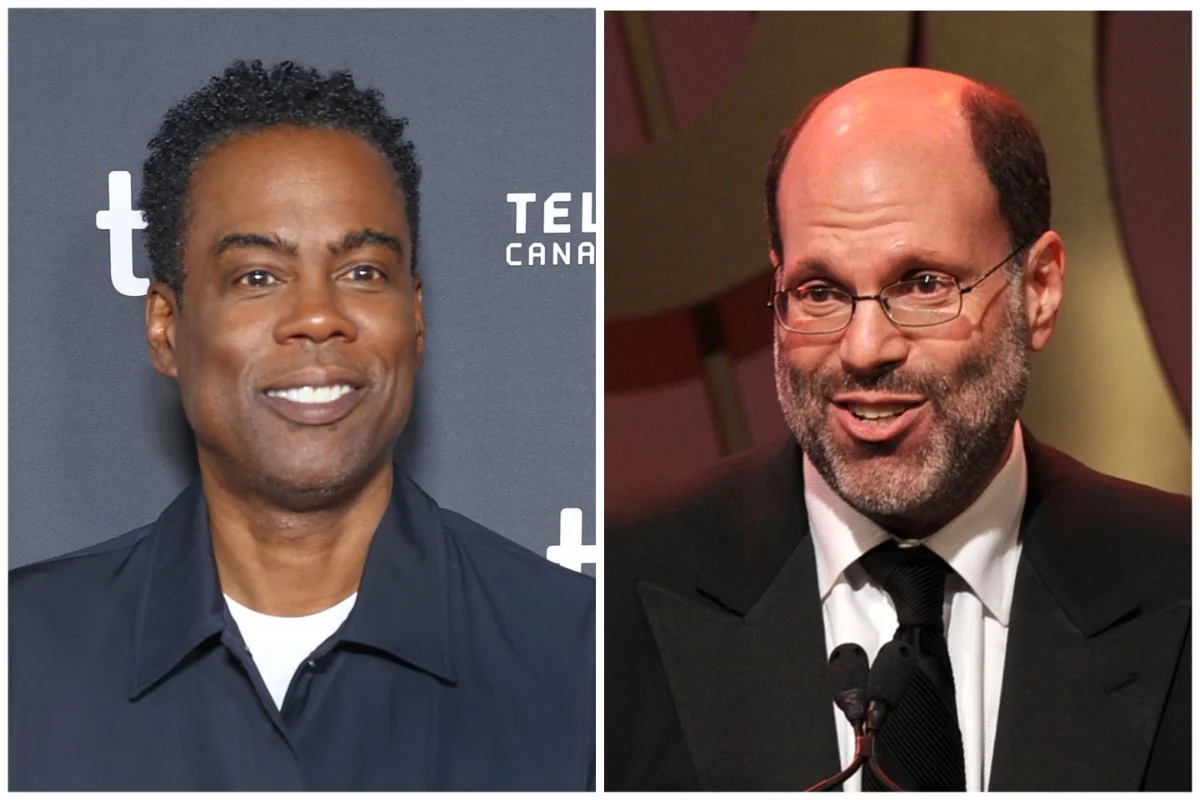
In a candid conversation that delved into the often-unseen machinations of Hollywood, acclaimed comedian and filmmaker Chris Rock revealed that a significant part of his development as a director can be attributed to the "tough love" of Scott Rudin, a once-powerful producer whose career imploded amidst widespread allegations of abusive behavior. The revelation came during a keynote address at the Toronto International Film Festival (TIFF), where Rock, fresh off the premiere of his latest directorial endeavor, "Misty Green," reflected on his multifaceted career. He acknowledged Rudin’s instrumental role in pushing him to refine his craft, a stark contrast to Rudin’s public persona as an alleged "absolute monster" who vanished from the industry following a damning 2021 exposé.
Rock’s journey to this point, marked by critical acclaim and a deep understanding of cinematic storytelling, was not a linear path. His 2014 directorial effort, "Top Five," a critically lauded comedy starring himself and Rosario Dawson, served as a pivotal moment where Rudin’s influence was most acutely felt. Rock recounted the genesis of "Top Five," explaining that the film’s script was meticulously crafted in 2012 during the extensive downtime afforded by his participation in the large ensemble cast of "Grown Ups 2." This period of relative idleness, a common byproduct of massive studio productions where supporting actors often have significant gaps between their scheduled shooting days, provided Rock with the fertile ground necessary to incubate his creative vision.
"Being number three or four on the call sheet of a ginormous movie means you’re going to have a lot of days off," Rock explained to TIFF CEO Cameron Bailey during their public dialogue. He further elaborated on the influences that shaped "Top Five," noting, "I wrote [‘Top Five’], and yeah, it’s got a lot of Woody [Allen] in it. It’s got a lot of Mike Leigh in it. It’s got a lot of Alexander Payne in it." These esteemed directors, known for their distinct cinematic voices and often vérité-style approaches, undoubtedly informed Rock’s aspirations for the film. However, it was Rudin, who produced "Top Five," who provided the indispensable, albeit abrasive, impetus. "Scott [Rudin] produced it, and he really pushed me in a way. I know people have whatever stories about Scott, [but] I need hard coaching," Rock admitted, drawing a clear distinction between his personal need for rigorous direction and the public’s perception of Rudin’s notorious temperament.
When pressed by Bailey about the nature of this "push," Rock offered a nuanced analogy rooted in his personal experiences as a father. "Everybody doesn’t respond to a hug, you know what I mean? I got two daughters. One, you can smile her into excellence. The other one you gotta be like, ‘Hey, what the fuck are we doing?’" This relatable illustration highlighted Rock’s belief that different individuals, including himself as an artist, require distinct motivational strategies to achieve their full potential. For Rock, Rudin’s intense, no-nonsense approach was precisely the catalyst he needed. "Scott really pushed me in a way I hadn’t been pushed in a long time, and it was great. I learned to not settle so for anything… especially when it comes to getting talent. [To] pursue the best of the best of the best for everything – in front of the camera, behind the camera. No compromise." This profound lesson in artistic integrity and the relentless pursuit of excellence, forged in the crucible of Rudin’s demanding production style, has evidently shaped Rock’s subsequent directorial philosophy.
The "tough love" Rock received from Rudin stands in stark contrast to the widely publicized accounts of the producer’s alleged tyrannical reign over his sets. Prior to his public downfall, Rudin was known for a management style that lacked any semblance of gentleness or subtlety. His feedback was often described as blunt, brutal, and delivered with the finesse of a sledgehammer. This reputation was amplified by a leaked email during the 2014 Sony Pictures hack, where Rudin infamously referred to Angelina Jolie as a "minimally talented spoiled brat." This epithet, so indicative of Rudin’s vitriolic communication style, was so potent that it was later humorously memorialized by Tina Fey and Amy Poehler in one of their Golden Globe Awards hosting monologues, underscoring the widespread awareness of his abrasive nature.
Rudin’s career, which had been a cornerstone of Broadway and Hollywood for decades, saw a dramatic interruption following the explosive 2021 exposé. For four years, he largely retreated from public view. However, in a move that signaled his intention to re-enter the industry, Rudin resurfaced in 2025 and announced his plans to return to Broadway. His previous work on the Great White Way had yielded monumental successes, including the groundbreaking musical "The Book of Mormon" and the critically acclaimed revival of Harper Lee’s "To Kill a Mockingbird," both of which garnered numerous awards and significant commercial success. This planned return marked a complex chapter for an industry still grappling with the implications of his alleged misconduct and the broader discourse surrounding workplace abuse.
In a rare moment of reflection and accountability, Rudin himself addressed the allegations in an interview with The New York Times last year. His statement offered a partial acknowledgment of the criticism he faced. "A lot of what was said was true. Some of what was said wasn’t true. But I didn’t feel there was any point in responding to all of it because what’s the point of parsing bad behavior? It was bad behavior. I own it," Rudin stated, directly confronting the accusations. He further elaborated on his past actions, admitting, "I don’t think I was ever really in the dark about why I was rough on people. I knew why I was rough on people. For a long time, it seemed like a price I could live with." This admission, while offering a degree of personal reckoning, also highlights the inherent power imbalance and the cost borne by those who worked under his demanding and, by many accounts, abusive direction.
The context of Rudin’s past behavior is crucial to understanding Rock’s perspective. Rudin’s production company was notorious for its demanding schedules, aggressive negotiation tactics, and a perceived lack of regard for the well-being of cast and crew. He was known to be a formidable force in securing top-tier talent and squeezing every ounce of performance from them. This often came at the expense of fostering a collaborative and supportive environment. Reports from former employees detailed instances of extreme verbal abuse, public humiliation, and a pervasive atmosphere of fear. Despite these documented accounts, Rudin continued to be a sought-after producer for major studios and theatrical productions, a testament to his perceived ability to deliver commercially successful projects, even if the human cost was significant.
Rock’s assertion that he "needs hard coaching" and that Rudin’s approach was "great" invites a deeper examination of artistic collaboration and the varying needs of creative individuals. While the ethical implications of Rudin’s methods are undeniable and have been widely condemned, Rock’s experience suggests that, for some artists, a highly directive and challenging environment can be a catalyst for growth, provided it is coupled with a clear artistic vision and a willingness to push boundaries. However, it is vital to distinguish between challenging direction and abusive behavior. Rock’s anecdote about his daughters implicitly draws this line, suggesting that while one daughter thrives on positive reinforcement, the other requires a more direct and confrontational approach. This points to a spectrum of motivational techniques, and Rudin, in Rock’s view, occupied the extreme end of the "confrontational" spectrum, a position that, for Rock himself, yielded positive artistic results.
The retrospective nature of Rock’s comments also places Rudin’s alleged actions within the broader context of Hollywood’s historical tolerance for problematic behavior from powerful figures. For years, the industry was rife with stories of producers, directors, and executives who operated with impunity, their creative contributions often overshadowing their interpersonal conduct. The #MeToo movement and subsequent reckonings have brought increased scrutiny and accountability to these power dynamics. Rudin’s fall from grace, therefore, represents a significant shift in this landscape, even as his planned return to Broadway raises questions about the industry’s capacity for genuine reform and the potential for past transgressions to be overlooked in pursuit of artistic or commercial success.
Furthermore, Rock’s mention of "Misty Green" as his latest directorial effort, premiering at TIFF, signals a continued commitment to filmmaking beyond his stand-up comedy career. His directorial work, including "Top Five," has often been praised for its sharp wit, insightful social commentary, and a grounded portrayal of human relationships. The fact that he is still actively engaged in directing, and that his past experiences, even those involving difficult personalities, continue to inform his creative process, speaks to his enduring passion for the art form. The success of "Top Five" not only provided him with a platform to explore complex themes but also solidified his reputation as a director capable of eliciting strong performances and crafting compelling narratives.
The influence of Scott Rudin on Chris Rock’s filmmaking journey, therefore, is a complex and multifaceted issue. It highlights the often-unseen sacrifices and unconventional collaborations that can contribute to artistic achievement. While Rudin’s alleged abusive behavior remains a significant concern and a subject of ongoing discussion, Rock’s candid admission offers a unique perspective on how such an environment, when experienced by an individual with a specific need for intense guidance, can paradoxically lead to artistic maturation and a steadfast refusal to compromise on creative vision. This narrative serves as a reminder that the path to artistic excellence is rarely straightforward and can be paved with experiences that, while challenging, ultimately shape the creator into a more resilient and discerning filmmaker. The conversation at TIFF, therefore, was not merely a reflection on a past collaboration but a deeper exploration of the dynamics of mentorship, artistic drive, and the often-uncomfortable truths that lie beneath the surface of Hollywood’s glamorous facade.
