
 By Lina Irawan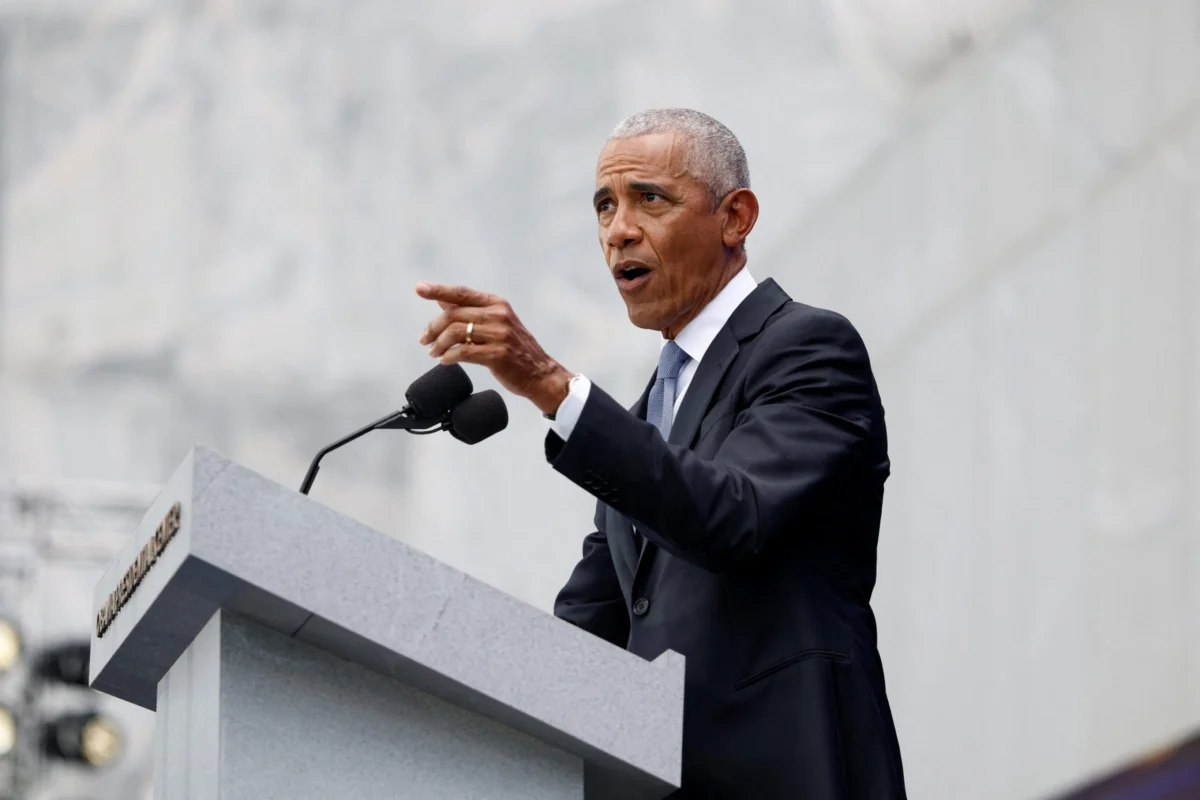
Speaking during a weekend trip to his resort in Doonbeg, Ireland, President Trump acknowledged the theoretical need for "some regulation" but offered no specific proposals. Instead, he attributed mounting warnings about AI’s unchecked growth and potential societal disruption to "negative forces" he declined to identify, despite prominent tech leaders themselves sounding the alarm. "We can put guardrails, we can do this and that, but I think you have a lot of negative forces that are bringing it up that… shouldn’t be bringing it up, and they’re bringing up things that won’t happen," Trump told reporters, underscoring his belief that fears are overblown. His overarching philosophy, he reiterated, was simple: "Whoever wins with AI wins."
This declaration came just a day after Dario Amodei, CEO of the artificial intelligence company Anthropic, made a public plea for the industry to "put the brakes" on its lightning-fast development. Amodei argued that a temporary slowdown was crucial to allow safety measures and ethical guidelines to catch up with technological progress. His call resonated widely within the tech community, drawing public agreement from other titans of the industry, including Tesla and X (formerly Twitter) CEO Elon Musk, and OpenAI CEO Sam Altman, whose company developed the widely popular ChatGPT. These figures, at the forefront of AI innovation, have expressed concerns ranging from the potential for job displacement and the spread of misinformation to more existential risks associated with superintelligent AI.
When pressed by a reporter on whether the industry should be regulated or slow its pace, Trump, after observing a golfer at the Irish Open, unequivocally stated his priority. He asserted that the United States currently holds a lead over China in AI development, a position he intends to maintain. "Frankly, I want to keep it that way because whoever wins AI wins," he declared, framing the issue primarily as a zero-sum geopolitical contest. This perspective highlights a fundamental tension at the heart of the AI debate: the balance between fostering rapid innovation for national advantage and implementing safeguards to prevent unforeseen negative consequences.
The geopolitical dimension of AI is set to take center stage later in September when Chinese President Xi Jinping is scheduled to visit the U.S. to meet with Trump. It is widely anticipated that artificial intelligence, alongside trade and other strategic issues, will be a significant item on their agenda. The U.S. and China are considered the two global leaders in AI research, development, and deployment, making their respective approaches to governance and competition critical for the future of the technology worldwide.
Domestically, AI has rapidly transformed into a major election-year issue in the U.S., impacting both rural landscapes and urban policy debates. The expansion of vast computing warehouses, known as data centers, by some of the country’s largest technology companies has become a flashpoint. These facilities, essential for powering AI models, are increasingly being seeded in small towns, often in agricultural areas, leading to significant local concerns. Americans from across the political spectrum are raising alarms about the environmental and economic impact of these centers, citing issues such as the conversion of farmland, strain on local water supplies for cooling, and rising electricity bills due to their immense energy consumption. Despite this growing bipartisan opposition, Trump has consistently maintained his support for data centers, viewing them as crucial infrastructure for American technological supremacy. This stance diverges sharply from many Republican and Democratic local officials and communities who are actively trying to block new data center developments, highlighting a disconnect between national priorities and local realities.
Former President Barack Obama, a Democrat, has urged his party to make AI a central campaign issue, advocating for a more proactive and comprehensive approach. At a recent event with House Minority Leader Hakeem Jeffries, Obama articulated a vision that directly contrasts with Trump’s market-driven focus. "I would talk about this, and I would say, ‘Here’s our plan for safety, here’s our plan for making sure our kids are not corrupted by this.’… I would be thinking about the economic impacts in very concrete ways and understanding what does it mean if there’s going to be job displacement. Where is that going to hit? How are we going to respond?" Obama emphasized, highlighting concerns about ethical use, societal impact, and economic dislocation, particularly job losses due to automation, as key areas requiring governmental foresight and planning.
White House Meetings and a Call for Action by Members of Congress
The administration appears to be acknowledging the growing discourse, albeit cautiously. Kevin Hassett, director of the National Economic Council at the White House, indicated that high-level meetings are anticipated this week, involving officials overseeing cyber and science and technology policy, to discuss potential next steps. There is also a possibility that Trump could meet with members of Congress who have been vocal about the rapid pace of AI development. "I think the president wants to hear from them as well," Hassett noted, suggesting an openness to input, though the administration’s primary focus remains on maintaining a competitive advantage.
On Capitol Hill, there is a clear recognition of the issue, even if consensus on solutions remains elusive. U.S. House Speaker Mike Johnson acknowledged the need for "some guardrails, some safety measures" to prevent AI from "run[ning] away." However, mirroring Trump’s primary concern, Johnson quickly pivoted to the geopolitical imperative: "But, like Trump, he also wants to ensure the U.S. does not ‘lose our edge in the global competition on this with China because that would be a national security threat.’" This dual focus on safety and competition underscores the tightrope policymakers believe they must walk. Johnson proposed summoning industry leaders for "one big meeting and work this out together in the same room," a step he has discussed with Trump and believes should be the "next step." "So we’re going to pull everybody together and make sure we do this in the right way," Johnson affirmed, adding that it is a "top priority for me and for the Congress." Yet, he concluded with a calming note: "But we don’t need everybody to panic right now."
House Minority Leader Hakeem Jeffries, however, criticized Republican leaders for allowing members to return to their districts at the end of September, arguing that this delays crucial action. "We should take decisive action now so that we can slow down, as the CEOs have recently acknowledged,… the pace of development in order to protect the American people and ensure that AI is proceeding safely," Jeffries stated. He indicated that action on AI would be a "high priority" for House Democrats when they meet as a group, signaling a more urgent approach from his party.
Despite the bipartisan agreement that "more guardrails are needed," Congress has historically struggled to regulate the technology industry effectively. Past attempts at imposing even narrow rules have often faltered, reflecting a combination of powerful industry lobbying, the rapid evolution of technology that quickly renders legislation obsolete, and a lack of deep technical understanding among many lawmakers. This history of legislative inertia suggests that crafting meaningful AI regulation will be a formidable challenge.
Industry Insider Urges Cooperation Between Washington and Beijing
Adding another layer to the complex debate, Jacob Coxon, a former Anthropic employee, has gone public with his profound fears, resigning from the company over AI concerns. Coxon, who now advocates for more stringent oversight, argued for a combination of international rules and robust self-regulation by the industry. His concerns stem from a belief that AI models are rapidly approaching "super capabilities" that could soon exceed human control and comprehension. "You’re building a human-level or superhuman-level mind, without understanding what it wants, or thinks, or the way it thinks," Coxon warned, articulating the core "alignment problem" that many AI safety researchers grapple with—ensuring that advanced AI systems act in humanity’s best interest.
Amidst the fierce global competition for AI dominance, Coxon delivered a stark warning and a plea for cooperation. He urged the U.S. and China, the two leading nations in the AI race, to jointly agree to slow down their development efforts to prioritize safety. "I do hope that the people in China who are looking at the same problems as we are, so they’re trying to build the same technology, will come to the same conclusion that it has to be done in a measured manner, and it should be easy to cooperate on some sort of mutual—of mutual slowing," Coxon emphasized. He cautioned that without such cooperation, "we risk running the same race with China, which could be equally dangerous," implying that a relentless, unregulated sprint could lead to catastrophic outcomes for both nations and the world.
White House Adviser Challenges AI Leaders Over Regulation
The calls for regulation from within the AI industry itself have not gone unchallenged. David Sacks, a prominent tech founder and investor who also serves as co-chairman of a White House advisory council on science and technology, took to social media to directly question the motives and actions of AI leaders like Amodei. Sacks’ post challenged the notion that government intervention is the only solution, arguing that the very individuals and companies setting the pace for AI development possess the power to slow it down voluntarily. "The easiest way not to build superintelligence is for you to agree not to build it," Sacks wrote, implying that if the concerns are genuine, the industry leaders themselves should exercise restraint rather than demanding external regulation. This perspective highlights the ongoing debate between self-regulation and governmental oversight, a familiar tension in the history of rapidly advancing technological sectors. It posits that the onus is on the developers to internalize ethical considerations and safety protocols, rather than waiting for potentially cumbersome and slow-moving legislative bodies to impose them.
The unfolding debate surrounding artificial intelligence underscores a pivotal moment in technological history. President Trump’s emphasis on national competitiveness and his skepticism toward immediate, extensive regulation reflect a "win at all costs" mentality in the geopolitical arena. This stands in stark contrast to the growing concerns of industry leaders, former employees, and political figures like Barack Obama and House Democrats, who advocate for a more cautious, ethically grounded, and potentially internationally coordinated approach. As AI continues its rapid advancement, the fundamental challenge remains: how to harness its transformative potential for progress while mitigating its profound risks, all within a complex landscape of economic competition, national security imperatives, and evolving societal values. The decisions made, or not made, in the coming months and years will shape not only the future of artificial intelligence but also the future of humanity itself.
