
 By admin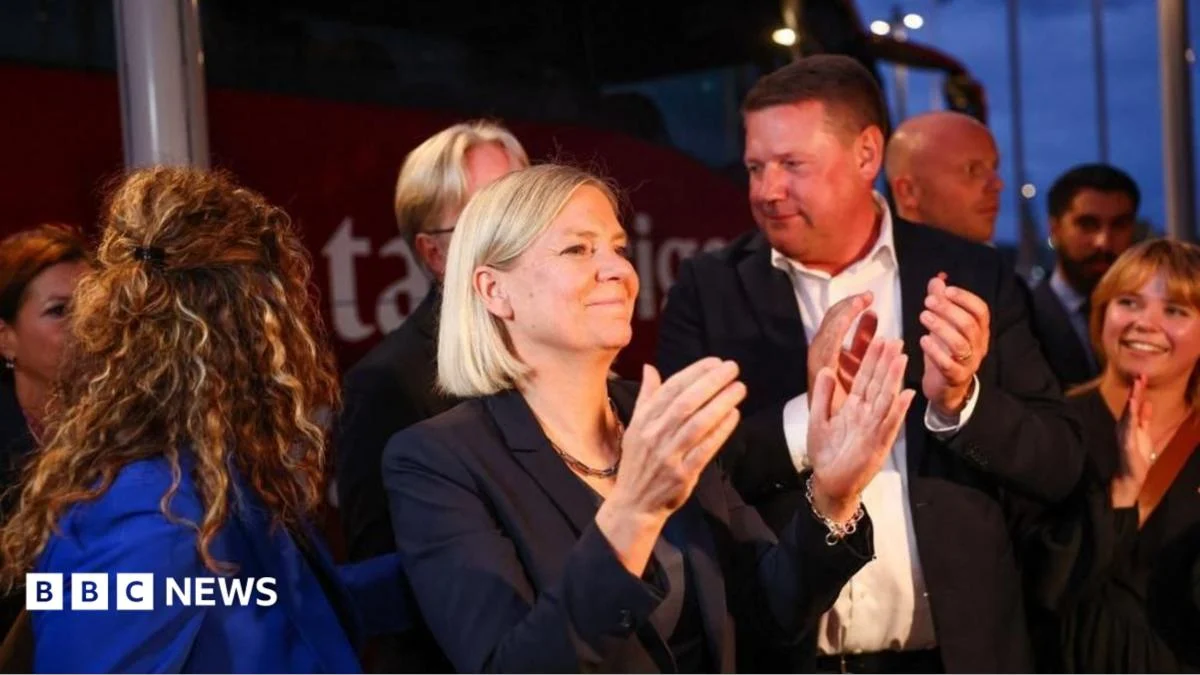
Sweden, a nation long synonymous with progressive social policies and a robust welfare state, finds itself at a pivotal moment in its political history. A deeply entrenched two-bloc system, comprising four parties on the right and four on the left, has historically fostered a landscape where coalition and minority governments are not anomalies, but rather the norm. This intricate political tapestry, however, is being stretched to its limits by the ascendant influence of the Sweden Democrats (SD), a party whose origins and platform have drastically reshaped the national discourse and electoral calculus. The outcome of recent elections, as articulated by the key political figures, paints a stark picture of the choices confronting the Swedish electorate: a nation potentially dominated by a party with a controversial past, or one steered by a leader championing a renewed spirit of cooperation.
At the heart of the left-leaning bloc, and indeed much of Sweden’s post-war political identity, lies the Social Democrats. For decades, this party has been a formidable force, shaping the country’s economic and social policies, building a comprehensive welfare system that has served as a model for many nations. Their legacy is deeply interwoven with the fabric of modern Sweden, representing a sustained commitment to social justice, equality, and collective well-being. However, the political ground beneath their feet has been shifting, challenged by new anxieties and demographic changes that have empowered previously marginalized political actors.
The most significant of these actors is the Sweden Democrats (SD). Founded in the 1980s by individuals with alleged Nazi sympathies, the party was for years largely ostracized from the mainstream political arena. Its ideology, rooted in nationalism and a staunchly anti-immigration stance, was considered beyond the pale by the established political order. Yet, the political climate began to transform, and by 2022, the SD had achieved a seismic victory, emerging as the country’s second-largest party. This surge in popularity was fueled by a potent campaign that tapped into public concerns about escalating violent crime and the perceived pressures of immigration. The party masterfully articulated a narrative that resonated with a segment of the population feeling left behind or concerned about the societal implications of rapid change, effectively repositioning itself from the fringes to the center of national debate.
The gravity of this shift was palpable in the pronouncements of Magdalena Andersson, the leader of the Social Democrats and a prominent figure in the left-leaning bloc. After casting her vote, Andersson framed the election as a fundamental binary choice for the Swedish people. She posed a stark question: "Should we have a government entirely dominated by the Sweden Democrats, something that has never happened in Sweden before? Or should we have a government led by me, which will steer Sweden in a new spirit of co-operation?" This framing underscores the unprecedented nature of the potential SD ascendancy. A government fully under their dominion would represent a radical departure from Sweden’s political traditions and could signal a significant reorientation of national priorities and values. Andersson’s appeal for a "new spirit of co-operation" suggests a desire to bridge divides and forge a path forward through consensus, a stark contrast to the potentially polarizing leadership of the SD.
On the opposing side of this ideological divide, Ulf Kristersson, the leader of the Moderate Party and a key figure in the right-leaning bloc, also expressed a clear vision for the nation’s future. Speaking after casting his ballot in his home municipality of Strangnas, Kristersson conveyed a sense of continuity and purpose. "I think there is a genuine enthusiasm for us being able to continue our important work," he stated. This sentiment suggests a belief that his alliance has been effectively addressing the nation’s challenges and that voters would endorse their ongoing efforts. The "important work" he refers to likely encompasses the conservative agenda of fiscal responsibility, law and order, and a more restrictive approach to immigration – policies that have gained traction in recent years, often in direct response to the issues highlighted by the Sweden Democrats.
The election campaign itself was dominated by a trifecta of critical issues that deeply concerned the Swedish populace. National security, a broad category encompassing both external threats and internal stability, was a paramount concern. This was inextricably linked to the issue of gang crime, which has seen a disturbing rise in recent years, manifesting in shootings and bombings that have shaken the public’s sense of safety. The perception of declining law and order has been a potent driver of political sentiment, benefiting parties that advocate for stricter enforcement and more punitive measures. Finally, welfare spending emerged as another central theme. As a nation with a highly developed welfare state, debates around its sustainability, its scope, and its funding are perennial. However, the economic pressures and the changing demographics have brought these discussions to the forefront, with different parties proposing vastly different approaches to managing and reforming these vital public services.
The rise of the Sweden Democrats cannot be understood in isolation. It is part of a broader European trend of growing support for right-wing populist and nationalist parties, often fueled by concerns about globalization, cultural identity, and the perceived failures of established political elites. In Sweden, the specific context of relatively high immigration rates in recent decades, coupled with incidents of gang violence, provided fertile ground for the SD’s message. Their success represents a significant challenge to the long-held consensus on multiculturalism and open borders that has characterized Swedish society for much of the late 20th century. Experts in political science and sociology have pointed to a growing polarization within Swedish society, with a widening gap between urban, more liberal centers and rural or suburban areas that may feel more culturally or economically marginalized.
The traditional political parties, including the Social Democrats and the Moderates, have found themselves grappling with how to respond to the Sweden Democrats’ surge. Some have sought to engage with the SD, recognizing their electoral power, while others have maintained a strict cordon sanitaire, refusing any form of cooperation. This strategic dilemma has often led to complex coalition negotiations and has, at times, resulted in political deadlock or minority governments that are susceptible to shifts in public opinion and the demands of smaller parties. The 2022 election, and the subsequent political maneuvering, exemplified this challenge, as the right-leaning bloc, despite winning a majority, had to contend with the significant influence of the SD, a party that, while not directly participating in the government, exerted considerable leverage over its formation and policy agenda.
The implications of the election’s outcome are far-reaching. A government dominated by the Sweden Democrats, as Andersson warned, would likely herald a significant shift in Sweden’s domestic and foreign policy. This could include a more restrictive immigration regime, a tougher stance on crime, and potentially a reevaluation of Sweden’s commitment to international cooperation and its traditionally neutral foreign policy stance. Conversely, a government led by Andersson, albeit potentially a minority one, would aim to maintain the core tenets of the Swedish welfare state while seeking to address the nation’s challenges through a more inclusive and collaborative approach. The challenge for such a government would be to regain the trust of voters who have gravitated towards the SD and to find common ground on the pressing issues of crime and integration.
Furthermore, the election’s results have significant implications for the European Union. Sweden has historically been a key player within the EU, advocating for multilateralism and a strong collective response to global challenges. A shift towards a more nationalistic government in Stockholm could impact the dynamics within the EU, potentially weakening its resolve on issues such as climate change, migration, and foreign policy coordination. The rise of parties like the Sweden Democrats is often viewed with concern by EU institutions and other member states, as it can contribute to a fragmentation of the European project and a rise in protectionist sentiments.
The discourse surrounding national security and gang crime highlights a complex interplay of social, economic, and policing factors. While the SD has effectively capitalized on public fear, analyses from criminologists and sociologists suggest that the roots of violent crime are multifaceted, often stemming from socioeconomic disparities, integration challenges, and the availability of illicit firearms. Addressing these issues requires more than just punitive measures; it necessitates comprehensive strategies that include social investment, educational opportunities, and effective integration policies. The debate over welfare spending, meanwhile, touches upon the very identity of Sweden as a welfare state. As the population ages and economic pressures mount, difficult choices will need to be made regarding the sustainability of existing services and the potential need for reforms.
The political landscape in Sweden, therefore, is not merely about the election of a new government; it is about a fundamental redefinition of the nation’s identity and its place in the world. The choices presented by Andersson and Kristersson reflect the deep ideological currents that are shaping the country. The ascendant Sweden Democrats, with their origins and platform, represent a significant challenge to the established order and have forced a national reckoning with issues that were once considered settled. The coming years will undoubtedly be a period of intense political debate and potential transformation, as Sweden navigates the complex terrain between its cherished welfare state traditions and the emerging forces that are reshaping its political future. The "new spirit of co-operation" that Andersson espouses may be the only path to bridging the divides that have emerged, but whether such a spirit can truly take root in the face of such profound ideological differences remains to be seen. The world watches as Sweden confronts this critical juncture, a microcosm of broader shifts occurring across the Western world.
