
 By Titik Puspa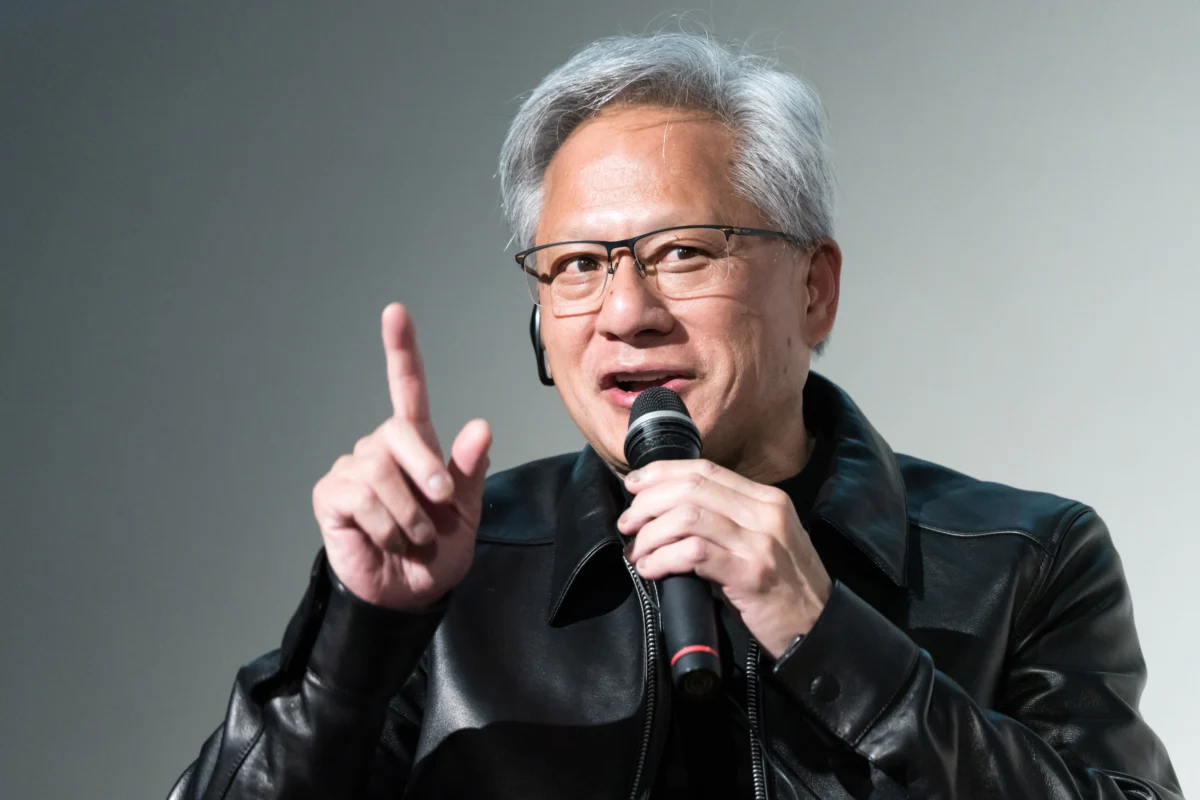
The tech world buzzed on Monday, September 14, 2026, as Jensen Huang, the iconic CEO of Nvidia, found himself in an unexpected on-stage moment at the All-In conference in Los Angeles. The highlight of the event was a live phone call from none other than former President Donald Trump, a moment captured and amplified across social media platforms and tech news outlets. While the conversation itself delved into the burgeoning landscape of artificial intelligence and its societal implications, a subtler detail also drew attention: the foldable smartphone Huang used to connect with the former President. Initially misidentified, the device has since been confirmed as a Samsung Galaxy Fold 8, a detail that, while seemingly minor, underscores the rapid evolution of personal technology and its integration into high-profile interactions.
The call with President Trump, broadcast live to an audience of industry leaders and enthusiasts, quickly steered towards the increasingly prominent debate surrounding AI safety and the potential for what some describe as an "AI slowdown." Trump, in his characteristic style, characterized mounting fears about artificial intelligence as a "hoax," asserting that such anxieties primarily benefit geopolitical rivals like China and individuals with political agendas. He drew a stark parallel to the internet’s transformative impact, emphasizing that AI’s scope and potential are too vast to be stifled by apprehension. Huang, present on stage, acknowledged the audience’s enthusiastic reception to Trump’s pronouncements, a subtle nod to the palpable sentiment within certain tech circles that favors rapid AI advancement.
The exchange between Huang and Trump illuminated a key tension in the current AI discourse. While Trump vehemently argued against what he perceived as an overblown fear of AI, positing that a slowdown would cede ground to competitors, Huang’s position, as the leader of a company at the forefront of AI hardware development, is inherently complex. Nvidia’s business model is deeply intertwined with the escalating demand for its advanced chips, which power the sophisticated AI models being developed by research labs and corporations worldwide. Consequently, any narrative that suggests an AI slowdown could pose a significant threat to Nvidia’s growth trajectory and stock performance. While Nvidia’s stock had seen a robust increase of 33% over the preceding year, the market’s reaction to the discourse surrounding AI pacing, even indirectly, can manifest in subtle stock fluctuations, as evidenced by a minor dip following the conference.
The strategic implications of Huang’s public stance, or lack thereof, on existential AI risks are not lost on industry observers. Whether Huang genuinely subscribes to Trump’s optimistic outlook on AI’s unchecked progress, or if he is strategically navigating a complex corporate and public relations landscape, remains a subject of speculation. In the highly competitive and rapidly evolving AI sector, the narrative surrounding AI’s future has a profound impact on investor confidence and customer acquisition. For Nvidia, demonstrating continued innovation and the seamless integration of AI into various industries is paramount. Downplaying or reframing concerns about AI’s potential downsides, therefore, can be seen as a pragmatic approach to safeguarding the company’s market position and financial health. This strategic imperative highlights the delicate balancing act that CEOs of leading AI companies must perform, managing both the technological frontiers and the societal perceptions surrounding their innovations.
Beyond the high-profile call, the presence of a foldable smartphone in Huang’s hand offered a subtle yet significant commentary on the evolving personal technology landscape. The initial misidentification of the device as an "iPhone Duo" – a hypothetical Apple foldable that has been the subject of much speculation but not yet officially released – underscores the anticipation surrounding Apple’s entry into the foldable market. However, the subsequent correction to identify it as a Samsung Galaxy Fold 8 situates the moment within the current reality of foldable device availability. Samsung has been a pioneer in this segment, with its Fold series representing a mature iteration of the foldable form factor. The choice of a foldable device for such a high-stakes, on-stage interaction speaks to the increasing mainstream adoption and practicality of these advanced smartphones. It signifies a departure from traditional smartphone designs and embraces a new paradigm of mobile computing, offering larger screens for enhanced productivity and immersive experiences, all within a pocketable form factor.
The broader context of the All-In conference itself is crucial to understanding the significance of this event. The conference, known for bringing together prominent figures from the venture capital, technology, and political spheres, serves as a fertile ground for discussions on the future of innovation and its societal impact. The confluence of a leading AI executive, a former U.S. President, and a live audience of influential stakeholders created a unique platform for addressing critical issues. The conversation around AI pacing, in particular, reflects a growing polarization in public and expert opinion. On one side, proponents emphasize the immense potential of AI to solve pressing global challenges, accelerate scientific discovery, and drive economic growth. They often point to the historical precedent of technological advancements being met with initial skepticism and fear, which ultimately proved unfounded.

On the other side, a segment of researchers and ethicists express profound concerns about the long-term implications of advanced AI, including the potential for job displacement, the exacerbation of societal inequalities, the development of autonomous weapons, and, in the most extreme scenarios, existential threats to humanity. This latter group advocates for a more cautious and deliberate approach to AI development, emphasizing the need for robust safety protocols, ethical guidelines, and potentially international regulatory frameworks to ensure that AI remains aligned with human values and interests. The debate is not merely academic; it has tangible consequences for research funding, public policy, and the direction of technological innovation.
Jensen Huang’s role in this debate is particularly noteworthy. As the CEO of Nvidia, his company is not just a supplier of hardware; it is a critical enabler of AI research and deployment. The computational power provided by Nvidia’s GPUs is fundamental to training complex AI models, from large language models to sophisticated simulation engines. Therefore, Huang’s public pronouncements and actions carry significant weight. His acknowledgment of the applause during Trump’s critique of AI fears suggests an awareness of, and perhaps even a tacit agreement with, the sentiment that rapid AI progress is desirable and should not be unduly hindered. This perspective aligns with the economic incentives of his company, which thrives on increased demand for its cutting-edge technology.
However, the article also rightly points out the potential for a divergence between Huang’s public persona and his private convictions. CEOs of publicly traded companies are often under immense pressure to prioritize shareholder value, which can necessitate a careful curation of public messaging. The possibility exists that Huang, while personally holding different views on AI safety, publicly aligns with a more optimistic and progress-oriented narrative to maintain investor confidence and foster continued business growth. This inherent tension between corporate responsibility and personal belief is a common theme in the corporate world, especially in rapidly evolving and potentially disruptive industries like artificial intelligence.
The mention of Nvidia’s stock performance, while down a few percentage points on the day, serves as a reminder of the market’s sensitivity to news and sentiment surrounding the AI industry. Even a slight dip can be interpreted as a signal, prompting further scrutiny of the company’s strategic direction and the broader market dynamics. The 33% annual gain, however, underscores Nvidia’s dominant position and the immense market appetite for AI-driven solutions.
The foldable phone itself, the Samsung Galaxy Fold 8, represents a significant technological advancement in personal computing. Its ability to transform from a compact smartphone into a larger, tablet-like display offers a versatile user experience, suitable for both on-the-go communication and more intensive tasks like content creation, multitasking, and immersive entertainment. The fact that such a cutting-edge device was used in a direct, live communication with a former President highlights the seamless integration of advanced technology into the highest levels of public and private interaction. It suggests a future where foldable devices, or similar form factors, become the norm for professionals and leaders, enabling enhanced productivity and communication capabilities.
In conclusion, the brief on-stage call between Jensen Huang and President Trump at the All-In conference was more than just a celebrity encounter; it was a microcosm of the broader debates shaping the future of artificial intelligence. It highlighted the tension between rapid technological advancement and concerns for safety and societal impact, the complex strategic considerations faced by leaders in the AI industry, and the evolving landscape of personal technology. The choice of a foldable phone further underscored the increasing sophistication and integration of personal devices in high-stakes environments, hinting at a future where form factors and functionalities continue to push the boundaries of what’s possible. The discussion, though brief, served to amplify the ongoing, critical conversation about how humanity will navigate the transformative power of artificial intelligence.
