
 By admin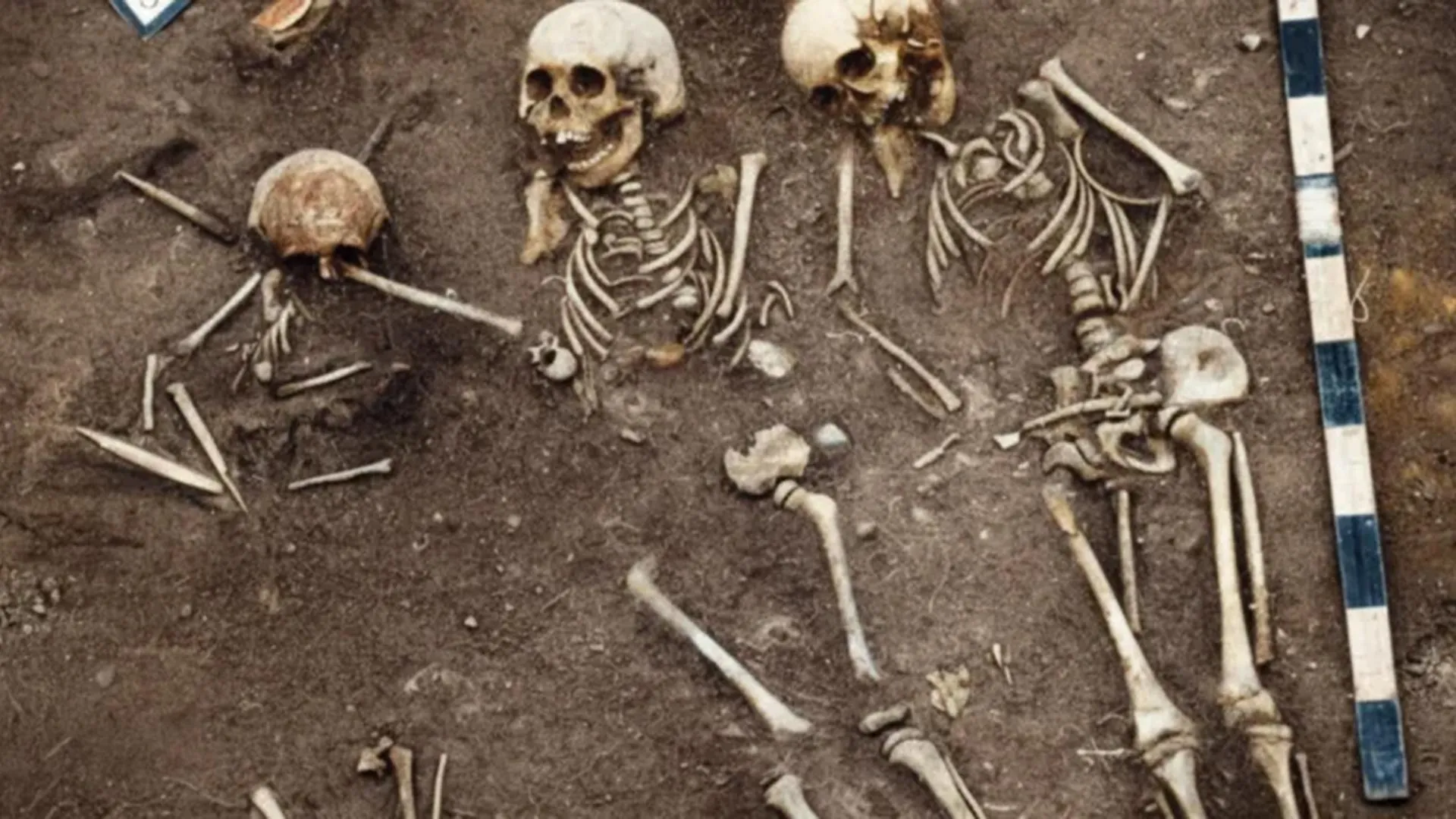
This revelation profoundly challenges the conventional narrative of plague’s history, which largely begins with the Justinian Plague in the 6th century CE and peaks with the Black Death of the 14th century, both catastrophic events that decimated dense urban populations across continents. The prevailing theory held that the bacterium evolved its most virulent forms, particularly its efficient flea-borne transmission mechanism, in conjunction with the development of settled, populous communities and the proliferation of commensal rodents like rats. However, the new findings push back the timeline of plague’s severe impact by millennia, illustrating that even in dispersed, prehistoric societies, this pathogen possessed the capacity for widespread devastation.
An international and interdisciplinary research team spearheaded by scientists from the University of Copenhagen and the University of Cambridge, in collaboration with colleagues from institutions including the University of Alberta, embarked on an ambitious quest to unlock the genetic secrets held within ancient human remains. Their focus centered on four distinct hunter-gatherer burial sites located in the Lake Baikal region of East Siberia – a locale renowned for its rich archaeological record of Stone Age cultures. By meticulously recovering and analyzing ancient DNA (aDNA) preserved in human teeth, the scientists were able to reconstruct early bacterial genomes, bringing to light previously unknown ancient forms of Yersinia pestis.
The painstaking process of extracting and sequencing genetic material from millennia-old remains is a testament to the revolutionary advancements in paleogenomics. Teeth, with their dense structure, act as natural time capsules, often shielding microbial DNA from degradation over vast stretches of time. From these minute fragments, the researchers were able to piece together the genetic blueprint of the ancient plague bacterium, a feat that would have been unimaginable just a few decades ago.
"Whether the earliest forms of plague were mild or virulent has been a matter of debate, but our findings demonstrate that these ancient strains were already highly lethal," affirmed senior author Eske Willerslev, a distinguished Professor at both the University of Copenhagen and the University of Cambridge. This statement directly refutes earlier hypotheses that proposed ancient Y. pestis might have been a less potent pathogen, gradually acquiring its deadliness through evolutionary adaptations. The evidence now suggests that a significant degree of virulence was present much earlier in its evolutionary trajectory.
To fully comprehend the catastrophic events that unfolded within these prehistoric communities, the researchers employed a powerful blend of scientific methodologies. Genetic evidence was meticulously integrated with archaeological insights gleaned from the burial sites and precise radiocarbon dating techniques. This holistic approach allowed for a robust reconstruction of the outbreaks. "Based on the plague DNA, the genetic relationships between the victims, the archaeological analysis and the radiocarbon dating, we’ve built a really clear, complete picture of what happened during these outbreaks," explained lead author Ruairidh Macleod, who conducted this pivotal work as a PhD student at the University of Cambridge and is now a Research Fellow at the University of Oxford. This multidisciplinary strategy is crucial for interpreting aDNA findings within their broader cultural and ecological contexts, moving beyond mere detection to understand the lived experience of ancient populations.
The quantitative findings were stark: DNA from Yersinia pestis was identified in 18 of the 46 individuals tested, equating to a staggering detection rate of nearly 40 percent. This proportion is exceptionally high, surpassing even the rates observed at some well-known medieval plague burial sites, where the disease was known to be rampant. Such a high prevalence within a relatively small sample group strongly points towards acute, localized epidemics that severely impacted these hunter-gatherer communities. The implication is profound: plague was not just present, but actively devastating these populations.
Prior research into ancient Yersinia pestis strains had often highlighted the absence of certain genetic features considered crucial for the bacterium’s efficient spread. Specifically, earlier forms were thought to lack genes like ymt (Yersinia murine toxin), which enables the bacterium to survive and multiply in the flea midgut, thereby facilitating flea-borne transmission. Without this and other adaptations, scientists had generally assumed that the earliest versions of the bacterium were unlikely to trigger severe, widespread outbreaks. This new research, however, fundamentally challenges that long-held view.
The archaeological data provided compelling corroboration for the genetic findings. At the two largest cemeteries among the investigated sites, archaeologists had for decades been puzzled by an unusually high number of children and young teenagers among the deceased. The sheer volume of juvenile burials within a relatively short period had been an enduring enigma. "The unusually high number of children and the short timespan was a real puzzle that we’ve been trying to solve since the 1990s. Finding out that plague was the cause is extraordinary, but it makes so much sense," remarked archaeologist Andrzej Weber of the University of Alberta, who serves as the Principal Investigator of the Baikal Archaeology Project. This demographic anomaly—a skewed mortality curve heavily weighted towards the young—is a classic epidemiological signature of an acute infectious disease, particularly one that strikes rapidly and severely.
Radiocarbon dating further solidified the picture of sudden, concentrated mortality events. The dates indicated that many of the deaths occurred in close succession, suggesting synchronous outbreaks rather than sporadic individual fatalities. In poignant instances, the research revealed cases where siblings appeared to have died together, while other graves contained parents and children, likely succumbing to the same devastating outbreak. These clustered deaths provide powerful human-level insights into the scale of suffering and loss inflicted by the ancient plague within these tight-knit family units.
A particularly intriguing aspect of the ancient plague strains discovered in Siberia was the presence of a distinctive superantigen. This toxin-producing genetic factor is notably absent in historic plague strains, including those responsible for the Black Death. Superantigens are a class of microbial toxins that can trigger an exaggerated and non-specific immune response, essentially hijacking the body’s defenses. Instead of a targeted immune reaction, superantigens cause a massive, uncontrolled release of inflammatory cytokines, leading to severe inflammation, multi-organ failure, and potentially making an infection far more dangerous and rapidly fatal.
"This finding changes our understanding of the earliest plague outbreaks: Even before the bacterium evolved efficient flea-borne transmission, these ancient strains appear to have carried a potent combination of virulence factors that could make infection highly lethal," stated senior author Martin Sikora, Associate Professor at the University of Copenhagen. The existence of this superantigen suggests an alternative, equally devastating pathogenic strategy employed by early Y. pestis. It implies that even without the ability to spread via fleas, these ancient strains possessed a formidable arsenal that could inflict rapid and severe disease, especially in vulnerable populations like children. This could represent an earlier evolutionary pathway for virulence, one that perhaps became less advantageous or was lost as Y. pestis developed more efficient transmission mechanisms, such as flea-borne infection, better suited for denser human populations.
Taken together, the collective evidence paints a compelling and sobering picture: some of the earliest known plague outbreaks may have been as deadly as, if not more deadly than, later historical epidemics, particularly for children. This appears to have been possible even before the bacterium developed the highly efficient flea-based transmission mechanism associated with the notorious bubonic plague. It redefines the timeline of plague’s evolutionary prowess and its capacity for widespread devastation, pushing it back into the early Holocene.
The findings also lend substantial support to a long-standing theory regarding plague’s geographical origins and initial spread. It is widely hypothesized that Yersinia pestis may have first emerged in the vast plains of Central or North-East Asia, a region known as a natural reservoir for plague, before dispersing more widely across Eurasia through populations of wild rodents. The Lake Baikal region, situated in this expansive area, fits perfectly within this hypothesized cradle of plague.
Archaeological evidence from the Baikal sites indicates that the hunter-gatherers inhabiting this region had close and consistent contact with marmots – large, burrowing rodents that are known to be natural carriers of Yersinia pestis and continue to serve as a significant plague reservoir today. These interactions could have been multifaceted, ranging from hunting marmots for fur and food to living in close proximity to their extensive burrow systems. Researchers therefore strongly suspect that some of these prehistoric outbreaks may have originated through direct zoonotic spillover – the disease passing directly from infected marmots into humans. This direct transmission could have occurred through bites, scratches, contact with infected tissues during hunting or butchering, or even through the consumption of inadequately cooked infected meat.
If this hypothesis holds true, it fundamentally alters our perception of plague’s early history. It suggests that Yersinia pestis was already capable of causing deadly outbreaks in small, scattered human communities thousands of years before the advent of agriculture, the rise of cities, crowded settlements, and the subsequent flea-driven epidemics that would later etch the disease into the annals of human infamy. This discovery underscores the profound and ancient relationship between humans, animals, and the pathogens they share, reminding us that disease has always been a powerful, shaping force in human evolution, even in the most seemingly pristine and uncrowded environments. The silent threat of plague was not a consequence of human civilization, but rather a persistent ecological reality that predated and likely influenced its very development.
