
 By admin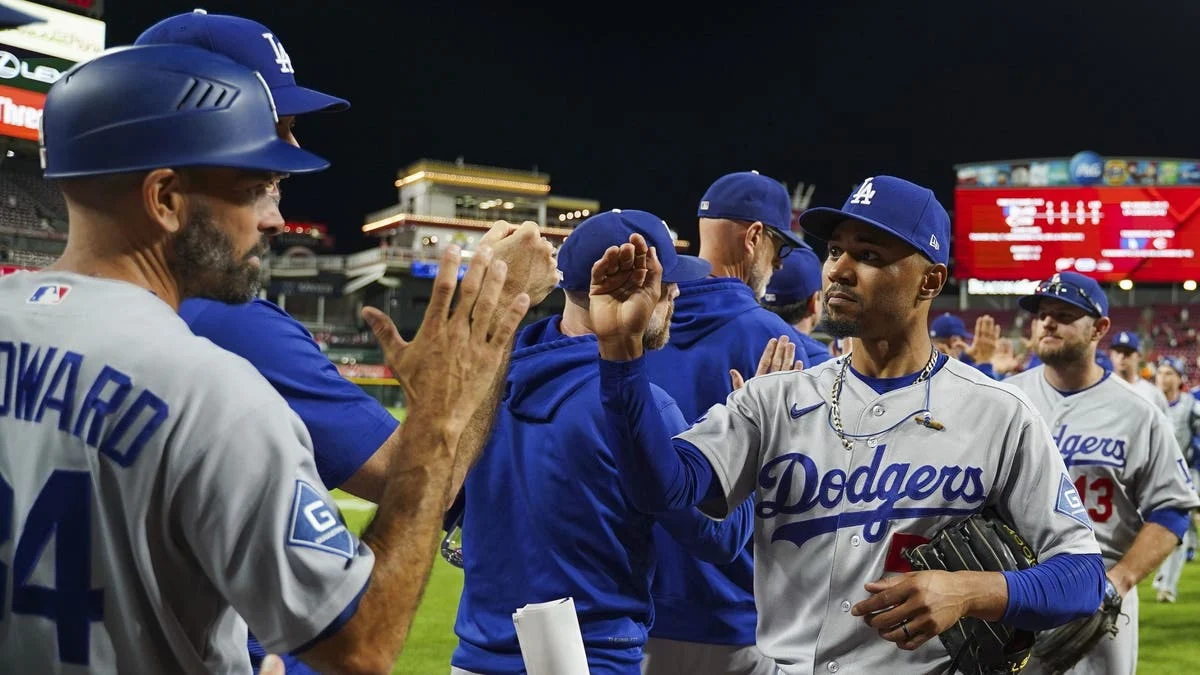
The Los Angeles Dodgers have once again etched their name into baseball history, securing their record-tying 14th consecutive trip to Major League Baseball’s postseason. This remarkable achievement was celebrated with a modest yet meaningful toast of bubbly following their decisive 4-1 victory over the Cincinnati Reds on Monday night. While the immediate celebration was subdued, the underlying sentiment spoke volumes about the ingrained culture of success and the unwavering expectation of deep playoff runs within the storied franchise.
"It’s hard to say it ever feels routine, but it is the expectation here," commented third baseman Max Muncy, a veteran of many of these playoff clinches. "I always laugh whenever we clinch a postseason spot, we just do a nice little toast. The guys that haven’t been here, they kind of see that and they expect a little bit more. That happens when you clinch the division." This lighthearted tradition underscores the Dodgers’ unique position in baseball, where simply making the playoffs, while a significant accomplishment, is viewed as a baseline rather than the ultimate goal. The true celebrations, as Muncy alluded to, are reserved for winning championships.
This latest postseason berth places the Dodgers in an elite club, joining the Milwaukee Brewers and Tampa Bay Rays as the only teams to have already clinched a playoff spot this season. Furthermore, it continues their impressive streak of dominance in the National League West. With this clinch, their magic number to secure a fifth consecutive division title – and their 13th in the last 14 seasons – has been reduced to three. This sustained period of territorial supremacy within their division is a testament to the club’s consistent ability to build and maintain a winning roster, even amidst the inherent fluidity of professional baseball.
The Dodgers’ 14 consecutive postseason appearances now draw them level with a legendary stretch by the Atlanta Braves, who participated in the playoffs every year from 1991 through 2005. During that 15-year run, the Braves made five trips to the World Series, ultimately capturing the championship in 1995. When comparing these historical parallels, Muncy offered a proud distinction: "Thankfully we’re doing a little bit better than that," he said, referencing the Dodgers’ three World Series titles and five appearances in the Fall Classic during their own remarkable streak. This subtle but significant difference highlights the Dodgers’ elevated success in translating regular-season dominance into championship hardware, a benchmark that often separates good teams from truly great ones.
The contrast in how playoff clinches are perceived and celebrated was also highlighted by pitcher Tarik Skubal, who joined the Dodgers this season. Having experienced playoff clinching situations with the Detroit Tigers in previous years, Skubal noted a distinct difference in the Dodgers’ approach. "I think it just speaks to the people in this room and what they expect out of this team," Skubal remarked. "That was cool. A little toast and move on. Forget it happened. We’ve got more to accomplish this season." His observation provides external validation for the Dodgers’ internal culture, emphasizing that their focus remains firmly fixed on the larger objectives that lie ahead.
Manager Dave Roberts, now in his 11th season at the helm, articulated the team’s mindset during the post-clinch toast. His message to the team was clear: while their accomplishments to date are significant, they are far from reaching their full potential. "We go through a lot of players every year, and guys find a way to step up, and so that’s the thing I’m probably most proud of, is the consistency of winning over the long term," Roberts stated. "Any team, any organization can win in a given year where things line up, but to do it every single year when you’re expected to do this says something about the entire organization." This statement encapsulates the enduring strength of the Dodgers’ organizational philosophy, which prioritizes player development, strategic acquisition, and a unified commitment to excellence that transcends individual seasons or personnel changes.
Currently, the Dodgers stand as the second seed in the National League with a formidable record of 91 wins and 59 losses. They hold a comfortable 2 1/2-game lead over the Atlanta Braves and trail the Milwaukee Brewers by just 2 games for the top seed in the National League. This positioning is crucial, as securing a top-two seed guarantees a coveted first-round bye in the expanded MLB playoff format. This advantage is particularly valuable for the Dodgers this season, given the ongoing health concerns affecting key players.
The potential for a first-round bye becomes even more significant when considering the current health status of two of their most impactful players. First baseman Freddie Freeman has been managing right knee soreness, a persistent issue that requires careful monitoring. More critically, two-time American League MVP Shohei Ohtani is currently on the 15-day injured list, sidelined by inflammation in his right biceps. Ohtani’s absence, especially as the postseason looms, presents a significant challenge for the Dodgers’ offensive firepower and overall team dynamic.
Roberts acknowledged the importance of a first-round bye in light of these health concerns. "Given where our guys are health wise, to get that week would be huge. We’ve still got to play well to finish out the season to get to that point," he said prior to Monday’s game. This sentiment highlights the strategic imperative for the Dodgers to not only secure the bye but also to manage their roster effectively in the remaining regular-season games, aiming to have their key players as healthy and ready as possible for the rigors of the postseason.
The Dodgers’ sustained success is a complex interplay of factors. On the field, their consistent ability to develop and acquire elite talent is undeniable. Players like Muncy, Mookie Betts, and Walker Buehler have been cornerstones of their recent success, while emerging stars continue to contribute significantly. Off the field, the organization’s commitment to analytics, player development, and a robust scouting network provides a continuous pipeline of talent. Furthermore, the financial resources available to the Dodgers have allowed them to make significant investments in their roster, both through player contracts and their state-of-the-art player development facilities.
The historical context of the Braves’ streak provides a valuable lens through which to view the Dodgers’ accomplishment. While the Braves enjoyed a period of sustained playoff appearances, their World Series success during that span was more limited. This underscores the difficulty of not only reaching the pinnacle of October baseball but also of winning it all. The Dodgers, with three championships in the last decade, have demonstrated a greater ability to convert their regular-season prowess into ultimate victory, a feat that eludes many talented teams.
The expectation of winning within the Dodgers clubhouse is a self-perpetuating cycle. As new players arrive, they are quickly immersed in the culture of high expectations and the understanding that anything less than a championship is a disappointment. This mindset, while potentially adding pressure, also serves as a powerful motivator, pushing players to perform at their highest level consistently. The "little toast and move on" mentality is not one of complacency, but rather a testament to a team that views each accomplishment as a stepping stone towards a larger, more significant prize.
The current standings also illustrate the fine margins at play in the National League. While the Dodgers have a comfortable lead in the West, the race for the top seed in the NL is tight. Securing that top spot, and the accompanying bye, could prove critical in their quest for another championship. The health of Ohtani and Freeman will undoubtedly be a major storyline as the regular season concludes and the postseason begins. Their ability to return to full strength and contribute meaningfully will significantly impact the Dodgers’ chances of navigating the challenging playoff landscape.
The Dodgers’ record-tying streak of 14 consecutive postseason appearances is not merely a statistical anomaly; it represents a sustained era of excellence in Major League Baseball. It speaks to the organizational depth, the coaching acumen, the player development programs, and the unwavering commitment to winning that defines the Los Angeles Dodgers. As they continue their pursuit of another World Series title, their journey serves as a compelling narrative of consistent achievement and the relentless pursuit of greatness in the demanding world of professional baseball. The champagne may have been a modest toast for now, but the taste of potential victory remains the ultimate aspiration for this perpetually contending ballclub.
