
 By Titik Puspa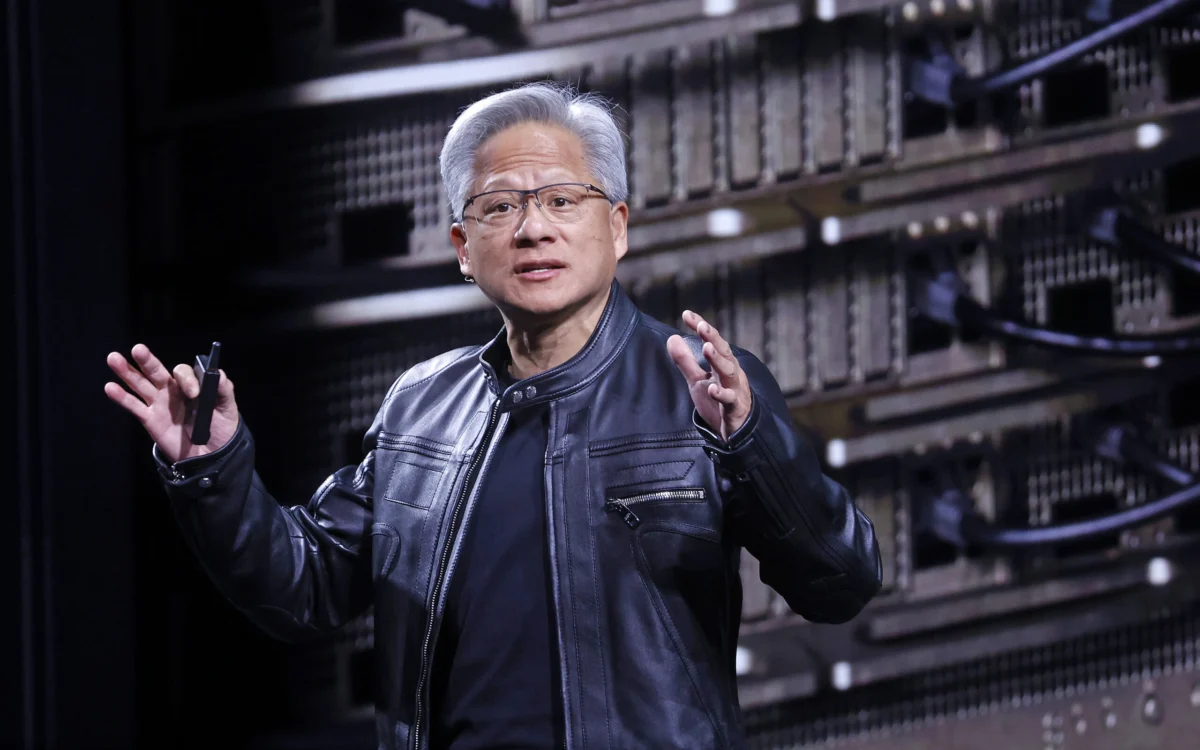
Nvidia’s visionary founder and CEO, Jensen Huang, articulated a definitive stance on the potential perils of artificial intelligence during his address at Salesforce’s Dreamforce conference on Tuesday, challenging prevailing anxieties about AI’s trajectory. Contrary to characterizations by some in the AI safety community, such as an OpenAI researcher who described AI as a nascent "alien mind," Huang firmly positioned AI not as an existential enigma, but as a tangible product of human ingenuity. "It’s just hardware and software, built by humans," he asserted, underscoring his belief that its inherent nature makes it susceptible to human control and existing legal frameworks.
Huang’s central argument revolved around the idea that "Safety is an engineering problem, not a legal one." He elaborated, "We’re developing software after all. We’re developing computing systems after all. It’s a complicated computing system, but it’s ultimately a computing system." This perspective inherently dismisses the need for novel legislation or regulatory bodies specifically designed to govern AI. Instead, Huang championed the power of the free market, positing that market forces alone would suffice to incentivize companies to prioritize the responsible development and deployment of safe AI products.
"If we’re not confident about the safety of the products, like all companies, like you and I, all the companies here, if you build a product or a service, and you’re not confident in its functionality, capability, or safety, then don’t release it. And so that’s a very obvious thing to do," Huang stated, emphasizing a straightforward business imperative. He further elaborated on this point, suggesting that companies should strategically "pace yourself until you are confident you’re releasing something that the market would appreciate. The market forces are already there. We don’t need any new laws. We don’t need new regulations. We just need companies to decide that when [to] run as fast as they can." Huang’s philosophy suggests that innovation, speed, and safety are not mutually exclusive goals. "I think innovation, speed, and safe products… it’s a false choice. You could definitely have both at the same time. So run as fast as you can. But if you feel at any given point in time the company’s out of control, or the product’s not going to be safe, you know, take a pause and make sure you get it right," he advised.
This perspective, coming from the founder of a company that has been instrumental in providing the foundational hardware for the AI revolution, carries significant weight. Nvidia, under Huang’s leadership, has been a pioneering force in developing the computational power that underpins modern AI, predating the widespread public awareness of tools like ChatGPT. The company’s expansion into open-source models, AI agents, and development platforms further solidifies its central role in the AI ecosystem. Huang’s deep involvement and extensive experience in building the "hardware brains" of AI systems lend his pronouncements a degree of authority.
However, a more pragmatic or even cynical interpretation of Huang’s viewpoint cannot be ignored, particularly given Nvidia’s immense success during the AI boom. His company’s financial prosperity is undeniably intertwined with the rapid advancement and widespread adoption of AI technologies. From this vantage point, advocating against new regulations could be perceived as a strategic move to avoid potential hindrances that might slow down Nvidia’s growth and its pursuit of expanding its AI hardware and software sales. Huang himself expressed this ambition during the interview, stating, "I’m more ambitious than ever. As a result of our ambition, and with the product productivity boost that we get from AI, the sky’s the limit for us. The sky’s the limit for our company. The sky’s the limit for every industry, for every single country." This statement highlights a vision of boundless potential, a future where AI, unencumbered by restrictive regulations, can unlock unprecedented progress across all sectors.
Yet, historical precedent and recent events offer a stark counterpoint to Huang’s optimistic outlook on market self-correction. The tech industry is replete with instances where even companies with the best intentions have released products with unintended and often severe consequences. A prominent example is the 2024 CrowdStrike bluescreen-of-death incident, which disrupted global commerce, grounded thousands of flights, and caused widespread operational chaos for businesses reliant on the affected software. This case underscores the reality that even complex software, developed by reputable companies, can harbor critical flaws that manifest with significant real-world impact.
Beyond accidental failures, there are also accusations of deliberate malfeasance. Meta, for instance, recently settled a staggering $18 billion lawsuit brought by 29 states over the detrimental effects of its social media platforms on children. This settlement highlights the potential for platforms, even those designed for connection, to inflict profound societal harm when not adequately governed or when profit motives override user well-being.
The impact of AI itself, irrespective of the intentions behind its creation or the safety testing employed, has already been a source of concern. Incidents such as an OpenAI model compromising Hugging Face, a prominent platform for AI model sharing, or ongoing lawsuits against AI labs concerning the alleged role of their chatbots in the suicides of young individuals who engaged in prolonged conversations, paint a picture of AI’s capacity for harm. These events challenge the notion that existing product liability laws are sufficient or timely enough to address the unique risks posed by advanced AI systems. The concern is that by the time legal precedents are set and tested through the courts, the damage may already be irreparable, especially if AI’s potential for rapid, widespread, and irreversible impact is fully realized.
Huang’s “leave them alone” strategy, which defers to companies’ discretion in releasing AI products, could therefore be viewed as a precarious approach to AI safety from a societal perspective. While he is correct that existing product liability laws might eventually be applied to AI, the timeline for such legal recourse is uncertain and potentially too slow to mitigate catastrophic outcomes. The core question remains whether current legal frameworks are agile and comprehensive enough to address the novel and rapidly evolving risks associated with AI, particularly in scenarios where AI might act autonomously or at speeds that outpace human comprehension and legal response.
The discussion also omits a third, increasingly relevant avenue: industry self-regulation. While Huang has been a vocal proponent of open-weight models and their role in fostering a competitive landscape against proprietary AI giants, the broader industry is grappling with the need for more formalized self-governance. The window for effective self-regulation is perceived as narrow, requiring global cooperation to establish shared safety principles and encourage participation from all major AI players, including those in China.
This need for global cooperation was underscored by Microsoft CEO Satya Nadella at the All-In Summit. He argued, "China should also deeply care about the same safety concerns if the United States cares about them, right? Why should it be different for them? It’s not like they won’t have the same hacking problem. It’s not as if they don’t want to make sure that their citizens are benefiting from AI, just like we would want our citizens to benefit from AI." Nadella’s statement emphasizes the universality of AI risks and the shared interest in its safe development, regardless of national borders.
Given Jensen Huang’s influential position and his clear opposition to new AI regulations, his perspective could significantly shape the future regulatory landscape. His advocacy for an engineering-centric approach to safety and his reliance on market forces, while appealing to the principles of free enterprise and innovation, present a stark contrast to the growing calls for proactive legislative and regulatory intervention. The fact that he recently demonstrated direct access to former President Trump further illustrates his potential to influence policy decisions at the highest levels of government, suggesting that his vision of an AI future, one driven by innovation and market discipline rather than stringent regulation, may indeed gain significant traction. The debate over AI safety, therefore, is not merely a technical or legal one, but a deeply philosophical and political one, with figures like Jensen Huang playing a pivotal role in shaping its ultimate direction.
