
 By Rifan Muazin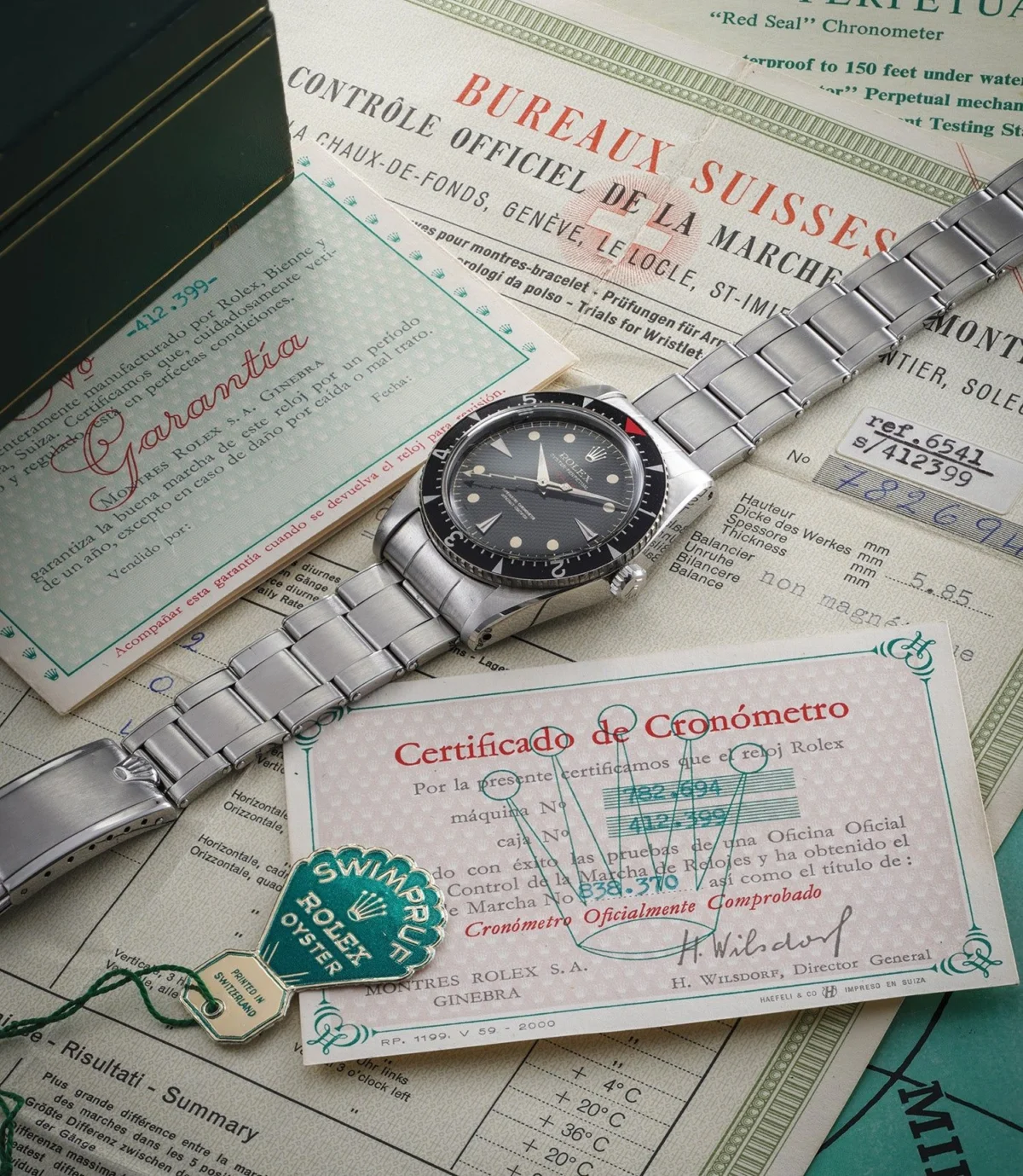
The release of the new Padellone-inspired Perpetual 1908 represents a pivot for a brand that has spent the last several decades perfecting a very specific, highly focused catalog of "Professional" watches. While the world knows Rolex for the rugged utility of the Submariner, the high-octane precision of the Daytona, and the go-anywhere reliability of the Oyster Perpetual, the brand’s history is actually far more experimental and eclectic. Decades ago, Rolex was a house of high-complication and artisanal finishing, utilizing techniques and aesthetic flourishes that have largely been absent from the modern, industrialized production lines. The return of a triple-calendar aesthetic suggests that Rolex may be ready to dip back into its archives to satisfy a market increasingly obsessed with heritage and "Neo-vintage" charm.

"Imagine Rolex bringing back bark or hammered Morellis finishing or, better yet, developing an entirely new case finish," says Cam Barr, the founder and CEO of Craft + Tailored. For collectors like Barr, the beauty of vintage Rolex lies in these eccentricities—the small, tactile details that make a watch feel like a piece of art rather than a mass-produced tool. "Those kinds of small, slightly eccentric details are part of what makes vintage Rolex so much fun to collect, and I’d love to see some of that experimentation find its way back into the modern catalog."
The buzz surrounding the Padellone’s return has ignited a global conversation among the "Watch Illuminati"—the world’s foremost dealers, auctioneers, and scholars—about what else the Crown might be hiding in its vault. If Rolex is willing to revive a 1950s "frying pan," what other ghosts of the past could be modernized for a new generation?

One of the most frequent names to emerge in these discussions is the Rolex Chronograph Dato-Compax, famously known as the "Jean-Claude Killy" (ref. 6236). Produced from the late 1940s through the early 1960s, the Dato-Compax was the pinnacle of Rolex’s mechanical complexity before the Daytona simplified the brand’s chronograph offerings. It featured a triple calendar—displaying the day, date, and month—layered over a three-register chronograph. "It was the most complicated production Rolex movement of the 20th century, with vintage examples being extremely sought after," notes Paul Boutros, the deputy chairman and head of Americas for Phillips auction house. The watch earned its nickname from the legendary French alpine skier and three-time Olympic gold medalist Jean-Claude Killy, who was frequently spotted wearing the reference. With its elegant 36mm case and distinctive outer date track, a modern "JCK" would serve as a bridge between Rolex’s tool-watch dominance and its high-horology aspirations.
Another prime candidate for a revival is the Milgauss ref. 6541. Rolex officially retired the Milgauss line in 2023, leaving a hole in the catalog for fans of the brand’s "scientist’s watch." However, the modern Milgauss—with its green sapphire crystal and orange lightning-bolt seconds hand—was a far cry from the original 1950s design. Eric Wind, owner of Wind Vintage, and Michael Morgan, founder of the Iconic Watch Company, both point to the reference 6541 as the version Rolex should bring back. This original iteration featured a rotating bezel with a red triangle (similar to early Submariners) and a stunning black honeycomb dial that was designed to assist with its anti-magnetic properties.

The market for the 6541 is already white-hot; in May 2023, a pristine example sold for a staggering $2.5 million at Phillips in Geneva. Intriguingly, the winning bidder was reportedly a representative for Rolex itself, leading to speculation that the brand is buying back its own history to study it for future releases. "The 1950s were such a dynamic time for Rolex," Wind explains, and a return to the 6541’s aesthetic would satisfy those who find the modern professional line too bulky or polished.
If Rolex wants to lean into its historical gravitas, it could look toward the "Prisoner of War" Chronograph ref. 3525. This watch carries a narrative weight that few other timepieces can match. During World War II, Rolex founder Hans Wilsdorf implemented an "honor system" for British officers held in German POW camps. These prisoners could order a Rolex watch to be delivered to the camp, with the agreement that they would pay for it only after the war was won. The reference 3525 was one of the models famously ordered by these officers, including those involved in the "Great Escape" from Stalag Luft III. "The reference 3525 was a historically significant model," says Adam Golden, founder of Menta Watches. Beyond the history, the 3525 is a masterclass in classic chronograph design, featuring a "monobloc" case where the bezel and mid-case are carved from a single piece of steel. A revival would be a poignant tribute to Wilsdorf’s personal character and the brand’s resilience during the 20th century’s darkest hours.

For those who crave the "weird" side of Rolex, the King Midas stands alone. Designed by the legendary Gérald Genta (the man behind the Audemars Piguet Royal Oak and Patek Philippe Nautilus), the King Midas was introduced in the early 1960s as a limited-edition, solid-gold masterpiece. It was asymmetrical, incredibly heavy, and featured an integrated bracelet that looked more like a piece of brutalist architecture than a timepiece. It was famously worn by Elvis Presley and was, at the time of its release, the most expensive Rolex on the market. Cam Barr notes that the Midas represents a time when Rolex was "unapologetically angular" and willing to take massive design risks. While a literal copy might be too niche for today’s market, a modern interpretation of Genta’s silhouette would align perfectly with the current industry-wide obsession with integrated-bracelet luxury sports watches.
On the more subtle end of the spectrum is the "Pre-Daytona" Chronograph ref. 6238. Before the Daytona became a cultural phenomenon with its external tachymeter bezel, the 6238 offered a cleaner, more understated take on the chronograph. By keeping the tachymeter scale on the dial and utilizing a smooth, polished bezel, the 6238 achieved a "quiet luxury" aesthetic that feels incredibly modern. James Lamdin, founder of Analog:Shift, suggests that a successor to the 6238—perhaps downsized and paired with a Jubilee bracelet—would be a formidable competitor to the dressier chronographs offered by brands like Patek Philippe or Vacheron Constantin.

Interestingly, not all experts want to see a dead model resurrected; some simply want a return to the proportions of the recent past. Jacek Kozubek, founder of Tropical Watch, advocates for a revival of the Submariner ref. 14060. Produced from the late 80s into the early 2000s, the 14060 is often called the "last of the best" by purists. It features the classic "holes" case (allowing for easy strap changes), an aluminum bezel insert that fades beautifully over time, and a slimmer, more elegant profile than the current "Maxi-case" Submariners. "I would love to see a slimmer, more wearable version of the Submariner," Kozubek says. For him, the appeal isn’t just about a specific reference number, but about the "feeling" of a watch that disappears on the wrist while still being capable of diving to 300 meters.
Finally, there is the "Holy Grail" of Rolex complications: the Split-Seconds Chronograph ref. 4113. This is perhaps the rarest Rolex ever made, with only 12 examples produced in the early 1940s and only nine known to exist today. A split-seconds chronograph (or rattrapante) allows the wearer to time two separate events simultaneously using two overlapping seconds hands. It is one of the most difficult complications to manufacture. Because Rolex has moved so far toward being a manufacturer of robust, reliable "everyday" luxury, a return to the rattrapante would be a powerful statement of technical prowess. "A true ‘grande’ complication offered by Rolex would be an incredible offering," says Paul Boutros. Given that a vintage 4113 sold for $3.5 million earlier this year, the appetite for a high-complication Rolex has never been higher.

The release of the new Padellone in the Perpetual 1908 line proves that Rolex is no longer content to simply iterate on its existing icons. By looking backward, the Crown is finding new ways to move forward, blending the soul of its vintage archives with the industrial perfection of modern manufacturing. Whether the next surprise release is a "Jean-Claude Killy" or a revamped Milgauss, one thing is certain: the world will be watching, and the wait until next September—or next April—has never felt longer.
