
 By admin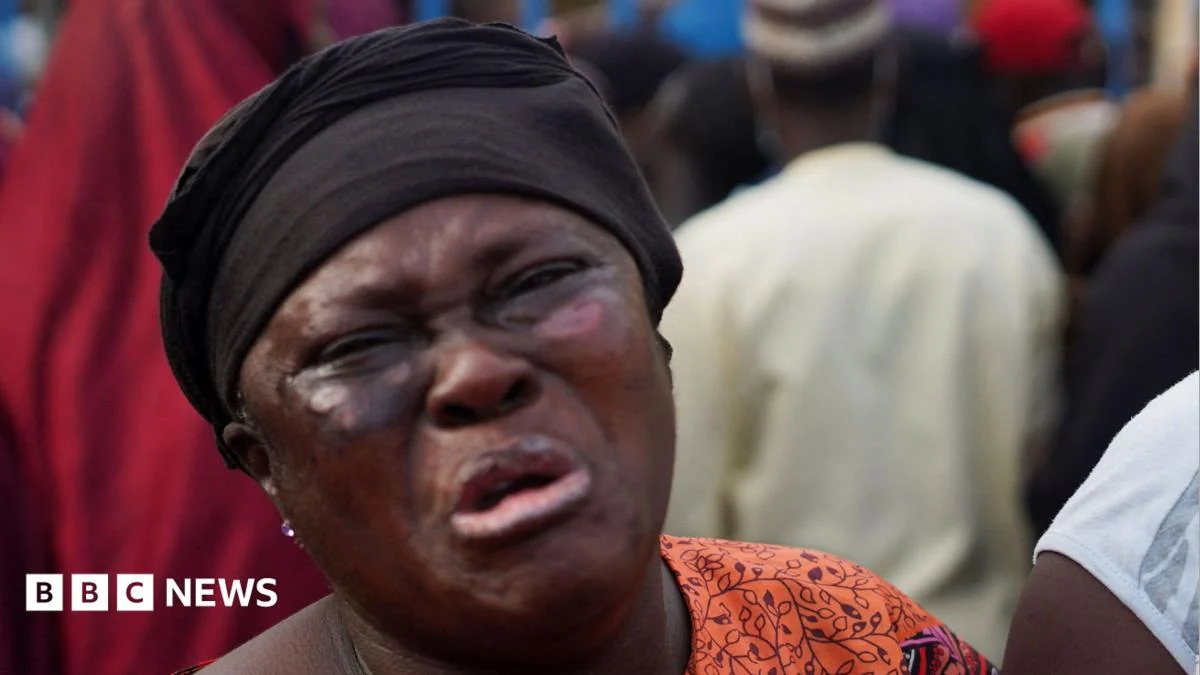
Initially, the NSCDC attributed the mass deaths to a potential outbreak of disease, with initial suggestions pointing towards diphtheria, a severe bacterial infection. However, an intelligence report subsequently shared with the Agence France-Presse (AFP) news agency paints a far more grim picture, suggesting that overcrowding and a severe lack of ventilation within the detention facility were the primary culprits, leading to suffocation. The father of one of the detained individuals, Abdullahi Dalhatu, corroborated this account to the BBC, stating, "We believe they suffocated because there was no ventilation." He recounted a harrowing scene where his son survived only because he was positioned near a small window, while his friend and many others collapsed. His son described how, under the oppressive heat of the confined and poorly ventilated cell, detainees began to fall unconscious. Despite repeated attempts to alert authorities by knocking on the door, their pleas for help went unanswered. While the BBC has not independently verified this specific testimony, it aligns with the broader narrative emerging from the intelligence report.
The grim news ignited a volatile reaction from angry miners and relatives of the deceased. In the aftermath of the fatalities, public institutions and public transport buses in the vicinity of the detention centre became targets of their fury. Residents reported witnessing individuals pelting these facilities with stones and sticks, actions that were eventually quelled by police who deployed tear gas. In response to the escalating situation and the gravity of the deaths, the State Governor, Mohammed Umaru Bago, addressed the public on Thursday, labelling the events as "sad and tragic." In a significant development, Governor Bago announced that an NSCDC commander has been detained in connection with the deaths. The governor further declared a three-day period of mourning and announced the postponement of campaign activities for elections scheduled to commence in January, underscoring the profound impact of this tragedy on the state’s political landscape.
The arrested group, comprised of young men, were detained on Tuesday by officials on suspicion of engaging in illegal mining activities near Borgu, a locality within the mineral-rich Niger State. This region is notoriously known for its extensive small-scale gold mining operations, often carried out by artisanal miners in open fields. The NSCDC, a paramilitary agency tasked with protecting critical national infrastructure and combating crimes such as illegal mining, also plays a crucial role in supporting police with internal security operations. It was within a detention facility operated by this very agency that the 37 individuals, apprehended as part of an operation against suspected unlawful mining, were discovered deceased just two days later.
The spokesperson for the NSCDC, Babawale Afolabi, emphasized the pervasive nature of illegal mining in Niger State, highlighting that artisanal miners frequently operate in exposed environments. He revealed that over 50 individuals were apprehended during an operation earlier in the week. Afolabi explained that the detainees had not yet been formally charged, as profiling and documentation processes were still underway prior to their deaths. "Illegal mining in Niger is serious," Afolabi stated, underscoring the scale of the challenge faced by the authorities.
The initial explanation of a diphtheria outbreak, while offered by the NSCDC, has since been met with caution. The agency’s national headquarters later issued a statement clarifying that the definitive cause of death had not yet been established and would necessitate comprehensive medical and laboratory testing. "The NSCDC wishes to clarify that reports attributing the deaths to any specific disease remain subject to medical and laboratory confirmation," the statement read. This ambiguity has fueled further suspicion and demands for transparency.
Abdullahi Dalhatu further elaborated on the circumstances leading up to the arrests, telling the BBC that security officers had been actively pursuing suspected illegal miners in the community for several days. He recounted the distress of relatives who visited the NSCDC office seeking the release of their loved ones, only to be repeatedly told to return later. "Unfortunately, the following day we got the news that our children had died," he lamented, encapsulating the profound grief and shock of the families.
Adding to the mounting concerns, one father informed Nigerian media that his son had appeared in good health when relatives brought him food the day before his demise. This father has called for an independent post-mortem examination, a sentiment echoed by other families grappling with the unexplained deaths. Another relative, whose 17-year-old brother was among the deceased, questioned the plausibility of a disease claiming so many detainees while seemingly sparing their guards. This logical inconsistency further fuels skepticism regarding the official explanation. The pending post-mortem examinations are anticipated to be crucial in shedding light on the true circumstances surrounding these tragic fatalities.
In response to the unfolding crisis, Niger’s Police Commissioner has ordered an immediate investigation into "the unfortunate death of suspected illegal miners while in the detention facility of the NSCDC," as stated by spokesman Wasiu Abiodun in a written statement. The bodies of the victims have been transported to the general hospital in the state capital, Minna, for examination, a critical step in the investigative process. It remains unclear whether any of the suspects had been formally charged prior to their deaths, raising further questions about due process.
Nigeria’s constitution mandates that any individual detained on suspicion of a criminal offense must be brought before a court within a "reasonable time." This period is generally defined as within a day if a court is located within 40 kilometers (25 miles), or within two days in other instances, unless a longer duration is deemed reasonable. The circumstances surrounding the detention and subsequent deaths of these 37 individuals raise serious questions about whether this constitutional requirement was met.
The scramble for gold reserves unearthed through illegal mining operations in Niger State has been identified as a significant driver of criminal gang violence, according to both officials and security experts. This illicit trade not only fuels local unrest but also has far-reaching implications for the global supply chain. A 2024 report by SwissAid highlighted that a substantial portion of the gold extracted from the region is trafficked through complex global networks, underscoring the international dimension of this issue. The tragedy in Niger State serves as a stark reminder of the human cost associated with the pursuit of illicit wealth and the urgent need for comprehensive reforms in law enforcement, detention facility management, and the tackling of illegal mining activities in Nigeria. The investigations are ongoing, and the nation awaits a full and transparent accounting of how such a catastrophic loss of life occurred.
