
 By admin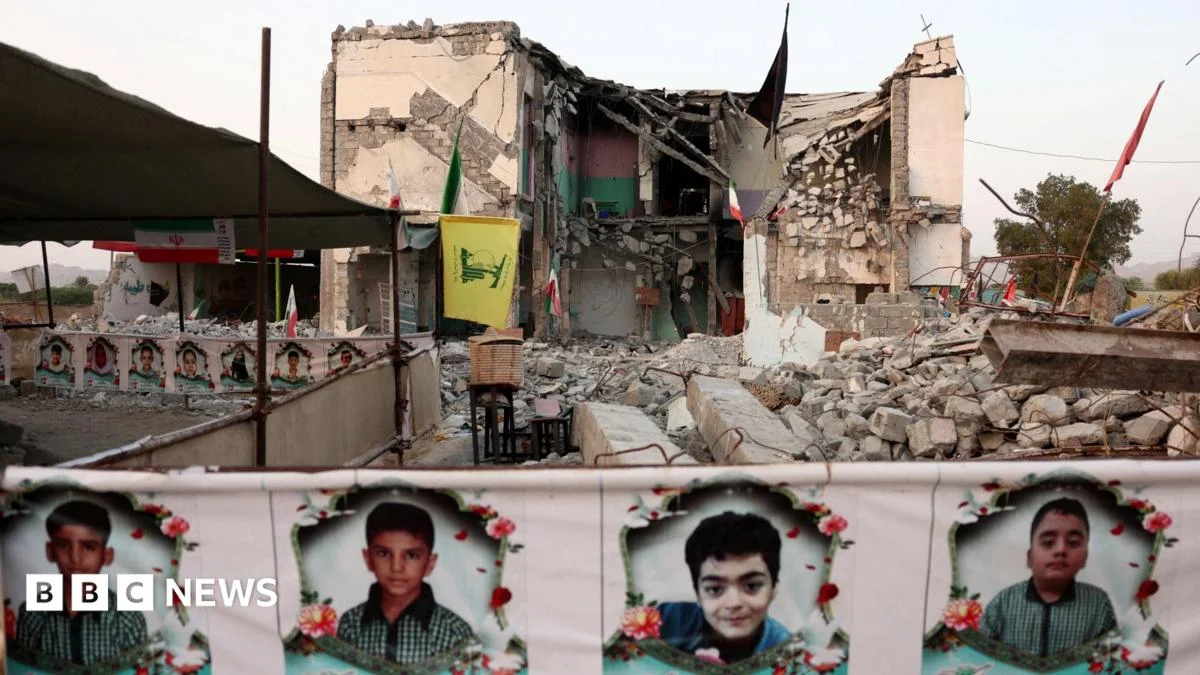
The beleaguered civilian population of Iran finds itself caught in a devastating pincer movement, facing egregious human rights violations and crimes against humanity perpetrated by their own government, alongside the deadly geopolitical conflict with the United States and Israel. This stark reality was laid bare in a somber statement released on Thursday by an independent fact-finding mission, tasked with reporting to the United Nations Human Rights Council. The mission’s latest report details two of the most catastrophic attacks on Iranian civilians, alongside an unprecedented crackdown on domestic dissent, painting a grim picture of widespread suffering and systemic abuse.
The UN experts, three independent figures meticulously examining the conflict’s impact, have focused their latest report on two particularly lethal assaults that occurred on February 28th, marking the initial outbreak of hostilities between Iran, the United States, and Israel. The first incident, a devastating strike on Shajareh Tayyebeh Primary School in the southern town of Minab, resulted in the deaths of at least 156 individuals, a staggering toll that tragically included 120 children, according to local authorities. The school, situated in close proximity to an Islamic Revolutionary Guard Corps (IRGC) naval complex that was also targeted that day, was clearly identifiable as a civilian educational institution. Crucially, the fact-finding mission found no evidence to suggest the school was being utilized for any military purposes.
The independent experts, in their rigorous assessment, concluded that there were "reasonable grounds to believe" that the strike on the school was carried out by the United States. This conclusion is bolstered by several key pieces of evidence. Media reports indicated that a preliminary US military inquiry had found American forces responsible for the attack. Furthermore, the United States is the sole belligerent in this conflict possessing Tomahawk missiles, the weapon system believed to have been employed in the assault. The experts went further, asserting that the school was "the intended point of impact" and that the catastrophic damage was not a consequence of an errant strike or collateral damage from the attack on the adjacent IRGC complex. Survivor testimonies corroborated this, with witnesses reporting that the school was struck not once, but twice, underscoring the deliberate nature of the attack.
Despite these findings, the US military has yet to publicly release the results of its own investigation into the Minab strike. However, Defense Secretary Pete Hegseth has issued statements affirming that the US military "would never target civilian targets," a declaration that stands in stark contrast to the evidence presented by the UN fact-finding mission. This discrepancy raises serious questions about transparency and accountability in the conduct of the conflict.
The second devastating attack detailed in the report occurred on the same day, February 28th. Precision Strike Missiles (PrSM) were reportedly used to unleash clouds of tungsten pellets over a sports complex and a residential area in the town of Lamerd. This attack claimed the lives of at least 21 civilians, including seven children, according to local authorities. Similar to the Minab incident, the fact-finding mission’s experts determined that the sports complex was clearly identifiable as a civilian facility and that there was no information to suggest its use for military purposes.
The experts’ conclusion regarding this incident also pointed towards the United States, stating there were "reasonable grounds to believe that the strike was carried out by the US." This belief is again supported by the fact that the US is the only party to the conflict possessing PrSM missiles. The US military, however, has denied conducting any strikes in Lamerd on that day and has disputed reports identifying the weapon used as a PrSM. These conflicting accounts highlight a critical challenge in establishing a clear and verifiable narrative of events during the conflict.
In both the Minab and Lamerd attacks, the fact-finding mission’s experts reached a grave conclusion: there were "reasonable grounds to believe that the US committed the war crime of launching an indiscriminate attack resulting in loss of life or injury to civilians or damage to civilian objects." This accusation of war crimes, if substantiated, carries profound implications for international law and the future of accountability in armed conflicts.
Beyond the immediate devastation of these aerial assaults, the fact-finding mission’s report also shines a harsh spotlight on the Iranian authorities’ brutal repression of widespread protests that convulsed the nation in December 2025 and January 2026. The experts described this crackdown as an "unprecedented escalation" compared to previous government responses. The use of lethal force was rampant, leading to mass killings and injuries, and was accompanied by extensive arrests of dissenters.
Witnesses, healthcare workers, and the families of victims provided harrowing accounts to the mission’s investigators. They reported that security personnel deliberately positioned themselves on rooftops and other elevated vantage points, systematically firing assault rifles into crowds of protesters. Many protesters sustained severe and life-altering injuries, including critical wounds to the head, chest, and eyes from metal shotgun pellets, which resulted in permanent blindness. The deliberate targeting of civilians engaged in peaceful protest, as described, constitutes a severe breach of international human rights law.
The crackdown further intensified as security forces reportedly attacked healthcare facilities. Wounded demonstrators were beaten and arrested within the confines of hospitals, and some healthcare workers themselves were detained. This deliberate obstruction of medical care had a chilling effect, deterring victims from seeking life-saving treatment for fear of reprisal. Such actions are a direct violation of the fundamental right to health and the principles of humanitarian aid.
The report also detailed the dire conditions faced by tens of thousands of individuals detained during the protests. These detainees endured torture, prolonged solitary confinement, and a complete denial of legal counsel. These practices are flagrant violations of international norms against torture and the right to a fair trial.
Adding to the grim reality, the fact-finding mission warned that the Iranian government had significantly intensified its use of the death penalty against protesters. At least 29 men were executed following expedited trials on charges directly connected to the unrest, highlighting a systematic effort to silence opposition through capital punishment.
While the fact-finding mission acknowledged that it was not possible to independently verify the exact death toll from the crackdown, they stated there were "strong grounds to believe" that the actual number was "significantly higher" than the official figure of 3,000. The government’s assertion that the majority of those killed were members of the security forces or bystanders is also called into question by the mission’s findings. In stark contrast, the US-based Human Rights Activists News Agency (Hrana) has reported confirming the deaths of over 7,000 individuals, with the overwhelming majority identified as protesters. This significant discrepancy underscores the potential for a vast undercount of civilian casualties by the Iranian government.
The experts concluded their assessment of the domestic crackdown by stating that Iranian authorities had committed "many gross human rights violations." They further categorized these violations as amounting to "the crimes against humanity of murder, imprisonment and other severe deprivation of physical liberty, torture, and other inhumane acts, committed as part of a widespread and systematic attack directed against a civilian population." This classification signifies a grave indictment of the Iranian regime’s conduct.
In response to these allegations, Iranian authorities have sought to deflect blame, accusing the United States and Israel of fomenting the unrest. They have also attributed the deaths to what they described as "terrorists" and "rioters," a narrative that directly contradicts the testimonies and evidence gathered by the UN fact-finding mission. The stark contrast between the mission’s findings and the Iranian government’s official statements underscores the deep chasm of information and accountability in the ongoing crisis. The report serves as a critical call for international attention and action to address the immense suffering of Iranian civilians caught between external conflict and internal repression.
