
 By admin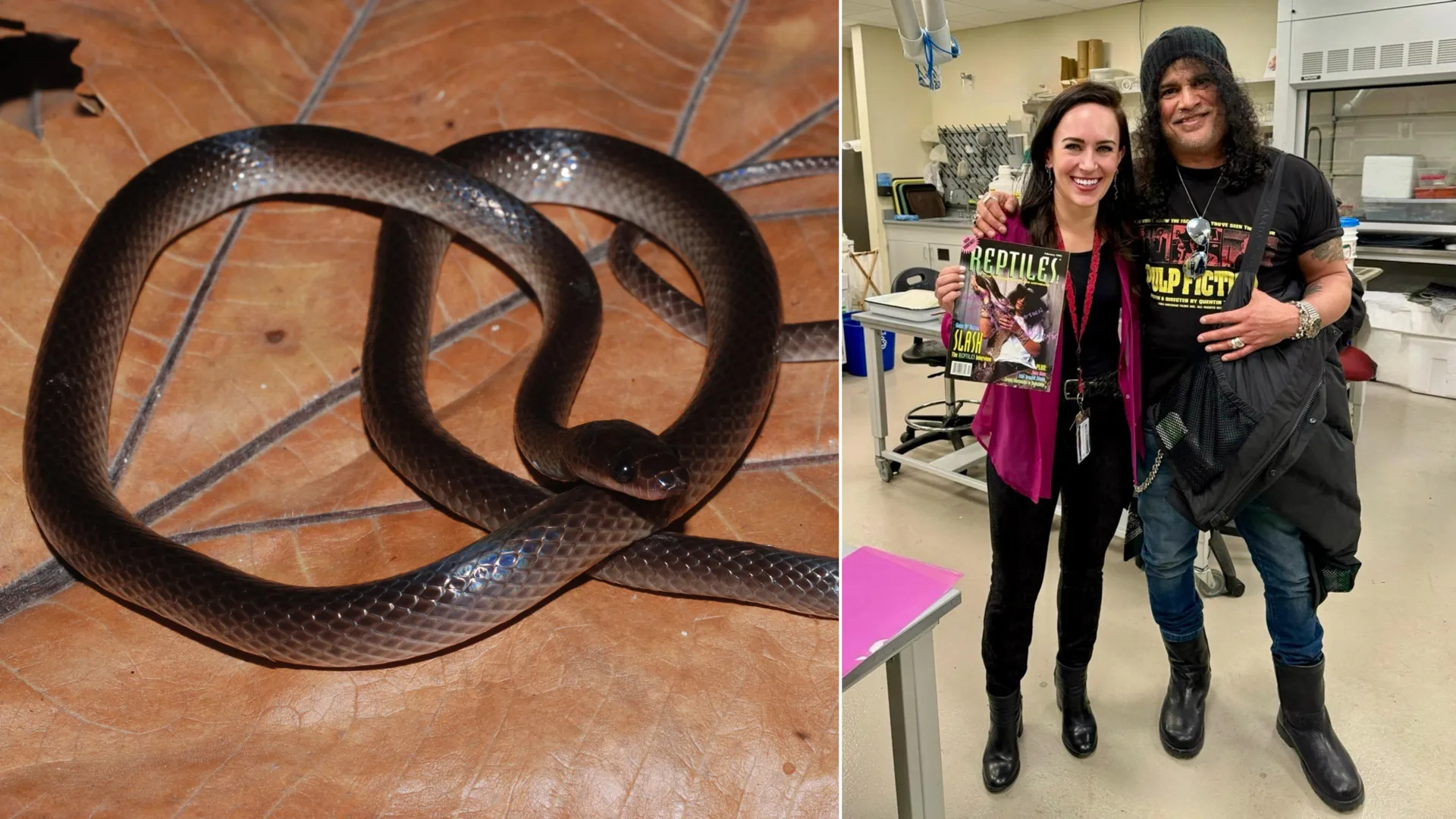
This unique designation is more than just a nod to a celebrity; it’s a recognition of Slash’s consistent and vocal advocacy for the natural world, a commitment that spans decades. The legendary guitarist, known for his top hat and electrifying solos, expressed genuine humility and excitement about the tribute. "As a long time herpephile, I am extremely honored and humbled to have Lielaphis slashi from New Guinea named after me. It is really exciting, I never would have imagined this moment would arrive," says Slash, reflecting a deep-seated connection to these creatures that predates his global fame. This sentiment underscores the profound impact such an honor can have, not just on the individual, but also on public awareness of biodiversity and conservation.
For Dr. Sara Ruane, the Field Museum’s Associate Curator of Herpetology and a senior author of the groundbreaking paper in Zootaxa describing the species, the name carries an even deeper, intensely personal resonance. Her journey into the world of herpetology—the scientific study of reptiles and amphibians—was inextricably linked with the iconic rock band. "Guns N’ Roses has been one of my favorite bands since I was in first grade, and by fifth grade, I had already told my teacher that I wanted to be a herpetologist — a scientist who studies reptiles — when I grew up," Dr. Ruane recounts, illustrating a remarkable convergence of childhood passions.
The narrative of her inspiration takes a vivid turn with a memory from her formative years. "So when I was twelve years old and got my copy of Reptiles Magazine in the mail and it had a picture of Slash holding his pet reticulated python on the cover, I thought, ‘This guy is so cool.’" This seemingly simple childhood observation planted a seed. It was a powerful validation for a young girl with an unusual ambition, seeing her rock idol share her fascination with creatures often misunderstood or feared. The image of Slash, a figure of rebellion and cool, embracing a large snake shattered stereotypes and legitimized her own interests.
Years later, as Dr. Ruane established herself as a leading scientist with the rare opportunity to bestow official names upon newly recognized reptile species, that childhood memory resurfaced. She revisited the old magazine interview, seeking deeper insight into the man behind the guitar and the python. "I reread his interview, and he talked about how much he loves museums and zoos and natural history, and about how when he was a kid, he’d go outside and look for snakes — it was all stuff that I really related to, and it made me think that he’d be a great person to name a new species after," Dr. Ruane explains. This wasn’t merely a fan’s gesture; it was a recognition of shared values, a mutual respect for the natural world, and a testament to Slash’s genuine commitment to its understanding and preservation. His early experiences of exploring for snakes as a child mirrored her own, forging an unexpected intellectual kinship across vastly different professional paths.
Her opportunity to honor this shared passion eventually materialized in the form of a modest, reddish-brown snake, approximately 28 inches long, meticulously collected from the biodiverse, yet largely uncharted, forests of New Guinea. This specimen, initially an enigma, would soon become the namesake of a rock legend.
A Mysterious Snake From New Guinea: Unveiling Biodiversity
The discovery of Lielaphis slashi highlights the immense biological richness and ongoing scientific frontier that is New Guinea. As the world’s second-largest island, trailing only Greenland in landmass, New Guinea is an ecological marvel. Strategically located just north of Australia, the island is politically divided between Indonesia (West Papua) and Papua New Guinea to the east. Its vast, largely untouched tropical forests, towering mountain ranges, and expansive wetlands support an extraordinary degree of biodiversity, much of which remains poorly documented or entirely unknown to science.
Scientists estimate that New Guinea hosts between 5% and 10% of the world’s species, despite occupying less than 0.5% of its land area. Its complex geological history, including its separation from the ancient supercontinent Gondwana and its subsequent isolation, has fostered a remarkable level of endemism, meaning many species found here exist nowhere else on Earth. This makes every expedition, every collected specimen, a potential key to unlocking new secrets of evolution and ecology.
It was during fieldwork one humid night in 2006 that Dr. Chris Austin, a distinguished professor and curator of herpetology at the Louisiana State University Museum of Natural Science, made the initial encounter. Navigating the dense, often treacherous undergrowth of New Guinea’s rainforests, Dr. Austin stumbled upon a snake that, to his experienced eye, seemed unfamiliar. "These New Guinea groundsnakes are nocturnal, so the best way to find them is at night. They are typically found just after sunset at the base of large trees where they are looking for something to eat," says Austin, a co-author of the paper describing the new species. The challenges of such nocturnal expeditions are significant. "When working at night in New Guinea you need to be very careful as there are several highly venomous species that look very similar to the non-venomous groundsnakes." This necessitates meticulous observation and expert identification skills to avoid potentially life-threatening mistakes. The discovery of the unknown snake, therefore, was not a casual find but the result of dedicated, hazardous fieldwork.
The path from field observation to formal scientific description is often long and collaborative. After completing her doctorate, Dr. Ruane joined Dr. Austin at LSU in 2016. Their shared interest in the poorly understood snake fauna of New Guinea quickly blossomed into a productive research partnership. The two began a systematic collaboration to untangle the complex taxonomy of the region’s snakes, a group known for its cryptic diversity—species that look very similar but are genetically distinct. Their continued work on this challenging group laid the essential groundwork for recognizing new species like Lielaphis slashi.
Genetics Reveal a New Species: The Power of Modern Taxonomy
At first glance, the reddish-brown snake collected by Dr. Austin did not immediately stand out as an entirely new species. Its general appearance was consistent with other known groundsnakes in the genus. However, in modern herpetology, visual identification is often just the beginning. The true revelation came through rigorous laboratory analysis, which unveiled critical differences that traditional morphology alone might have missed.
Dr. Tianqi Huang, the study’s first author and a post-doctoral researcher working with Dr. Ruane at the Field Museum, spearheaded the cutting-edge genetic analyses. "Using multiple cutting-edge genetic analyses, we found that L. slashi is genetically distinct from other similar snakes in the same genus," Dr. Huang explains. These advanced techniques typically involve sequencing specific mitochondrial and nuclear DNA markers. By comparing these genetic blueprints across various specimens, scientists can construct phylogenetic trees, which illustrate evolutionary relationships. In the case of L. slashi, these analyses provided irrefutable evidence that its genetic makeup diverged significantly from its closest known relatives, establishing its status as a unique evolutionary lineage.
But genetic evidence, while powerful, is often complemented by traditional morphological studies. "The combination of physical characteristics, like differences in numbers of scales when compared with other species, and the genetic evidence is what led us to realize that it is an entirely new species," Dr. Huang clarifies. These morphological differences can be subtle, involving precise counts of ventral scales (along the belly), subcaudal scales (under the tail), or variations in head scutellation (the pattern of scales on the head). Even minute distinctions in color patterns or body proportions, when consistently present and correlated with genetic data, contribute to the species diagnosis.
Furthermore, the research team employed ecological modeling, a sophisticated tool that uses environmental data to predict species distributions and habitat preferences. "We also used ecological modeling to show that L. slashi‘s preferred habitat is different from similar snakes," Dr. Huang adds. This modeling helps identify "niche partitioning," where closely related species, despite living in the same general area, specialize in different microhabitats, altitudinal ranges, or even temperature regimes. Demonstrating a distinct ecological niche further reinforces the species’ unique identity and provides valuable insights into its survival strategies within New Guinea’s complex ecosystems. This multi-faceted approach, combining genetics, morphology, and ecology, represents the gold standard in contemporary taxonomic research.
What Slash’s Groundsnake Eats: Glimpses into Its Life
Despite the scientific triumph of its identification, much remains unknown about the daily life and ecological role of Lielaphis slashi. Observing snakes in their natural habitat, especially nocturnal and cryptic species in dense rainforests, presents formidable challenges. "It’s incredibly hard to observe snakes in the wild before they slither away, so our knowledge about L. slashi is limited," Dr. Ruane admits. This scarcity of observational data underscores the ongoing need for long-term field studies in biodiversity hotspots.
However, the snake’s anatomy provides valuable clues about its potential behavior and feeding habits. Like many groundsnakes in its genus, Lielaphis slashi possesses a distinctive dental structure. "Snakes in this genus often have large teeth in the back of their mouths, which New Guinea groundsnakes may use to grab on to and eat small, slippery-scaled lizards and the eggs of other reptiles; this snake isn’t grasping and squeezing its prey like a boa constrictor," Dr. Ruane explains. This anatomical feature describes what herpetologists call "opisthoglyphous" or "rear-fanged" snakes. While some rear-fanged snakes possess mild venom that is delivered through grooves in these enlarged teeth, it is generally not considered medically significant to humans. Their primary function is to secure struggling, often slippery, prey, making it easier to manipulate and swallow.
Given this dental structure, L. slashi likely preys on small, agile vertebrates such as geckos, skinks, and other small lizards, which are abundant in its forest habitat. The inclusion of reptile eggs in its potential diet suggests an opportunistic feeding strategy, taking advantage of readily available protein sources. Unlike constrictors, which subdue their prey through suffocation, or highly venomous snakes that inject potent neurotoxins or hemotoxins, Slash’s groundsnake employs a more direct, mechanical approach to subdue its meals.
Crucially, despite the "most dangerous band in the world" moniker sometimes associated with Guns N’ Roses, its reptilian namesake is far from a threat to humans. Lielaphis slashi does not produce venom capable of seriously harming a human. Any defensive bite would likely result in minor irritation, similar to a scratch. This distinction is vital for public understanding, helping to dispel misconceptions and unwarranted fear of snakes, especially those from remote tropical regions.
Threats to New Guinea’s Forests: A Call for Conservation
While Slash’s groundsnake poses little danger to humans, human activity poses a grave and accelerating threat to the species and countless other animals inhabiting New Guinea’s precious forests. The island, a global biodiversity treasure chest, is under intense pressure from a variety of anthropogenic factors.
"The habitats that Slash’s groundsnake is from are under threat from industries like coffee farming and mining," Dr. Ruane warns. These are just two examples of a broader pattern of deforestation and habitat degradation. Large-scale logging, often driven by international demand for timber, clears vast tracts of old-growth forest. The expansion of agricultural frontiers, including palm oil plantations and coffee farms, converts diverse ecosystems into monocultures, obliterating the intricate habitats that species like Lielaphis slashi depend on. Mining operations, particularly for gold, copper, and nickel, not only destroy habitat directly but also lead to severe pollution of rivers and soil, impacting entire ecosystems downstream. Infrastructure development, such as roads and dams, further fragments forests, isolating populations and making them more vulnerable.
The consequences of these activities are dire. Habitat loss and fragmentation are the primary drivers of biodiversity decline globally, and New Guinea is no exception. Species that are highly specialized or have limited ranges are particularly vulnerable to extinction when their specific ecological niches disappear. Climate change exacerbates these threats, altering rainfall patterns, increasing the frequency of extreme weather events, and potentially shifting species ranges faster than they can adapt.
This existential threat underscores the profound importance of the scientific work being done by Dr. Ruane and her colleagues. "That’s part of why describing the species that live there is important. Every species should be recognized in order for us to better understand how ecosystems work, how everything fits into the environment. We can’t conserve animals or other living things that we don’t know about," Dr. Ruane emphasizes. This statement encapsulates a fundamental principle of conservation biology: You cannot protect what you do not know exists.
By formally identifying species such as Lielaphis slashi, scientists establish critical baseline data. This information is essential for conservation planning, allowing researchers to map species distributions, assess population sizes, and identify areas of high biodiversity that warrant protection. It informs policy decisions, aids in the designation of protected areas, and provides the scientific foundation for environmental impact assessments of development projects. Each newly described species is a piece of the puzzle, contributing to a clearer, more comprehensive picture of New Guinea’s staggering biodiversity and helping scientists understand which organisms may be at greatest risk as their habitats continue to change.
The naming of Lielaphis slashi is more than a scientific footnote; it’s a vibrant intersection of popular culture and vital scientific endeavor. It spotlights the critical work of taxonomists and conservationists, while simultaneously leveraging the broad appeal of a rock icon to draw attention to the urgent need to protect the Earth’s disappearing biodiversity. Slash’s groundsnake serves as a living symbol of both the wonders still waiting to be discovered and the pressing responsibility we bear to safeguard them.
This monumental study was the result of a collaborative effort by a dedicated team of researchers, including Tianqi Huang (Field Museum and Rutgers University), Chris Austin (Louisiana State University Museum of Natural Science), Justin Bernstein (Slippery Rock University and the American Museum of Natural History), Bulisa Iova (Papua New Guinea National Museum and Art Gallery), Jackson Roberts (Virginia Museum of Natural History), Jeffrey Frederick (University of Kentucky), and Sara Ruane (Field Museum). Their collective expertise and tireless commitment continue to unravel the mysteries of our planet’s rich, yet fragile, natural heritage.
