
 By admin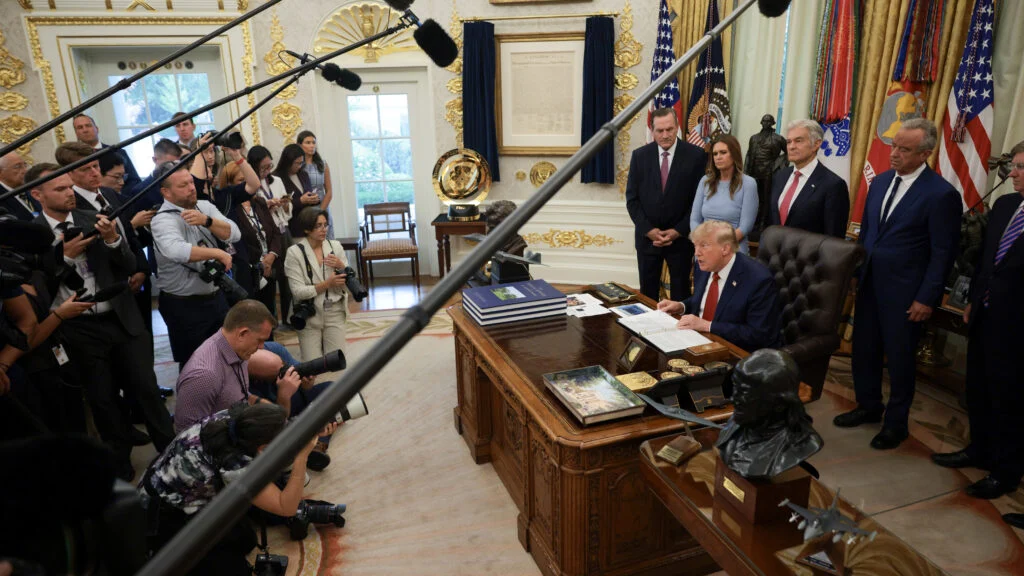
President Trump made an announcement Friday to tout one of his initiatives to lower drug prices, standing before a backdrop of administrative officials to signal a significant shift in how the federal government approaches the soaring costs of prescription medication within the Medicaid program. While the rhetoric was high on promises of historic savings for taxpayers and patients alike, the rollout of what the administration has dubbed the GENEROUS model—a framework designed to modernize drug purchasing through value-based arrangements—left many policy experts, state health officials, and industry stakeholders with more questions than answers regarding its practical execution.
The GENEROUS model, according to the President’s remarks, represents a paradigm shift in the relationship between state Medicaid programs and pharmaceutical manufacturers. Under the current system, Medicaid programs are largely tethered to a rigid rebate structure established by the Medicaid Drug Rebate Program (MDRP) of 1990. While this system ensures that Medicaid receives some of the lowest prices in the market through a "best price" provision, it has often been criticized for stifling innovation in payment models, particularly for high-cost, one-time curative treatments like gene therapies. The GENEROUS model aims to dismantle these barriers by allowing states to enter into outcome-based agreements where the final price of a drug is contingent upon its actual clinical performance in patients.
Trump emphasized that all 50 states, Washington, D.C., and Puerto Rico will participate in the GENEROUS model, framing the initiative as a rare moment of total national unity on a complex healthcare issue. "We are bringing everyone to the table to ensure that our most vulnerable citizens have access to the most advanced medicines without bankrupting the system," the President stated. However, the uniformity of this participation was quickly complicated by subsequent data released by the Centers for Medicare and Medicaid Services (CMS). Later on Friday, CMS clarified that while the administration’s goal is universal adoption, 40 states and Puerto Rico had officially signed agreements to participate at that moment. The remaining states have expressed intent and applied for inclusion, but they have until the end of the month to finalize their participation agreements.
The discrepancy between the President’s announcement and the CMS data highlights the administrative friction that often accompanies large-scale federal health initiatives. For state Medicaid directors, the decision to join the GENEROUS model is not merely a political one but a deeply technical calculation. Medicaid is a jointly funded federal-state program, and states are responsible for a significant portion of drug expenditures. In an era where a single dose of a gene therapy can cost upwards of $2 million, state budgets are increasingly precarious. The promise of "value-based" pricing is attractive, but the infrastructure required to track patient outcomes over months or years—and the legal mechanisms to claw back payments if a drug fails—requires a level of data sophistication that many state agencies currently lack.
The GENEROUS model specifically targets the "Best Price" rule, a regulatory hurdle that has long been the bane of value-based care advocates. Traditionally, if a drug manufacturer offered a steep discount to one entity based on a specific clinical outcome, that discount would automatically set a new, lower "best price" that the manufacturer would then have to offer to every Medicaid program in the country. This acted as a massive disincentive for companies to experiment with outcome-based pricing. The GENEROUS model seeks to provide a regulatory "safe harbor" or a modified reporting structure that allows these innovative contracts to exist without triggering a nationwide price collapse for the manufacturer, thereby encouraging more flexible pricing for high-cost specialty drugs.
Industry reaction to the Friday announcement has been a mix of cautious optimism and strategic skepticism. Groups representing the pharmaceutical industry, such as PhRMA, have long argued that the 1990s-era Medicaid rules are anachronistic in the age of precision medicine. However, they remain wary of any model that might eventually lead to government-mandated price setting. Analysts suggest that while the GENEROUS model offers a path toward more flexible contracting, it also places a heavy burden on manufacturers to prove the long-term efficacy of their products in a "real-world" Medicaid population, which often faces different socioeconomic challenges than the populations studied in controlled clinical trials.

The timing of the announcement also drew scrutiny from political analysts and health policy researchers. Coming in the midst of a heated political season, the push to finalize state agreements by the end of the month suggests an urgency to produce tangible results before the upcoming election. Critics argue that the "GENEROUS" acronym and the sweeping claims of universal state participation are part of a broader effort to frame the administration as aggressive on drug pricing, even as other major initiatives, such as the "International Pricing Index" or the "Most Favored Nation" model, face significant legal and logistical delays.
To understand the stakes of the GENEROUS model, one must look at the underlying data of Medicaid drug spending. In recent years, Medicaid has seen a dramatic rise in spending on specialty drugs, which now account for nearly half of the program’s total drug spend despite representing only a tiny fraction of total prescriptions. For states, the volatility of these costs is a primary concern. A sudden influx of patients requiring a new, high-cost treatment for a condition like Hepatitis C or spinal muscular atrophy can create a billion-dollar hole in a state budget overnight. The GENEROUS model’s emphasis on "paying for success" is intended to mitigate this risk, but the "success" metrics themselves remain a point of contention. Who decides if a drug worked? Is it a lab value, a reduction in hospitalizations, or a patient’s self-reported quality of life? The CMS framework for the model suggests that these metrics will be negotiated between states and manufacturers, but federal oversight will be necessary to ensure that the metrics are rigorous and not simply "low-hanging fruit" designed to guarantee payment.
Furthermore, the participation of Puerto Rico and the District of Columbia adds another layer of complexity. These jurisdictions often operate under different federal funding caps (allotments) than the 50 states. For Puerto Rico, which has faced chronic underfunding and healthcare infrastructure challenges, the GENEROUS model could provide a much-needed mechanism to access therapies that were previously out of reach due to strict budgetary constraints. However, the administrative capacity to manage complex value-based contracts in a territory still recovering from multiple natural disasters and fiscal crises is a significant concern for federal overseers.
As the end-of-the-month deadline approaches, the 10 states that have applied but not yet signed will be under intense pressure. These states are likely grappling with the legalities of their own state constitutions and procurement laws, which may not explicitly allow for the kind of "contingent" payments envisioned by the GENEROUS model. Some state legislatures may need to pass enabling legislation to allow their Medicaid agencies to enter into these multi-year, outcome-linked contracts. This "tail" of implementation is where the President’s vision of a unified national front may meet the reality of American federalism.
Expert perspectives on the model remain divided. Some health economists argue that the GENEROUS model is a necessary evolution. "The current system is built for the blockbuster pills of the 1990s, not the curative cell therapies of the 2020s," said one policy analyst from a prominent D.C. think tank. "If we don’t change how we pay for these drugs, Medicaid programs will eventually be forced to restrict access to save their budgets." Conversely, patient advocacy groups are concerned that value-based models could lead to "narrow networks" or sophisticated rationing if the outcome metrics are too difficult for certain patient populations to achieve, potentially excluding the most complex cases from receiving treatment.
The Friday announcement, while lacking in granular detail, has undoubtedly set the stage for a major confrontation over the future of drug pricing in America. Whether the GENEROUS model becomes a cornerstone of Medicaid policy or remains a symbolic gesture depends on the technical work currently happening behind the scenes at CMS and in state capitals across the country. The 40 states that have already signed on represent a significant majority of the Medicaid population, but the true test will be the first "value-based" contract signed under this framework. Until then, the "many questions unanswered" noted by observers on Friday will continue to loom over the administration’s drug pricing agenda.
As the pharmaceutical industry, state governors, and federal regulators look toward the end-of-the-month deadline, the focus will shift from the podium in Washington to the fine print of the participation agreements. The GENEROUS model’s success will ultimately be measured not by the number of states that sign a piece of paper, but by whether it can actually lower the net cost of drugs while expanding access to life-saving treatments for the millions of Americans who rely on Medicaid. For now, the administration has succeeded in changing the conversation, but the difficult work of transforming the nation’s largest insurer into a value-based purchaser has only just begun.
