
 By Lina Irawan
The era of elevated inflation, characterized by sharp increases in the Consumer Price Index (CPI) across various sectors, has relentlessly eroded the purchasing power of the dollar. What $100,000 could buy a decade or even five years ago is dramatically different from its current capacity. Housing costs, whether rent or mortgage payments, have soared in many urban and suburban areas, often consuming a disproportionately large chunk of a six-figure salary. Essential expenses like groceries, transportation, healthcare, and childcare have seen double-digit percentage increases, transforming what was once discretionary spending into unavoidable outlays. This pervasive erosion means that many Americans earning $100,000 are no longer experiencing the financial ease they once expected; instead, they find themselves meticulously budgeting, clipping coupons, and actively hunting for bargains, much like individuals earning significantly less.
This shifting economic reality has not gone unnoticed by major retailers. Walmart, the nation’s largest retailer and a bellwether for consumer trends, has previously reported an observable increase in more affluent customers frequenting its stores. This trend signifies a broader economic squeeze, where even higher-income households are prioritizing value and discounts over premium pricing or convenience. More recently, this migration towards frugality has extended even further, with these financially pressured consumers now turning to deep discounters like dollar stores, a segment traditionally catering to lower-income demographics.
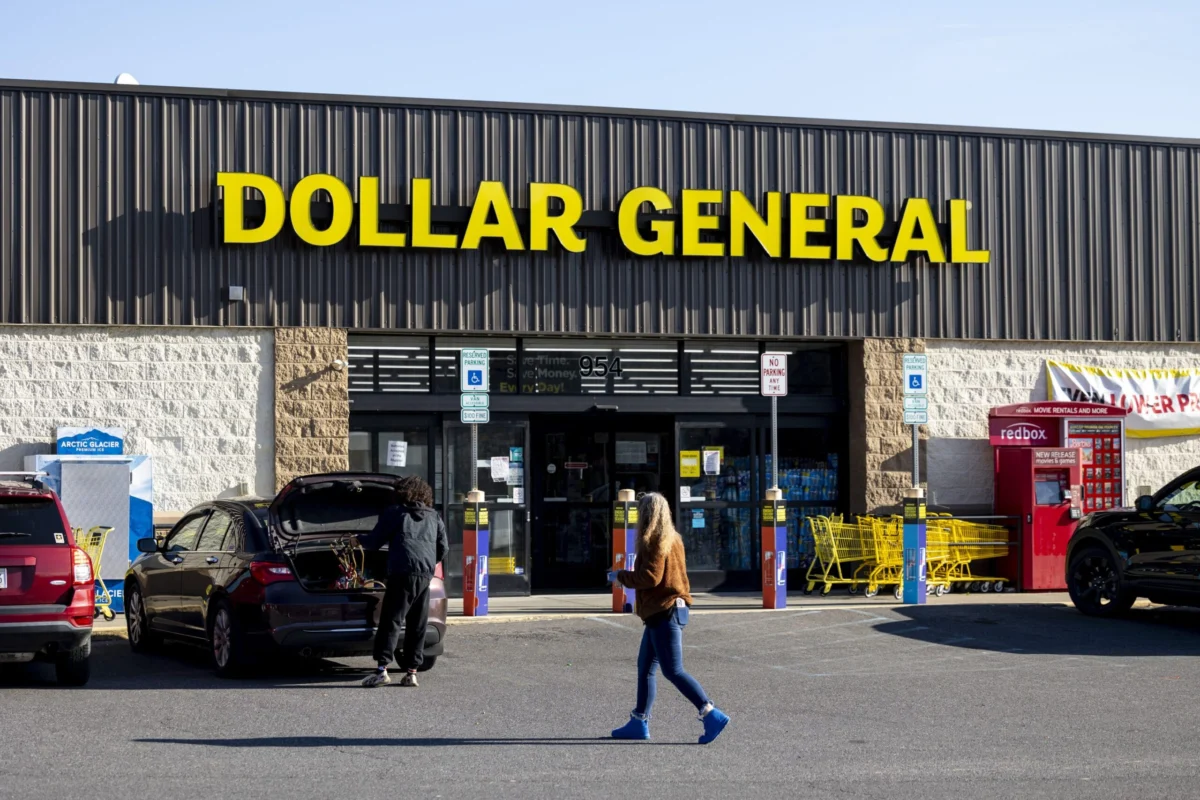
The insights from retail executives offer a stark picture of this widespread economic strain. At the recent Goldman Sachs Global Consumer and Retail Conference, Todd Vasos, CEO of Dollar General, provided a revealing assessment of current consumer behavior across different income strata. Vasos detailed how Dollar General’s core customers, whom he defined as individuals earning less than $45,000 annually, exhibit distinct changes in their shopping habits when gasoline prices cross the critical threshold of $4 a gallon. For these households, higher fuel costs directly impact their disposable income and mobility. They tend to buy closer to home to minimize travel expenses, shop more frequently to spread out their purchases and manage cash flow, and purchase less on each trip, often buying only what they can immediately afford or what is absolutely necessary. This increased frequency of shopping reflects a deeper underlying anxiety, as customers are often uncertain about future price fluctuations or their financial situation in the coming weeks, prompting them to acquire what they need while they can.
However, Vasos’s most striking observation concerned the middle and upper-middle-income segments. "But the interesting thing with this economy, because of the other sustained headwinds of inflation over the years that have passed, even that middle to upper middle is acting more like a lower-income shopper these days," he stated, according to a Seeking Alpha transcript of the conference. This highlights a critical point: the cumulative effect of inflation isn’t just affecting the most vulnerable; it’s pushing a broader segment of the population into a more conservative, budget-conscious mindset. This "trading down" phenomenon is a direct consequence of the sustained pressure on household budgets.
The financial strain extends significantly beyond energy costs, although fuel prices remain a potent symbol of inflationary pressures. According to AAA, the national average price for a gallon of gasoline has surged to $4.476, a substantial increase from $3.189 a year ago. This spike is largely driven by a confluence of geopolitical tensions, including the ongoing conflict in Ukraine impacting global energy supplies, OPEC+ production decisions, and general supply chain disruptions, rather than any specific "war on Iran." The ripple effect of higher energy costs is particularly evident in the price of diesel, which has soared to an alarming $6.50 a gallon. Given that diesel powers the vast majority of commercial trucks, this increase translates directly into higher shipping costs for nearly every consumer good, from food to furniture, thereby contributing significantly to overall inflation.
But the burden is not confined to the gas pump. Utility bills, encompassing electricity, natural gas, and water, have seen steep increases, partly due to rising energy prices and infrastructure investments. The automotive market has also been severely impacted; prices for both new and used cars skyrocketed due to semiconductor shortages, supply chain disruptions, and robust demand, making vehicle ownership or replacement a significant financial hurdle. Insurance premiums across the board – auto, home, and health – have also jumped, driven by higher repair costs, increased frequency of extreme weather events, and rising medical expenses. Food prices have become a daily concern for households, with staples like milk, eggs, bread, and meat seeing substantial hikes due to factors such as increased input costs for farmers, supply chain bottlenecks, and labor shortages. Furthermore, caregiving costs, including childcare and elder care, have become exorbitant, often rivaling or exceeding mortgage payments in many regions, reflecting a critical shortage of caregivers and rising labor costs in the sector.
Against this backdrop of broad-based cost increases, Vasos underscored the profound psychological impact on individuals earning what was once considered a comfortable salary. "I would tell you, what we’re hearing more and more from them is ‘I don’t feel like I’m higher income at $100,000 any longer,’ because of all of the headwinds that I just mentioned," he elaborated. This sentiment reveals a widespread feeling of financial inadequacy, where a seemingly robust income no longer provides the expected level of comfort or security. Despite these challenges, Vasos expressed confidence in Dollar General’s strategic positioning: "So we believe at Dollar General, we’re in a really good position to service all of the different demographics of what we have." The retailer’s emphasis on value, with "2,000 items at or below $1," remains a crucial draw for consumers across the income spectrum.
Despite the pervasive inflationary pressures, consumers have shown remarkable resilience, a factor Vasos attributed primarily to sustained employment. The U.S. labor market has remained robust, with unemployment rates near historic lows and consistent job creation, providing a critical buffer against economic downturn. While wage growth has occurred, it has often lagged behind the pace of inflation, meaning that real wages (wages adjusted for inflation) have, for many, stagnated or even declined. This combination of employment stability and eroding purchasing power leads to a complex consumer behavior: people are working, earning, and spending, but they are doing so with increased caution and a heightened focus on value.
Evidence of this resilience, coupled with underlying stress, is reflected in recent economic data. The latest retail sales report, for instance, showed a better-than-expected 1.2% increase in August and a 1.1% gain when excluding gasoline. While these figures suggest strong consumer spending, economists often caution that such increases can be misleading during inflationary periods. A higher dollar value in retail sales might not necessarily mean consumers are buying more items; rather, it could simply indicate they are paying more for the same or even fewer goods due to elevated prices. Consumers are adapting, often by cutting back on discretionary spending, delaying large purchases, or opting for cheaper alternatives, but they are still spending on necessities. Vasos predicted that as long as employment holds steady, Dollar General’s customers, regardless of their income bracket, will continue to find ways to navigate the challenging inflation landscape.
Further evidence of the diminished value of a six-figure income comes from various surveys and analyses. A survey conducted by The Harris Poll last year starkly illustrated this sentiment, finding that a significant 64% of six-figure earners no longer view their income as a milestone for success but rather as the "bare minimum for staying afloat." This statistic underscores a profound shift in societal perception regarding financial well-being. The traditional markers of affluence are becoming increasingly out of reach for a growing number of people, even those earning what was once considered a high salary.
The survey also revealed that even households earning $200,000 or more have resorted to financial tactics commonly associated with less affluent consumers. For example, 64% reported using rewards points to pay for essential items, a practice typically indicative of tight budgeting. Fifty percent admitted to utilizing "buy now, pay later" (BNPL) plans for purchases under $100, suggesting a need to stretch cash flow even for small expenditures. Alarmingly, 46% of these high-income earners confessed to relying on credit cards to "make ends meet," a behavior that can quickly lead to accumulating debt and further financial precarity. These findings paint a picture of widespread financial anxiety, transcending traditional income divides.
Adding to this discourse, Michael Green, chief strategist and portfolio manager for Simplify Asset Management, sparked a viral conversation with his Substack post titled "Part 1: My Life Is a Lie." In it, Green controversially argued that the "real poverty line" in the United States should be set at $140,000. His contention is that conventional governmental gauges of poverty and cost of living fail to accurately capture the immense financial struggles faced by American households, even those earning what are superficially considered high incomes. Green meticulously detailed how the escalating costs of housing, childcare, transportation, healthcare, and education have pushed the functional "crisis threshold"—the minimum income required for a family to function without constant financial distress—far beyond official poverty levels.
"If the crisis threshold—the floor below which families cannot function—is honestly updated to current spending patterns, it lands at $140,000," Green asserted. This perspective challenges the very definition of economic well-being and highlights a growing disconnect between official statistics and the lived realities of millions of Americans. The implication is that a significant portion of the population, including many six-figure earners, are experiencing a form of "hidden poverty" or "affordability crisis," struggling to cover basic necessities despite seemingly robust incomes.
The erosion of the $100,000 salary as a symbol of success is a multi-faceted issue driven by persistent inflation, rising costs across all essential sectors, and a labor market where wage growth often lags behind price increases. This shift is not merely an academic exercise; it has tangible consequences for individual households, influencing their daily decisions, financial planning, and overall quality of life. As retailers like Dollar General adapt their strategies to cater to an increasingly cost-conscious consumer base that spans all income levels, the broader economic landscape continues to grapple with the challenge of restoring genuine purchasing power and financial security to the American middle class. The lingering question remains: will the $100,000 salary ever regain its former luster, or has the definition of financial success been permanently recalibrated by the forces of modern inflation?
