
 By admin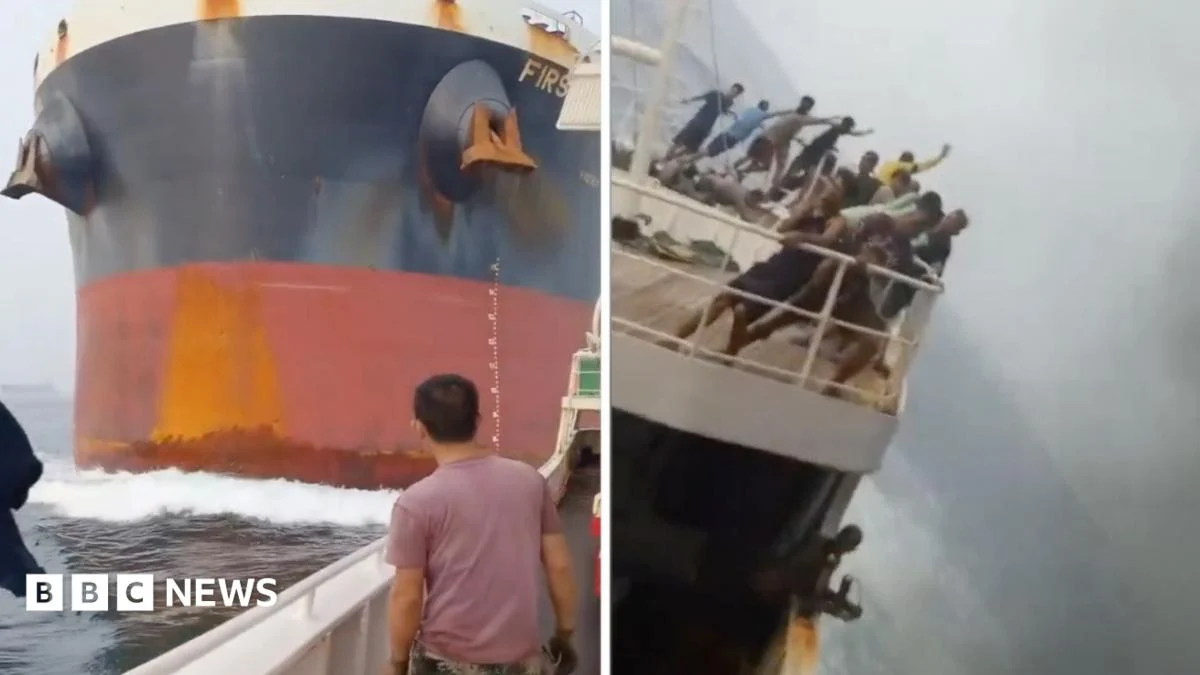
Dramatic footage, authenticated by BBC Verify, has emerged on social media platforms, purportedly capturing the precise moment a large cargo ship violently collided with a smaller fishing vessel in busy shipping lanes near Singapore. The clips, which have since gone viral, offer a stark and unsettling glimpse into the catastrophic impact, showcasing the fragility of smaller craft when confronted by the immense power of commercial maritime traffic. While the visual evidence is compelling, crucial details surrounding the incident, including the exact date, the identities of all vessels involved, and the potential human cost, are still being meticulously pieced together.
BBC Verify’s rigorous authentication process, which involved cross-referencing visual cues, vessel tracking data, and expert analysis of maritime traffic patterns, has pinpointed the location of the collision to waters in the vicinity of Singapore. This strategically vital maritime nexus, one of the world’s busiest shipping hubs, handles a significant volume of global trade and is characterized by a constant flow of vessels of all sizes, from colossal container ships to nimble fishing boats. The analysis of available evidence strongly suggests that this harrowing encounter likely occurred on Sunday, September 17th. However, the precise time of the incident remains unconfirmed, adding another layer of complexity to the ongoing investigation.
The immediate aftermath of the collision, as depicted in the circulated videos, is one of chaos and destruction. One widely shared clip appears to show a large, dark-hulled cargo vessel, its sheer scale dwarfing the fishing boat, bearing down on the smaller craft. The impact itself is a visceral event, with the fishing vessel seemingly being pushed and then engulfed by the larger ship. Another perspective, possibly from a drone or a nearby vessel, offers a wider view of the immediate aftermath, revealing debris scattered across the water and the fishing boat in a severely compromised state. The sheer force of the impact is palpable, raising immediate concerns about the integrity of the fishing vessel and the safety of its occupants.
A critical unanswered question, and perhaps the most concerning, is the fate of those on board the fishing vessel. As of the latest available information, it remains unclear whether any individuals were injured or tragically killed as a result of the collision. The lack of immediate official confirmation on casualties is not uncommon in the initial stages of such incidents, as rescue operations, investigations, and the identification of individuals take precedence. However, the visual evidence of the severe damage inflicted upon the fishing boat understandably fuels anxiety and a desperate need for clarity on this front.
Equally perplexing is the underlying reason for this catastrophic encounter. The waters around Singapore are meticulously managed, with established shipping lanes, navigational aids, and a sophisticated vessel traffic management system designed to prevent such accidents. The collision between a large cargo ship and a fishing vessel, especially in such a regulated environment, suggests a potential breakdown in communication, a navigational error, a failure of critical systems, or perhaps even a combination of factors. Investigators will be scrutinizing various possibilities, including speed, visibility, adherence to maritime regulations, and the operational status of both vessels at the time of the incident.
The economic significance of the Singapore Strait cannot be overstated. It forms a critical artery of global trade, connecting the Indian Ocean with the South China Sea and the Pacific Ocean. Over 100,000 vessels pass through its waters annually, carrying a substantial portion of the world’s goods. This high volume of traffic, while testament to its importance, also inherently increases the risk of accidents. Fishing vessels, often operating at different speeds and with different navigational priorities than commercial shipping, must navigate these busy waterways with extreme caution. The presence of numerous fishing grounds and the proximity of coastal communities to established shipping lanes further complicate the maritime landscape.
The types of vessels involved are also significant. Cargo ships, particularly container ships, are among the largest man-made moving objects on Earth. Their immense mass and momentum mean that any collision carries a high risk of severe damage to smaller vessels. Fishing vessels, on the other hand, are typically much smaller, more agile, but also far more vulnerable. The economic livelihoods of fishing communities are intrinsically tied to the safety and seaworthiness of their vessels. A loss or severe damage to a fishing boat can have devastating financial and social consequences for the crew and their families.
To understand the potential causes, it is important to consider the operational environment. Maritime traffic management systems in busy straits like the Singapore Strait rely on a layered approach, including radar, AIS (Automatic Identification System) transponders, VTS (Vessel Traffic Services) operators, and established communication protocols. AIS transponders, for instance, transmit a vessel’s identity, position, course, and speed, allowing other vessels and traffic controllers to track its movements. A failure in the AIS system of either vessel, or a misinterpretation of the data, could contribute to a collision. Similarly, adverse weather conditions, though not explicitly mentioned, can reduce visibility and increase the difficulty of navigation, especially at night or during periods of heavy rain.
Expert perspectives on maritime safety often highlight the importance of "situational awareness" for all mariners. This encompasses understanding one’s own vessel’s capabilities and limitations, as well as being acutely aware of the surrounding maritime traffic and potential hazards. In a high-traffic area like the Singapore Strait, maintaining this awareness is paramount. The collision could suggest a lapse in this crucial aspect for one or both vessels. Investigations will likely delve into the watchkeeping practices on board both ships, the communication records between them, and the actions taken by the respective bridge teams in the lead-up to the incident.
The analysis of the video footage itself is a critical component of the investigation. Experts will be examining the angles of impact, the relative speeds of the vessels, and the apparent trajectory of the cargo ship. This can help determine whether the collision was a direct result of a sudden maneuver, a sustained course error, or a failure to yield the right of way. The condition of the fishing vessel prior to the impact, as seen in the footage, will also be scrutinized to ascertain its operational status and any potential contributing factors from its side.
The implications of such a collision extend beyond the immediate damage and potential loss of life. Shipping accidents, especially in busy waterways, can lead to significant disruptions in maritime traffic, causing delays for other vessels and impacting global supply chains. Environmental concerns are also a factor, as any damage to the vessels could lead to oil spills or the release of other hazardous materials into the marine environment, posing a threat to marine ecosystems. The cleanup and remediation efforts, if required, can be extensive and costly.
The investigation into this collision will undoubtedly be thorough, involving maritime authorities from Singapore, potentially the flag states of the involved vessels, and possibly international maritime organizations. The process will involve interviewing witnesses, collecting evidence from the vessels (if recoverable), analyzing voyage data recorders (if equipped), and reconstructing the events leading up to the collision. The findings of such investigations are crucial for improving maritime safety regulations and preventing future tragedies.
The social media dissemination of such footage, while providing an immediate and visceral account of the event, also brings its own set of challenges. It can lead to speculation and the spread of misinformation before official investigations are complete. However, in this instance, the authentication by a reputable organization like the BBC lends significant credibility to the visuals, transforming them from mere viral content into valuable pieces of evidence that aid in understanding the gravity of the situation.
The coming days and weeks will be crucial as authorities work to unravel the full story behind this collision. The focus will remain on confirming the identities of all individuals involved, accounting for any casualties, and meticulously determining the cause of the incident. The hope is that a comprehensive understanding of this event will not only bring closure to those affected but also contribute to reinforcing the safety and efficiency of one of the world’s most vital maritime arteries, ensuring that such dramatic and potentially tragic encounters are minimized in the future. The stark imagery captured on social media serves as a potent reminder of the inherent risks involved in maritime operations and the constant need for vigilance, adherence to regulations, and effective communication among all those who traverse the world’s oceans.
