
 By admin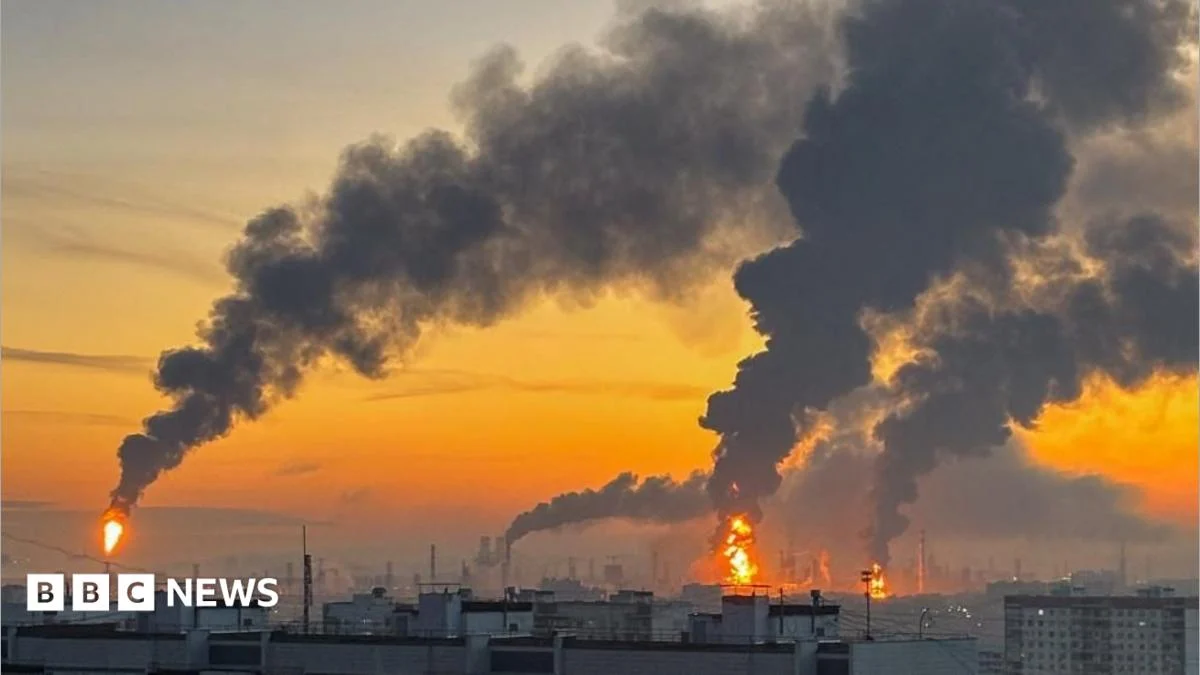
Ukraine launched its most extensive drone offensive to date against the Moscow region on Sunday, striking the capital’s primary oil refinery and a residential building in a retaliatory barrage that underscored the intensifying aerial warfare between the two nations. Moscow’s Mayor, Sergei Sobyanin, declared the attack the "most massive" yet, with 450 drones reportedly intercepted and downed en route to the capital. The assault resulted in tragic loss of life, with the region’s governor reporting at least two fatalities and 20 individuals injured.
Ukrainian President Volodymyr Zelensky explicitly confirmed Kyiv’s involvement, stating that drones and missiles had successfully targeted a "key" Russian oil facility and a logistics site within the region. He characterized these strikes as hitting "billions of dollars that sustain the war machine," emphasizing the strategic importance of the targeted infrastructure. This significant Ukrainian operation came on the heels of separate Russian attacks that claimed the lives of nine people, including three children, in the Kyiv and Sumy regions on Saturday, highlighting a grim tit-for-tat escalation in aerial bombardments.
The recent surge in strikes by both Russia and Ukraine has predominantly targeted energy-generating facilities, vital transport infrastructure, and crucial logistics hubs, reflecting a strategic shift towards crippling the adversary’s war-making capabilities and economic resilience. In Sofyino, a 44-year-old woman was killed when a drone struck a three-story residential building, with five others, including two children, sustaining injuries, according to regional head Andrei Vorobyev. The Orekhovo-Zuevo district also witnessed tragedy when an elderly man died after his private home was hit, Governor Vorobyev further confirmed. Verified footage circulating on social media platforms, including those analyzed by the BBC, depicted dramatic scenes of explosions illuminating the night sky above Moscow, alongside a burning warehouse.
Mayor Sobyanin detailed that a drone impacted a building situated near one of the capital’s prominent boulevards, as well as the oil refinery. Ukrainian military officials asserted that three critical units at the refinery sustained damage. This facility holds immense strategic significance, as it is responsible for supplying over a third of the Moscow region’s fuel needs, according to Ukraine’s Ministry of Defense. Furthermore, a portion of the petrol, diesel, and aviation fuel produced at the refinery directly supplies Russia’s military operations, making it a prime target for Kyiv. Ukraine’s Minister of Defense articulated the strategic rationale behind such strikes, stating that attacking these facilities "directly undermines the enemy’s ability to continue its war of aggression and supply its military formations."
Mayor Sobyanin also framed the extensive drone attack as a deliberate "attempt to disrupt" Russia’s ongoing parliamentary election, which was in its third day on Sunday. The election, tightly controlled by the Kremlin, has been widely criticized by international observers and opposition figures as lacking the fundamental principles of freedom, fairness, and transparency. In a tragic parallel, Russian state media reported that an election official was among the two individuals killed by a drone attack on a bus in a Moscow-controlled area of Kherson, Ukraine, on Sunday, citing information from the head of Russia’s election commission.
The aerial assaults also caused significant disruptions to air travel. Moscow’s largest airport, Sheremetyevo, issued a warning of "temporary restrictions" for passengers during the overnight period. Similarly, Vnukovo airport halted all arrivals and departures. While restrictions at both airports were lifted by Sunday morning, authorities cautioned that flight delays might still occur.
These events unfolded against a backdrop of continued civilian casualties in Ukraine. On Saturday, a mother and her two young children, a boy and a girl, were killed in a Russian attack in the city of Fastiv, located in the Kyiv region, as reported by regional head Tymur Tkachenko. He later announced that a child who had been injured in a separate attack in Vyshhorod, north of Kyiv, succumbed to their injuries in hospital. In the northeastern Sumy region, four people lost their lives when a Russian drone struck the car they were traveling in, according to Oleh Hryhorov, a senior local official. President Zelensky also reported that Russia had targeted a monastery in the Kherson region with a drone on Saturday, resulting in the death of one clergyman and injuries to four others.
The ongoing aerial bombardments of energy infrastructure by both sides have persisted throughout the past week, notably occurring despite a claim made by former US President Donald Trump on social media suggesting that both belligerents had agreed to cease such attacks. This assertion by Trump came shortly after he signed a sanctions bill on Friday, which targets Russia’s economy by imposing tariffs on major purchasers of the country’s oil and gas, including significant buyers like China and India. The US legislation empowers the President to levy 100% tariffs on these major purchasers of Russian energy, a move aimed at further isolating Russia economically.
The full-scale invasion of Ukraine by Russia, initiated by President Vladimir Putin in February 2022, has thus devolved into a protracted conflict characterized by increasingly sophisticated and devastating aerial attacks. The targeting of critical infrastructure, both military and civilian, has become a hallmark of this phase of the war, with profound implications for the civilian populations of both nations and the broader geopolitical landscape. The strategic calculus behind these strikes appears to be a desperate attempt by each side to gain leverage, inflict maximum damage on the adversary’s war-making capacity, and demoralize the opposing populace.
The refinery attack, in particular, carries significant economic and symbolic weight. The Moscow Oil Refinery, one of the largest in Europe, is a vital component of Russia’s energy sector. Its disruption not only impacts the domestic supply of fuel but also affects Russia’s ability to export oil and gas, a crucial source of revenue for the Kremlin. By targeting this facility, Ukraine aims to choke off a significant financial artery funding Russia’s military operations. The damage inflicted, even if temporary, sends a clear message of Ukraine’s expanding reach and capability to strike deep within Russian territory.
The psychological impact of such large-scale drone attacks on the Russian populace cannot be understated. While Russian authorities have sought to downplay the severity and extent of the damage, the visual evidence of explosions over the capital and the confirmed casualties inevitably create a sense of vulnerability and insecurity among those who have, until now, felt relatively insulated from the direct consequences of the war. The timing of the attack, coinciding with the final day of Russia’s parliamentary elections, further amplifies its political significance, suggesting an intent to sow chaos and undermine the perceived legitimacy of the electoral process.
Experts on geopolitical affairs and military strategy have noted the evolving nature of the conflict, with drones playing an increasingly prominent role. The widespread deployment of unmanned aerial vehicles by both sides reflects advancements in drone technology and their adaptability for reconnaissance, attack, and psychological warfare. The sheer number of drones involved in Sunday’s assault suggests a well-coordinated and meticulously planned operation by Ukraine, showcasing their growing prowess in this domain.
Conversely, Russia’s reliance on its air defense systems and its ability to intercept such a large number of drones will be closely scrutinized. The effectiveness of these systems, particularly in defending critical infrastructure near the capital, will be a key indicator of Russia’s defensive capabilities. The ongoing targeting of energy infrastructure by both sides also raises concerns about potential environmental impacts and the long-term consequences for global energy markets, particularly in light of the ongoing sanctions regime imposed by Western nations.
The reciprocal nature of these attacks underscores the cyclical escalation that has defined the conflict since its inception. Each strike, whether by drone, missile, or artillery, prompts a response, creating a dangerous feedback loop that further entrenches the belligerents in a destructive cycle. The human cost of this escalating aerial warfare is immense, with civilian casualties mounting on both sides and the fabric of daily life being increasingly disrupted. The targeting of residential buildings, as seen in both Ukraine and Russia, represents a grave violation of humanitarian principles and further fuels the cycle of retribution.
As the conflict grinds on, the strategic objectives of each side appear to be increasingly focused on attritional warfare, aiming to exhaust the adversary’s resources, morale, and political will. The recent drone attacks, particularly the large-scale assault on the Moscow region, signify a bold attempt by Ukraine to shift the strategic balance and bring the war directly to Russia’s doorstep. The coming days and weeks will likely reveal the full extent of the damage inflicted and the subsequent retaliatory measures, further shaping the trajectory of this devastating war. The international community continues to grapple with finding a diplomatic resolution, but the escalating military actions on both sides suggest that a peaceful end remains a distant prospect. The ongoing targeting of energy infrastructure also has broader implications for global energy security and the ongoing efforts to combat climate change, adding another layer of complexity to an already multifaceted and tragic conflict. The effectiveness of sanctions, as exemplified by the US legislation targeting oil and gas buyers, will be a crucial factor in assessing their impact on Russia’s long-term ability to sustain its military campaign. The strategic importance of these sanctions, coupled with Ukraine’s demonstrated ability to strike critical Russian assets, suggests a concerted effort to cripple Russia’s economic and military capabilities.
