
 By admin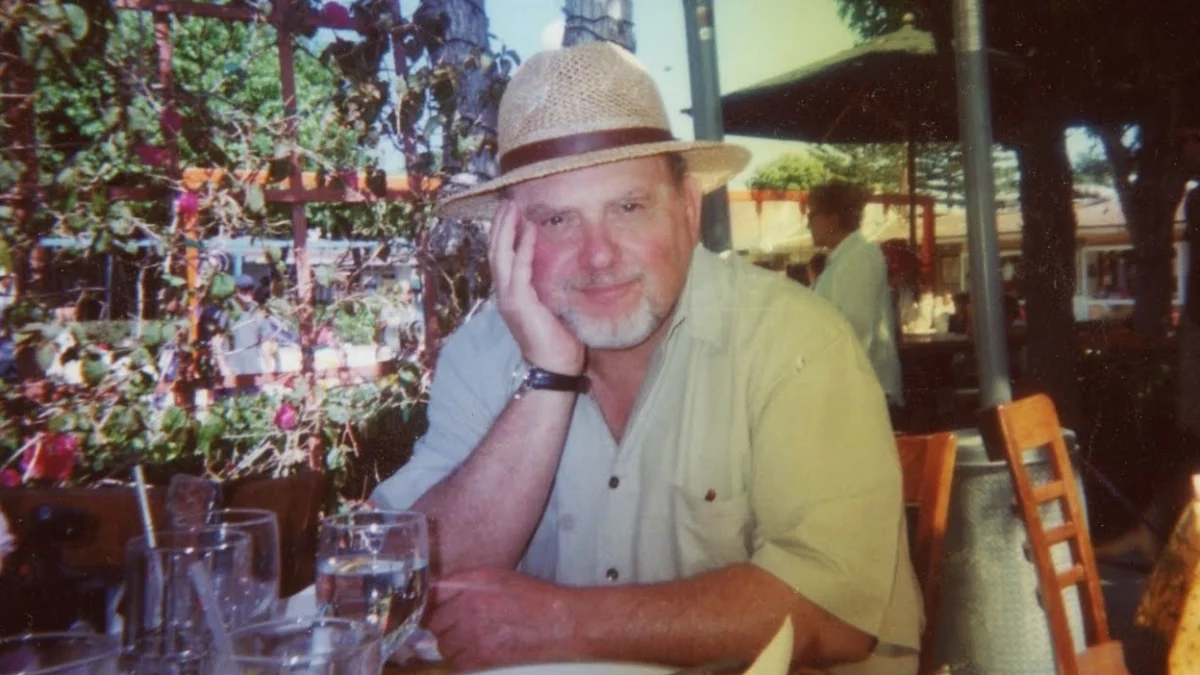
Dick Guttman, a titan of Hollywood public relations and a screenwriter who shaped the public personas of countless cinematic legends, passed away on September 19th in Los Altos, California, at the age of 93. For over six decades, Guttman was an indispensable force in the entertainment industry, a master strategist whose work with luminaries such as Barbra Streisand, Clint Eastwood, Paul Newman, Audrey Hepburn, Elizabeth Taylor, and William Shatner cemented their enduring legacies. His passing marks the end of an era for a man who not only navigated but actively sculpted the public’s perception of Hollywood’s brightest stars during a transformative period in the industry.
Guttman’s journey into the glittering world of Hollywood was not one of immediate access, but rather a testament to his early ambition and relentless pursuit of connection. Born in St. Louis, Missouri, he relocated to Los Angeles with his family in the aftermath of World War II. His official biography paints a vivid picture of a young Guttman, a keen observer of the burgeoning entertainment landscape, riding the city’s streetcars to linger outside the soundstages of popular radio dramas. There, he would meticulously collect discarded scripts and seek autographs, demonstrating an early fascination with the magic of performance and the personalities behind it. This passion for storytelling and the individuals who brought it to life soon translated into a professional endeavor. Even while attending Fairfax High School, Guttman honed his journalistic skills, covering high school sports for the prestigious Los Angeles Examiner, laying the groundwork for a career that would demand exceptional communication and a keen understanding of narrative.
His formal entry into the public relations field began during his time at UCLA, where he secured a part-time position with the renowned agency Rogers & Cowan. This experience proved to be a pivotal stepping stone, leading him to Europe as a unit publicist for international film productions. Among the films he worked on were "Paris Holiday" and "The Key," experiences that broadened his understanding of global filmmaking and publicity. It was in Paris, while serving as unit publicist for Billy Wilder’s classic romantic comedy "Love in the Afternoon," that Guttman met Gisela, his future wife. Their union in 1956 marked the beginning of a lifelong partnership that would span 70 years.
Upon his return to Los Angeles, Guttman spent more than a decade at Rogers & Cowan, where he played a crucial role in shaping the careers of actors at a time when the studio contract system was beginning to loosen its grip. In this evolving landscape, "press agents," as Guttman preferred to call them, were not merely disseminators of information but architects of public image, essential allies in building and sustaining successful careers. His astute understanding of media dynamics and his ability to cultivate strong relationships with journalists made him a sought-after representative for actors who were increasingly taking control of their own destinies.
In 1971, Guttman joined forces with Jerry Pam to establish Guttman & Pam, an agency that quickly rose to prominence, becoming one of Hollywood’s most influential public relations firms for over two decades. This partnership was characterized by a shared vision for strategic client representation and a deep understanding of the industry’s complexities. Following the dissolution of this partnership, Guttman launched his own agency, Guttman Associates, in the early 1990s. Under his leadership, the firm continued to represent a constellation of top-tier stars and was instrumental in promoting some of cinema’s most celebrated films. His promotional campaigns were credited with significantly contributing to the success of critically acclaimed and commercially successful movies such as Clint Eastwood’s Oscar-winning "Unforgiven," the gritty "Dirty Harry" franchise, Arthur Penn’s groundbreaking "Bonnie and Clyde," Francis Ford Coppola’s introspective "The Conversation," Robert Benton’s poignant "Kramer vs. Kramer," Bob Fosse’s dazzling "All That Jazz," Peter Weir’s intense "The Year of Living Dangerously," John Huston’s epic "The Man Who Would Be King," Tom Hooper’s Best Picture winner "The King’s Speech," Michel Hazanavicius’ silent film revival "The Artist," the Shakespearean romance "Shakespeare in Love," and Anthony Minghella’s sweeping "The English Patient." These diverse projects underscore Guttman’s remarkable ability to tailor his approach to a wide range of cinematic genres and artistic visions.
The legacy of Guttman Associates endures, with his colleagues Susan Madore and Rona Menashe now at the helm, continuing to uphold the firm’s reputation for excellence and dedication to its clients. Guttman’s influence extended far beyond the realm of actors and filmmakers. He also represented prominent figures from other spheres, including the prolific author Sidney Sheldon and pioneering astronaut Buzz Aldrin. Furthermore, his expertise was sought by influential companies such as Lucasfilm and Industrial Light & Magic, and he played a role in the global introduction of Sanrio’s iconic character, Hello Kitty. This broad spectrum of representation highlights Guttman’s versatility and his ability to understand and articulate the unique narratives of diverse individuals and entities.
In a reflective moment, when asked about the sheer volume of clients he had represented, Guttman offered a humble yet staggering estimate: "I’ve done the rough math, and my guess is probably 700 clients, and about 200 legends. I have been very blessed." This statement speaks volumes about the depth of his experience and the profound impact he had on so many careers, a testament to his dedication and the trust placed in him by Hollywood’s elite.
Beyond his extensive work in public relations, Guttman also demonstrated a talent for storytelling as a screenwriter. He contributed to seven films, including the 1963 drama "Back Door to Hell," which featured a young Jack Nicholson. He also penned several television movies, notably collaborating with acclaimed director Joseph Sargent on projects such as "Passion Flower" and "Ivory Hunters." This dual role as both a publicist and a storyteller provided him with a unique, insider’s perspective on the creative process and the challenges of bringing narratives to the screen.
In 2015, Guttman shared his rich tapestry of experiences and anecdotes in his autobiography, "Starflacker." The book offered readers an intimate glimpse into his decades of working alongside Hollywood’s most iconic figures, providing a valuable historical record of the industry and the art of public relations. After residing in Malibu for over five decades, Guttman and his wife Gisela relocated to Los Altos last year, a move that brought them closer to family.
Dick Guttman’s enduring legacy is carried on by his devoted wife of 70 years, Gisela; his daughters, Danielle Guttman Klein and Monika Guttman Robertson; his granddaughters, Alyssa Brucculeri and Claire Robertson; his great-granddaughter, Aria Brucculeri; and his sister, Joan Ostrow. His passing is mourned by a vast network of colleagues, friends, and the countless individuals whose careers he helped to shape.
In lieu of flowers, the family has established the Dick Guttman Memorial Fund at the Entertainment Industries Foundation (EIF). Donations to this fund will support members of the creative community through various philanthropic endeavors, including crucial wildfire relief efforts, ensuring that Guttman’s commitment to supporting those in the arts continues to resonate. This fund serves as a fitting tribute to a man who dedicated his life to championing talent and fostering the well-being of the entertainment world.
