
 By admin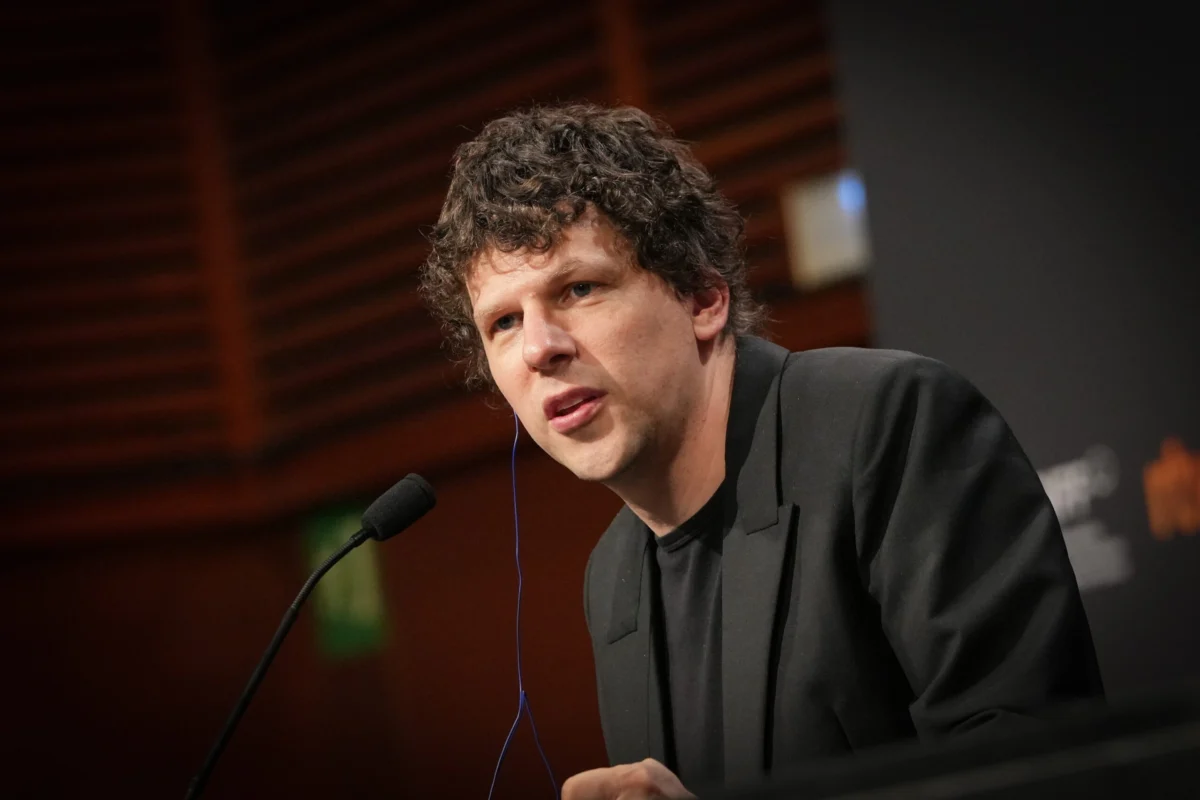
In a masterclass of self-aware humor and poignant introspection at the San Sebastian Film Festival, Jesse Eisenberg, the acclaimed actor who has now stepped firmly into the director’s chair, unveiled the deeply personal origins of his latest cinematic offering, "The Debut." The film, which centers on Julianne Moore’s portrayal of Mona Friedman, a seemingly ordinary New Jersey housewife whose life takes an unexpected turn after joining a local musical production, draws heavily from Eisenberg’s own formative experiences. He candidly revealed that the narrative is not merely inspired by his past, but is in fact, autobiographical, stemming from his childhood in the very setting and era depicted.
"I call it autobiographical because the movie takes place in 1990 in central New Jersey, and when I was in central New Jersey in 1990, I was like Mona Friedman," Eisenberg explained during a press conference held on Wednesday. His voice, imbued with that signature blend of earnestness and wry amusement, painted a vivid picture of his younger self. "I was so shy, I was depressed, and I didn’t have friends. And then I walked into this community theater when I was seven years old, and suddenly everybody was so nice and they hugged me." This profound sense of acceptance, he elaborated, was a stark contrast to his experiences in a more conventional school environment. He recalled the sting of being singled out and ridiculed by peers for his appearance, specifically his curly hair. "Going from a kid who was made fun of in school because he had curly hair, and the kids would say anything to me… and then I walked into the community theater, and everybody’s like: ‘Your hair is amazing. Come this way, you should play with me.’" This anecdote underscores a central theme of "The Debut" – the sanctuary and transformative potential found in artistic communities, places where perceived flaws can become celebrated unique qualities.
Eisenberg further illuminated the emotional core of the film by pinpointing a specific scene that resonated with profound personal significance, describing it as born from "real pain." This scene involves Mona Friedman being subjected to a harsh, public dressing-down by Paul Giamatti’s character, the theater director. Eisenberg connected this moment directly to his own experiences in drama school, where a pivotal encounter with a teacher profoundly shaped his understanding of acting and vulnerability. "When I was in drama school, I just was doing really silly things to make my friends laugh, like really bad acting, just to make them laugh," he confessed. "And then my teacher realized I needed to take it seriously, so in front of all my friends in a dark room, just like Julianne in the movie, he broke me down and was screaming: ‘What is wrong with you? And after like five minutes, you’re screaming and crying, and then after that, you’re like, I can do anything. I can do anything on stage now because I’ve already embarrassed myself. I’ve already gotten to the depths of my my my soul, and now I can do anything.’" This cathartic experience, though undoubtedly difficult at the time, forged a resilience and a fearless approach to performance that Eisenberg credits with unlocking his potential as an actor. The scene in "The Debut," therefore, serves not just as a dramatic beat, but as a symbolic representation of the often brutal, yet ultimately liberating, process of artistic maturation. He described this scene as emerging from "years of feeling forgotten and all the annoying stuff that artists feel that they burden the audiences with," a sentiment that speaks to the inherent insecurity and self-doubt that can plague creative individuals.
Beyond the intimate details of "The Debut," Eisenberg’s presence at the festival also brought him face-to-face with questions about his iconic role as Mark Zuckerberg in Aaron Sorkin’s "The Social Network." Specifically, he was asked about his decision not to reprise the character in the anticipated sequel, "The Social Reckoning," a role that ultimately went to Jeremy Strong. Eisenberg addressed the topic with his characteristic candor and respect for the creative process. "I’ve talked about it a lot, and Aaron Sorkin’s talked about it a lot, and I loved his script, and he’s a genius, and the movie I’m sure is incredible," he stated, acknowledging the immense talent involved. However, he reiterated his personal stance: "But for me, it just didn’t feel like something I wanted to act in again. But that has nothing to do with how great the movie is. The movie will be a great, great movie, and Jeremy Strong will be amazing in the movie. I’m sure. I just didn’t feel like it’s something I wanted to do again." This response highlights a mature understanding of artistic evolution and the importance of moving forward, even when revisiting a beloved character. It suggests that for Eisenberg, the act of embodying Zuckerberg has run its course, and his focus has shifted towards new creative endeavors, such as his directorial debut.
The conversation also touched upon Eisenberg’s famously distant relationship with social media. When pressed for his opinion on the ubiquitous platforms that have fundamentally reshaped modern communication and society, he offered a refreshingly blunt assessment. "I have ‘no opinion’ because ‘I stay as far away from it,’" he declared, his tone leaving no room for ambiguity. He then drew a parallel to his most famous role, acknowledging the irony of his association with a platform he actively avoids. "It’s ironic, because people associate me with this website, but they know way more about the website than I do, and I’d like to keep it that way." This stance reflects a deliberate choice to maintain a degree of separation from the digital noise, perhaps allowing him to focus more intently on his craft and personal life, free from the constant barrage of online discourse. This detachment also serves as a subtle counterpoint to the very nature of the digital age, a realm that his film "The Social Network" so powerfully dissected.
Eisenberg’s directorial venture, "The Debut," thus emerges as a testament to the enduring power of art to heal, connect, and transform individuals. By drawing from his own deeply felt experiences in community theater, he has crafted a narrative that explores themes of shyness, depression, and the profound relief found in belonging. The film’s exploration of vulnerability, particularly through the challenging scene involving Julianne Moore’s character, speaks to the universal human struggle for self-acceptance and the courage required to confront one’s deepest fears. The juxtaposition of his personal journey with his reflections on "The Social Network" and his aversion to social media further solidifies his image as an artist who values authenticity and meaningful human connection above all else. As "The Debut" begins its cinematic journey, it promises to offer audiences a heartfelt and insightful look into the transformative power of the arts, a theme that resonates deeply within Jesse Eisenberg’s own life and career. The film’s success will undoubtedly hinge on its ability to capture the nuanced emotional landscape that Eisenberg so eloquently described, proving that sometimes, the most compelling stories are the ones closest to home, born from the quiet corners of childhood and the vibrant stages of community. The journey from a shy, bullied child to a celebrated filmmaker is a narrative arc worthy of a film in itself, and "The Debut" appears to be a powerful and honest exploration of that transformative path. The deliberate choice to set the film in 1990, a pre-internet era for many, further emphasizes the importance of face-to-face interaction and the tangible sense of community that theater provided, a stark contrast to the often isolating nature of today’s digital world. This temporal setting allows for a focus on genuine human connection and the development of self-worth through shared artistic endeavor, a theme that feels particularly relevant in an increasingly virtual landscape. The casting of Julianne Moore, an actress known for her profound emotional depth, suggests that Mona Friedman’s journey will be portrayed with considerable nuance and sensitivity, allowing audiences to connect with her struggles and triumphs on a deeply personal level. Similarly, Paul Giamatti’s participation as the demanding director adds a layer of formidable presence, highlighting the high stakes and potential for both crushing defeat and exhilarating victory within the theatrical world. Eisenberg’s willingness to revisit painful memories and translate them into cinematic art speaks to a courageous artistic vision, one that seeks to find universal truths in personal experience. This commitment to authenticity is what will likely make "The Debut" a standout film, offering a refreshingly human perspective on the search for identity and belonging in a world that can often feel overwhelming and indifferent. The film’s genesis in community theater also taps into a rich vein of theatrical tradition, where amateur passion often fuels professional ambition, and where unlikely friendships can blossom in the shared pursuit of a creative goal. It is this spirit of collective endeavor and personal discovery that Eisenberg seems intent on capturing, offering a hopeful counterpoint to the often cynical portrayals of human interaction in contemporary cinema. His personal anecdote about being embraced by the theater community after experiencing social ostracization serves as a powerful metaphor for the film’s potential to explore themes of redemption and self-discovery through artistic engagement. The contrast between the cruelty of the outside world and the welcoming embrace of the theatrical stage is a potent narrative device that Eisenberg masterfully employs. His ability to articulate these complex emotions with such clarity and humor is a testament to his growth as both an artist and a storyteller, proving that his talents extend far beyond his acclaimed acting roles. "The Debut" is not just a film about theater; it is a film about the human need for connection, validation, and the courage to step into the spotlight, however daunting that may seem.
