
 By admin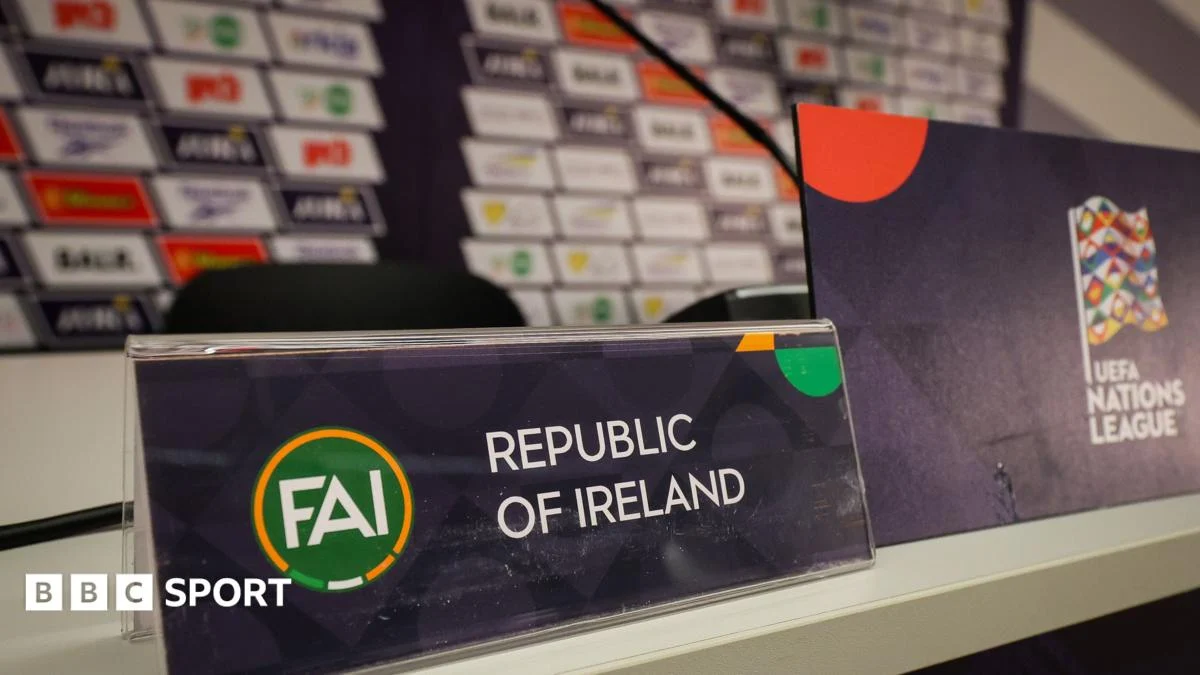
The Republic of Ireland’s pre-match news conference, slated for Sunday ahead of their Uefa Nations League fixture against Israel in Hungary, has been abruptly delayed, fueling speculation and deepening the controversy surrounding the fixture. The match, scheduled to take place in Debrecen at 19:45 BST, with a return leg in Backa Topola, Serbia, on October 4th, has become a focal point for calls to boycott due to the ongoing Israel-Gaza war. A potent "Stop The Game" campaign, spearheaded by the advocacy group Irish Sport for Palestine, has gained significant traction, amplifying pressure on the Irish Football Association (IFA) and the national team.
The growing chorus for a boycott has resonated with prominent figures within Irish football. Former Republic of Ireland manager Brian Kerr and ex-international James McClean are among the notable individuals who have publicly lent their support to the campaign, urging the team to withdraw from the matches. Their endorsements lend considerable weight to the ethical arguments being made, highlighting the complex moral quandaries faced by athletes and sporting bodies in times of international conflict. However, it is important to acknowledge that not all voices within the Irish football community are aligned with a boycott. A segment of the fanbase, perhaps less vocal but no less passionate, maintains the belief that the match should proceed as scheduled, with supporters present to cheer on their team. This perspective often hinges on the idea that sport can serve as a platform for unity and resilience, even in challenging circumstances.
Adding to the internal discourse, midfielder Jason Knight, following the Republic of Ireland’s 1-0 defeat to Kosovo on Thursday, expressed a personal sentiment that he "didn’t think the game should be going ahead." His candid remarks, made in the immediate aftermath of a disappointing result, underscore the personal toll such decisions can take on players grappling with external pressures. Winger Chiedozie Ogbene, while acknowledging the difficult situation, urged the public not to "put the pressure on us" regarding the team’s approach to the scheduled games. This plea highlights the delicate balance the players must strike between their personal convictions, the expectations of their supporters, and the directives of their governing body.
The unfolding events at the team’s base in Hungary have been marked by an unusual lack of transparency. Heimir Hallgrimsson’s team was scheduled to meet the media at 09:15 BST (10:15 local time) at the stadium, a customary pre-match engagement that precedes training. However, shortly before this scheduled press conference, a Uefa official entered the room to inform waiting media teams that the briefing had been postponed until after training, which was expected to conclude around 11:30 BST (12:30 local time). This initial delay, while inconvenient, did not immediately signal the extent of the disruption to come.
The situation took a more dramatic turn shortly thereafter. The same Uefa official returned to the media room with a further announcement: the Republic of Ireland’s training session had also been postponed, with no revised time provided. Crucially, there was also no confirmed time for the rescheduled news conference. This cascade of postponements has created an atmosphere of significant uncertainty and has led to widespread speculation about the internal deliberations and potential divisions within the Irish squad.
The fixture itself has been steeped in controversy since the draw pitted the two nations against each other in Group B3 of the Uefa Nations League. The geopolitical context, namely the devastating conflict in the Middle East, has cast a long shadow over the sporting encounter, transforming it from a routine international match into a highly charged and ethically complex event.
Sources indicate that a crucial team meeting took place on Friday, providing an opportunity for the players to openly air their views and concerns regarding both the Sunday game in Hungary and the subsequent return fixture in Serbia. This internal dialogue is understood to be a pivotal moment in the decision-making process, allowing players to articulate their personal stances and collectively gauge the mood within the squad. The expectation was that the players, through their representatives, would release a formal statement at Saturday’s news conference, outlining their position. However, the dramatic delay to the press conference has cast doubt on this timeline and intensified the sense of apprehension. Reports have emerged, though not officially confirmed, suggesting that at least one player may be contemplating withdrawing from the squad, a testament to the profound impact of the ongoing conflict on the players’ well-being and their commitment to the team.
Further complicating matters, it has since been revealed that the news conference, initially planned to be held at the stadium, is now slated to take place at the team hotel. This change of venue, coupled with Uefa’s inability to provide concrete information regarding the reasons for the ongoing delays, has only served to fuel speculation and concern among the media and the wider footballing public. The lack of official communication from Uefa, the governing body for European football, on the specifics of the postponements has added to the sense of disarray.
To provide necessary context for the intense pressure surrounding this fixture, it is crucial to recall the events that precipitated the current humanitarian crisis. On October 7, 2023, the armed Palestinian group Hamas launched a coordinated attack on Israel, resulting in the deaths of approximately 1,200 people and the taking of 251 hostages. This attack triggered a massive military offensive by Israel in Gaza. According to the territory’s Hamas-run health ministry, a figure considered reliable by the United Nations, the Israeli response has led to the deaths of over 73,000 people in Gaza. The scale of the devastation and the ongoing humanitarian catastrophe in Gaza have understandably prompted widespread international condemnation and calls for a cessation of hostilities. It is within this grim backdrop that the Republic of Ireland’s football team finds itself caught, tasked with navigating a deeply sensitive and politically charged situation on the global stage. The decision to play or boycott has profound implications, extending far beyond the confines of the football pitch.
The pressure on the Republic of Ireland team and the IFA is immense, stemming from various quarters. Human rights organizations, Palestinian solidarity groups, and a significant portion of the public in Ireland have voiced their strong opposition to the fixture going ahead. They argue that participating in a sporting event against Israel, while the conflict rages, could be perceived as tacit endorsement of the ongoing military actions and a disregard for the suffering of the Palestinian people. The campaign for a boycott is framed not just as a sporting protest, but as a moral imperative, a statement of solidarity with those affected by the conflict. Supporters of the boycott often draw parallels with other instances where sporting events have been cancelled or relocated due to political or ethical concerns, arguing that football should not be exempt from such considerations.
Conversely, those who advocate for the match to proceed often cite the principle of separating sport from politics. They argue that athletes should not be penalized for the actions of their governments and that sporting competitions can provide a vital space for human connection and understanding, even between nations in conflict. There is also the concern that a boycott could lead to sanctions from Uefa and a loss of significant revenue for the IFA, impacting the development of football within Ireland. Furthermore, some argue that by withdrawing, the Irish team would forfeit an opportunity to engage in dialogue and potentially exert influence through their presence. The argument is made that boycotting achieves little tangible change and instead isolates the team from the international footballing community.
The internal deliberations within the Irish squad are undoubtedly complex. Players are individuals with their own beliefs and moral compasses, and they are also part of a team with collective responsibilities. The pressure from both sides – the moral imperative to protest and the professional obligation to play – creates a deeply challenging environment. Reports of players considering withdrawal underscore the personal toll this situation is taking. These are not just athletes; they are individuals with families, friends, and a connection to the wider world, and they are being forced to confront deeply uncomfortable ethical dilemmas. The delay in the press conference and the postponement of training are outward manifestations of an internal struggle to find a unified and ethically sound path forward.
The broader implications for Uefa and international sport are also significant. This situation highlights the increasing difficulty for sporting organizations to remain neutral in an increasingly interconnected and politically charged world. Decisions made by governing bodies like Uefa in response to such sensitive geopolitical issues can have far-reaching consequences, setting precedents for future situations and shaping the role of sport in global affairs. The controversy surrounding the Ireland-Israel fixture serves as a stark reminder that in the modern era, sport cannot operate in a vacuum, divorced from the realities of the world stage. The eyes of many will be on how Uefa, the IFA, and the Republic of Ireland team ultimately navigate this complex and emotionally charged situation. The delayed press conference is not just a delay in announcing match details; it is a delay in articulating a stance, a delay in offering clarity to a world watching with concern. The football pitch, in this instance, has become a microcosm of global conflict and ethical debate, forcing individuals and institutions to confront uncomfortable truths and make difficult choices.
