
 By admin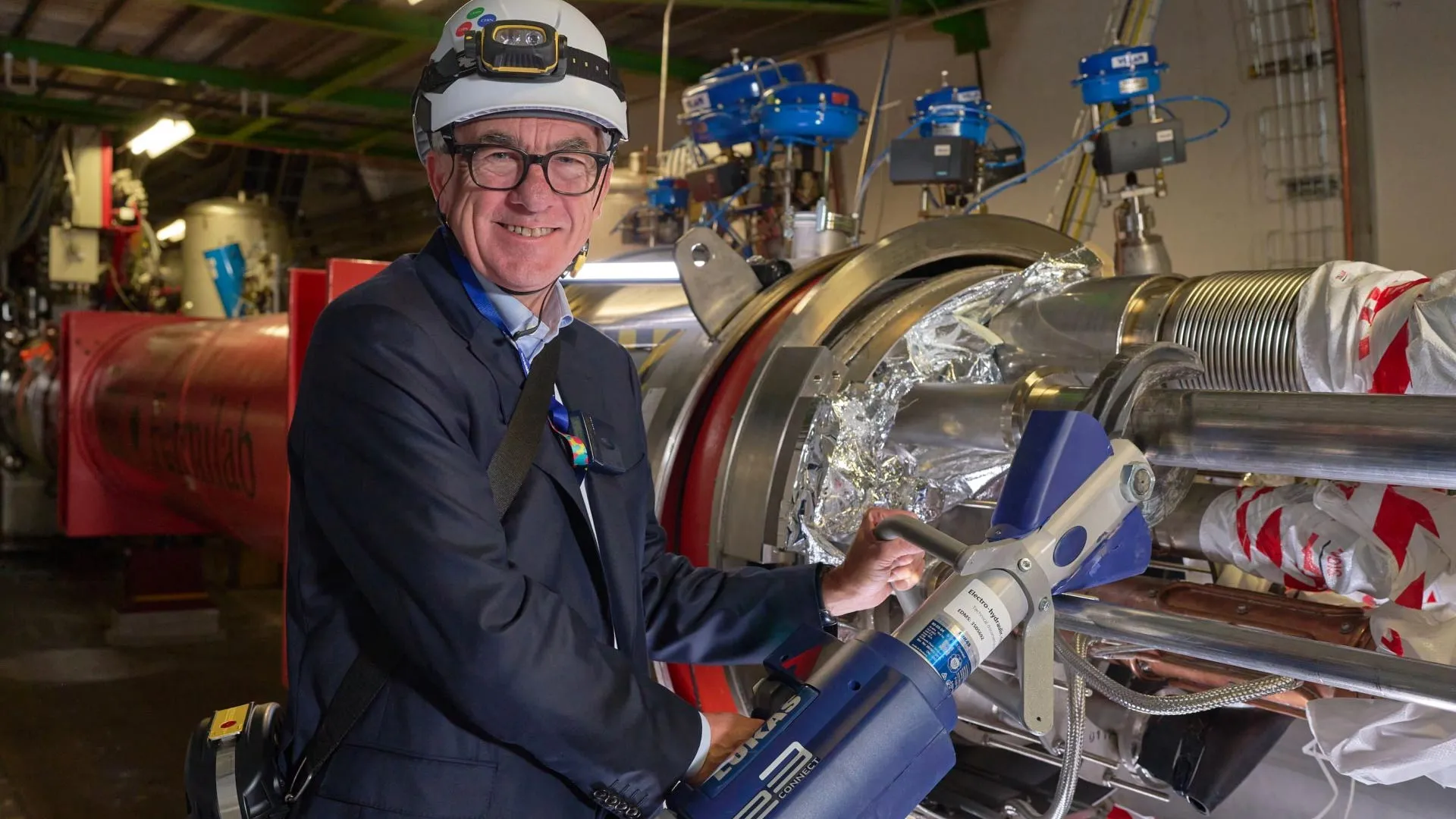
The Large Hadron Collider (LHC) at CERN, a marvel of modern engineering and a beacon of scientific exploration, represents humanity’s most ambitious attempt to understand the fundamental building blocks of the universe and the forces that govern them. Nestled 100 meters underground near Geneva, Switzerland, this colossal ring is more than just a giant particle accelerator; it’s a meticulously calibrated instrument designed to recreate conditions akin to those fractions of a second after the Big Bang. Its primary mission is to collide protons at unprecedented energies, allowing physicists to probe new frontiers in particle physics, from the elusive Higgs boson – which it famously discovered in 2012 – to potential candidates for dark matter and other phenomena beyond the Standard Model.
Central to the LHC’s operation is its intricate magnetic system, a symphony of over 9,000 superconducting magnets. These magnets are not merely for guiding particles; they are the precision tools that bend, focus, and shape the proton beams as they hurtle around the ring at 99.9999991% the speed of light. Without this sophisticated magnetic architecture, the protons, traveling in two counter-rotating beams, would quickly drift into the accelerator walls. Each magnet type plays a critical, specialized role: dipole magnets, numbering around 1,232, are the workhorses responsible for bending the beams around the circular track; quadrupole magnets focus the beams, preventing them from spreading out; and an array of higher-order magnets like sextupoles, octupoles, and decapoles correct tiny imperfections and aberrations in the beam path, ensuring maximum stability and luminosity. These superconducting magnets operate at a chilling 1.9 Kelvin, colder than outer space, allowing their coils to conduct electricity without resistance and generate immensely powerful magnetic fields.
Among these thousands of magnets, some of the most critical are known as "inner triplets." These groups of three powerful quadrupole magnets, strategically positioned on both sides of the LHC’s four main experiments – ATLAS, CMS, ALICE, and LHCb – are tasked with an incredibly precise job. Their role is to focus the particle beams as tightly as possible, "squeezing" them down to a microscopic width, just moments before the protons collide inside the cavernous detectors. Imagine trying to hit two needles together mid-air, traveling at nearly the speed of light; that’s the level of precision these magnets enable.
The efficacy of the inner triplets directly translates into the LHC’s luminosity, a crucial metric in particle physics. Luminosity refers to the number of collisions that occur within a given period of time. The tighter the beams are focused and compressed by the inner triplets, the greater the probability that individual protons within those beams will collide head-on. A higher luminosity means a dramatically increased collision rate, providing researchers with significantly more data to analyze. For experiments seeking rare phenomena or precise measurements of known particles, more data translates directly into a higher chance of discovery, greater statistical significance for results, and the ability to detect subtle deviations from theoretical predictions that could hint at new physics. The Higgs boson, for instance, was discovered by analyzing trillions of collisions; future discoveries may require even more.
Preparing the LHC for a New Era: The Hi-Luminosity Upgrade
Recognizing the immense potential for further discoveries, CERN embarked on the ambitious High-Luminosity LHC (HiLumi LHC) project. This multi-year endeavor aims to upgrade the LHC to deliver up to ten times more integrated luminosity than the original design, effectively extending the machine’s operational lifespan into the late 2030s. The HiLumi LHC is not merely an incremental improvement; it’s a transformative leap designed to collect an unprecedented dataset, pushing the boundaries of what’s possible in high-energy physics. This upgraded machine will allow physicists to study known particles, like the Higgs boson, with much greater precision, potentially revealing new properties or interactions, while also significantly enhancing the search for new particles and forces that remain elusive with current data levels.
A cornerstone of the HiLumi LHC project involves the wholesale replacement of the existing inner triplets with a much more powerful, next-generation magnet system. This monumental task is currently unfolding during the third long shutdown (LS3) of the LHC, a period of extensive maintenance, consolidation, and upgrade work. LS3, which began in late 2026 and is scheduled to conclude in 2029, is far more comprehensive than previous shutdowns, dedicated largely to preparing the accelerator and its experiments for the HiLumi era.
Recently, a pivotal moment occurred when crews successfully cut the first magnet interconnection at LHC Point 1, the site of the colossal ATLAS experiment. This action formally marked the beginning of the actual replacement operation for these critical magnets. The event was underscored by a visit from CERN Director-General Mark Thomson, who was on-site to acknowledge the milestone, emphasizing the institutional commitment and global significance of the project.
Jean-Philippe Tock, Head of the LS3 Coordination Team, highlighted the sheer scale of the undertaking. "The replacement of these magnets with the new HiLumi LHC inner triplets is crucial for the coming high-luminosity years," Tock explained. "The first quadrupole of the new triplets should arrive in the tunnel at the start of 2029. In total, 16 cryostats and 28 cryo-assemblies will be installed – a major undertaking." This statement underscores the immense logistical and engineering challenge. Each cryostat, a vacuum-insulated vessel designed to maintain the magnets at cryogenic temperatures, houses multiple superconducting magnets. The installation of 16 cryostats, each weighing many tons and requiring meticulous alignment within the tight confines of the LHC tunnel, represents a feat of precision engineering. The 28 cryo-assemblies likely refer to the individual magnet units themselves, which must be carefully integrated into the cryogenic system and precisely interconnected to the existing accelerator infrastructure, including electrical and cooling lines. This complex dance of heavy machinery, delicate components, and precise timing requires years of planning and coordination involving hundreds of engineers, technicians, and physicists from around the world.
Magnets About 40% Stronger: A Technological Leap
The new inner triplets are the culmination of over a decade of intensive research and development, a testament to international collaboration involving institutions from the US, Japan, and Europe. They represent a significant technological leap over the niobium-titanium (NbTi) magnets that have served the LHC faithfully since its inception. While NbTi has been the workhorse of superconducting magnets for decades, it has reached its practical limits in terms of magnetic field strength for accelerator applications.
The upgraded magnets harness the power of niobium-tin (Nb3Sn) superconducting coils instead of niobium-titanium. This material choice is a game-changer. Niobium-tin alloys exhibit superior superconducting properties, allowing them to remain superconducting and generate much stronger magnetic fields at similar cryogenic temperatures compared to NbTi. Specifically, the new Nb3Sn magnets will be capable of generating magnetic fields reaching an impressive 11.3 tesla. This is approximately 40% stronger than the magnetic fields produced by the current NbTi inner triplets, which typically operate around 8 tesla. This significant increase in field strength is what enables the tighter focusing of the particle beams, directly translating into the desired boost in luminosity.
Developing Nb3Sn magnets, however, presented formidable engineering challenges. Unlike the ductile NbTi, niobium-tin is inherently brittle, making it difficult to wind into coils without fracturing. This required the development of innovative "react-and-wind" or "wind-and-react" manufacturing techniques, where the brittle Nb3Sn compound is formed after the coil winding process, or the coils are wound with precursors that are then reacted at high temperatures. Furthermore, the higher field strength means increased electromagnetic forces within the magnets, demanding robust mechanical structures to prevent deformation and ensure stability during operation. Protection systems against "quenches" – sudden loss of superconductivity – are also more complex, as the stored energy is significantly higher.
The new, more powerful equipment will be strategically installed around the ATLAS and CMS experiments. These two general-purpose detectors are designed to explore the broadest range of physics phenomena, including the detailed study of the Higgs boson, searches for supersymmetric particles, extra dimensions, and other exotic phenomena. For these experiments, the increased collision rate provided by the HiLumi LHC is absolutely essential for collecting enough data to make statistically significant discoveries and precision measurements, especially when searching for rare events that are predicted by new physics theories.
While ATLAS and CMS will receive the full Nb3Sn inner triplet upgrade, the ALICE and LHCb experiments operate with different physics programs and, therefore, do not require the same dramatic increase in instantaneous luminosity. ALICE specializes in heavy-ion collisions, studying the quark-gluon plasma – a state of matter believed to have existed in the early universe. LHCb focuses on B-physics, investigating matter-antimatter asymmetries and rare decays of beauty quarks to test the Standard Model. Their existing inner triplets can thus remain in place without replacement by the more complex Nb3Sn technology. However, it’s important to note that even these magnets will undergo significant refurbishment and upgrades to ensure they can robustly handle the overall increased beam intensities and integrated luminosity that the HiLumi LHC will deliver, benefiting from the machine’s enhanced performance and reliability. This ensures that all four main experiments will contribute to the rich physics harvest of the HiLumi era, albeit with tailored upgrades reflecting their specific scientific goals.
Removing 28 Superconducting Magnets: An End of an Era
Since September 7, CERN teams have been engaged in the meticulous and demanding process of dismantling sections of the collider on either side of the ATLAS and CMS experiments. The primary objective is the removal of 28 superconducting magnets, which include the original inner triplets, slated for replacement. This intricate operation involves several stages: safely disconnecting power lines, cryogenic lines that supply super-cold helium, and vacuum systems; carefully cutting the massive cryostats that house the magnets; and then extracting these colossal components using specialized heavy-lifting equipment within the constricted tunnel environment. Each step requires immense precision, adherence to stringent safety protocols, and coordination across multiple engineering groups.
This dismantling operation is more than just a logistical exercise; it marks a significant "end of an era" for hardware that has been an integral part of the LHC since its construction. These magnets, installed nearly two decades ago, have been the silent workhorses behind some of the most profound scientific discoveries of the 21st century.
Markus Zerlauth, the HiLumi LHC Project Leader, eloquently captured the historical significance of the moment. "Today’s event is a major milestone for CERN, especially for the HiLumi LHC project team," Zerlauth stated. "The current inner triplets date back to the LHC construction phase and were installed in the machine between 2005 and 2007. After nearly twenty years of operation, they will give way to a new generation of even more powerful magnets. It’s truly remarkable to witness such a handover from one generation of innovation to the next." His words resonate with the spirit of continuous scientific advancement that defines CERN. The original inner triplets were instrumental in focusing beams for the discovery of the Higgs boson, a triumph that reshaped our understanding of fundamental particles. Their replacement signifies not an obsolescence, but a necessary evolution, paving the way for the next generation of discoveries.
The HiLumi LHC project is a testament to the enduring human quest for knowledge, pushing the boundaries of technology and international collaboration. With these powerful new niobium-tin magnets in place, the upgraded LHC will open a new window into the universe, promising to uncover deeper secrets of matter, energy, space, and time, and potentially revealing physics that extends far beyond our current understanding. The meticulous work unfolding now in the underground tunnels of CERN is laying the groundwork for decades of groundbreaking physics research, ensuring that the LHC remains at the forefront of discovery for years to come.
