
 By admin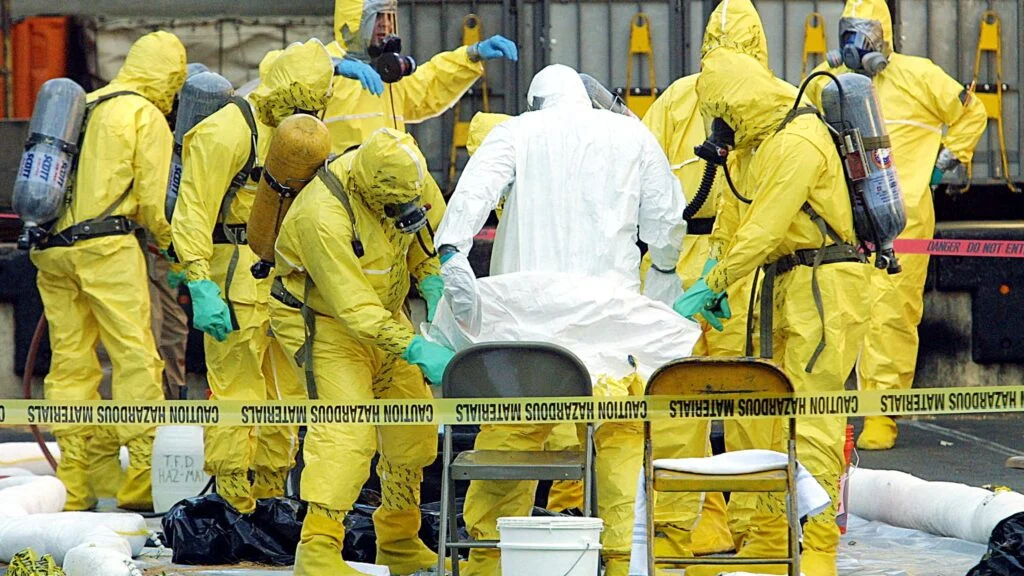
Twenty-five years ago, as the United States remained paralyzed by the grief and chaos of the September 11 terrorist attacks, a secondary, invisible terror began to move through the veins of the nation’s infrastructure. In the autumn of 2001, the first of two distinct batches of envelopes laden with lethal anthrax spores were mailed from New Jersey, targeting prominent news media outlets and the offices of United States senators. This campaign of biological subversion resulted in 22 confirmed cases of anthrax disease, claimed five lives, and ignited a wave of national panic that fundamentally altered the American approach to domestic security. Beyond the immediate human toll, the attacks necessitated a recovery and decontamination effort that cost billions of dollars, exposing critical vulnerabilities in the way the country processed mail and perceived biological threats.
As we mark a quarter-century since those harrowing weeks, the reflections of those who stood on the front lines of the public health response serve as more than a historical retrospective. They provide a vital framework for understanding how the United States might navigate contemporary biological challenges—whether those threats are natural, accidental, or the product of intentional human or artificial intelligence-driven design. The 2001 attacks demonstrated with chilling efficiency how a handful of letters could be transformed into a dissemination machine, leveraging the vast reach of the U.S. Postal Service to strike at the heart of the government and the fourth estate.
The first indication of the crisis emerged not in Washington, D.C., but in Florida. An envelope containing a fine, pale powder reached the offices of American Media Incorporated (AMI), the publisher of The Sun tabloid. Shortly thereafter, a photo editor became critically ill with what appeared to be a mysterious respiratory or neurological condition. It was an astute clinician who, while examining a spinal tap specimen, identified the presence of Bacillus anthracis. This discovery triggered an immediate alert to the Centers for Disease Control and Prevention (CDC) via its then-nascent Laboratory Response Network.
In the early hours of the investigation, public health officials, including Dr. Daniel B. Jernigan and his colleagues, initially sought natural explanations for the exposure. However, the paradigm shifted violently when a second AMI employee was confirmed to have anthrax. Occurring just weeks after the fall of the Twin Towers, the realization that the nation was under biological attack left the scientific community stunned. The CDC rapidly pivoted, establishing an Emergency Operations Center (EOC) within one of its auditoriums. This makeshift command center became the hub for a massive epidemiological effort, sending teams into the field to trace the path of the spores and manage what many feared was a coordinated, large-scale offensive.
The subsequent investigation, later detailed in a seminal paper by Dr. Jernigan and his team, revealed a clinical picture that defied traditional expectations. The cases were split into two distinct categories: half were limited to cutaneous (skin) infections, while the other half presented as inhalational anthrax, a form of the disease that is historically almost always fatal if not treated immediately. This dichotomy was not random; it was directly linked to the physical properties of the anthrax itself.
The use of molecular testing, which was a cutting-edge frontier in 2001, allowed investigators to determine that the isolates recovered from patients, the powder-laden envelopes, and environmental samples were genetically indistinguishable. This confirmed a common source for the attacks. However, the physical formulation of the spores varied between the two major mailings. The first batch, mailed on September 18, contained a coarser, "crunchy" powder that tended to clump. This formulation was primarily associated with cutaneous infections among media workers. The second batch, mailed on October 9, was a "fine powder" that was easily aerosolized. This second mailing was far more lethal, causing inhalational disease and striking postal workers who had never even opened the envelopes, but had merely been near the high-speed sorting machines that forced the microscopic spores through the paper and into the air.
This finding was a watershed moment for biosecurity. It proved that the consequences of a biological release extend far beyond the intended recipient. The characteristics of the agent—its formulation, its ability to stay aloft, and the route of dissemination—dictated the scope of the disaster. For a time, investigators worried that the difference between the "crunchy" and "fine" powders represented a crude experiment by the perpetrator to test different delivery methods in preparation for a larger attack. While that larger release never materialized, the 2001 attacks fundamentally shattered the prevailing scientific assumptions of the time. Prior to these events, it was believed that the risk of "re-aerosolization"—the process of spores settling and then being kicked back into the air—was low. Existing guidance focused almost exclusively on decontaminating the specific site where an envelope was opened. The deaths of postal workers at facilities like the Brentwood mail hub in D.C. forced a radical rethink of public health strategy.
In response to the mounting evidence of widespread risk, an unprecedented prophylaxis campaign was launched. Ultimately, an estimated 32,000 people were placed on a regimen of antimicrobial drugs to prevent the onset of the disease. This massive intervention was successful; no additional cases were identified among those who began the prophylactic treatment at suspected exposure sites. The lesson was clear: in a deliberate biological event, the initial cases are often just the tip of the iceberg, and investigators must look beyond the target to everyone along the path of dissemination.
Fast forward twenty-five years, and the technological landscape has changed significantly. Today, the U.S. Postal Service employs advanced screening technologies, mail sorters are engineered to contain particles, and the volume of physical mail has plummeted in the digital age. Furthermore, the "Select Agent" rules enacted after the attacks have placed stringent controls on the handling of dangerous pathogens, making it much more difficult for individuals to misuse legitimate laboratory access. However, these technological gains are being offset by new, more complex vulnerabilities.
The contemporary infrastructure for responding to infectious diseases—whether natural or man-made—is currently under severe strain. Civilian and military biodefense programs have faced successive rounds of budget cuts, and a recent report from the Center for Strategic and International Studies (CSIS) warns that Americans face greater biological risks today than at any point this century. This heightened risk is driven in part by the rapid advancement of artificial intelligence. AI now has the capability to facilitate the development of novel pathogens and may soon be able to generate entirely new biological threats, a reality that led the Bipartisan Commission on Biodefense to declare that AI is fundamentally transforming the biological threat landscape.
This evolution of threat occurs at a time when the CDC’s internal capacity is at a low ebb. Current data indicates that the CDC’s civilian staff levels are approximately 28% lower than they were in 2024, representing a significant loss of subject matter expertise and institutional memory. The "muscle memory" of shoe-leather epidemiology that saved lives in 2001 is being eroded by staffing shortages and a slow hiring process for scientific leadership. Furthermore, the ability of public health agencies to act on scientific evidence is being hampered by a political climate that has, at times, demonstrated an intolerance for internal dissenting dialogue and independent decision-making.
As we look toward the future, the lessons of 2001 remain more relevant than ever. First, detection must lead to immediate, coordinated action. A signal of an intentional biothreat requires a response that is not delayed by bureaucratic friction or a lack of coordination between federal, state, and local governments. Second, preparedness must be built on the assumption that initial theories may be wrong. The ability to manage uncertainty and remain open to science-driven course correction is the difference between a contained incident and a national catastrophe. Third, and perhaps most importantly, preparedness is a human capability that must be nurtured. No amount of sophisticated technology can replace experienced scientists, functioning networks, and the relationships built through years of practice.
The recent and large-scale outbreaks of Hantavirus, Ebola, Cyclospora, and Measles in 2026 serve as a stark reminder that infectious diseases remain a constant threat to global stability. The specter of an intentional anthrax release should motivate a renewed focus on biothreat preparedness and cross-sector coordination. Twenty-five years after the anthrax letters, we must remember that the strength of our response depends not only on our ability to detect the powder but on our commitment to maintaining the people, the institutions, and the scientific culture required to understand and neutralize the threat. The first signal will rarely tell us everything we need to know; it is our collective readiness that determines the final outcome.
