
 By admin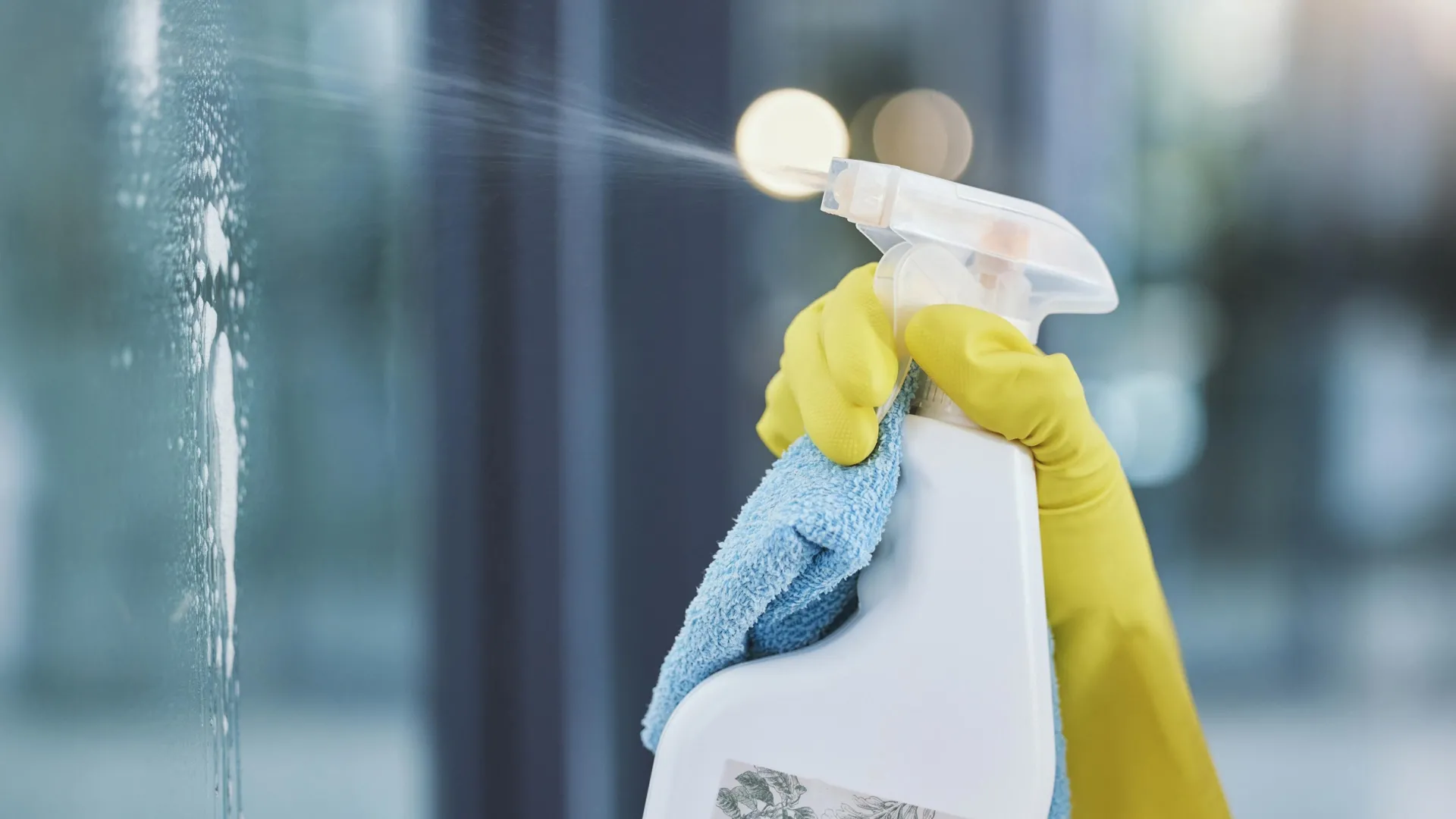
The seemingly innocuous aroma of citrus, pine, or flowers, often perceived as the hallmark of a freshly cleaned space, carries a hidden paradox. While these scents are universally associated with cleanliness and hygiene, groundbreaking research from Purdue University reveals that they can be a silent signal of complex chemical reactions actively unfolding in the air, generating potentially harmful invisible pollutants.
A team led by Brandon Boor, an Assistant Professor of Civil and Construction Engineering at Purdue University specializing in indoor air quality, has uncovered that fragrance compounds, whether from conventional cleaning products or botanical essential oil-based alternatives, rapidly react indoors to form nanoparticles. These incredibly minute particles, if inhaled, possess the alarming ability to penetrate deep into the human respiratory system, raising significant public health concerns. The findings, presented at the fall meeting of the American Chemical Society (ACS) during the "Healthy Indoor Spaces: Bridging the Microbiome and Chemistry" symposium, challenge our conventional understanding of what constitutes a "clean" indoor environment.
The Invisible Threat: Nanoparticles in Your Home
"Importantly, cleaning removes viruses and bacteria from surfaces, but it can also generate invisible air pollution," Boor stated, highlighting the dual nature of our cleaning practices. "There’s no visible dust or smoke in the air, but these particles are forming." This invisible nature makes the threat particularly insidious, as individuals are often unaware they are being exposed.
The research quantifies this unseen danger: "We showed that indoor ozone reactions with fragrances from cleaning produce nanoparticles that carry a respiratory dose comparable to, or greater than, what you would experience from standing outside along a busy road," Boor elaborated. While the composition of these indoor particles may differ from those generated by vehicular emissions, the total inhaled dose can be surprisingly higher. This revelation shatters the common misconception that a pleasant scent equates to clean, healthy air. "You’re not seeing smoke, dust, or haze in the air. Instead, you think the air smells great so it must be clean," Boor noted, underscoring the deceptive sensory experience.
From Pandemic Concerns to Atmospheric Chemistry
The genesis of this research stems from observations made during the COVID-19 pandemic. As the world intensified its focus on disinfection, Boor and his colleague Nusrat Jung, also a Purdue Assistant Professor of Civil and Construction Engineering, began investigating the broader impact of cleaning agents and chemical disinfectants on indoor environments. A recurring feature that quickly caught their attention was the ubiquitous presence of strong fragrances in many popular cleaning products.
"That’s often to create a pleasant smellscape in the indoor space," Boor observed. "But clean air should not smell like highly concentrated citrus fruit. It should not really smell of anything." This simple yet profound statement encapsulates a critical shift in perspective needed for indoor air quality.
The scientific community has long understood that atmospheric chemistry involves the reaction of compounds released by plants with naturally occurring ozone. Terpenes, such as pinene found in pine trees, are well-known participants in these reactions, which can generate tiny airborne particles. Over time, these particles can grow and aggregate, eventually becoming large enough to contribute to cloud formation in the atmosphere. However, this process typically proceeds relatively slowly in outdoor environments due to the generally low concentrations of terpenes in ambient air.
Indoor Environments: A Chemical Hotbed
Indoors, the scenario drastically changes. Scented cleaning products are potent sources of terpenes, releasing these fragrance compounds as they evaporate from sprayed droplets or cleaned surfaces. Common cleaning liquids contain a variety of terpenes, including pinene (pine), limonene (lemon), thymol (thyme), and linalool (lavender). The crucial difference is their concentration: during cleaning activities, airborne terpene levels inside a room can skyrocket to tens or even hundreds of times greater than those typically measured in a forest. This concentrated release creates an ideal, fast-acting chemical factory for nanoparticle formation.
To simulate realistic conditions, the Purdue researchers conducted experiments in a meticulously designed model home located on the Purdue campus. This small house, complete with a functional kitchen, wood flooring, and a bathroom, allowed the team to replicate ordinary household cleaning activities with high fidelity. Their tests involved both scented conventional liquid products and botanical-containing disinfectant sprays and wipes. The results were stark: the very same fundamental chemistry responsible for nanoparticle formation outdoors occurred indoors, but with vastly accelerated rates and significantly higher concentrations, leading to potentially profound consequences for human exposure.
Billions of Invisible Particles Form in Minutes
The sheer scale of particle generation is startling. Routine tasks such as mopping floors, spraying countertops, and wiping surfaces with scented products can generate billions or even trillions of particles, with the exact number varying depending on the specific product used. The vast majority of these newly formed particles were nanoparticles or ultrafine particles, measuring a minuscule 1-30 nanometers across. Their incredibly small size means they often fall outside the detection range of commercially available at-home air quality monitors, leaving occupants completely unaware of the dramatic increase in particulate matter. The researchers found that ordinary cleaning activities could temporarily push indoor ultrafine particle levels above those measured outdoors, even in urban environments.
The tiny size of these particles is paramount from a health perspective. Ultrafine particles (UFPs) are particularly concerning because they can bypass the body’s natural defenses, settling deep within the alveolar regions of the lungs. Once there, they can contribute to irritation and inflammation in the respiratory system, potentially exacerbating conditions like asthma or other lung diseases. Moreover, some UFPs are small enough to potentially translocate into the bloodstream, raising concerns about systemic health impacts beyond the respiratory tract.
One of the most striking discoveries was the remarkable speed of the process. Particle formation and subsequent growth occurred within mere minutes of cleaning. "By the time you finish cleaning up an indoor space, you’ve already formed a lot of nanoparticles and inhaled them," Boor explained, highlighting the immediate and unavoidable nature of this exposure.
The detailed scientific abstract accompanying the research provides further quantification, revealing indoor nanoparticle nucleation rates of approximately 10^5 cm^-3 s^-1 and condensational growth rates reaching up to 300 nm h^-1. These rates significantly exceed typical outdoor values by orders of magnitude, resulting in transient indoor nanoparticle number concentrations soaring to 10^5-10^8 cm^-3. This rapid growth ensures their survival to sizes that efficiently deposit throughout the human respiratory system, leading to inhalation dose rates comparable to or even exceeding those from primary combustion sources like traffic emissions.
The Ozone Connection: Intensifying the Threat
More recent investigations by Boor and Ernest Blatchley, another Professor at Purdue, have explored how nanoparticle formation is affected when scented surface cleaners are used concurrently with germicidal far-UV (UV-C) lamps, devices increasingly employed to disinfect indoor air. This combination, they found, created an even more favorable environment for intensified nanoparticle production.
UV-C lamps, while effective at killing pathogens, interact with oxygen in the air to produce ozone. During experiments in the model home, ozone concentrations increased to roughly 20 to 40 parts per billion (ppb). These levels, while somewhat below peak outdoor ozone concentrations during the experiments, were still significant. The presence of both elevated ozone and high concentrations of terpenes from cleaning products dramatically intensified nanoparticle production. This synergistic effect raises additional concerns about the cumulative particulate matter exposure for occupants in spaces utilizing both scented cleaners and UV-C air purification devices.
Mitigating the Invisible Pollution: Actionable Steps
Boor emphasizes that the research’s intent is not to discourage cleaning, which remains crucial for removing viruses and bacteria from surfaces. Instead, the goal is to empower consumers with information to make informed choices and adopt practices that reduce exposure to the secondary pollution generated during the process. Several simple, yet effective, measures can help mitigate this invisible threat:
- Choose Unscented Products: The most direct way to reduce terpene emissions is to opt for cleaning products that are explicitly labeled as "fragrance-free" or "unscented." This eliminates the primary source of the reactive compounds.
- Improve Ventilation: Enhancing air circulation is critical. This can be achieved by opening windows and doors to create cross-ventilation, especially during and immediately after cleaning. Utilizing exhaust fans in kitchens and bathrooms can also effectively remove airborne pollutants from the indoor environment. Mechanical ventilation systems, if present, should be run at higher settings during cleaning.
- Avoid Ozone-Generating Devices: Be mindful of devices that produce ozone, such as certain air purifiers, ionizers, and some UV-C lamps. If such devices are in use, particularly while scented cleaning products are being applied, their combined effect can significantly intensify nanoparticle formation. Consider turning them off during cleaning or opting for devices that do not generate ozone.
- Read Labels and Understand Ingredients: While "natural" or "botanical" products often sound safer, many still contain high concentrations of essential oils rich in terpenes, making them just as problematic as conventional scented cleaners in this context. Consumers should look beyond marketing claims and investigate ingredient lists.
- Clean When Fewer People Are Present: If possible, schedule cleaning activities for times when the space is unoccupied or has minimal occupants, allowing time for particles to dissipate before re-entry.
"Importantly, cleaning removes viruses and bacteria from surfaces, but it can also generate invisible air pollution," Boor reiterates, serving as a powerful reminder of the delicate balance in indoor environments. "There’s no visible dust or smoke in the air, but these particles are forming." The findings from Purdue University underscore the need for a paradigm shift in how we perceive cleanliness, moving beyond sensory cues to a more scientifically informed understanding of indoor air quality.
The research was made possible by the dedicated work of graduate and undergraduate students and received vital funding from a National Science Foundation Faculty Early Career Development Program (CAREER) grant and the Alfred P. Sloan Foundation. This ongoing work is crucial for developing improved building ventilation strategies, air cleaning technologies, and product formulations that prioritize both hygiene and healthy indoor air for all.
