
 By admin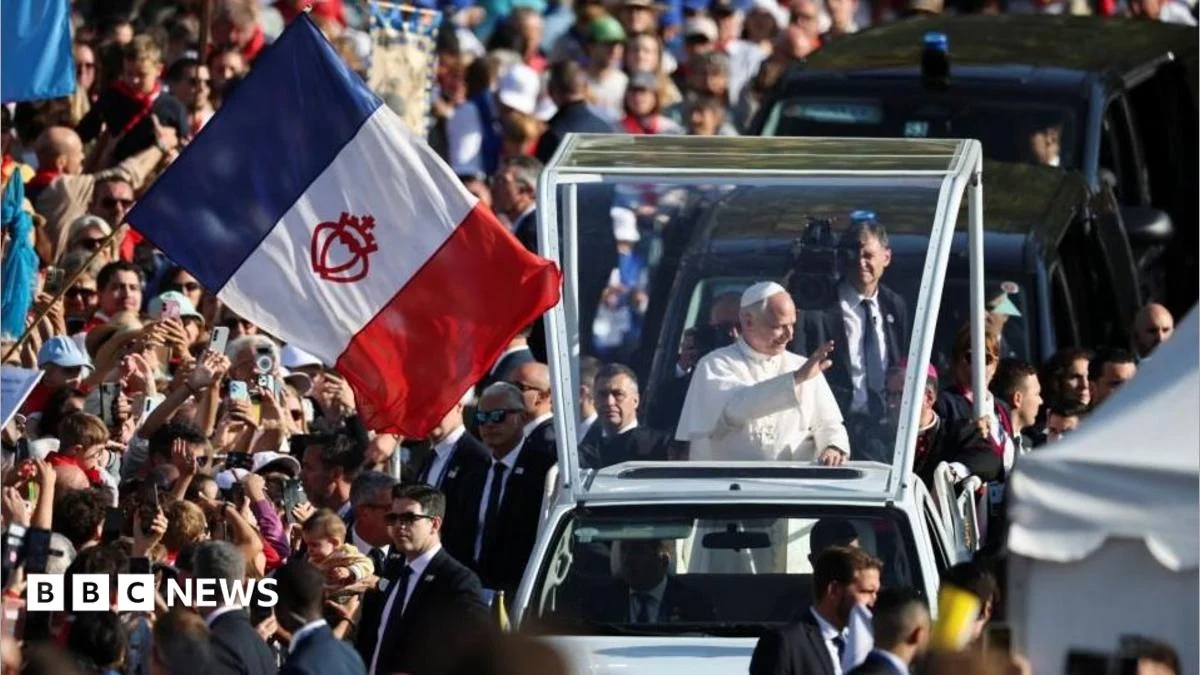
Pope Francis has issued a stern and unequivocal call to the French episcopate, demanding that they relentlessly root out the "scourge" of sexual abuse within the Roman Catholic Church. Speaking to bishops during a private, closed-door session at the revered Sanctuary of Our Holy Lady of Lourdes in southern France, the pontiff stressed the paramount importance of maintaining "the greatest vigilance." This urgent directive comes at a pivotal moment in the Pope’s four-day official visit to France, a visit marked by significant public appearances and, crucially, a highly anticipated private meeting with survivors of clerical sexual abuse. The gravity of the Pope’s message underscores the deep-seated crisis of abuse that has plagued the Church, a crisis brought into stark relief by a landmark 2021 inquiry.
The 2021 independent report, commissioned by the French Catholic Church itself, delivered a devastating indictment of decades of institutional failure. It revealed that clergy and lay members of the Church had perpetrated the abuse of an estimated 330,000 children in France over a period spanning 70 years. This staggering figure, extrapolated from extensive statistical analysis and witness testimonies, painted a grim picture of widespread and systemic harm. The report, led by Jean-Marc Sauvé, highlighted not only the direct perpetrators but also the profound failings of church leadership in preventing, addressing, and acknowledging these egregious acts. The inquiry’s findings triggered a seismic shift in public perception and within the Church itself, forcing a reckoning with its past and demanding urgent reforms.
Pope Francis’s address to the bishops at Lourdes, a site synonymous with faith, healing, and pilgrimage, was delivered prior to him celebrating Mass before thousands of devoted worshippers. The juxtaposition of the sacred ritual with the somber reality of the abuse crisis served as a potent reminder of the Church’s dual role as a source of spiritual solace and, tragically, a venue for profound human suffering. His remarks, released to reporters after the private gathering, were direct and unsparing. "You have faced with determination the painful scourge of abuse of minors committed by members of the clergy or within an ecclesial context," the Pope acknowledged, recognizing the efforts that have been undertaken. However, he immediately followed this with a firm admonition: "It is important to persevere along the path you have begun, maintaining the greatest vigilance."
This emphasis on "vigilance" is not merely a rhetorical flourish; it represents a call for a proactive and unyielding commitment to safeguarding children and supporting survivors. It implies a need for robust prevention strategies, transparent reporting mechanisms, thorough investigations, and meaningful accountability for those who have abused their positions of trust. The private meeting with survivors, scheduled for later in the day, is a crucial element of the Pope’s pastoral mission in France. These encounters are designed to offer a space for dialogue, for listening to the pain and experiences of those who have been so deeply wounded, and for reaffirming the Church’s commitment to their healing and justice. For survivors, these meetings can be both cathartic and fraught with emotion, representing a potential moment of recognition and validation after years of silence or dismissal.
The gathering of senior church leaders in Lourdes occurred just a day after the pontiff’s momentous visit to Paris, which drew an estimated 700,000 people to the iconic Place de la Concorde. The sheer scale of this turnout underscored the profound public interest and engagement with Pope Francis’s presence in France. Thousands of jubilant followers lined the Champs-Élysées, cheering and waving as the Pope traversed the grand avenue in his open-topped popemobile, a symbol of his desire to connect directly with the faithful. This public demonstration of devotion, while a testament to his global appeal, also serves as a backdrop against which the Church’s internal struggles, particularly the abuse crisis, are viewed by the public. The contrast between the outward celebration and the internal reckoning is a complex dynamic that the Church leadership must navigate.
Earlier in his visit, on Friday, Pope Francis engaged in a significant diplomatic encounter with French President Emmanuel Macron. This meeting, held at the Élysée Palace, provided an opportunity for discussions on a range of issues of mutual concern, including the role of faith in society, social justice, and international relations. While specific details of their conversation were not fully disclosed, the meeting between the head of state and the head of the Catholic Church invariably touches upon the Church’s societal impact and its responsibilities. The issue of the abuse crisis, and the Church’s response to it, would almost certainly have been a prominent topic of discussion, given its profound implications for French society and the Church’s standing within it.
The ongoing crisis of sexual abuse within the Catholic Church is a global phenomenon, with France being one of the countries most profoundly impacted by its scale and the revelations of its institutional cover-up. The Sauvé report, in its detailed analysis, highlighted systemic failures that allowed abuse to persist for decades. These failures included inadequate vetting of clergy candidates, a culture of secrecy that prioritized the Church’s reputation over the protection of children, and a lack of effective disciplinary measures against perpetrators and those who enabled them. The report’s recommendations, which the bishops are now being urged by Pope Francis to diligently implement, include a wide range of reforms aimed at creating a safer environment for children and ensuring justice for survivors. These include enhanced child protection policies, improved training for clergy and church personnel, independent oversight mechanisms, and a commitment to transparency in addressing allegations.
Expert perspectives on the Pope’s call for vigilance underscore its importance. Dr. Anya Sharma, a sociologist specializing in religious institutions, noted, "The Pope’s message at Lourdes is a critical signal that the era of denial and insufficient action is over. The term ‘scourge’ is deliberate and powerful, framing the abuse not as isolated incidents but as a deeply ingrained problem that requires an almost military-level response in terms of vigilance and eradication. The meeting with survivors is also vital; it moves beyond institutional pronouncements and into the realm of direct human engagement, acknowledging the lived reality of those who have suffered."
Furthermore, the challenge for the French bishops is not just about implementing new policies but also about fostering a fundamental shift in culture. For generations, a certain clericalism, a sense of entitlement and distance from the laity, may have contributed to an environment where abuse could thrive and be concealed. Pope Francis’s emphasis on the bishops’ role suggests that the responsibility for driving this cultural change rests squarely on their shoulders. They must lead by example, demonstrating humility, accountability, and a genuine commitment to the well-being of all members of the Church, especially its most vulnerable.
The public’s trust in the Catholic Church in France has been severely eroded by the revelations of the abuse crisis. Rebuilding that trust will be a long and arduous process, requiring consistent and demonstrable action. Pope Francis’s visit, particularly his direct engagement with bishops and survivors, is a significant step in this process. However, the true measure of success will lie in the sustained and effective implementation of reforms in the years to come. The message from Lourdes is clear: the fight against the scourge of sexual abuse is not a one-time campaign but an ongoing, unwavering commitment that demands the utmost vigilance from every level of the Church. The eyes of the world, and more importantly, the eyes of the survivors, are now fixed on the actions that will follow these powerful words. The legacy of this visit, and indeed the future of the Catholic Church in France, will be determined by the depth of its commitment to confronting this painful truth and enacting meaningful change.
