
 By admin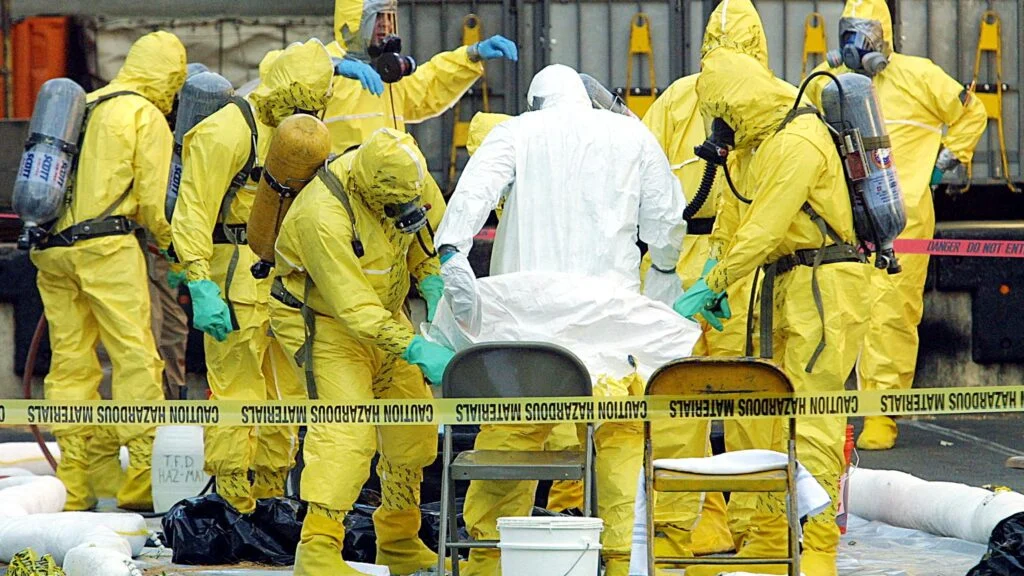
Twenty-five years ago, while the United States was still paralyzed by the trauma of the September 11 terrorist attacks, a second wave of terror arrived not by plane, but by post. The first of two distinct batches of anthrax-laden envelopes were mailed from New Jersey, targeted at major news media outlets and the offices of United States Senators. This bioterrorism campaign, often referred to as "Amerithrax," resulted in 22 cases of anthrax disease, claimed five lives, and ignited a nationwide panic that fundamentally altered the American perception of security. Beyond the human toll, the attacks necessitated a massive federal response, costing billions of dollars in decontamination, healthcare, and long-term recovery efforts. Today, as we reflect on the quarter-century that has passed, the lessons learned from that chaotic period are more relevant than ever. Understanding how public health infrastructure rose to meet the anthrax challenge provides a vital roadmap for navigating modern threats—whether those threats are intentional acts of terror, inadvertent laboratory leaks, or pathogens generated through the burgeoning power of artificial intelligence.
The 2001 anthrax attacks demonstrated with chilling efficiency how a handful of letters could leverage the reach of a global superpower’s own infrastructure against its citizens. The postal system, a marvel of distribution designed to connect every household in the country, was weaponized as a biological dissemination machine. The first sign of trouble appeared in Florida at the offices of American Media Incorporated (AMI). Robert Stevens, a photo editor for The Sun tabloid, became mysteriously and severely ill. It was the keen eye of an astute clinician, observing the telltale signs of Bacillus anthracis in a spinal tap specimen, that first alerted authorities to the presence of a biological agent. This clinical suspicion was the catalyst for a massive mobilization. When the Centers for Disease Control and Prevention (CDC) was alerted through its newly established Laboratory Response Network (LRN), a team of specialists, including those who would lead the Epidemiology and Surveillance Team, began the grueling work of tracing an invisible killer.
Initially, the investigation operated under the assumption that the exposure might have been natural. Anthrax is a zoonotic disease, and while rare in the U.S., it can occur through contact with infected animals or contaminated animal products. However, the narrative shifted abruptly when a second AMI employee was confirmed to have contracted the disease. Coming only weeks after the fall of the Twin Towers, the realization that the nation was under biological attack left the public health community stunned. The CDC immediately stood up an Emergency Operations Center (EOC) in one of its auditoriums, deploying multiple field teams to Florida, New York, and Washington, D.C. The investigation that followed revealed a complex clinical picture: half of the cases manifested as cutaneous (skin) infections, while the other half were the much more lethal inhalational form of the disease.
The scientific effort to track the source of the anthrax was a watershed moment for molecular epidemiology. At the time, molecular testing was a relatively novel tool in the public health arsenal. Investigators used it to prove that isolates recovered from victims, from the four recovered powder-containing envelopes, and from various environmental samples were genetically indistinguishable. This confirmed a common source—the Ames strain of Bacillus anthracis. Furthermore, the investigation identified critical differences between the two mailing waves. The first mailing, dated September 18, contained what investigators informally called "crunchy" anthrax. This material was clumped and less refined, leading primarily to cutaneous infections among media workers. The second mailing, dated October 9, contained a "fine powder" formulation. This version was highly processed, easily aerosolized, and significantly more dangerous. It was this second batch that caused the fatal inhalational cases among postal workers at the Brentwood facility in D.C. and the Hamilton facility in New Jersey, people who were never the primary targets but became victims of the "mail-processing pathway."
These findings underscored a terrifying reality: the consequences of an intentional biological release extend far beyond the intended targets. The characteristics of the biological agent—its formulation, its route of dissemination, and the specific vulnerabilities of the exposed population—dictate the scale of the catastrophe. In the early days of the 2001 investigation, the differences between the "crunchy" and "fine powder" mailings looked like a crude, live-fire experiment designed to test different delivery methods. This led to a pervasive fear that a much larger, more sophisticated release was imminent. Fortunately, that larger attack never materialized, and no further intentional anthrax releases have been reported in the decades since. However, the event left a permanent scar on the national psyche, leading to thousands of "white powder" scares that continue to test the limits of law enforcement and public health resources.
Perhaps the most consequential revelation of the 2001 attacks was that pre-existing knowledge and traditional models were insufficient to predict the behavior of a weaponized pathogen. Prior to Amerithrax, scientific literature suggested that the risk of re-aerosolization—spores settling and then being kicked back into the air—was low. Existing guidance focused almost exclusively on decontaminating individuals who were present when an envelope was opened. The deaths of postal workers who merely handled sealed envelopes forced a radical rethink of infection risks. As new evidence accumulated, the public health response shifted toward a more aggressive posture. Ultimately, an estimated 32,000 people were placed on antimicrobial prophylaxis to prevent the onset of the disease. This massive intervention was successful; no additional cases were identified among those who completed the drug regimen. The broader lesson was clear: in a deliberate biological event, initial assumptions are often wrong, and investigators must look beyond the immediate "blast radius" to anyone potentially exposed along the entire path of dissemination.
Fast forward twenty-five years to the present day, and the landscape of biodefense has changed dramatically. Technological capabilities for detecting biological threats have advanced by orders of magnitude. Modern mail is screened with sophisticated biohazard detection systems, mail volume has decreased as digital communication dominates, and mail sorters are engineered to minimize the escape of particulates. Furthermore, the implementation of the Select Agent Program has made it significantly more difficult for individuals to gain authorized access to dangerous pathogens like anthrax. Yet, despite these technological and regulatory gains, the infrastructure required to respond to such threats is arguably more vulnerable than it was in 2001.
A recent report from the Center for Strategic and International Studies (CSIS) warns that Americans face greater risks from biological threats today than at any time this century. This heightened risk is driven by several factors, most notably the integration of artificial intelligence into the life sciences. The Bipartisan Commission on Biodefense has concluded that AI fundamentally transforms the biological threat landscape by lowering the barrier to entry for the creation of "designer" pathogens. AI can now facilitate the development of novel biological agents, optimize their virulence, and even provide instructions for their dissemination. This "democratization" of biological weaponry means that the next "anthrax letter" might not come from a rogue scientist with access to a high-security lab, but from a motivated actor using a large language model to synthesize a threat from scratch.
Compounding this technological risk is a steady erosion of the human and institutional capital necessary for an effective response. Civilian and military biodefense programs have faced significant budget cuts. At the CDC, the workforce capacity for high-consequence pathogen programs is reportedly running at nearly 30% lower than in 2024. This loss of subject matter experts and seasoned scientific leadership creates a "knowledge gap" that technology alone cannot bridge. During the 2001 attacks, the "muscle memory" of traditional shoe-leather epidemiology allowed investigators to pivot quickly, but the pace and scale of modern threats may exceed the current capacity of a depleted workforce.
Furthermore, the culture of public health leadership has come under scrutiny. The first lesson of the 2001 attacks is that detection must lead rapidly to action. However, in a political climate where independent, evidence-based decision-making is often undermined, there is a growing concern that the response to a future biothreat might be delayed by bureaucracy or political interference. The second lesson is that preparedness requires a culture that manages uncertainty and welcomes scientific dissent. Effective response demands a "science-driven evaluation" that is open to rapid course correction. If leadership at agencies like Health and Human Services (HHS) demonstrates an intolerance for internal debate, the ability to rethink strategies in the face of new evidence is lost. Finally, preparedness is a capability that must be continually maintained. Sophisticated sensors are useless without the experienced people, functioning networks, and practiced relationships needed to interpret the data and make defensible decisions under pressure.
The current state of public health readiness is being tested by a resurgence of natural outbreaks. In the mid-2020s, the world has seen significant surges in Hantavirus, Ebola, Cyclospora, and Measles. These "natural" challenges serve as a barometer for how we might handle an "intentional" one. The widening gaps in mitigation and readiness are a call to action. The specter of a refined, aerosolized threat like the 2001 anthrax letters should motivate a renewed focus on cross-sector coordination and the replenishment of the nation’s public health "first responders."
As we mark twenty-five years since the fall of 2001, we must remember that the first signal of a biological event rarely tells the whole story. The initial case in Florida was just the tip of an iceberg that extended through the postal arteries of the Northeast and into the halls of government. The strength of the American response in the future will not depend solely on the sensitivity of our detectors or the speed of our AI models. It will depend on whether we have preserved the institutions, the scientific integrity, and the human expertise required to understand a threat and act before it spreads. The lessons of the anthrax letters were bought at a high price; forgetting them would be a secondary tragedy the nation cannot afford.
