
 By Lina Irawan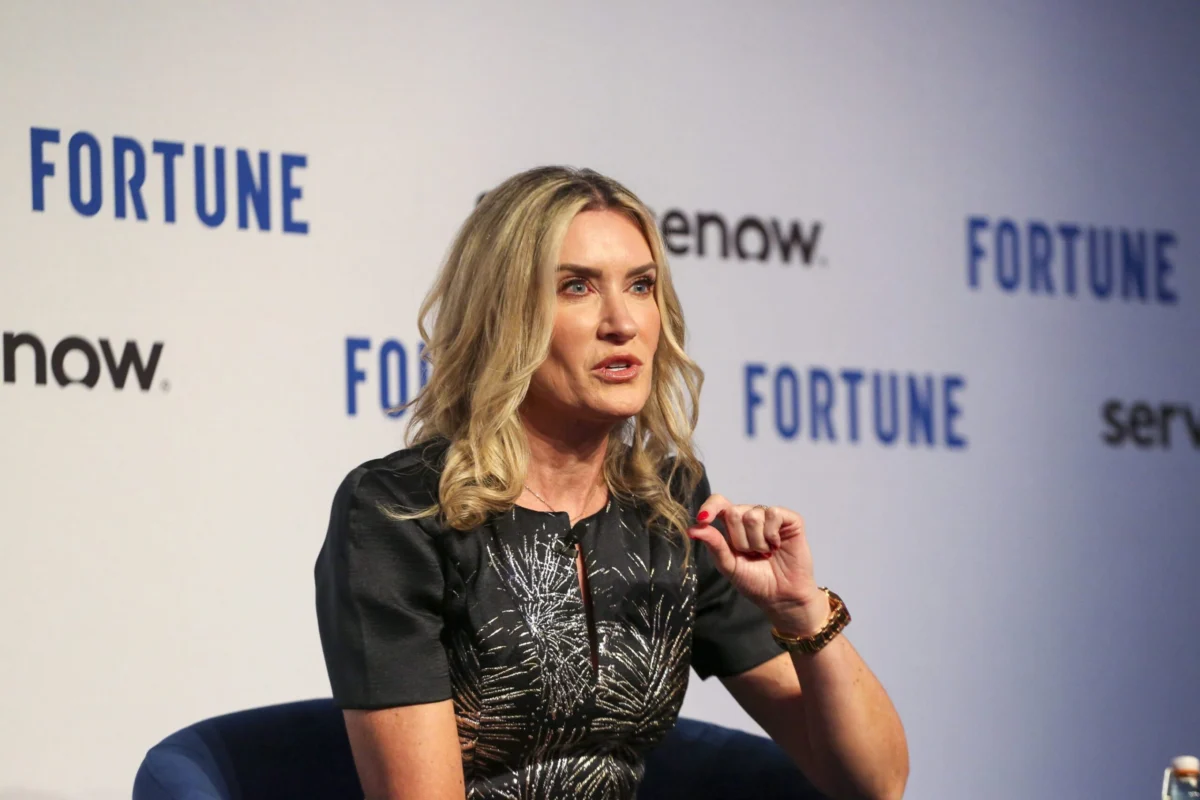
This disparity was a central theme at Fortune’s inaugural AIQ Summit, where industry leaders converged to dissect the realities of AI integration. Stacy Dillow, Executive Vice President and Chief People Officer at Hewlett Packard Enterprise (HPE), offered a critical perspective during her conversation with Editor-in-Chief Alyson Shontell. Dillow articulated that the true hurdle isn’t merely experimenting with cutting-edge technology; rather, it lies in the far more challenging endeavor of fundamentally rethinking how work is structured and performed, and critically, dismantling the entrenched organizational frameworks built around these traditional processes.
Dillow underscored a crucial point: "We’ve got to force ourselves to think differently because if we’re not trying to change how we work, we’re just trying to retrofit and put AI in a process that isn’t going to give us a different answer." This insight speaks to a common pitfall: companies often attempt to layer new AI tools onto existing, often inefficient, workflows without questioning the underlying process itself. The result is typically marginal gains, or worse, the amplification of existing inefficiencies, failing to unlock AI’s true potential for exponential improvement. True transformation requires a blank slate approach, envisioning how AI can enable entirely new ways of operating, rather than simply automating outdated steps.
This paradigm shift is rapidly becoming an indispensable responsibility for corporate leaders across the board. As AI transcends its initial role as an experimental novelty and evolves into an intrinsic component of daily business operations, the onus is on the C-suite to champion and steer this transformation. Dillow did not mince words, asserting that "If you’re in the C-suite today and you’re not doing some level of AI adoption implementation or everyday thinking about transformation, you’re not going to be doing your job." She emphasized that leveraging AI is no longer a strategic option but a fundamental requirement "to survive" in an increasingly competitive and technologically advanced landscape. This signifies that AI integration is no longer solely the domain of IT or specialized AI teams; it’s a cross-functional imperative demanding strategic oversight from every senior leader, from the CEO down. It involves not just technological literacy but a deep understanding of organizational change management, cultural dynamics, and future workforce planning.
Leading this charge is Danielle Gonzalez, Chief People Officer at Palo Alto Networks, a cybersecurity titan that ranks No. 49 on the prestigious Fortune AIQ 75 list. Gonzalez has witnessed this profound shift firsthand within her organization, which has proactively integrated AI tools into its operational fabric. The company has empowered its employees by introducing a suite of cutting-edge generative AI tools, including NotebookLM, Claude, and Gemini, encouraging widespread experimentation and practical application. More significantly, Palo Alto Networks has developed a custom AI agent that has revolutionized internal support. This intelligent agent has dramatically reduced IT tickets by an astonishing 83%, demonstrating a powerful return on investment. Beyond IT, this sophisticated agent now seamlessly manages workflows across critical functions such as HR, finance, and legal, streamlining processes and enhancing efficiency across the enterprise.
Gonzalez highlighted the profound impact of this self-service model: "They’re no longer calling Danielle or their HR business partner or someone in the business, but rather they’re self-serving, and they’re asking the agent a question. It’s querying and it’s giving them the right answer for where they sit in their respective globe." This capability represents a significant leap forward, moving away from traditional, often bottlenecked, human-mediated support systems towards an agile, on-demand, and personalized information retrieval and task execution system. Employees can quickly access information relevant to their specific role, location, and queries, freeing up human resources teams to focus on more complex, strategic, and empathetic interactions that truly require human intervention. This also fosters a culture of independence and immediate problem-solving, dramatically improving employee experience and productivity.
The ripple effects of AI integration extend far beyond operational efficiencies; they fundamentally reshape the very nature of the workforce required to thrive in this new era. As AI increasingly redefines how tasks are accomplished, organizations are compelled to re-evaluate their talent strategies, focusing not just on hiring for specific skills but for adaptability and a willingness to embrace continuous change. This mandates equipping existing employees with the necessary tools and comprehensive training to keep pace with technological advancements. However, perhaps the most crucial shift is the need to cultivate a workforce that possesses the intellectual humility and courage to question long-standing processes and, crucially, to recognize when these established methodologies have become obsolete and must be abandoned.
Gonzalez emphasized this during her summit appearance: "We’re looking for curiosity. We’re looking for agency, and we’re looking for those people who can not only learn something at a fast rate of pace, but also unlearn what they thought to be true, so that they can make space to move forward." This concept of "unlearning" is particularly potent. It means shedding outdated assumptions, ingrained habits, and even successful past practices that may no longer be optimal or relevant in an AI-augmented environment. It requires a growth mindset that prioritizes continuous evolution over adherence to tradition. For Palo Alto Networks, this philosophy translates into a revamped approach to talent acquisition. The company has moved beyond simply asking candidates to enumerate their past accomplishments in traditional interviews. Instead, it employs innovative assessment methods like "observable interviews" and "hackathons" to directly gauge how candidates tackle complex problems, both with and without the aid of AI.
"Gone are the days where you’re sitting there and you’re interviewing someone and you’re having them tell you all about their achievements," Gonzalez stated, articulating a shift towards demonstrable skills over recounted history. "We want to see what you can do." These observable assessments provide a far more accurate predictor of success in an AI-driven workplace, evaluating a candidate’s problem-solving acumen, collaborative spirit, and adaptability in real-time scenarios. This forward-thinking approach ensures that the company is not just hiring for present needs but for future capabilities, fostering a workforce that is inherently prepared for continuous technological evolution.
For existing employees, the expectation mirrors that for new hires: while companies are committed to providing the requisite tools, resources, and training, the ultimate responsibility for continuous skill development rests squarely with the individual worker. Drew Holler, Chief Human Resources Officer at Lennar, a $19 billion homebuilder, articulated this shared responsibility with striking clarity. "We’re going to give you all the tools, but it’s your responsibility to upskill yourself as well," Holler declared. "We’re going to give you trainings, but you, as an individual, have to upskill." This statement encapsulates a critical partnership in the AI era: organizations must invest in their people and create opportunities for learning, but employees must seize these opportunities, cultivate a proactive learning mindset, and actively engage in developing the new competencies necessary to remain relevant and valuable. This dynamic ensures a workforce that is not only equipped with cutting-edge tools but also possesses the intrinsic drive for lifelong learning and adaptation, ultimately forging a resilient and future-proof enterprise.
In conclusion, the journey into the AI era is less about the mere adoption of technology and more about a profound, systemic reimagining of work itself. The "death of tokenmaxxing" signals a necessary shift from superficial engagement to strategic, impactful integration. Companies like HPE and Palo Alto Networks exemplify this imperative, demonstrating that true AI transformation requires visionary leadership, a willingness to dismantle and rebuild existing processes, and a commitment to cultivating a workforce defined by curiosity, agency, and an unparalleled capacity for both learning and unlearning. As AI continues its inexorable march into every facet of business, those organizations and individuals who embrace this radical rethink will not merely survive but will undoubtedly lead the way in shaping the future of work.
